Curling Irons & Wands
Curling Wand vs Clamped Iron: Which Should You Buy?
One of these is easier to learn and leaves a mark. The other looks more natural and will burn your fingers while you find out.
Updated September 2026 · Sawyer V.
A clipped iron holds the end of the section for you, which makes it far easier to learn and produces an even, repeatable curl — with a possible crease where the clip sat. A clipless wand needs a heat glove and more practice, and gives a looser, more natural-looking result.
We earn a commission if you buy through the links on this page, at no extra cost to you. It never changes which tool we pick or which one we tell you to skip. How this site is funded.
The mechanical difference
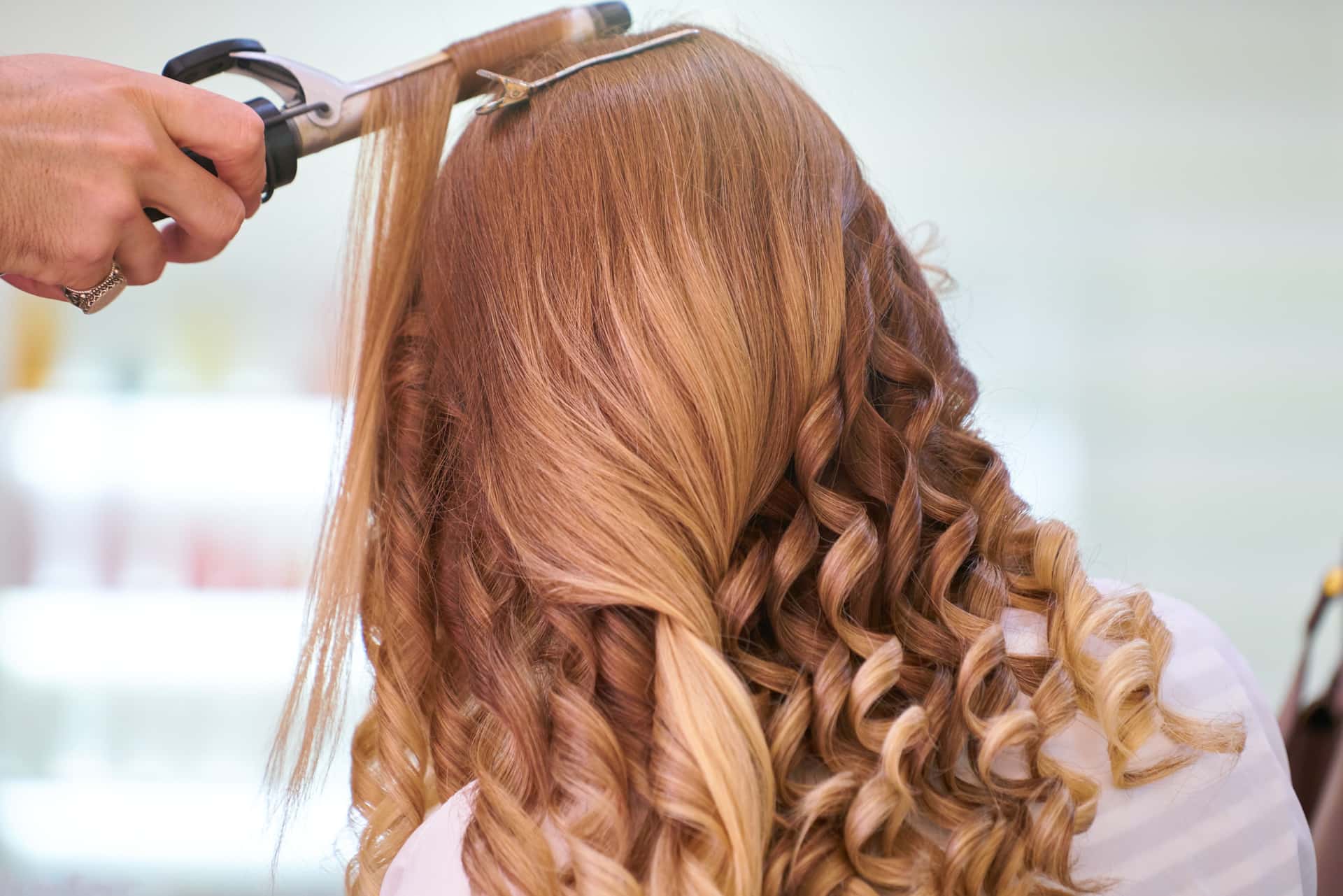
On a clipped iron you open the clamp, place the end of a section under it, close it, and rotate the tool so the hair wraps up the barrel. The clip does the holding.
On a clipless wand there is no clamp. You hold the end of the section yourself — with a heat-resistant glove — and wrap it around the barrel by hand, holding it there until the curl sets.
Everything else follows from that one difference.
Side by side
Clipped iron against clipless wand
| Clipped iron | Clipless wand | |
|---|---|---|
| Who holds the hair | The clip | You, in a glove |
| Learning curve | Gentle | Steeper — expect a few sessions |
| Curl character | Even, uniform, repeatable | Slightly irregular, more natural |
| Crease risk | Real, where the clip sat | None |
| Root access | Limited by the clamp mechanism | Better — nothing in the way |
| Speed once learned | Similar | Similar |
| Burn risk | Lower | Higher; a glove is not optional |
| Suits short hair | Better — little length to hold | Harder; almost nothing to grip |
| Suits a uniform set | Yes | Less so, by design |
The crease, and how much it matters
A clip presses on the hair while the curl sets, and on fine or slippery hair it can leave a visible flat mark where it sat. This is the single most cited reason people move to wands.
It is largely avoidable. Clip the very end of the section rather than further up, keep the tool moving as you wrap rather than clamping and holding in one place, and release with a slide rather than opening the clamp on a set curl. On coarse or dense hair the crease rarely appears at all.
Where the wand genuinely wins
Undone, lived-in curls. A clipped iron produces a uniform result because the mechanism is uniform — every section is held the same way for the same time. A wand introduces slight variation with every wrap, and that variation is what reads as natural rather than set.
It also gets closer to the root, because there is no clamp housing in the way, and it lets you vary how much of the end you leave out — which is the main technique behind beach waves.
Where the clip genuinely wins
Learning, short hair, and anything that needs to be even. If you are buying a first curling tool, buy a clipped iron. The skill of holding a hot barrel with one hand and a hair end with the other while managing tension is real, and it is not the skill you want to be learning at seven in the morning.
On short hair the case is stronger still — there is barely enough length to grip, so a wand leaves you holding a very short end very close to a hot barrel. That is covered at curling irons for short hair.
The third option
A self-rotating barrel removes the wrap entirely — the tool turns itself and draws the section in. T3 publishes two rotation speeds and nine heat settings on the CurlWrap, with dual voltage.
It solves the wand’s learning curve and the clip’s crease in one move. What it adds is a mechanism that can fail, and T3 publishes no barrel diameter or weight for it, so you cannot check the curl size or the handling before buying.
What neither changes
How long the curl lasts. That is decided by barrel diameter relative to your hair length, and by whether you let each curl cool completely before releasing it. Hair sets in the shape it cools into, and a curl dropped warm relaxes straight back out whatever tool made it.
Both ghd curling tools in our registry are fixed at 365°F, which is the manufacturers’ own answer for typical hair, and published research puts the melting point of ordered keratin in dry hair at about 401°F. Neither clip nor wand changes those numbers — the temperature discussion is at the styling temperature page.
The tools on this page
Prices come from the live price layer. Where none is available the button says so rather than showing a number we cannot stand behind.
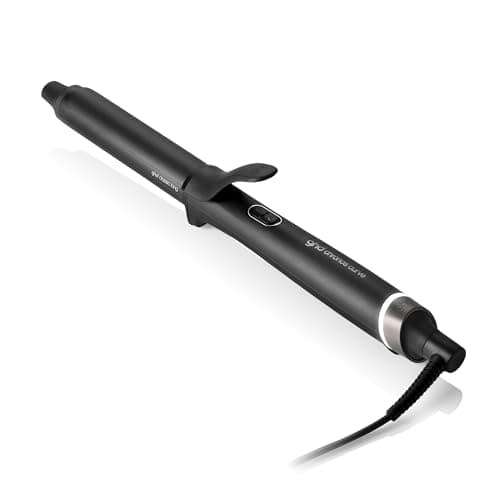
ghd Chronos Curve Classic curling iron (1 inch barrel)
A curling iron with no temperature dial at all — 365°F fixed, and a 20-minute sleep mode, which is unusual restraint in this category.
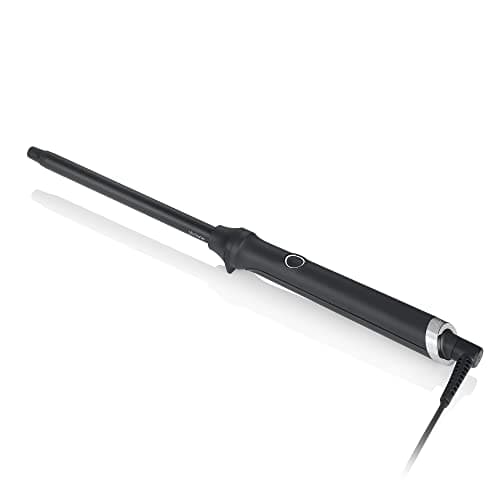
ghd Curve Thin curling wand (0.5 inch barrel)
A 0.5 inch barrel is the smallest in this registry and the one that holds a curl on short hair, with a 30-second heat-up and universal voltage.
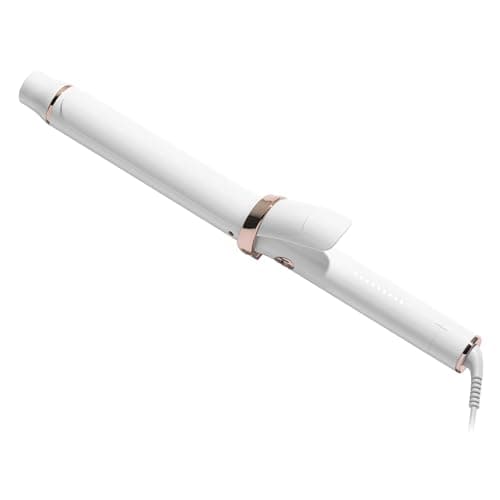
T3 SinglePass Curl X extra-long barrel curling iron
A 6.5-inch barrel and a separate published weight for every barrel size — unusual disclosure in a category where most makers publish a diameter and stop.
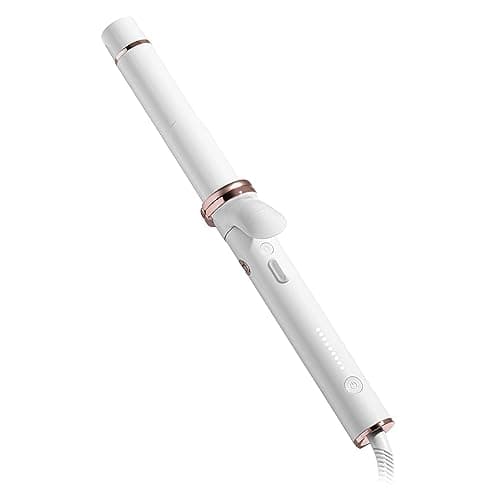
T3 CurlWrap automatic rotating curling iron
The barrel turns itself, which removes the wrist technique entirely — nine heat settings and genuine dual voltage alongside it.
Questions people actually ask
Is a curling wand better than a curling iron?
For natural, undone curls a wand is better, because it introduces slight variation with every wrap. For even, repeatable curls and for learning, a clipped iron is better — the clip holds the hair so you only have one job.
Do curling irons leave a crease?
They can, where the clip sat, mostly on fine or slippery hair. Clipping the very end rather than further up, keeping the tool moving as you wrap, and releasing with a slide all reduce it substantially.
Do I need a glove for a curling wand?
Yes. You are holding the end of a hair section against or near a barrel at around 365 degrees Fahrenheit with your fingers. A heat-resistant glove is standard equipment, not an accessory.
Which is better for short hair, a wand or an iron?
A clipped iron. On a bob there is barely enough length to grip, so a wand leaves you holding a very short end very close to a hot barrel with no margin.