Curling Irons & Wands
The Best Curling Irons for Beginners in 2026
A clamp, a temperature you cannot exceed, and a barrel size that matches the curl you actually want.
Updated September 2026 · Sawyer V.
A first curling tool should do two things: hold the section so both your hands are not required, and stop you from turning the temperature up when a curl drops. That points to a clipped iron with a fixed or clearly published temperature, not a clipless wand with a 455°F ceiling.
We earn a commission if you buy through the links on this page, at no extra cost to you. It never changes which tool we pick or which one we tell you to skip. How this site is funded.
Quick picks
Tap any row to jump to the full write-up. Prices come from the live price layer; where none is available the button says so rather than showing a number we cannot stand behind.
| # | Product | Best for | Price |
|---|---|---|---|
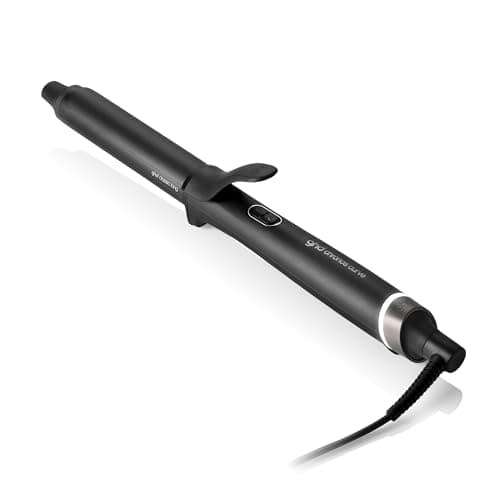
| 1 | ghd Chronos Curve Classic curling iron (1 inch barrel) A clipped 1 in ceramic barrel at one fixed 365°F, with an 8.8 ft cable and no dial to turn. | A first curl, on hair past the shoulder | |
| 2 | 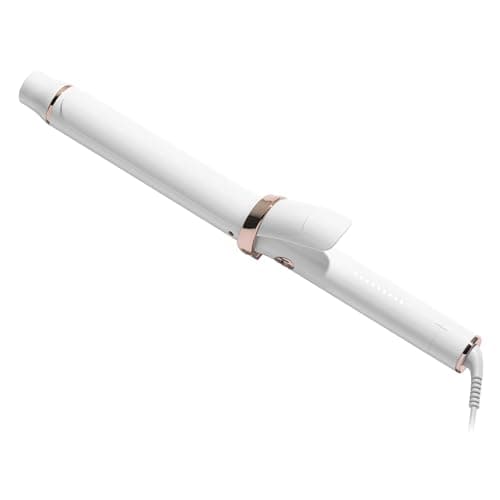 T3 SinglePass Curl X extra-long barrel curling iron Nine published heat settings, a published weight for each of the three barrel sizes, and 100-240 V. | Finding out what temperature your hair actually holds at | |
| 3 | 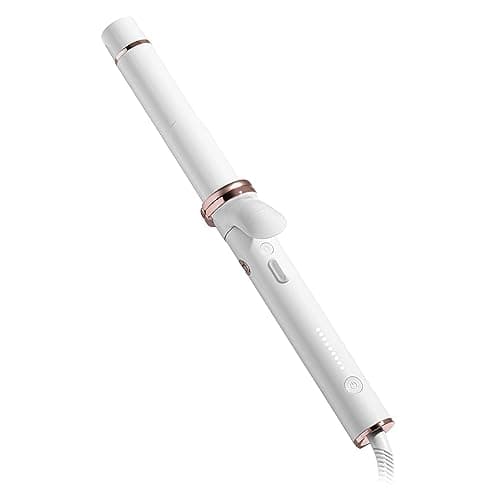 T3 CurlWrap automatic rotating curling iron A self-rotating ceramic barrel with nine heat settings - the tool wraps the section for you. | Anyone who cannot get the rotation right | |
| — | 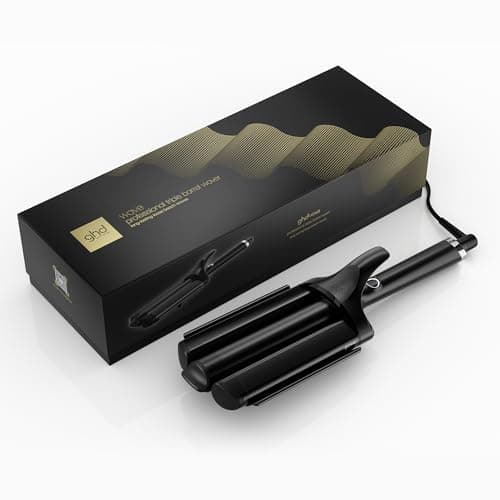 ghd Wave triple barrel hair waver A three-barrel waver at a fixed 365°F, with no published cord length and no published voltage. We’d skip this | Not a first curling tool |
1. The clamp does the holding
ghd Chronos Curve Classic curling iron (1 inch barrel)
Best for: A first curl, on hair past the shoulder
A clipped 1 in ceramic barrel at one fixed 365°F, with an 8.8 ft cable and no dial to turn.
The clip is the beginner feature. On a clipless wand you hold the section against a hot barrel with your own fingers, which is a genuine skill and a genuine burn risk while you are learning. A clamp takes the end of the section, holds it, and lets you rotate with one hand.
One fixed temperature removes the other beginner failure. When a curl drops out after ten minutes, the instinct is to go hotter. The actual causes are almost always a section that was too thick, hair that was not fully dry, or a curl released before it cooled. None of those is fixed by heat.
1 inch is the right first barrel: it produces a curl most people recognize as the one they wanted, and it is forgiving about technique in a way that very small and very large barrels are not.
What’s wrong with it
No published weight, no published wattage and no published voltage, so it cannot be costed or packed on the strength of the page.
Published specifications — ghd Chronos Curve Classic curling iron (1 inch barrel)
| Wattage | Not published |
|---|---|
| Heat settings | One fixed temperature — 365°F |
| Speed settings | Not applicable |
| Weight | Not published |
| Cord length | 8.8 ft professional cable |
| Noise (dB) | Not applicable |
| Attachments | None supplied |
| Plate / barrel | Ceramic barrel, 1 in, clipped |
| Dual voltage | Not published |
| Warranty | 2-year warranty |
Every figure above is taken from ghd — Chronos Curve Classic curling iron product page. “Not published” means the figure does not appear on that page — it is not an estimate withheld, it is a number the manufacturer does not state. How we compile these.
What it costs to run for a year
ghd does not publish a wattage for this tool, so there is nothing honest to compute. The formula is watts ÷ 1,000 × hours a year × your rate per kWh; if you find a rating plate on the handle, 65 hours a year and 18.34 cents per kilowatt-hour will get you the rest of the way.
2. Nine settings to learn your number on
T3 SinglePass Curl X extra-long barrel curling iron
Best for: Finding out what temperature your hair actually holds at
Nine published heat settings, a published weight for each of the three barrel sizes, and 100-240 V.
The opposite approach, and also a good one. A beginner does not know what their hair needs, and nine settings is enough granularity to find out by starting at the bottom and stepping up one at a time until a test curl holds.
T3 publishes 10.6 oz, 13.2 oz and 15.1 oz for the 1, 1.25 and 1.5 inch barrels. Publishing a separate weight per size is unusual disclosure, and weight matters here: a curling iron is held at head height, often above the shoulder, for the length of a session.
6.5 inches of CeraGloss ceramic barrel, an 8 ft swivel cord and genuine 100–240 V world voltage. It is the tool least likely to be outgrown.
What’s wrong with it
Nine settings is also nine chances to pick badly, and T3 publishes no wattage on any product.
Published specifications — T3 SinglePass Curl X extra-long barrel curling iron
| Wattage | 78 W |
|---|---|
| Heat settings | 9 heat settings |
| Speed settings | Not applicable |
| Weight | 10.6 oz (1 in), 13.2 oz (1.25 in), 15.1 oz (1.5 in) — cord not included |
| Cord length | 8 ft, 360-degree swivel cord |
| Noise (dB) | Not applicable |
| Attachments | None supplied |
| Plate / barrel | CeraGloss ceramic barrel, 6.5 in long |
| Dual voltage | Yes — auto world voltage, 100–240 V |
| Warranty | 2-year warranty |
Every figure above is taken from T3 Micro — SinglePass Curl X product page. “Not published” means the figure does not appear on that page — it is not an estimate withheld, it is a number the manufacturer does not state. How we compile these.
What it costs to run for a year
$0.93 a year
78 W × 65 hours a year = 5.1 kWh, at 18.34 cents per kilowatt-hour. The hours assume 15 minutes a session, 5 days a week — that is an assumption, not a measurement, so swap in your own if it is wrong.
3. No wrist technique required
T3 CurlWrap automatic rotating curling iron
Best for: Anyone who cannot get the rotation right
A self-rotating ceramic barrel with nine heat settings - the tool wraps the section for you.
The hardest part of curling is not the heat, it is the rotation: keeping tension even while turning the barrel and keeping the section flat. A self-rotating barrel does that part.
For a beginner this is a legitimate shortcut rather than a gimmick. It produces consistent curls from the first attempt, which is worth a lot when the alternative is a week of uneven results and a temptation to raise the temperature.
Nine heat settings, an 8 ft swivel cord and 100–240 V. We cover the wider category on automatic curlers.
What’s wrong with it
More mechanism means more to fail, and a rotating barrel is the wrong tool near hair extensions or a weft.
Published specifications — T3 CurlWrap automatic rotating curling iron
| Wattage | 77 W |
|---|---|
| Heat settings | 9 heat settings |
| Speed settings | Two barrel rotation speeds |
| Weight | 13.4 oz (cord not included) |
| Cord length | 8 ft, 360-degree swivel cord |
| Noise (dB) | Not published |
| Attachments | None supplied |
| Plate / barrel | Korean CeraGloss ceramic self-rotating long barrel, 1 in and 1¼ in |
| Dual voltage | Yes — auto world voltage, 100–240 V |
| Warranty | 2-year warranty |
Every figure above is taken from T3 Micro — CurlWrap automatic rotating curling iron product page. “Not published” means the figure does not appear on that page — it is not an estimate withheld, it is a number the manufacturer does not state. How we compile these.
What it costs to run for a year
$0.92 a year
77 W × 65 hours a year = 5.0 kWh, at 18.34 cents per kilowatt-hour. The hours assume 15 minutes a session, 5 days a week — that is an assumption, not a measurement, so swap in your own if it is wrong.
The one we'd skip
ghd Wave triple barrel hair waver
Best for: Not a first curling tool
A three-barrel waver at a fixed 365°F, with no published cord length and no published voltage.
We would not start here. A waver makes one shape — a uniform S-bend — and it makes it well, but it does not make a curl, and most people searching for a first curling iron want a curl.
It is also the thinnest specification sheet in the curling category here: no published weight, no published cord length, no published wattage and no published voltage. Four blank rows on a tool sold at a premium price.
If a wave is genuinely what you want, it is a good tool and the beach waves page covers it properly. As a first purchase for someone learning to curl, it is the wrong shape of tool.
What’s wrong with it
Makes a wave rather than a curl, and leaves four of the ten specification rows blank.
Published specifications — ghd Wave triple barrel hair waver
| Wattage | Not published |
|---|---|
| Heat settings | One fixed temperature — 365°F |
| Speed settings | Not applicable |
| Weight | Not published |
| Cord length | Not published |
| Noise (dB) | Not applicable |
| Attachments | None supplied |
| Plate / barrel | Three ergonomic barrels, dual temperature sensors |
| Dual voltage | Not published |
| Warranty | 2-year warranty |
Every figure above is taken from ghd — Wave triple barrel hair waver product page. “Not published” means the figure does not appear on that page — it is not an estimate withheld, it is a number the manufacturer does not state. How we compile these.
What it costs to run for a year
ghd does not publish a wattage for this tool, so there is nothing honest to compute. The formula is watts ÷ 1,000 × hours a year × your rate per kWh; if you find a rating plate on the handle, 65 hours a year and 18.34 cents per kilowatt-hour will get you the rest of the way.
Clipped or clipless, for a first tool
This is the decision that matters most and it is rarely presented clearly. A clipped iron has a spring-loaded clamp that grips the end of the section. A clipless wand does not; you hold the hair against the barrel yourself, usually wearing the heat-proof glove that comes in the box.
Clipped vs clipless, for someone learning
| Clipped iron | Clipless wand | |
|---|---|---|
| Holding the section | The clamp does it | Your fingers do it |
| Hands needed | One | Two, plus a glove |
| Burn risk while learning | Lower | Higher |
| Crease at the end of the curl | Possible if clamped hard | None |
| Curl shape | More uniform | More undone |
The trade is real: clipless wands give a looser, more modern curl and leave no clamp mark. But the clamp mark is fixable with technique, and a burn is not. Start clipped. The full comparison is at wand vs clamp.
Barrel size sets the curl, not the temperature
The single most common beginner misunderstanding. Turning the heat up does not make a tighter curl; it makes a hotter curl of the same diameter. Curl diameter is set by barrel diameter and by how much hair you wrap around it.
- 0.5 in: tight ringlets, and slow on any length.
- 1 in: the default first barrel. A recognizable curl that relaxes into a wave over a day.
- 1.25–1.5 in: loose waves, faster on long hair, unforgiving on short hair.
The barrel size page has the full mapping, including what each size does on different lengths.
Why a beginner’s curls drop, and what fixes it
Almost never the temperature. In order of how often it is the real cause:
- The curl was released before it cooled. Hair sets as it cools, not while it is hot. Drop each curl into your palm and hold it for ten seconds.
- The section was too thick. The outside got hot and the inside never did.
- The hair was not completely dry. This is also the mechanism behind the cavitated shafts described in the bubble-hair literature Ruetsch and Kamath, Journal of Cosmetic Science.
- The hair is very fine or very heavy. Both resist holding a curl, for opposite reasons.
How to make curls last works through each of these properly.
What not to buy first
Anything advertising 455°F
A high ceiling on a first tool only makes the worst available mistake reachable. What matters is the floor, and tools that publish a ceiling without a floor — the Hot Tools Black Gold line is the clearest example here — tell you nothing about whether they can sit somewhere safe.
A five-barrel interchangeable set
Swapping a hot barrel mid-session is a burn waiting to happen, and nobody uses all five. Buy one barrel size, learn it, and add a second later if you actually miss it.
A waver, if you want curls
Different shape, different tool. See beach waves if that is actually the goal.
Questions people actually ask
Should a beginner use a curling iron or a curling wand?
A clipped iron. The clamp holds the section so only one hand is needed, which lowers the burn risk substantially while your technique is still slow. Wands give a looser, more undone curl but require you to hold hair against a hot barrel yourself.
What size curling iron should a beginner buy?
One inch. It produces the curl most people picture when they say curl, it works on most lengths past the shoulder, and it is more forgiving of uneven technique than either a half-inch or a 1.5 inch barrel.
Why do my curls fall out straight away?
Usually because the curl was released before it cooled. Hair sets as it cools, so drop each curl into your palm and hold it for about ten seconds. Thick sections and hair that is not fully dry are the next two causes.
Does a higher temperature make a tighter curl?
No. Curl diameter is set by the barrel diameter and by how much hair you wrap around it. A higher temperature makes the same curl hotter, which damages the hair without changing the shape.