Shop by Hair Type
The Best Hair Tools for 4C and Coily Hair in 2026
The hair type that asks most of a tool, and gets the least specific information from the people selling them.
Updated September 2026 · Sawyer V.
Coily hair needs stretch before it needs heat. A blow-dry with tension — using a comb attachment — does most of the straightening at a far gentler temperature, so the iron is finishing rather than starting. That single step reduces passes more than any tool upgrade.
We earn a commission if you buy through the links on this page, at no extra cost to you. It never changes which tool we pick or which one we tell you to skip. How this site is funded.
The blow-dry is doing most of the work
This is the most useful thing on the page and it is not about a product. If you go into a press with air-dried hair, the iron has to do all the straightening and you will pass repeatedly. If you blow-dry with tension first — a comb attachment or a proper stretch dry — the iron only has to finish, and the number of passes drops sharply.
Which is why the dryer matters as much as the iron for this hair type, and why both Shark and Dyson publishing dedicated comb attachments is worth more than another heat setting would be.
What nobody publishes, and it matters most here
Heat recovery time — how fast the plates return to temperature after a pass. On dense hair this is arguably the most important specification there is: an iron whose plates drop and stay dropped will feel like it is not working, and you will compensate by passing again.
No manufacturer publishes it. We cannot report a figure that does not exist, so we do not — and we say so, because a page confidently ranking irons on heat recovery is not working from published data either.
Protecting the hair through a press
- Bone dry before the iron. Published DSC work puts the melting point of ordered keratin at about 311°F in hair at 23% moisture, against 401°F when dry — a ninety-degree drop from water alone. Coily hair holds water deep in the section and dries unevenly, which makes this the highest-risk hair type for the mistake.
- Small sections, honestly sized. Big sections are why a press turns into repeat passes.
- One pass per section, then move on. Going back to perfect a piece is where the damage happens.
- Space presses out. Frequency is the variable with the most room in it — the arithmetic is here.
Every category, for coily hair
- Best flat irons for 4C and coily hair
- Dryers for curly and textured hair
- Blow-dry brushes for textured hair
- What temperature to press at
Price per use, at 5 uses a week over 5 years
| What you pay | Cost per use | Cost per year |
|---|---|---|
| $30 | $0.02 | $6.00 |
| $60 | $0.05 | $12.00 |
| $100 | $0.08 | $20.00 |
| $150 | $0.12 | $30.00 |
| $200 | $0.15 | $40.00 |
| $300 | $0.23 | $60.00 |
| $400 | $0.31 | $80.00 |
| $500 | $0.38 | $100.00 |
5 uses a week for 5 years is 1300 uses. Both figures are stated assumptions, not measurements — halve the life and every cost per use doubles. We publish the ladder rather than a worked example for one specific product because a price we typed into a sentence would be wrong within a week.
Quick picks
Tap any row to jump to the full write-up. Prices come from the live price layer; where none is available the button says so rather than showing a number we cannot stand behind.
| # | Product | Best for | Price |
|---|---|---|---|
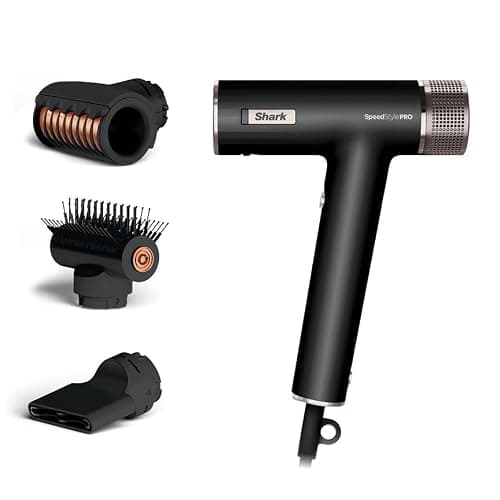
| 1 | Shark SpeedStyle Pro hair dryer A lift-and-stretch wide-tooth comb and a DefrizzFast diffuser among six named attachments, at 1,750 W. | Stretching dense coils before pressing | |
| 2 | 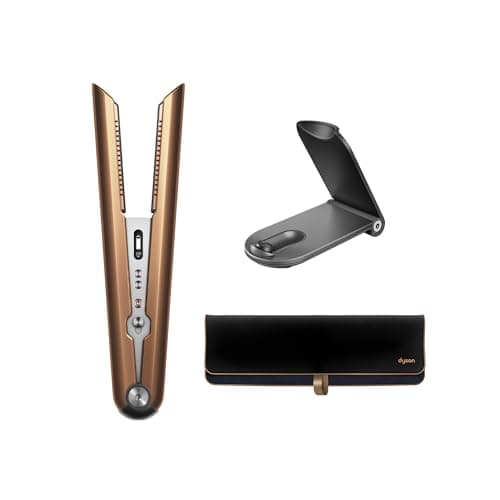 Dyson Corrale straightener Flexing plates that shape around the section, and cordless for a session that goes right round the head. | A silk press where sections keep escaping | |
| 3 | 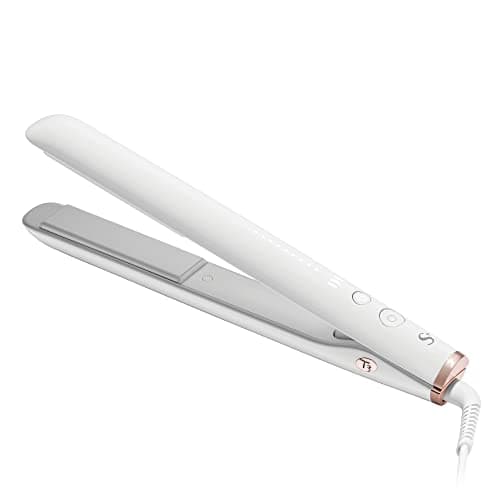 T3 SinglePass StyleMax 1 inch flat iron Nine heat settings and 11.1 oz — the lightest iron here, on the longest session on this site. | Treating the hairline differently from the crown | |
| 4 | 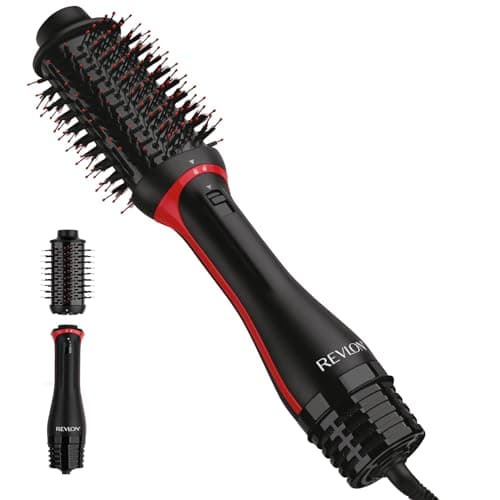 Revlon One-Step Volumizer Plus hair dryer and hot air brush Four heat settings and a four-year warranty on the cheapest stretching option here. | Stretching on a budget | |
| — | 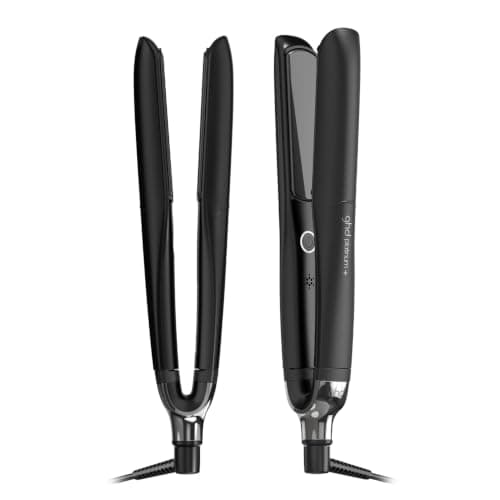 ghd Platinum+ flat iron (1 inch plate) 365°F fixed, with no way up when a resistant section will not release. We’d skip this | Not resistant coily textures |
1. The dryer
Shark SpeedStyle Pro hair dryer
Best for: Stretching dense coils before pressing
A lift-and-stretch wide-tooth comb and a DefrizzFast diffuser among six named attachments, at 1,750 W.
Shark names two textured-hair attachments explicitly: a DefrizzFast diffuser and a wide-tooth comb described for lift and stretch. A comb attachment that stretches hair as it dries is doing the job this hair type actually needs from a dryer.
1,750 W is the highest published rating of the premium dryers, which matters because total drying time on dense coils is its own form of stress. Full comparison at dryers for curly and textured hair.
What’s wrong with it
No published heat- or speed-setting count, and 120 V only. The 1,750 W rating also makes it the most expensive dryer here to run at about $21 a year.
Published specifications — Shark SpeedStyle Pro hair dryer
| Wattage | 1,750 W (peak 1,750 W) |
|---|---|
| Heat settings | Not published |
| Speed settings | Not published |
| Weight | 1.65 lb |
| Cord length | 96.1 in (8.0 ft) |
| Noise (dB) | Not published |
| Attachments | Turbo concentrator, QuickSmooth brush, DefrizzFast diffuser, wide-tooth comb, touch-up brush, FrizzFighter finishing tool |
| Plate / barrel | High-velocity airflow; no heated styling surface |
| Dual voltage | No — 120 V |
| Warranty | 2-year limited warranty |
Every figure above is taken from SharkNinja — Shark SpeedStyle Pro (HD731) product page. “Not published” means the figure does not appear on that page — it is not an estimate withheld, it is a number the manufacturer does not state. How we compile these.
What it costs to run for a year
$20.86 a year
1,750 W (peak 1,750 W) × 65 hours a year = 113.8 kWh, at 18.34 cents per kilowatt-hour. The hours assume 15 minutes a session, 5 days a week — that is an assumption, not a measurement, so swap in your own if it is wrong.
2. The flat iron
Dyson Corrale straightener
Best for: A silk press where sections keep escaping
Flexing plates that shape around the section, and cordless for a session that goes right round the head.
Coily hair does not lie flat between two rigid plates. Better contact per pass is the highest-value thing an iron can offer here, and flexing plates are the only published feature that addresses it directly.
Cordless matters more on a silk press than anywhere else on this site. The full picture, including the cheaper alternative, is at flat irons for 4C and coily hair.
What’s wrong with it
Battery-powered, and a full silk press may outlast a charge. Three heat settings is the fewest of any iron we list.
Published specifications — Dyson Corrale straightener
| Wattage | 200 W |
|---|---|
| Heat settings | 3 heat settings; Dyson's stated starting point is 365°F |
| Speed settings | Not applicable |
| Weight | 1.23 lb |
| Cord length | 10.9 ft charging cable |
| Noise (dB) | Not applicable |
| Attachments | Charging dock and travel pouch |
| Plate / barrel | Flexing manganese-copper alloy plates |
| Dual voltage | Battery — 10.8 V–16.8 V cell |
| Warranty | 2-year limited warranty |
Every figure above is taken from Dyson — Corrale straightener product page. “Not published” means the figure does not appear on that page — it is not an estimate withheld, it is a number the manufacturer does not state. How we compile these.
What it costs to run for a year
$2.38 a year
200 W × 65 hours a year = 13.0 kWh, at 18.34 cents per kilowatt-hour. The hours assume 15 minutes a session, 5 days a week — that is an assumption, not a measurement, so swap in your own if it is wrong.
3. The adjustable iron
T3 SinglePass StyleMax 1 inch flat iron
Best for: Treating the hairline differently from the crown
Nine heat settings and 11.1 oz — the lightest iron here, on the longest session on this site.
A 4C head is not one hair type. The edges and nape are usually finer and have taken the most stress; the crown is denser and more resistant. Nine settings lets you treat them differently rather than picking one compromise.
11.1 oz is the lightest published iron weight in our registry, and a press can run an hour. 100–240 V auto world voltage as well.
What’s wrong with it
1 inch plates mean a lot of sections on dense hair, so the session runs longer. No published wattage or cord length.
Published specifications — T3 SinglePass StyleMax 1 inch flat iron
| Wattage | Not published |
|---|---|
| Heat settings | 9 heat settings |
| Speed settings | Not applicable |
| Weight | 11.1 oz (cord not included) |
| Cord length | 360-degree swivel cord — length not published |
| Noise (dB) | Not applicable |
| Attachments | None supplied |
| Plate / barrel | CeraGloss ceramic plates, 1 in |
| Dual voltage | Yes — auto world voltage, 100–240 V |
| Warranty | 2-year warranty |
Every figure above is taken from T3 Micro — SinglePass StyleMax 1 inch flat iron product page. “Not published” means the figure does not appear on that page — it is not an estimate withheld, it is a number the manufacturer does not state. How we compile these.
What it costs to run for a year
T3 does not publish a wattage for this tool, so there is nothing honest to compute. The formula is watts ÷ 1,000 × hours a year × your rate per kWh; if you find a rating plate on the handle, 65 hours a year and 18.34 cents per kilowatt-hour will get you the rest of the way.
4. The blow-dry brush
Revlon One-Step Volumizer Plus hair dryer and hot air brush
Best for: Stretching on a budget
Four heat settings and a four-year warranty on the cheapest stretching option here.
A hot air brush is a reasonable stretching tool on looser coily patterns and it costs a small fraction of everything else on this page. Four heat settings including cool is more granularity than the more expensive brush publishes.
The detachable head matters here specifically: coily hair sheds into bristles and carries more product, so a head you can clean is a head that keeps working. More at brushes for curly and textured hair.
What’s wrong with it
On tight 4C patterns the barrel is often too small to hold tension effectively, and Revlon publishes no wattage, weight or cord length.
Published specifications — Revlon One-Step Volumizer Plus hair dryer and hot air brush
| Wattage | Not published |
|---|---|
| Heat settings | 4 heat settings — low, medium, high, cool |
| Speed settings | Not published |
| Weight | Not published |
| Cord length | Not published |
| Noise (dB) | Not published |
| Attachments | Detachable brush head |
| Plate / barrel | Ceramic titanium barrel; tourmaline ionic |
| Dual voltage | Not published |
| Warranty | 4-year limited warranty |
Every figure above is taken from Revlon Hair Tools — One-Step Volumizer Plus product page. “Not published” means the figure does not appear on that page — it is not an estimate withheld, it is a number the manufacturer does not state. How we compile these.
What it costs to run for a year
Revlon does not publish a wattage for this tool, so there is nothing honest to compute. The formula is watts ÷ 1,000 × hours a year × your rate per kWh; if you find a rating plate on the handle, 65 hours a year and 18.34 cents per kilowatt-hour will get you the rest of the way.
The one we'd skip
ghd Platinum+ flat iron (1 inch plate)
Best for: Not resistant coily textures
365°F fixed, with no way up when a resistant section will not release.
This is a good iron and it is the wrong shape for this job.
A fixed 365°F with no adjustment means that when a dense section does not straighten on the first pass, your only remaining option is another pass. On coily hair, where sections are already most likely to need repeating, that is the worst constraint to design around.
ghd’s fixed-temperature approach is aimed at people who would otherwise turn the dial to maximum, and it is a good answer to that problem. We recommend it on fine hair without hesitation.
What’s wrong with it
No temperature adjustment, which on resistant coily sections forces repeat passes — the single worst thing for this hair type.
Published specifications — ghd Platinum+ flat iron (1 inch plate)
| Wattage | Not published |
|---|---|
| Heat settings | One fixed temperature — 365°F |
| Speed settings | Not applicable |
| Weight | Not published |
| Cord length | 9 ft power cable |
| Noise (dB) | Not applicable |
| Attachments | None supplied |
| Plate / barrel | Precision-milled floating high-gloss plates, 1 in |
| Dual voltage | Yes — universal voltage |
| Warranty | 3-year warranty |
Every figure above is taken from ghd — Platinum+ flat iron (1 inch plate) product page. “Not published” means the figure does not appear on that page — it is not an estimate withheld, it is a number the manufacturer does not state. How we compile these.
What it costs to run for a year
ghd does not publish a wattage for this tool, so there is nothing honest to compute. The formula is watts ÷ 1,000 × hours a year × your rate per kWh; if you find a rating plate on the handle, 65 hours a year and 18.34 cents per kilowatt-hour will get you the rest of the way.
Questions people actually ask
What tools do I need for a silk press?
A dryer with a comb or stretch attachment, and an iron that finishes a section in one pass. The blow-dry does most of the straightening at a far gentler temperature, so the iron should be finishing rather than starting from scratch.
What temperature should I press 4C hair at?
Higher than for fine hair, because resistant textures need more to finish in one pass, but there is no headroom above the published 401 degree Fahrenheit dry melting point of hair keratin. Stretching first is what reduces the temperature you need.
Why won't my 4C hair stay straight after pressing?
Most often because it was not fully dry, or because it was not stretched with tension during the blow-dry so the iron was straightening from scratch. Humidity reverts hair that was never fully dry to begin with.