Shop by Hair Type
The Best Hair Tools for Wavy Hair in 2026
Wavy hair is the only type where the drying method decides whether you end up curly or straight. Almost everything follows from that.
Updated September 2026 · Sawyer V.
Wavy hair does whatever you dry it into. Diffuse it and you get curls; rough-dry it and you get frizz; brush it out and you get straight. The tool decision follows from which of those you actually want, and the answer changes day to day more than for any other hair type.
We earn a commission if you buy through the links on this page, at no extra cost to you. It never changes which tool we pick or which one we tell you to skip. How this site is funded.
Wavy is the undecided type
Fine hair is fine whatever you do to it. Coily hair is coily. Wavy hair is the one texture that genuinely becomes something else depending on how it dries — closer to curly if you diffuse it and leave it alone, closer to straight if you brush it out, and frizzy if you rough-dry it and do neither.
That means the tool decision is really a decision about which result you want most often, and most wavy-haired people want different things on different days. It is the strongest case on this site for buying a tool that does two jobs rather than the best tool for one.
Why waves frizz more than curls
A tight curl clumps — strands hold onto each other and the pattern reinforces itself. A loose wave does not clump nearly as well, so individual strands separate from the group more easily, and separated strands are what frizz physically is.
The consequence is that wavy hair punishes handling while drying more than curly hair does. Cup and hold, do not rake, and do not touch it between wet and dry. The full technique is at how to blow dry curly hair without frizz, which applies directly.
The three routes, and what each needs
Pick your outcome, then your tool
| You want | Method | Tool that matters |
|---|---|---|
| Defined, curlier waves | Diffuse on low speed, do not touch it | A dryer with a diffuser and a genuine low speed |
| Smooth, stretched waves | Brush through with tension while drying | A hot air brush with separate speed control |
| Straight | Rough-dry, then one low-temperature iron pass | An iron with a fine-grained low end |
| Uniform curls | Dry first, then set with a barrel | A curling iron around 1.25 in |
The mistake wavy hair makes
Treating it as straight hair that misbehaves. Rough-drying with no attachment, then straightening the frizz that produces, then repeating it daily — which over months is a lot of heat applied to fix a problem the drying method created.
Either commit to the wave and diffuse it, or commit to straight and rough-dry properly before one clean iron pass. The expensive route is doing half of each every morning.
Every category, for waves
- Dryers with a diffuser and real speed control
- Hot air brushes for smoothing
- Curling irons for beach waves
- Air stylers that do both jobs
- If frizz is the main complaint
Price per use, at 5 uses a week over 5 years
| What you pay | Cost per use | Cost per year |
|---|---|---|
| $30 | $0.02 | $6.00 |
| $60 | $0.05 | $12.00 |
| $100 | $0.08 | $20.00 |
| $150 | $0.12 | $30.00 |
| $200 | $0.15 | $40.00 |
| $300 | $0.23 | $60.00 |
| $400 | $0.31 | $80.00 |
| $500 | $0.38 | $100.00 |
5 uses a week for 5 years is 1300 uses. Both figures are stated assumptions, not measurements — halve the life and every cost per use doubles. We publish the ladder rather than a worked example for one specific product because a price we typed into a sentence would be wrong within a week.
Quick picks
Tap any row to jump to the full write-up. Prices come from the live price layer; where none is available the button says so rather than showing a number we cannot stand behind.
| # | Product | Best for | Price |
|---|---|---|---|
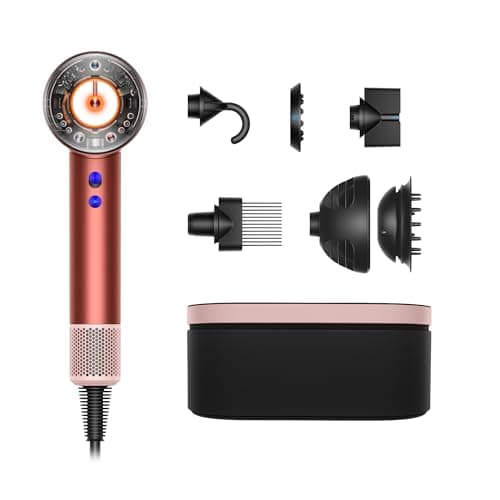
| 1 | Dyson Supersonic hair dryer Three speed settings and both a diffuser and a concentrator in the box — the two attachments that pull in opposite directions. | Deciding the outcome rather than accepting it | |
| 2 | 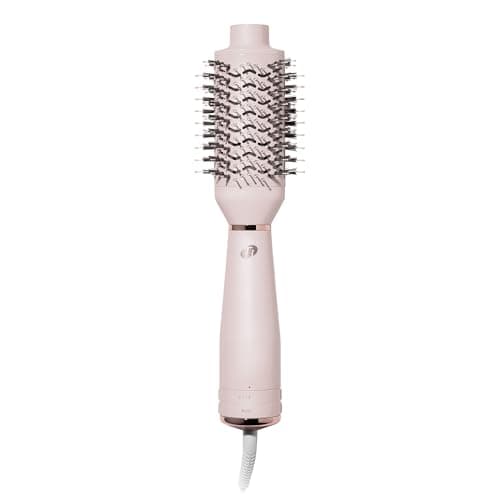 T3 AireBrush One-Step smoothing and volumizing dryer brush Three heat and two speed settings with ceramic bristles — enough control to stretch a wave rather than erase it. | Smoothing a wave without removing it | |
| 3 | 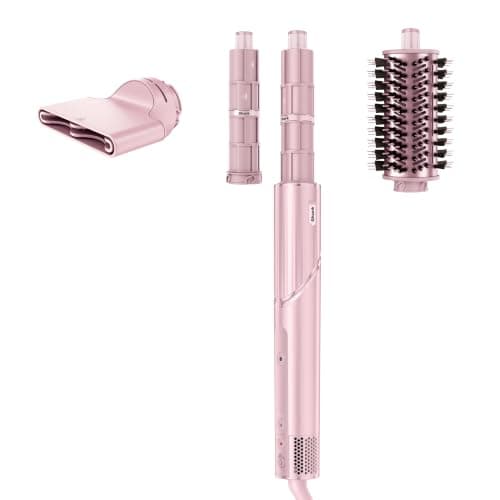 Shark FlexStyle air styling and drying system 1,600 W with a diffuser among the configurable attachments, and it converts to a dryer. | Waves on the days you want them defined | |
| 4 | 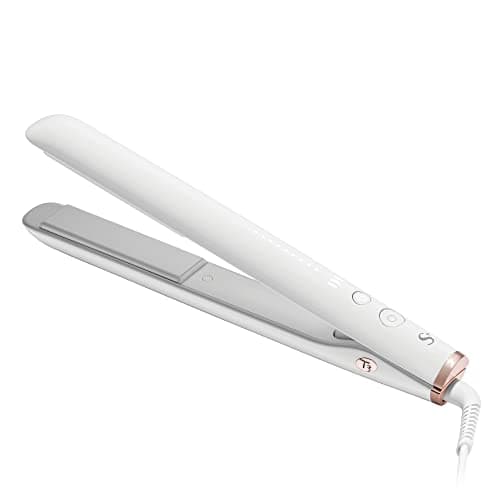 T3 SinglePass StyleMax 1 inch flat iron Nine heat settings, so a wave can be relaxed at a low temperature rather than pressed at a high one. | Straightening on the days you want it gone | |
| — | 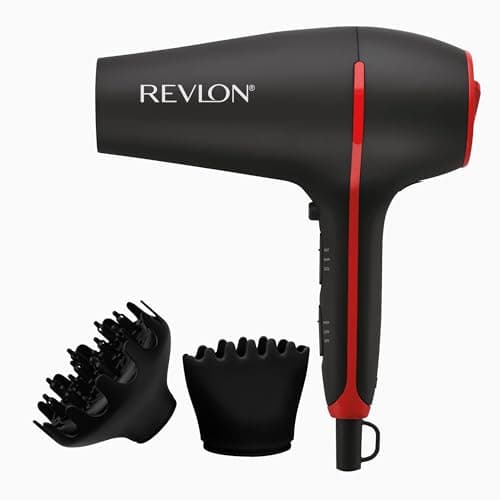 Revlon SmoothStay Coconut Oil-Infused hair dryer Two speed settings and no published attachment list — a wave needs low airflow and a diffuser, and neither can be confirmed. We’d skip this | Not wavy hair |
1. The dryer
Dyson Supersonic hair dryer
Best for: Deciding the outcome rather than accepting it
Three speed settings and both a diffuser and a concentrator in the box — the two attachments that pull in opposite directions.
Wavy hair needs both attachments and needs to switch between them, which is unusual. The diffuser preserves and enhances the wave; the concentrator smooths it out. Dyson publishes both, plus a wide-tooth comb.
Three speed settings is the row that matters for the diffused days: airflow disturbs a drying wave as much as heat does, and a low speed is what lets the pattern set as it is.
Full alternatives at the curly-hair dryers page, which shares most of the criteria.
What’s wrong with it
The heaviest dryer in our registry at a published 1.8 lb, 120 V only, and the most expensive conventional dryer here.
Published specifications — Dyson Supersonic hair dryer
| Wattage | 1,600 W |
|---|---|
| Heat settings | 4 heat settings, including a cold shot |
| Speed settings | 3 speed settings |
| Weight | 1.8 lb |
| Cord length | 8.6 ft |
| Noise (dB) | Not published |
| Attachments | 3 — styling concentrator, diffuser, wide-tooth comb |
| Plate / barrel | Air-multiplier body; no heated styling surface |
| Dual voltage | No — 120 V |
| Warranty | 2-year limited warranty |
Every figure above is taken from Dyson — Supersonic hair dryer product page. “Not published” means the figure does not appear on that page — it is not an estimate withheld, it is a number the manufacturer does not state. How we compile these.
What it costs to run for a year
$19.07 a year
1,600 W × 65 hours a year = 104.0 kWh, at 18.34 cents per kilowatt-hour. The hours assume 15 minutes a session, 5 days a week — that is an assumption, not a measurement, so swap in your own if it is wrong.
2. The blow-dry brush
T3 AireBrush One-Step smoothing and volumizing dryer brush
Best for: Smoothing a wave without removing it
Three heat and two speed settings with ceramic bristles — enough control to stretch a wave rather than erase it.
This is the tool wavy hair benefits from most, because the result it produces — a smoothed, stretched, glossier version of your own texture — is very close to what most wavy-haired people actually want on a normal day.
Separate heat and speed control matters here: you want moderate heat with enough airflow to dry, applied under enough tension to relax the wave without pulling it out entirely.
16 oz published, an 8 ft swivel cord, 125 V, two-year warranty.
What’s wrong with it
No published wattage, and a two-year warranty against the Revlon's four. Overused it will flatten the wave completely.
Published specifications — T3 AireBrush One-Step smoothing and volumizing dryer brush
| Wattage | Not published |
|---|---|
| Heat settings | 3 heat settings |
| Speed settings | 2 speed settings |
| Weight | 16 oz (cord not included) |
| Cord length | 8 ft, 360-degree swivel cord |
| Noise (dB) | Not published |
| Attachments | None supplied |
| Plate / barrel | CeraGloss ceramic surface, heat-resistant bristles |
| Dual voltage | No — 125 V |
| Warranty | 2-year warranty |
Every figure above is taken from T3 Micro — AireBrush One-Step product page. “Not published” means the figure does not appear on that page — it is not an estimate withheld, it is a number the manufacturer does not state. How we compile these.
What it costs to run for a year
T3 does not publish a wattage for this tool, so there is nothing honest to compute. The formula is watts ÷ 1,000 × hours a year × your rate per kWh; if you find a rating plate on the handle, 65 hours a year and 18.34 cents per kilowatt-hour will get you the rest of the way.
3. The air styler
Shark FlexStyle air styling and drying system
Best for: Waves on the days you want them defined
1,600 W with a diffuser among the configurable attachments, and it converts to a dryer.
An air styler suits wavy hair well because both of its modes are useful: the diffuser for definition, the brush attachments for smoothing. Few hair types genuinely use both halves of the tool.
The dryer conversion means you are not buying twice for the days you just want it dry, which on a hair type that changes its mind daily is worth more than usual.
1.5 lb, 8 ft cord, 120 V, two-year limited warranty.
What’s wrong with it
Shark publishes no heat- or speed-setting count, so the low airflow that protects a wave pattern cannot be verified before buying.
Published specifications — Shark FlexStyle air styling and drying system
| Wattage | 1,600 W (peak 1,600 W) |
|---|---|
| Heat settings | Not published |
| Speed settings | Not published |
| Weight | 1.5 lb |
| Cord length | 8 ft |
| Noise (dB) | Not published |
| Attachments | Configurable — auto-wrap curlers, oval brush, paddle brush, concentrator, diffuser |
| Plate / barrel | Coanda airflow barrels; no clamped heat plate |
| Dual voltage | No — 120 V |
| Warranty | 2-year limited warranty |
Every figure above is taken from SharkNinja — Shark FlexStyle (HD400SN) product page. “Not published” means the figure does not appear on that page — it is not an estimate withheld, it is a number the manufacturer does not state. How we compile these.
What it costs to run for a year
$19.07 a year
1,600 W (peak 1,600 W) × 65 hours a year = 104.0 kWh, at 18.34 cents per kilowatt-hour. The hours assume 15 minutes a session, 5 days a week — that is an assumption, not a measurement, so swap in your own if it is wrong.
4. The flat iron
T3 SinglePass StyleMax 1 inch flat iron
Best for: Straightening on the days you want it gone
Nine heat settings, so a wave can be relaxed at a low temperature rather than pressed at a high one.
Wavy hair is the easiest texture to straighten, which is exactly why people over-heat it. A wave relaxes at a far lower temperature than a curl needs, and nine settings lets you find the bottom of that range instead of defaulting to the middle.
11.1 oz published without the cord, CeraGloss ceramic plates, 100–240 V auto world voltage.
What’s wrong with it
Nine settings means nine chances to pick a hotter one than a wave needs. No published wattage or cord length.
Published specifications — T3 SinglePass StyleMax 1 inch flat iron
| Wattage | Not published |
|---|---|
| Heat settings | 9 heat settings |
| Speed settings | Not applicable |
| Weight | 11.1 oz (cord not included) |
| Cord length | 360-degree swivel cord — length not published |
| Noise (dB) | Not applicable |
| Attachments | None supplied |
| Plate / barrel | CeraGloss ceramic plates, 1 in |
| Dual voltage | Yes — auto world voltage, 100–240 V |
| Warranty | 2-year warranty |
Every figure above is taken from T3 Micro — SinglePass StyleMax 1 inch flat iron product page. “Not published” means the figure does not appear on that page — it is not an estimate withheld, it is a number the manufacturer does not state. How we compile these.
What it costs to run for a year
T3 does not publish a wattage for this tool, so there is nothing honest to compute. The formula is watts ÷ 1,000 × hours a year × your rate per kWh; if you find a rating plate on the handle, 65 hours a year and 18.34 cents per kilowatt-hour will get you the rest of the way.
The one we'd skip
Revlon SmoothStay Coconut Oil-Infused hair dryer
Best for: Not wavy hair
Two speed settings and no published attachment list — a wave needs low airflow and a diffuser, and neither can be confirmed.
Two speeds is the fewest of any dryer we list, and speed is the setting a wave pattern depends on. With only two, the low one is divided out of the highest wattage on the site.
Revlon publishes no attachment list for this dryer either, so whether a diffuser is included cannot be confirmed. On a hair type where the diffuser decides the entire outcome, that is not a risk worth taking to save money.
On robust hair that is being rough-dried and then straightened it is a perfectly sensible buy — the budget page covers that case.
What’s wrong with it
Fewest speed settings on the site and no confirmable diffuser, on the hair type that needs both most.
Published specifications — Revlon SmoothStay Coconut Oil-Infused hair dryer
| Wattage | 1,875 W |
|---|---|
| Heat settings | 3 heat settings |
| Speed settings | 2 speed settings |
| Weight | Not published |
| Cord length | Not published |
| Noise (dB) | Not published |
| Attachments | Not published |
| Plate / barrel | 1 in grill, triple-coated ceramic; tourmaline ionic |
| Dual voltage | Not published |
| Warranty | Not published |
Every figure above is taken from Revlon Hair Tools — SmoothStay Coconut Oil-Infused hair dryer. “Not published” means the figure does not appear on that page — it is not an estimate withheld, it is a number the manufacturer does not state. How we compile these.
What it costs to run for a year
$22.35 a year
1,875 W × 65 hours a year = 121.9 kWh, at 18.34 cents per kilowatt-hour. The hours assume 15 minutes a session, 5 days a week — that is an assumption, not a measurement, so swap in your own if it is wrong.
Questions people actually ask
What hair tools are best for wavy hair?
It depends which result you want, more than for any other hair type. A dryer with a diffuser and a genuine low speed for definition, a hot air brush with separate speed control for smoothing, and an iron with a fine-grained low end for straight.
Why is my wavy hair so frizzy?
Loose waves clump less than tight curls, so individual strands separate from the group more easily — and separated strands are what frizz is. Handling it while it dries is the main cause, more than heat.
Should I diffuse wavy hair?
If you want the wave, yes, on a low speed with no handling. If you want it smooth, use a brush with tension instead. The expensive mistake is rough-drying with neither and then straightening the frizz that creates.