Guides
How to Blow Dry Curly Hair Without Frizz
Every time you touch a drying curl you are deciding what it looks like when it is dry. Mostly, do not touch it.
Updated September 2026 · Sawyer V.
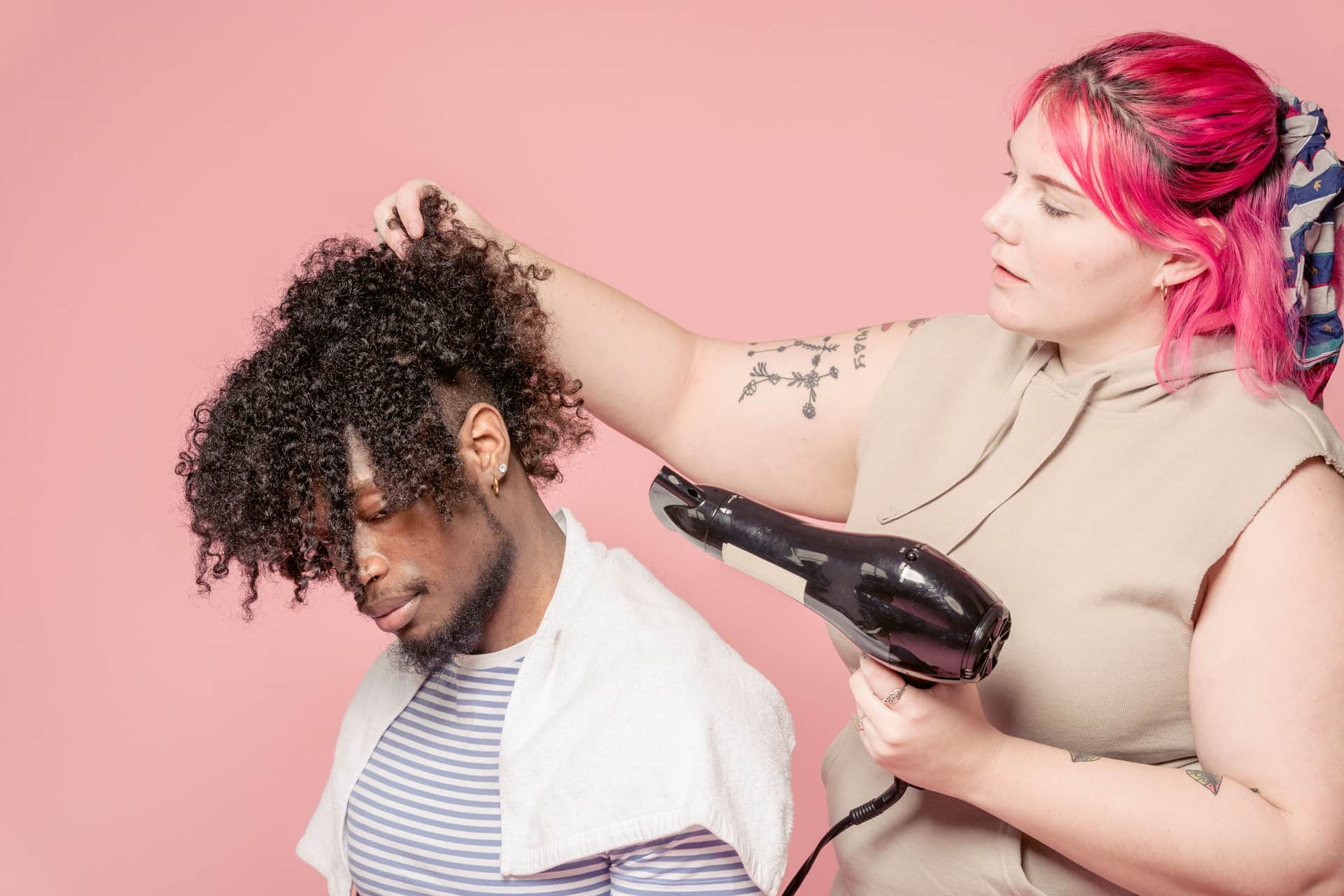
Frizz on curls is caused by air movement and handling as much as by heat. A curl disturbed while it dries sets disturbed. Use a diffuser on low speed, cup and hold rather than raking, and stop at about ninety percent dry rather than pushing to completely dry.
We earn a commission if you buy through the links on this page, at no extra cost to you. It never changes which tool we pick or which one we tell you to skip. How this site is funded.
Why frizz happens
A curl is a shape held by bonds that reform as hair dries. Whatever shape the curl is in at the moment it finishes drying is the shape it keeps. Disturb it while it dries — with a fast jet of air, with your fingers, with a towel — and it sets disturbed.
That reframes the whole problem. Frizz is not primarily a heat injury or a moisture deficiency. It is a mechanical outcome, and the fix is mechanical: stop moving the curl while it dries.
What a diffuser is actually doing
A diffuser takes a concentrated jet of air and spreads it over a wide area at much lower velocity. The heat still gets there; the disruption does not. That is the whole mechanism, and it is why a diffuser is not an accessory on curly hair — it is the functional part of the tool.
Which is also why speed settings matter more than heat settings here. A dryer you can turn down to a genuinely low airflow is doing more for your curls than one you can turn up. Dyson publishes three speed settings on the Supersonic; the drugstore option publishes two, which is the fewest we list. More at the best hair dryers for curly hair.
The technique
- Squeeze water out with a microfibre towel or cotton shirt. Never rub with terry towelling — that is abrasion on a lifted cuticle, and it is frizz being created before you have switched anything on.
- Apply product to soaking wet hair, not damp. Scrunch it in and then leave it.
- Cup a section into the diffuser bowl and lift it to the scalp. Do not push the diffuser into your hair; bring the hair to the diffuser.
- Hold still. Twenty to thirty seconds, no movement, then lower and move to the next section. This is the part people find hardest and it is the part that works.
- Low speed throughout. Medium heat is fine; high airflow is not.
- Stop at about ninety percent. The last ten percent takes the longest and delivers the least, and it is where most of the heat exposure lives.
- Do not touch it until it is completely dry and cool. Then scrunch out the cast if you used a gel.
The mistakes that cause most frizz
- Raking fingers through drying hair. Every pass separates a curl clump into individual strands, which is what frizz physically is.
- Diffusing on high speed. Faster air is more disruption, and the time you save is not worth the result.
- Moving the diffuser constantly. It feels productive and it drags the curl out of shape.
- Brushing dry curls. This separates every clump on your head at once. Detangle wet, with conditioner in.
- Rubbing with a bath towel. The single most common unforced error in curly hair care.
Should you air dry instead?
It avoids heat entirely, which is genuinely worth something, and it keeps hair swollen with water for far longer — and wet hair is mechanically weaker and more vulnerable to handling. Curly hair also takes the longest of any type to air dry, so it spends the longest in that state.
The compromise most curly-haired people land on is diffusing on low to about eighty percent and letting the rest happen on its own. The full argument is at does air drying damage hair.
If your curls have stopped forming properly
Sections that hang straighter than the hair around them are heat damage, not a technique problem, and they do not come back — see what repair actually means. If that is what you are looking at, the useful change is fewer heat sessions rather than a better diffusing method.
The tools on this page
Prices come from the live price layer. Where none is available the button says so rather than showing a number we cannot stand behind.
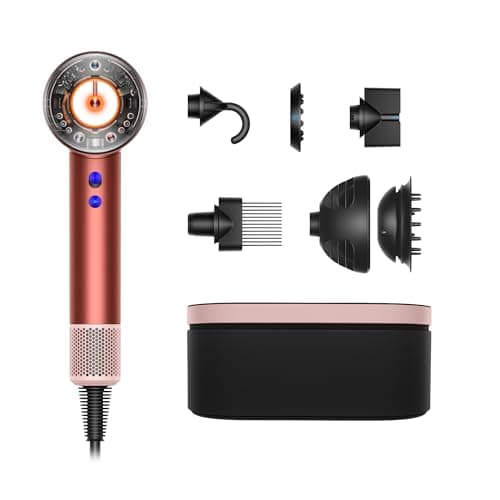
Dyson Supersonic hair dryer
1,600 W is less power than a drugstore dryer draws, and Dyson publishes that openly — the pitch is airflow and heat control, not wattage.
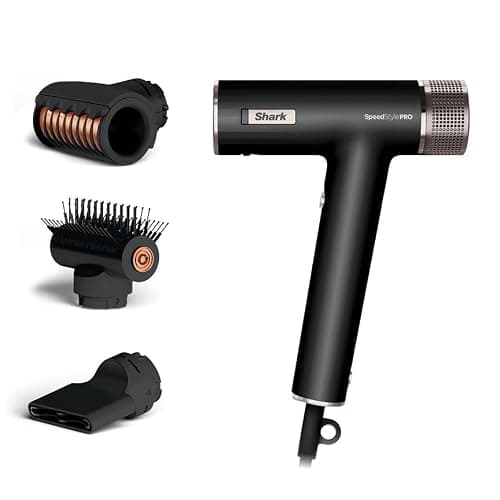
Shark SpeedStyle Pro hair dryer
The highest published wattage of the premium dryers here and the most attachments in the box, at a fraction of Dyson's asking price.
Questions people actually ask
How do I blow dry curly hair without frizz?
Use a diffuser on low speed, cup each section and hold it still for twenty to thirty seconds rather than moving constantly, and stop at about ninety percent dry. Frizz is caused by disturbing a curl while it dries, not just by heat.
Should I diffuse on high or low?
Low speed. Airflow disrupts a drying curl as much as heat damages it, so the speed setting matters more here than the heat setting. This is the one styling task where a lower-powered dryer is not a disadvantage.
Can I blow dry curly hair without a diffuser?
You can, and the concentrated jet will disrupt the curl pattern while it sets, which produces frizz. If you have no diffuser, dry on the lowest speed from a distance and accept a less defined result.
Why does my hair frizz even when I use a diffuser?
Most often from handling — raking fingers through drying hair, moving the diffuser constantly, or rubbing with a terry towel beforehand. All three separate curl clumps into individual strands, which is what frizz physically is.