Head to head
Dyson Airwrap vs Shark FlexStyle: The Published Numbers
The dupe question settled on published specs — with the two rows nobody publishes.
Updated September 2026 · Sawyer V.
Published specs · Real running costs · One pick we’d skip
Section
This is where the six-times question gets asked out loud. The published wattage figures are more interesting than either brand's advertising.
Updated September 2026 · Sawyer V.
A multi-styler dries and shapes in one pass using airflow rather than a clamped hot plate. The Dyson Airwrap defined the category; the Shark FlexStyle is the alternative most people mean by “dupe.” Dyson publishes 1,300 W, Shark publishes 1,600 W, and the FlexStyle also converts into a conventional dryer.
We earn a commission if you buy through the links on this page, at no extra cost to you. It never changes which tool we pick or which one we tell you to skip. How this site is funded.
Head to head
The dupe question settled on published specs — with the two rows nobody publishes.
Updated September 2026 · Sawyer V.
Single review
Dyson's own numbers, the running cost, and an honest read on who should skip it.
Updated September 2026 · Sawyer V.
Single review
Shark's own numbers, the conversion feature, and the specification they leave out.
Updated September 2026 · Sawyer V.
Best Airwrap Alternative
The real alternatives to an Airwrap, ranked on what the makers publish.
Updated September 2026 · Sawyer V.
Best for Fine Hair
Why fine hair is the best case for an air styler, and which one to pick.
Updated September 2026 · Sawyer V.
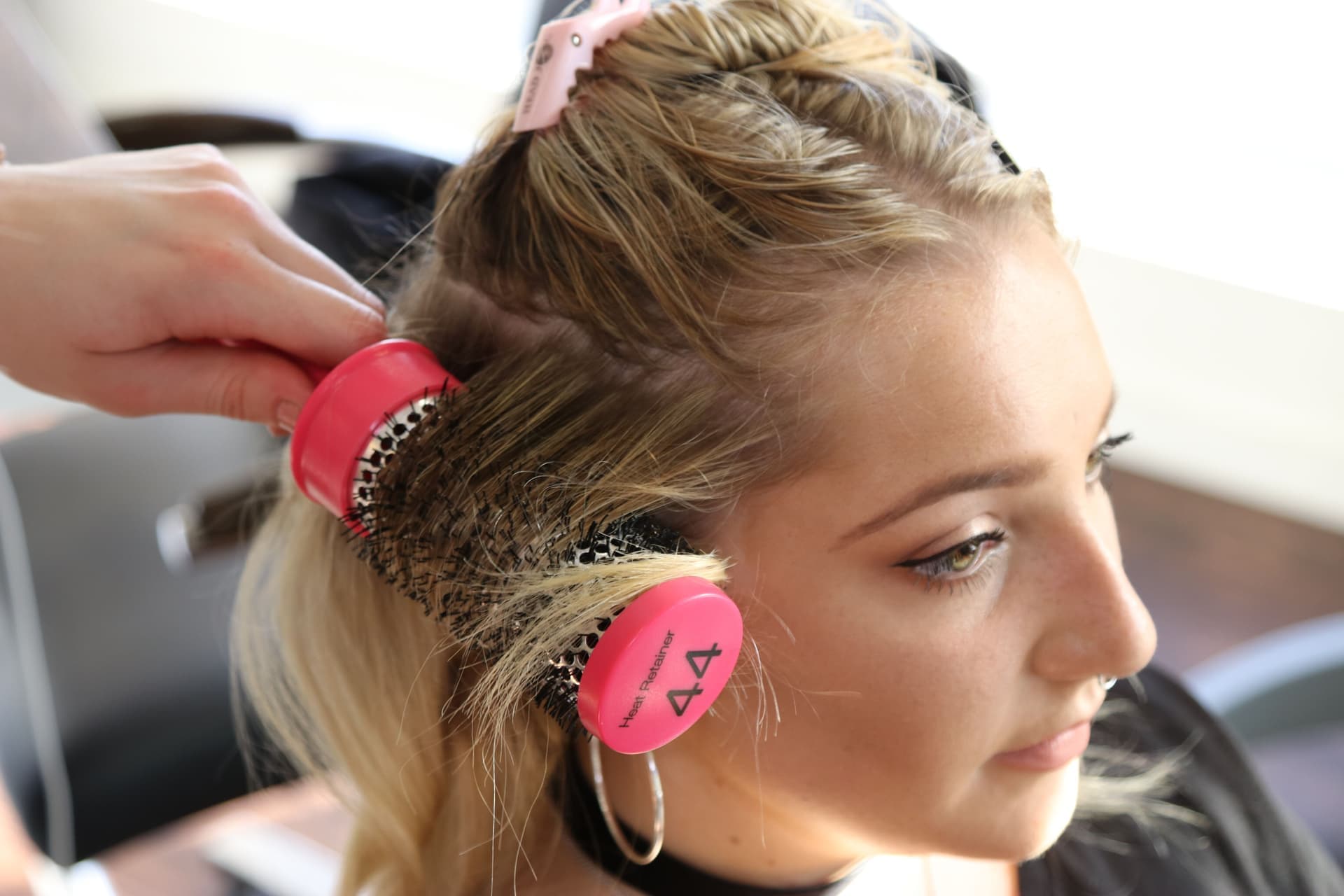
Guide
Every attachment type explained, and which set is actually worth buying.
Updated September 2026 · Sawyer V.
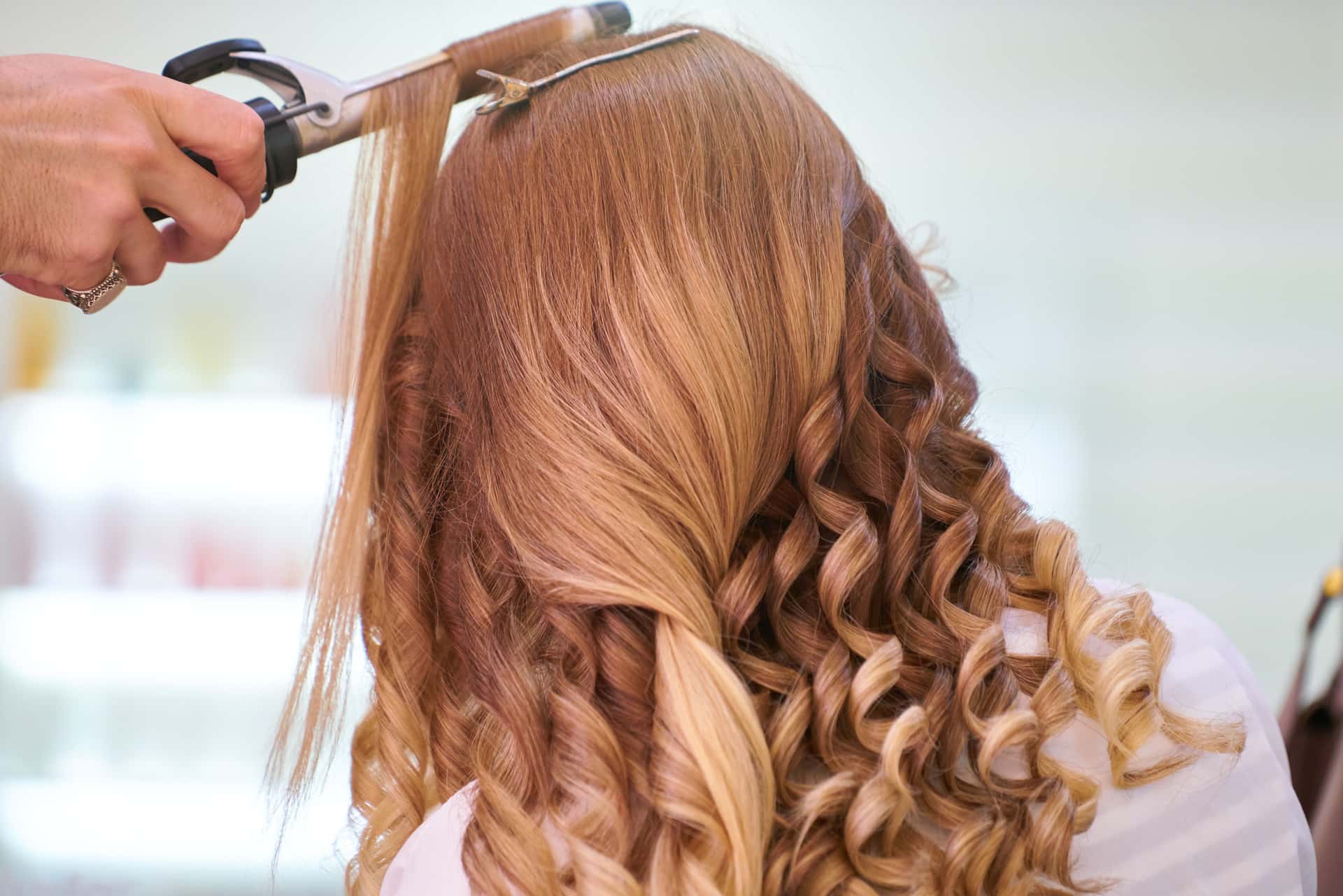
Guide
Two mechanisms, two heat profiles, and a straight answer on which to buy.
Updated September 2026 · Sawyer V.
Best for Curls
Diffuser-and-barrel picks for curls, and the configuration people get wrong.
Updated September 2026 · Sawyer V.
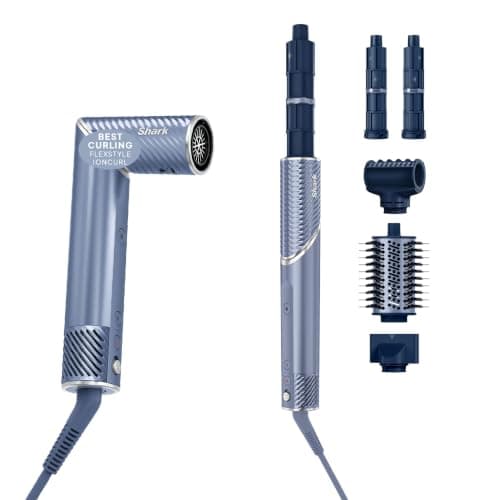
Best for Thick Hair
Power-first air stylers for dense hair, and the flagship that is wrong for it.
Updated September 2026 · Sawyer V.
Best for Short Hair
Which air styler configurations suit short hair, and the bundle to avoid.
Updated September 2026 · Sawyer V.
Shark Head-to-Head
The published spec table, and why the missing attachment list decides it.
Updated September 2026 · Sawyer V.
Single review
The highest styler wattage here, and the blank row that decides against it.
Updated September 2026 · Sawyer V.
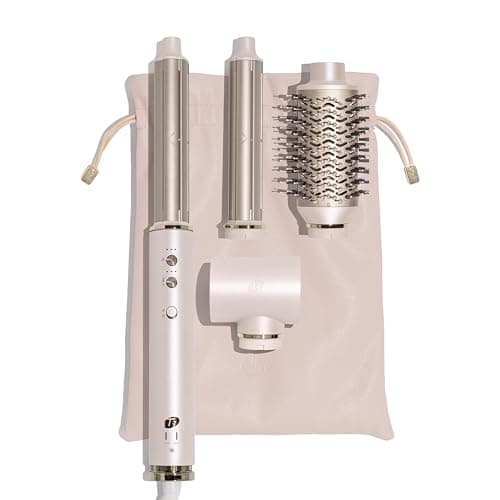
Single review
Dual voltage, nine combinations, and T3's one published wattage figure.
Updated September 2026 · Sawyer V.
Best for Coily Hair
Which air stylers suit coily hair, and the one whose bundle cannot be checked.
Updated September 2026 · Sawyer V.
Guide
The method, in order, and the three mistakes that make these tools feel useless.
Updated September 2026 · Sawyer V.
Best for Travel
The one air styler that travels, and what to pack when it is not enough.
Updated September 2026 · Sawyer V.
For Long Hair, Styled
Barrel length, published power and cord reach, for hair past the shoulder.
Updated September 2026 · Sawyer V.
For Damaged Hair, Styled
Airflow instead of contact heat, and which tools publish a low enough temperature.
Updated September 2026 · Sawyer V.
Coolest Air Styler Reviewed
Six stated temperatures, three attachments, and the rows Calista leaves blank.
Updated September 2026 · Sawyer V.
Best Air Styler for Colored Hair
Ranked on stated temperatures, not settings counts - and the styler whose heat rows are blank.
Updated October 2026 · Sawyer V.
Air Styler Head-to-Head
The widest attachment set against the only dual-voltage air styler here.
Updated September 2026 · Sawyer V.
Dupe-Class Head-to-Head
1,600 W and a dryer conversion against six stated temperatures and a 195°F ceiling.
Updated September 2026 · Sawyer V.
Best First Air Styler
What a first air styler needs, and which attachments you will actually use.
Updated September 2026 · Sawyer V.
Head to head
1,600 W that curls and dries against 1,750 W that only dries - and the attachment lists that decide it.
Updated October 2026 · Sawyer V.
Airwrap vs the Cheap One
1,300 W and four attachment types against 1,200 W, three attachments and six published temperatures capped at 195 degrees F.
Updated October 2026 · Sawyer V.
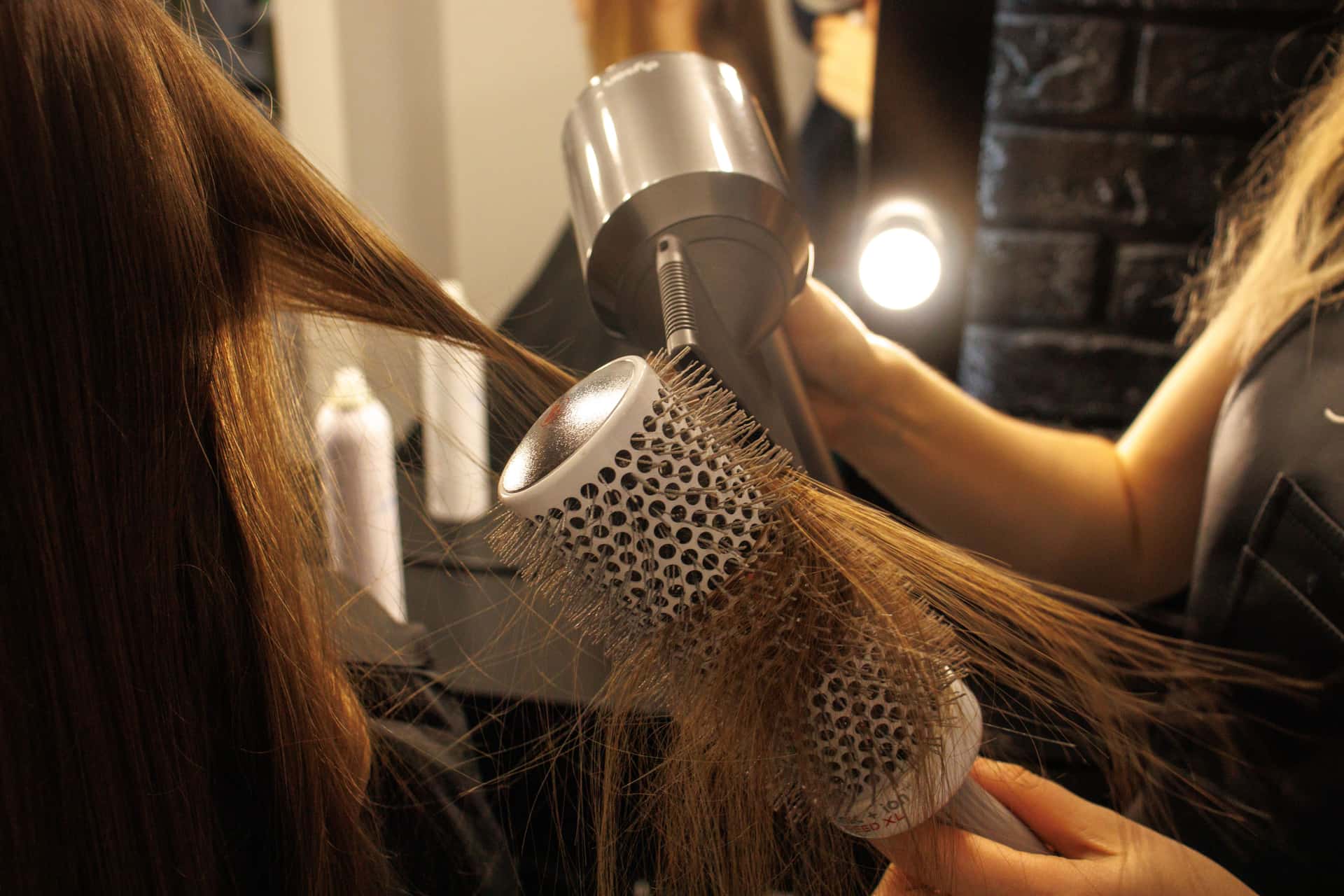
Conventional styling puts heat on hair and holds it in shape by clamping. A multi-styler uses fast-moving air to pull hair around a barrel and dry it into that shape, which is why these tools claim to work on damp hair and why they run at lower temperatures than an iron. Dyson calls the underlying effect the Coanda effect; Shark builds the same category of tool with its own arrangement of barrels and brushes.
The practical consequence is that a multi-styler is a drying tool first and a styling tool second. If your hair is already dry, most of what you paid for is doing nothing.
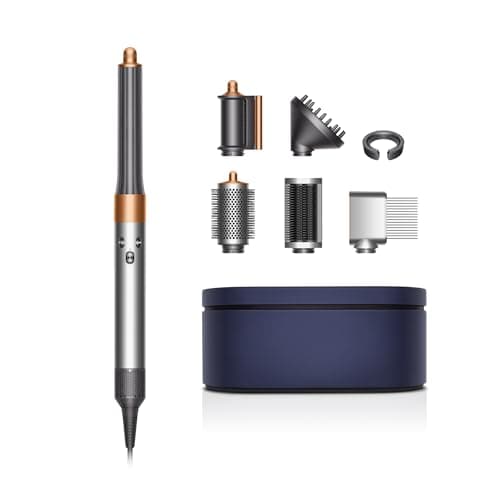
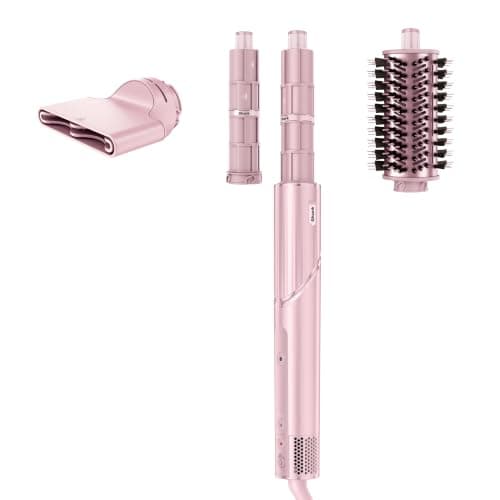
Set the marketing aside and read the two spec sheets. Dyson publishes 1,300 W for the Airwrap Complete Long, 3 heat settings, 3 speed settings, 1.4 lb, an 8.5 ft cable and a 2-year warranty. Shark publishes 1,600 W for the FlexStyle, 1.5 lb, an 8 ft cord and a 2-year warranty — and the FlexStyle’s barrel section detaches so the handle works as a standalone dryer.
So the cheaper tool publishes more power, the same warranty, a near-identical weight, and one function the more expensive tool does not have. That is not the whole story — spec sheets never are, and neither maker publishes airflow in comparable units — but it is a genuinely different picture from the one either brand’s advertising paints. The full comparison, including where the Airwrap does have the better argument, is in Dyson Airwrap vs Shark FlexStyle.
1,300 W is the lowest mains figure anywhere in our product registry, lower than every dryer we list and lower than the drugstore SmoothStay’s 1,875 W by a wide margin. Dyson frames that as heat control, and on fine hair that framing is persuasive. On thick or dense hair it means the tool has less to work with, and the reports we keep seeing in the query data — people searching whether the Airwrap is worth it specifically for thick hair — are consistent with that reading of the number.
If your hair is dense, the honest sequence is to fix drying time first with a proper dryer and treat the styler as a finishing tool. Start at the best hair dryers for thick hair.
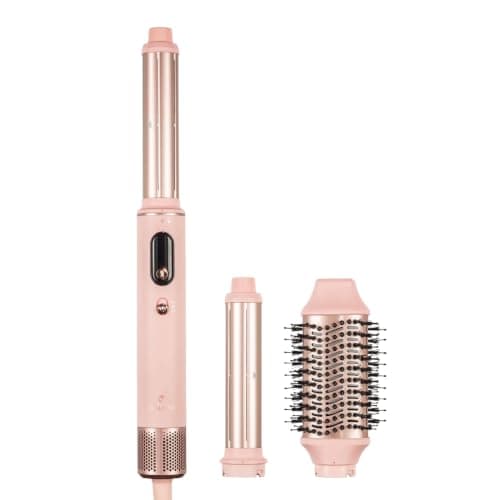
Both makers ship a bundle rather than a tool, and the bundle is where the price differences live. Dyson publishes curling barrels, smoothing brushes, a round volumizing brush and a drying nozzle for the Complete Long. Shark ships a configurable set of auto-wrap curlers, an oval brush, a paddle brush, a concentrator and a diffuser. Buying the wrong configuration is the most common way to be disappointed by one of these, which is why we wrote what each Airwrap attachment is for as a standalone page.
We have not curled anyone’s hair with either of these. There is no drawer of loaner units here and no test bench. What there is: both manufacturers’ published specifications in one table, in the same order, linked to the pages they came from; the running cost computed from those figures at a cited electricity rate; and a willingness to name the tool in each roundup we would not spend money on. Prices come from the live price layer or the button says “check price” — we do not type a number into a sentence that will be wrong next week.
It depends almost entirely on your hair and how often you would use it. Dyson publishes 1,300 W, the lowest mains figure in our registry, which supports the heat-control argument on fine hair and works against the tool on dense hair. We lay out the arithmetic instead of giving a flat answer.
On published specifications it is closer than the price gap suggests: more stated wattage than the Airwrap, the same two-year warranty, a comparable published weight, and it converts to a standalone dryer. Neither maker publishes airflow in comparable units, so the spec sheets cannot settle everything.
They are designed around damp hair — the shape is set as the hair dries. Used on fully dry hair you lose most of the mechanism, which is a common reason people conclude the tool does not work for them.
For soft shapes, generally yes, and without clamping a hot plate on the hair. For tight, long-holding curls a dedicated iron still has the advantage.