Hair Dryers
The Best Hair Dryers for Wavy Hair in 2026
Waves are the only texture that becomes something else depending on how you dry them. That makes the attachment set, not the wattage, the whole decision.
Updated September 2026 · Sawyer V.
Wavy hair needs a dryer that publishes both a diffuser and a concentrator, because those two attachments produce opposite outcomes and waves are the texture that genuinely uses both. Only two dryers in our registry publish both.
We earn a commission if you buy through the links on this page, at no extra cost to you. It never changes which tool we pick or which one we tell you to skip. How this site is funded.
Quick picks
Tap any row to jump to the full write-up. Prices come from the live price layer; where none is available the button says so rather than showing a number we cannot stand behind.
| # | Product | Best for | Price |
|---|---|---|---|
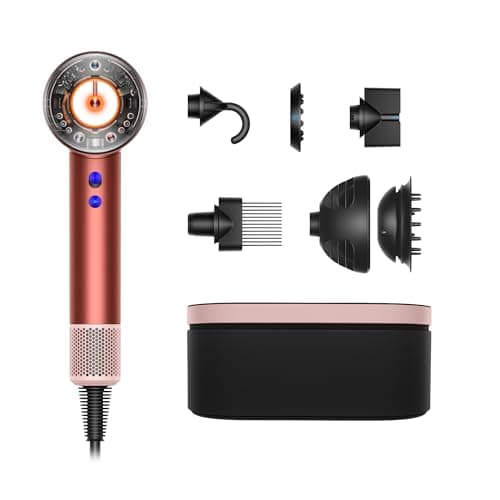
| 1 | Dyson Supersonic hair dryer A styling concentrator and a diffuser both published in the box, with three speed settings and four heat settings including a cold shot. | Deciding day to day whether you want the wave or not | |
| 2 | 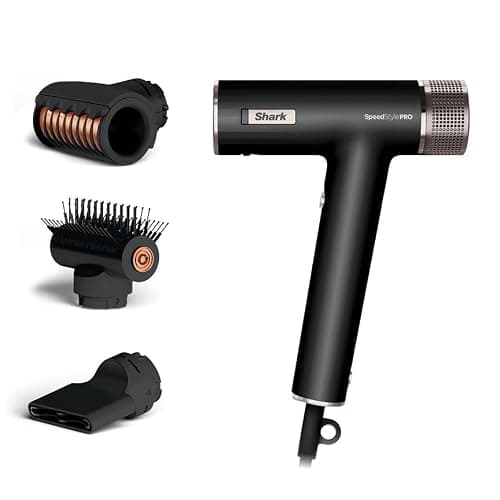 Shark SpeedStyle Pro hair dryer Six published attachments including both a Turbo concentrator and a DefrizzFast diffuser, at 1,750 W. | Waves that need smoothing on top and definition underneath | |
| 3 | 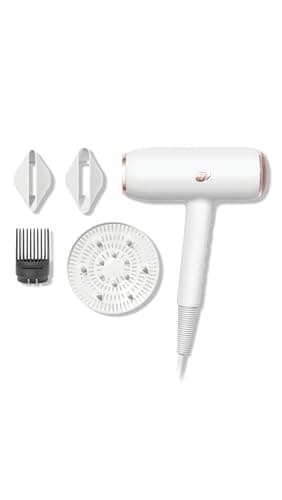 T3 Featherweight StyleMax professional hair dryer Five heat and three speed settings — fifteen combinations — at the lightest published corded weight in our registry. | Fine waves that go flat on too much heat and frizz on too much air | |
| — | 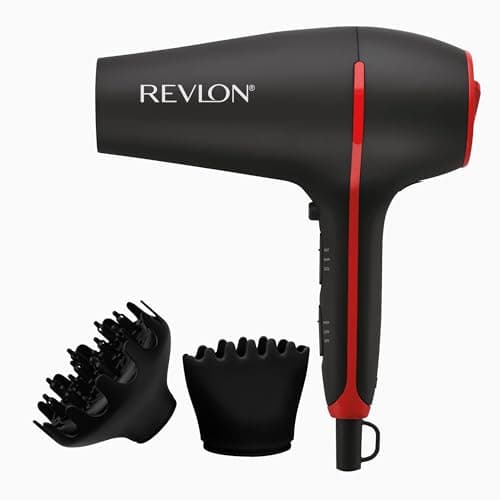 Revlon SmoothStay Coconut Oil-Infused hair dryer Two speed settings — the fewest here — and no published attachment list, on the texture that depends on both. We’d skip this | Not an undecided texture |
1. Best published control for either outcome
Dyson Supersonic hair dryer
Best for: Deciding day to day whether you want the wave or not
A styling concentrator and a diffuser both published in the box, with three speed settings and four heat settings including a cold shot.
Wavy hair is the texture that switches between the two attachments more than any other, and this is one of only two dryers here that publishes both. The concentrator smooths the wave out; the diffuser preserves and enhances it.
Three published speed settings is the row that matters on the diffused days. Airflow disturbs a drying wave more than heat does, and a genuine low speed is what lets the pattern set as it is.
The cold shot matters on the smoothed days for the opposite reason: hair sets as it cools, so a wave that has been stretched straight holds only if the last seconds are cool.
What’s wrong with it
The heaviest dryer in our registry at a published 1.8 lb, 120 V only, and the most expensive conventional dryer here.
Published specifications — Dyson Supersonic hair dryer
| Wattage | 1,600 W |
|---|---|
| Heat settings | 4 heat settings, including a cold shot |
| Speed settings | 3 speed settings |
| Weight | 1.8 lb |
| Cord length | 8.6 ft |
| Noise (dB) | Not published |
| Attachments | 3 — styling concentrator, diffuser, wide-tooth comb |
| Plate / barrel | Air-multiplier body; no heated styling surface |
| Dual voltage | No — 120 V |
| Warranty | 2-year limited warranty |
Every figure above is taken from Dyson — Supersonic hair dryer product page. “Not published” means the figure does not appear on that page — it is not an estimate withheld, it is a number the manufacturer does not state. How we compile these.
What it costs to run for a year
$19.07 a year
1,600 W × 65 hours a year = 104.0 kWh, at 18.34 cents per kilowatt-hour. The hours assume 15 minutes a session, 5 days a week — that is an assumption, not a measurement, so swap in your own if it is wrong.
2. Most attachments for a texture that uses them
Shark SpeedStyle Pro hair dryer
Best for: Waves that need smoothing on top and definition underneath
Six published attachments including both a Turbo concentrator and a DefrizzFast diffuser, at 1,750 W.
The broadest published attachment list here, and wavy hair is the texture most likely to genuinely use several of them. Beyond the two that matter most, Shark publishes a QuickSmooth brush, a wide-tooth comb, a touch-up brush and a FrizzFighter finishing tool.
Wavy heads are rarely uniform — the underneath often waves more tightly than the top, and the front is looser from being handled. Having a smoothing brush and a diffuser in the same box lets you treat those areas differently.
1,750 W is the second highest published wattage here, 1.65 lb and lighter than the Dyson, an 8 ft cord, two-year warranty.
What’s wrong with it
No published heat- or speed-setting count, which on the texture most dependent on low airflow is the specification you least want missing.
Published specifications — Shark SpeedStyle Pro hair dryer
| Wattage | 1,750 W (peak 1,750 W) |
|---|---|
| Heat settings | Not published |
| Speed settings | Not published |
| Weight | 1.65 lb |
| Cord length | 96.1 in (8.0 ft) |
| Noise (dB) | Not published |
| Attachments | Turbo concentrator, QuickSmooth brush, DefrizzFast diffuser, wide-tooth comb, touch-up brush, FrizzFighter finishing tool |
| Plate / barrel | High-velocity airflow; no heated styling surface |
| Dual voltage | No — 120 V |
| Warranty | 2-year limited warranty |
Every figure above is taken from SharkNinja — Shark SpeedStyle Pro (HD731) product page. “Not published” means the figure does not appear on that page — it is not an estimate withheld, it is a number the manufacturer does not state. How we compile these.
What it costs to run for a year
$20.86 a year
1,750 W (peak 1,750 W) × 65 hours a year = 113.8 kWh, at 18.34 cents per kilowatt-hour. The hours assume 15 minutes a session, 5 days a week — that is an assumption, not a measurement, so swap in your own if it is wrong.
3. Most heat steps for an undecided texture
T3 Featherweight StyleMax professional hair dryer
Best for: Fine waves that go flat on too much heat and frizz on too much air
Five heat and three speed settings — fifteen combinations — at the lightest published corded weight in our registry.
Waves are fussy in a specific way: too much airflow and they frizz, too little and they dry into whatever shape they feel like. Fifteen combinations give you somewhere to find the narrow band that works, and no other dryer here publishes more.
Separating heat from speed is what makes that useful. On a diffused day you want low speed with moderate warmth; on a smoothed day you want the opposite. A single combined dial cannot give you either.
16.6 oz without the cord and a 9 ft professional cord — joint longest here.
What’s wrong with it
T3 publishes no attachment list, so neither the diffuser nor the concentrator this page is about can be confirmed before buying — and no wattage either.
Published specifications — T3 Featherweight StyleMax professional hair dryer
| Wattage | Not published |
|---|---|
| Heat settings | 5 heat settings |
| Speed settings | 3 speed settings |
| Weight | 16.6 oz (cord not included) |
| Cord length | 9 ft professional cord |
| Noise (dB) | Not published |
| Attachments | Not published |
| Plate / barrel | Ceramic |
| Dual voltage | No — 125 V |
| Warranty | 2-year warranty |
Every figure above is taken from T3 Micro — Featherweight StyleMax product page. “Not published” means the figure does not appear on that page — it is not an estimate withheld, it is a number the manufacturer does not state. How we compile these.
What it costs to run for a year
T3 does not publish a wattage for this tool, so there is nothing honest to compute. The formula is watts ÷ 1,000 × hours a year × your rate per kWh; if you find a rating plate on the handle, 65 hours a year and 18.34 cents per kilowatt-hour will get you the rest of the way.
The one we'd skip
Revlon SmoothStay Coconut Oil-Infused hair dryer
Best for: Not an undecided texture
Two speed settings — the fewest here — and no published attachment list, on the texture that depends on both.
Two speeds is the fewest of any dryer we list, and speed is the setting a wave pattern depends on. With only two, the low one is a division of the highest published wattage in this registry, which is not the same thing as a gentle setting.
Revlon also publishes no attachment list, so whether a diffuser is included cannot be confirmed. On a texture where the diffuser decides the entire outcome, that is not a risk worth taking to save money.
On robust hair being rough-dried and then straightened it is a perfectly sensible buy — the budget page covers that case, and it wins on published wattage there.
What’s wrong with it
Fewest speed settings on the site and no confirmable diffuser, on the hair type that needs both most.
Published specifications — Revlon SmoothStay Coconut Oil-Infused hair dryer
| Wattage | 1,875 W |
|---|---|
| Heat settings | 3 heat settings |
| Speed settings | 2 speed settings |
| Weight | Not published |
| Cord length | Not published |
| Noise (dB) | Not published |
| Attachments | Not published |
| Plate / barrel | 1 in grill, triple-coated ceramic; tourmaline ionic |
| Dual voltage | Not published |
| Warranty | Not published |
Every figure above is taken from Revlon Hair Tools — SmoothStay Coconut Oil-Infused hair dryer. “Not published” means the figure does not appear on that page — it is not an estimate withheld, it is a number the manufacturer does not state. How we compile these.
What it costs to run for a year
$22.35 a year
1,875 W × 65 hours a year = 121.9 kWh, at 18.34 cents per kilowatt-hour. The hours assume 15 minutes a session, 5 days a week — that is an assumption, not a measurement, so swap in your own if it is wrong.
Wavy is the undecided texture
Fine hair is fine whatever you do to it. Coily hair is coily. Wavy hair is the one texture that genuinely becomes something else depending on how it dries — diffuse it and you get curls, rough-dry it and you get frizz, brush it out under tension and you get straight.
That single fact reorganizes the whole buying decision. On every other texture you are buying a dryer to do one job well. Here you are buying the ability to choose, which means the attachment set and the speed control matter more than the power figure.
The criteria, in order
What decides a dryer on wavy hair
| Criterion | Why it matters here | Who publishes it |
|---|---|---|
| Both attachments in the box | The two outcomes waves can take need opposite attachments | Dyson Supersonic and Shark SpeedStyle Pro only |
| Speed-setting count | Airflow disturbs a setting wave more than heat does | Dyson (3), T3 (3), Revlon (2). Shark and ghd publish none |
| A cool shot | A stretched wave only holds if the last seconds are cool | Dyson (cold shot), ghd Helios (cool shot) |
| Heat granularity | Waves sit between fine and thick; one setting rarely fits | T3 (5), Dyson (4), Revlon (3) |
| Wattage | Least important criterion on this page | Everyone except T3 |
The mistake that costs the most
Rough-drying with no attachment and then trying to rescue the result. Waves dried with unfocused, fast air separate into frizz, and once a clump has separated you cannot re-form it without re-wetting.
Whichever outcome you want, commit to it early. If it is a diffused day, fit the diffuser at around 80 percent dry and stop touching it. If it is a smoothed day, use the concentrator with tension from a brush, root to tip, and finish cool. The two methods are on the curly blow-dry guide and the straight blow-dry guide.
Humidity decides more than the dryer does
Waves revert faster than any other texture, and there is a measured reason. Hair takes up water from the air, and published work on moisture sorption identifies a glass transition at around 60 to 70 percent relative humidity, with the fiber’s mechanical behavior changing across it — Breakspear et al., International Journal of Cosmetic Science.
Above that, a smoothed wave is holding in a materially softer fiber than the one you styled. No dryer changes that, which is worth knowing before you buy one expecting it to — the humidity page covers what actually helps.
Price per use, at 5 uses a week over 5 years
| What you pay | Cost per use | Cost per year |
|---|---|---|
| $30 | $0.02 | $6.00 |
| $60 | $0.05 | $12.00 |
| $100 | $0.08 | $20.00 |
| $150 | $0.12 | $30.00 |
| $200 | $0.15 | $40.00 |
| $300 | $0.23 | $60.00 |
| $400 | $0.31 | $80.00 |
| $500 | $0.38 | $100.00 |
5 uses a week for 5 years is 1300 uses. Both figures are stated assumptions, not measurements — halve the life and every cost per use doubles. We publish the ladder rather than a worked example for one specific product because a price we typed into a sentence would be wrong within a week.
What we would buy
The Dyson Supersonic if you switch between the two outcomes and want published control over both. The Shark SpeedStyle Pro if you want the widest attachment set and more power for less money. The T3 Featherweight if your waves are fine and heat granularity is the thing you keep wishing you had.
The whole-toolkit view for this texture — including the brush that smooths a wave without erasing it — is on the wavy hair router.
Questions people actually ask
What is the best hair dryer for wavy hair?
One that publishes both a diffuser and a concentrator, because waves are the texture that genuinely uses both. Only the Dyson Supersonic and the Shark SpeedStyle Pro publish both in our registry.
Should I diffuse or rough-dry wavy hair?
Whichever outcome you want, but commit early. Rough-drying with no attachment separates the clumps into frizz, and once separated you cannot re-form them without re-wetting.
Why do my waves fall out by the afternoon?
Usually humidity. Above roughly 60 to 70 percent relative humidity hair passes a glass transition and its mechanical behavior measurably changes, so a smoothed wave is holding in a softer fiber than the one you styled.