Hair Dryers
The Best Hair Dryers for Frizzy Hair in 2026
Most frizz is caused by air hitting the cuticle from the wrong direction. The nozzle matters more than the technology on the box.
Updated September 2026 · Sawyer V.
Frizz is largely mechanical: air hitting the cuticle across the strand lifts it, and hair that dries in that state sets rough. The dryer specifications that help are a proper concentrator nozzle and a genuine cool shot. Ionic output is on nearly every dryer now, so it cannot separate one from another.
We earn a commission if you buy through the links on this page, at no extra cost to you. It never changes which tool we pick or which one we tell you to skip. How this site is funded.
Quick picks
Tap any row to jump to the full write-up. Prices come from the live price layer; where none is available the button says so rather than showing a number we cannot stand behind.
| # | Product | Best for | Price |
|---|---|---|---|
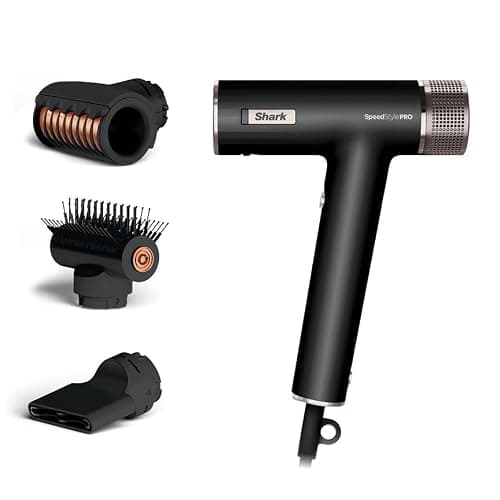
| 1 | Shark SpeedStyle Pro hair dryer A FrizzFighter finishing tool and a turbo concentrator among six named attachments. | Flyaways that survive everything else | |
| 2 | 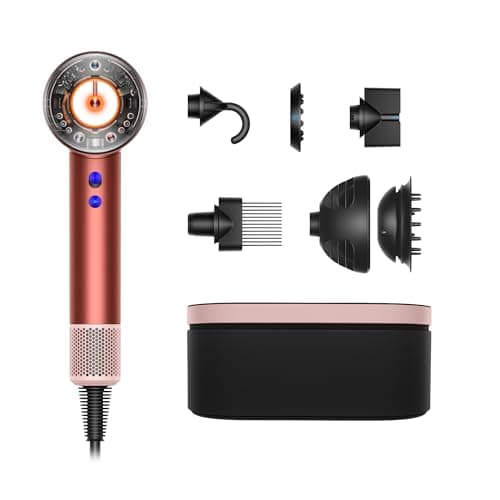 Dyson Supersonic hair dryer Four heat settings, a published cold shot, and a styling concentrator in the box. | Frizz on hair that is also heat-damaged | |
| 3 | 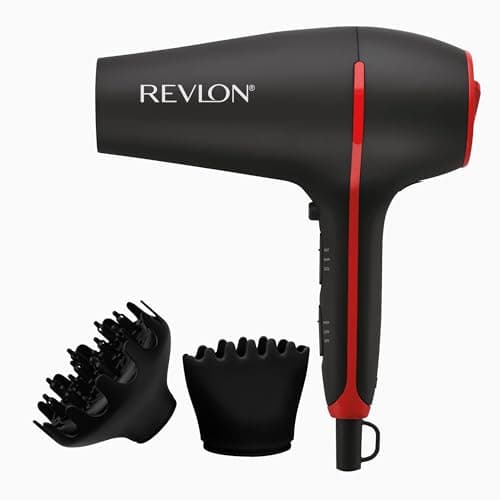 Revlon SmoothStay Coconut Oil-Infused hair dryer Ceramic tourmaline ionic technology and a coconut-oil-infused ceramic grill, at drugstore money. | Frizz on robust hair, on a budget | |
| — | 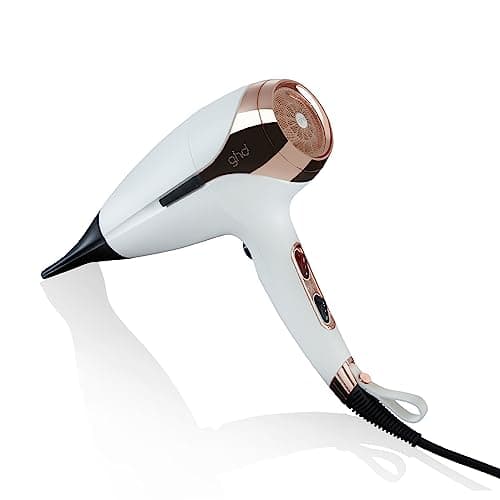 ghd Helios 1875W advanced professional hair dryer No published attachment list, so the concentrator that would fix frizz cannot be confirmed. We’d skip this | Not frizz, on published information |
1. Only dryer with a finishing tool
Shark SpeedStyle Pro hair dryer
Best for: Flyaways that survive everything else
A FrizzFighter finishing tool and a turbo concentrator among six named attachments.
Shark is the only maker in our registry that publishes a dedicated finishing attachment — the FrizzFighter — alongside a turbo concentrator and a QuickSmooth brush. For frizz specifically, a finishing tool is more useful than another heat setting, because the problem shows up at the end of the process rather than during it.
The concentrator is the more important of the two. It narrows the airflow so you can direct it down the strand rather than across it, which is the single biggest lever on frizz.
1,750 W, 1.65 lb, 96.1 in cord, 120 V, two-year limited warranty.
What’s wrong with it
No published heat- or speed-setting count, so the cool-shot behavior cannot be verified from the product page. 120 V only.
Published specifications — Shark SpeedStyle Pro hair dryer
| Wattage | 1,750 W (peak 1,750 W) |
|---|---|
| Heat settings | Not published |
| Speed settings | Not published |
| Weight | 1.65 lb |
| Cord length | 96.1 in (8.0 ft) |
| Noise (dB) | Not published |
| Attachments | Turbo concentrator, QuickSmooth brush, DefrizzFast diffuser, wide-tooth comb, touch-up brush, FrizzFighter finishing tool |
| Plate / barrel | High-velocity airflow; no heated styling surface |
| Dual voltage | No — 120 V |
| Warranty | 2-year limited warranty |
Every figure above is taken from SharkNinja — Shark SpeedStyle Pro (HD731) product page. “Not published” means the figure does not appear on that page — it is not an estimate withheld, it is a number the manufacturer does not state. How we compile these.
What it costs to run for a year
$20.86 a year
1,750 W (peak 1,750 W) × 65 hours a year = 113.8 kWh, at 18.34 cents per kilowatt-hour. The hours assume 15 minutes a session, 5 days a week — that is an assumption, not a measurement, so swap in your own if it is wrong.
2. Best heat regulation
Dyson Supersonic hair dryer
Best for: Frizz on hair that is also heat-damaged
Four heat settings, a published cold shot, and a styling concentrator in the box.
Damaged cuticles produce a great deal of what people treat as a frizz problem, and they are damaged by heat. Dyson publishes four heat settings plus a cold shot and states the dryer measures air temperature over forty times a second to regulate heat — a claim about restraint rather than power.
The cold shot is the specification that matters most here. Hair sets in the shape it cools into, so finishing each section cool is what locks the cuticle flat instead of letting it lift as it cools on its own.
A styling concentrator is one of the three published attachments.
What’s wrong with it
Heaviest published weight in our registry at 1.8 lb, and no decibel figure — noise is a common complaint nobody in this category quantifies.
Published specifications — Dyson Supersonic hair dryer
| Wattage | 1,600 W |
|---|---|
| Heat settings | 4 heat settings, including a cold shot |
| Speed settings | 3 speed settings |
| Weight | 1.8 lb |
| Cord length | 8.6 ft |
| Noise (dB) | Not published |
| Attachments | 3 — styling concentrator, diffuser, wide-tooth comb |
| Plate / barrel | Air-multiplier body; no heated styling surface |
| Dual voltage | No — 120 V |
| Warranty | 2-year limited warranty |
Every figure above is taken from Dyson — Supersonic hair dryer product page. “Not published” means the figure does not appear on that page — it is not an estimate withheld, it is a number the manufacturer does not state. How we compile these.
What it costs to run for a year
$19.07 a year
1,600 W × 65 hours a year = 104.0 kWh, at 18.34 cents per kilowatt-hour. The hours assume 15 minutes a session, 5 days a week — that is an assumption, not a measurement, so swap in your own if it is wrong.
3. Best value for a smoothing claim
Revlon SmoothStay Coconut Oil-Infused hair dryer
Best for: Frizz on robust hair, on a budget
Ceramic tourmaline ionic technology and a coconut-oil-infused ceramic grill, at drugstore money.
Revlon publishes the full smoothing vocabulary on this dryer: a 1 in grill triple-coated in ceramic and infused with coconut oil, plus ceramic tourmaline ionic technology which the company credits with reducing static and frizz.
Those are manufacturer claims and we report them as such. The honest observation is that the identical vocabulary appears on tools costing many times more, which is exactly why we do not treat ionic as a differentiator.
1,875 W with three heat and two speed settings.
What’s wrong with it
No published weight, cord length, voltage, warranty or attachment list — so whether a concentrator is included cannot be confirmed, and that is the attachment this page cares about.
Published specifications — Revlon SmoothStay Coconut Oil-Infused hair dryer
| Wattage | 1,875 W |
|---|---|
| Heat settings | 3 heat settings |
| Speed settings | 2 speed settings |
| Weight | Not published |
| Cord length | Not published |
| Noise (dB) | Not published |
| Attachments | Not published |
| Plate / barrel | 1 in grill, triple-coated ceramic; tourmaline ionic |
| Dual voltage | Not published |
| Warranty | Not published |
Every figure above is taken from Revlon Hair Tools — SmoothStay Coconut Oil-Infused hair dryer. “Not published” means the figure does not appear on that page — it is not an estimate withheld, it is a number the manufacturer does not state. How we compile these.
What it costs to run for a year
$22.35 a year
1,875 W × 65 hours a year = 121.9 kWh, at 18.34 cents per kilowatt-hour. The hours assume 15 minutes a session, 5 days a week — that is an assumption, not a measurement, so swap in your own if it is wrong.
The one we'd skip
ghd Helios 1875W advanced professional hair dryer
Best for: Not frizz, on published information
No published attachment list, so the concentrator that would fix frizz cannot be confirmed.
This is a skip on documentation grounds and it is a fair one on a page about a problem that a specific attachment solves.
ghd publishes no attachment list for the Helios. On a page where the whole recommendation turns on whether you get a nozzle narrow enough to direct airflow along the strand, a tool whose box contents cannot be confirmed from the manufacturer is not something we can rank first.
What ghd does publish is strong — 1,875 W, variable temperature with a cool shot, a 9 ft cable — and it wins a place on the coily-hair page where raw power is the criterion. Here it does not.
What’s wrong with it
No published attachment list and no published weight, and ghd states it is not universal voltage so it will not travel either.
Published specifications — ghd Helios 1875W advanced professional hair dryer
| Wattage | 1,875 W |
|---|---|
| Heat settings | Variable temperature control, including a cool shot |
| Speed settings | Variable power control |
| Weight | Not published |
| Cord length | 9 ft power cable |
| Noise (dB) | Not published |
| Attachments | Not published |
| Plate / barrel | Aeroprecis airflow; no heated styling surface |
| Dual voltage | No — ghd states it is not universal voltage |
| Warranty | 2-year consumer warranty (1-year professional) |
Every figure above is taken from ghd — Helios 1875W professional hair dryer product page. “Not published” means the figure does not appear on that page — it is not an estimate withheld, it is a number the manufacturer does not state. How we compile these.
What it costs to run for a year
$22.35 a year
1,875 W × 65 hours a year = 121.9 kWh, at 18.34 cents per kilowatt-hour. The hours assume 15 minutes a session, 5 days a week — that is an assumption, not a measurement, so swap in your own if it is wrong.
What frizz physically is
Hair is wrapped in a cuticle of overlapping scales, like roof tiles. When those scales lie flat the strand is smooth and reflects light evenly. When they lift, the strand catches on its neighbors and scatters light — and that is frizz.
Scales lift for three reasons: mechanical disruption, moisture moving in and out of the fiber, and damage that has left them permanently raised. Only the third is irreversible. The first two are what your drying technique controls, which is why technique changes results here more than a purchase does.
The direction of the airflow is the whole trick
Cuticle scales point from root to tip. Air traveling down the strand lays them flat; air traveling up or across it lifts them. That is the entire mechanism behind a concentrator nozzle, and it is why a dryer used without one produces frizz on hair that would otherwise be smooth.
So the specification to check is not ionic output. It is whether a concentrator is in the box, how narrow it is, and whether you can hold the dryer at a workable angle for long enough to use it properly.
What actually helps frizz, and who publishes it
| Feature | Why it helps | Published by |
|---|---|---|
| Concentrator nozzle | Directs air down the cuticle rather than across it | Dyson, Shark |
| Dedicated finishing tool | Targets flyaways after the main dry | Shark only |
| Cool shot | Sets the cuticle flat as the section cools | Dyson, ghd Helios |
| Ionic output | Claimed to neutralize the static charge on dry hair | Almost every dryer sold, at every price |
Ionic: what the claim is worth
Manufacturers state that ionic output breaks up water droplets and neutralizes the positive charge on dry hair that makes strands repel each other. If that mechanism works as described, the hair type that would notice most is fine hair prone to static.
The practical problem is that the claim is now universal. Revlon publishes it on a drugstore dryer in the same words the premium brands use. A feature that appears on the cheapest and most expensive tool in a category has stopped being a way to tell them apart. The longer treatment is at are ionic hair dryers worth it.
Free changes that outperform any dryer
- Stop rubbing with a terry towel. That is abrasion on a wet, swollen cuticle, and it creates frizz before you switch anything on. Squeeze with a microfiber towel or a cotton shirt.
- Rough-dry to eighty percent before you get precise. Most frizz-causing airflow happens during the boring part.
- Point the nozzle down the strand, following the brush.
- Finish cool and then leave it alone. Running fingers through a warm blow-dry undoes the cuticle work you just did.
When it is not frizz
Frizz that does not respond to conditioner or technique is usually a damaged cuticle rather than a dry one — the scales are physically raised rather than thirsty, and no product lays them back down. The checklist for telling those apart is at the signs of heat damage.
If your hair is curly, most of what reads as frizz is the curl pattern being disturbed while it dries, which is a different problem with a different fix — the curly-hair dryers page.
Price per use, at 5 uses a week over 5 years
| What you pay | Cost per use | Cost per year |
|---|---|---|
| $30 | $0.02 | $6.00 |
| $60 | $0.05 | $12.00 |
| $100 | $0.08 | $20.00 |
| $150 | $0.12 | $30.00 |
| $200 | $0.15 | $40.00 |
| $300 | $0.23 | $60.00 |
| $400 | $0.31 | $80.00 |
| $500 | $0.38 | $100.00 |
5 uses a week for 5 years is 1300 uses. Both figures are stated assumptions, not measurements — halve the life and every cost per use doubles. We publish the ladder rather than a worked example for one specific product because a price we typed into a sentence would be wrong within a week.
Questions people actually ask
What hair dryer setting is best for frizzy hair?
Medium heat with the concentrator fitted, finishing each section on cool. The cool shot sets the cuticle flat as the section cools, which does more for smoothness than any heat setting.
Do ionic hair dryers stop frizz?
Manufacturers claim ionic output neutralizes the static charge that makes dry strands repel each other. Because nearly every dryer now makes that claim, including drugstore models, it is not a useful way to choose between two of them.
Why does my hair frizz even with a good dryer?
Most often from airflow direction and handling — air across the cuticle rather than down it, or towel-rubbing before you start. If frizz ignores technique and conditioner entirely, the cuticle is probably damaged rather than dry.