Hair Dryers
The Best Budget Hair Dryers in 2026
Spending less costs you published information more than it costs you performance. That is a more interesting trade than it sounds.
Updated September 2026 · Sawyer V.
Cheap dryers do not give up power — the highest published wattage in our registry belongs to a drugstore model. What you give up is heat-setting granularity, published weight and cord length, and often the warranty. For most people that is a fair trade; for fine or damaged hair it is not.
We earn a commission if you buy through the links on this page, at no extra cost to you. It never changes which tool we pick or which one we tell you to skip. How this site is funded.
Quick picks
Tap any row to jump to the full write-up. Prices come from the live price layer; where none is available the button says so rather than showing a number we cannot stand behind.
| # | Product | Best for | Price |
|---|---|---|---|
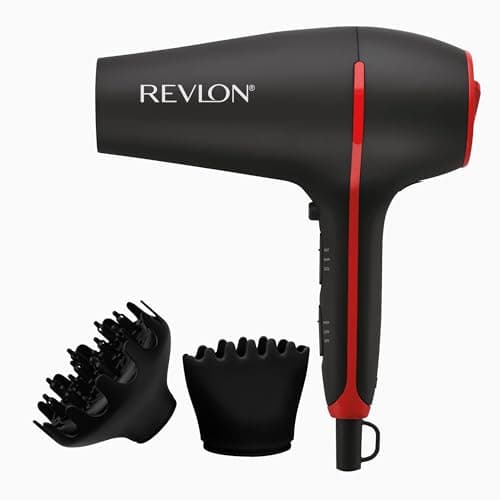
| 1 | Revlon SmoothStay Coconut Oil-Infused hair dryer 1,875 W, three heat settings, two speeds and a ceramic tourmaline grill — the most watts per dollar anywhere on this site. | Normal-to-coarse hair, dried quickly | |
| 2 | 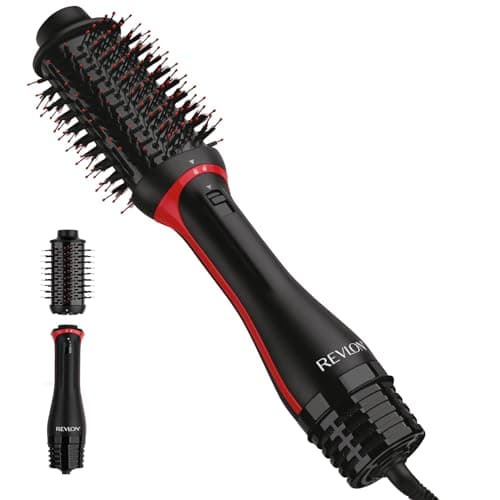 Revlon One-Step Volumizer Plus hair dryer and hot air brush A four-year limited warranty — the longest in our entire registry — on a tool that costs a fraction of a flagship. | A blowout without the two-handed technique | |
| 3 | 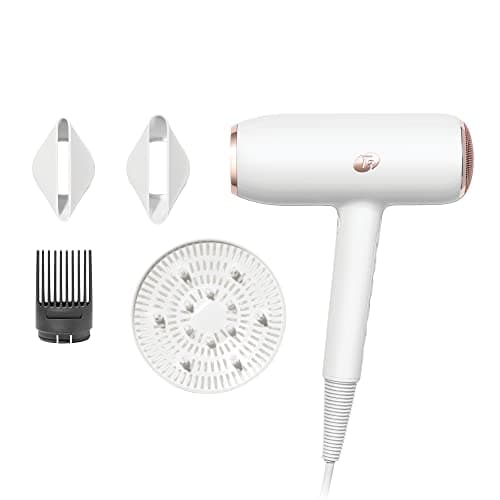 T3 Featherweight StyleMax professional hair dryer Five heat settings, three speeds, a published 16.6 oz and a 9 ft cord — the specification sheet the budget tools do not have. | Anyone whose hair does not tolerate a coarse heat range | |
| — | 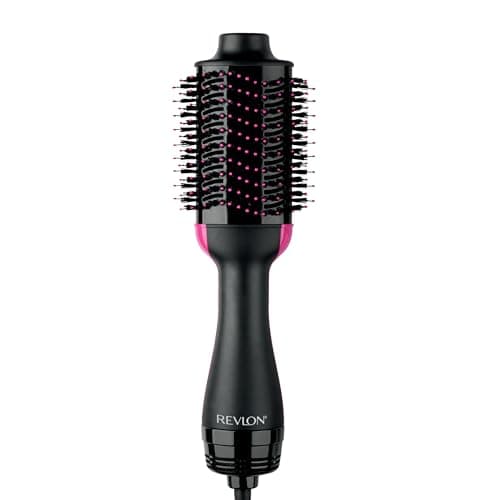 Revlon Salon One-Step hair dryer and volumizer The same four-year warranty as the newer model, with a brush head that does not come off. We’d skip this | Nobody, while the Plus exists |
1. Most published power for the money
Revlon SmoothStay Coconut Oil-Infused hair dryer
Best for: Normal-to-coarse hair, dried quickly
1,875 W, three heat settings, two speeds and a ceramic tourmaline grill — the most watts per dollar anywhere on this site.
Read the spec sheets side by side and the assumption that expensive means powerful collapses. This dryer publishes 1,875 W. The Dyson Supersonic publishes 1,600 W. The Dyson Airwrap publishes 1,300 W. If watts were what you were buying, this would be the flagship.
Revlon publishes a 1 in grill triple-coated in ceramic infused with coconut oil, plus ceramic tourmaline ionic technology — the same vocabulary the premium brands use, on their own product page.
What you get is a dryer that will dry normal-to-coarse hair quickly. What you do not get is the ability to work gently, and on this page that is the honest summary of the whole budget segment.
What’s wrong with it
Three heat settings and two speeds is the coarsest range on the site, and Revlon publishes no weight, cord length, voltage or warranty for it.
Published specifications — Revlon SmoothStay Coconut Oil-Infused hair dryer
| Wattage | 1,875 W |
|---|---|
| Heat settings | 3 heat settings |
| Speed settings | 2 speed settings |
| Weight | Not published |
| Cord length | Not published |
| Noise (dB) | Not published |
| Attachments | Not published |
| Plate / barrel | 1 in grill, triple-coated ceramic; tourmaline ionic |
| Dual voltage | Not published |
| Warranty | Not published |
Every figure above is taken from Revlon Hair Tools — SmoothStay Coconut Oil-Infused hair dryer. “Not published” means the figure does not appear on that page — it is not an estimate withheld, it is a number the manufacturer does not state. How we compile these.
What it costs to run for a year
$22.35 a year
1,875 W × 65 hours a year = 121.9 kWh, at 18.34 cents per kilowatt-hour. The hours assume 15 minutes a session, 5 days a week — that is an assumption, not a measurement, so swap in your own if it is wrong.
2. Longest warranty at any price
Revlon One-Step Volumizer Plus hair dryer and hot air brush
Best for: A blowout without the two-handed technique
A four-year limited warranty — the longest in our entire registry — on a tool that costs a fraction of a flagship.
This is not a conventional dryer, and it earns its place here on a single published number: four years of limited warranty. Dyson publishes two. ghd publishes three. The cheapest kind of tool on this site carries the longest written durability commitment on it.
A warranty is not a lifespan measurement and we will not pretend it is one. It is the only durability statement any of these companies makes in writing, and it is genuinely strange that the drugstore brand makes the boldest one.
Four heat settings — low, medium, high and cool — is also one more than the SmoothStay offers, on a tool that costs less. Revlon publishes a ceramic titanium barrel with tourmaline ionic technology and a detachable brush head.
What’s wrong with it
No published wattage, weight, cord length or speed-setting count, so no running cost can be computed. It is also a hot air brush rather than a dryer, so it will not do everything a dryer does.
Published specifications — Revlon One-Step Volumizer Plus hair dryer and hot air brush
| Wattage | Not published |
|---|---|
| Heat settings | 4 heat settings — low, medium, high, cool |
| Speed settings | Not published |
| Weight | Not published |
| Cord length | Not published |
| Noise (dB) | Not published |
| Attachments | Detachable brush head |
| Plate / barrel | Ceramic titanium barrel; tourmaline ionic |
| Dual voltage | Not published |
| Warranty | 4-year limited warranty |
Every figure above is taken from Revlon Hair Tools — One-Step Volumizer Plus product page. “Not published” means the figure does not appear on that page — it is not an estimate withheld, it is a number the manufacturer does not state. How we compile these.
What it costs to run for a year
Revlon does not publish a wattage for this tool, so there is nothing honest to compute. The formula is watts ÷ 1,000 × hours a year × your rate per kWh; if you find a rating plate on the handle, 65 hours a year and 18.34 cents per kilowatt-hour will get you the rest of the way.
3. The step up worth making
T3 Featherweight StyleMax professional hair dryer
Best for: Anyone whose hair does not tolerate a coarse heat range
Five heat settings, three speeds, a published 16.6 oz and a 9 ft cord — the specification sheet the budget tools do not have.
This is here to show what the extra money buys, because “budget” only means something against a reference point.
Fifteen heat-and-speed combinations against the SmoothStay’s six. A published weight, so you know what you are holding. A published 9 ft cord, the longest on the site. Those are the three things that reliably improve with price in this category, and none of them is power.
If your hair is fine, fragile or already damaged, that granularity is not a luxury — it is the difference between a setting you can live with and one you cannot. If your hair is robust, it genuinely may not be worth the difference.
What’s wrong with it
No published wattage, so no running cost. And it costs several times what the drugstore options do for a benefit that only some hair types will actually feel.
Published specifications — T3 Featherweight StyleMax professional hair dryer
| Wattage | Not published |
|---|---|
| Heat settings | 5 heat settings |
| Speed settings | 3 speed settings |
| Weight | 16.6 oz (cord not included) |
| Cord length | 9 ft professional cord |
| Noise (dB) | Not published |
| Attachments | Not published |
| Plate / barrel | Ceramic |
| Dual voltage | No — 125 V |
| Warranty | 2-year warranty |
Every figure above is taken from T3 Micro — Featherweight StyleMax product page. “Not published” means the figure does not appear on that page — it is not an estimate withheld, it is a number the manufacturer does not state. How we compile these.
What it costs to run for a year
T3 does not publish a wattage for this tool, so there is nothing honest to compute. The formula is watts ÷ 1,000 × hours a year × your rate per kWh; if you find a rating plate on the handle, 65 hours a year and 18.34 cents per kilowatt-hour will get you the rest of the way.
The one we'd skip
Revlon Salon One-Step hair dryer and volumizer
Best for: Nobody, while the Plus exists
The same four-year warranty as the newer model, with a brush head that does not come off.
The original Salon One-Step is still on sale and still carries the same published four-year limited warranty as the Volumizer Plus. Revlon publishes one clear difference between them, and it is the deciding one: this model’s brush head is non-detachable, while the Plus has a detachable head.
A detachable head is what lets you clean the barrel properly and swap it, and on a tool that pulls hair through a heated brush for four years, cleanability is not a nicety.
Revlon also publishes fewer specifications for this model than for the Plus — no heat-setting count at all, where the Plus states four. Same warranty, less published information, less functionality. There is no case for choosing it.
What’s wrong with it
Non-detachable brush head, and Revlon publishes no heat-setting count, wattage, weight or cord length for it — fewer stated specs than its own newer sibling.
Published specifications — Revlon Salon One-Step hair dryer and volumizer
| Wattage | Not published |
|---|---|
| Heat settings | Not published |
| Speed settings | Not published |
| Weight | Not published |
| Cord length | Not published |
| Noise (dB) | Not published |
| Attachments | Non-detachable brush head |
| Plate / barrel | Ceramic coating |
| Dual voltage | Not published |
| Warranty | 4-year limited warranty |
Every figure above is taken from Revlon Hair Tools — Salon One-Step hair dryer and volumizer. “Not published” means the figure does not appear on that page — it is not an estimate withheld, it is a number the manufacturer does not state. How we compile these.
What it costs to run for a year
Revlon does not publish a wattage for this tool, so there is nothing honest to compute. The formula is watts ÷ 1,000 × hours a year × your rate per kWh; if you find a rating plate on the handle, 65 hours a year and 18.34 cents per kilowatt-hour will get you the rest of the way.
What cheap actually costs you
Building the product registry for this site meant reading every manufacturer’s own page and copying out what they state. Doing that across the price range surfaced something we did not expect: the clearest thing you lose by spending less is not performance, it is disclosure.
Dyson publishes wattage, heat and speed settings, weight, cable length, voltage and warranty. Shark publishes all of that plus exact cord length in inches. Revlon publishes a wattage on some products, a warranty on others, and frequently nothing else — no weight, no cord, no voltage.
You are not being sold a worse dryer so much as a dryer you cannot check. Whether that matters depends entirely on whether you need to check.
The one thing that genuinely does get worse
Heat-setting granularity. Three heat settings and two speeds is six combinations. Five and three is fifteen. When the total range runs from cool to very hot, dividing it into six pieces means each step is large, and the lowest setting sits higher than it would on a tool with more steps.
For coarse or robust hair that is a non-issue. For fine, fragile or heat-damaged hair it is the whole ballgame, which is why the fine-hair page ends up recommending against the highest-wattage dryer on the site.
What does not get worse
- Power. The highest published wattage in our registry is on the cheapest dryer in it.
- Warranty. The longest published warranty on this site — four years — is Revlon’s, on their hot air brushes.
- Ionic and ceramic technology. The vocabulary is identical across the price range, because these are manufacturer claims rather than measured differences.
- Travel readiness. Nothing gets better here with price. Every dryer in our registry, at every price, is single voltage.
The arithmetic on trading up
Price per use, at 5 uses a week over 5 years
| What you pay | Cost per use | Cost per year |
|---|---|---|
| $30 | $0.02 | $6.00 |
| $60 | $0.05 | $12.00 |
| $100 | $0.08 | $20.00 |
| $150 | $0.12 | $30.00 |
| $200 | $0.15 | $40.00 |
| $300 | $0.23 | $60.00 |
| $400 | $0.31 | $80.00 |
| $500 | $0.38 | $100.00 |
5 uses a week for 5 years is 1300 uses. Both figures are stated assumptions, not measurements — halve the life and every cost per use doubles. We publish the ladder rather than a worked example for one specific product because a price we typed into a sentence would be wrong within a week.
At five uses a week over five years, moving from a $40 dryer to a $200 one costs about twelve cents a use. Whether twelve cents buys you enough depends on your hair, and on this page we would rather give you the number than an opinion. The extended version is at are expensive hair dryers worth it and the value hub.
Questions people actually ask
Are cheap hair dryers bad for your hair?
Not because they are cheap. They tend to publish fewer heat settings, which means the lowest setting is less low, and that matters for fine or damaged hair. On robust hair the difference is much smaller than the price gap suggests.
Do expensive hair dryers dry hair faster?
Not on published wattage — the highest rating in our registry belongs to a drugstore dryer. Airflow is what actually dries hair, and no manufacturer publishes it in comparable units, so nobody can honestly answer this from spec sheets alone.
What is the best cheap hair dryer?
For normal-to-coarse hair, the highest published wattage with the most heat settings you can find. For fine or damaged hair, the budget segment is where we would spend a little more, because heat-setting granularity is the thing that genuinely improves with price.