Is It Worth It?
What Your Hair Tools Actually Cost to Run
Between fifteen and twenty-two dollars a year. That is the whole range, and it settles a question people worry about more than they should.
Updated September 2026 · Sawyer V.
A hair dryer costs between about $15 and $22 a year to run at fifteen minutes a day, five days a week, using the June 2026 US average residential rate of 18.34 cents per kWh. The formula is watts ÷ 1,000 × hours × your rate.
We earn a commission if you buy through the links on this page, at no extra cost to you. It never changes which tool we pick or which one we tell you to skip. How this site is funded.
The formula, so you can use your own rate
There is no mystery here and no reason for anyone to assert a figure without showing the working.
watts ÷ 1,000 × hours used per year × your price per kWh = annual cost
Our stated usage assumption throughout this site is fifteen minutes a day, five days a week — 65 hours a year. That is an assumption, not a measurement of anybody’s habits, and if it is wrong for you, scale it. Our rate is the U.S. Energy Information Administration’s June 2026 average residential price of 18.34 cents per kWh. If your utility bill says something different, use that instead.
Every tool we can compute
Annual running cost at 65 hours a year and 18.34 cents per kWh
| Tool | Wattage | kWh/year | Per year | Over 5 years |
|---|---|---|---|---|
| Revlon SmoothStay dryer | 1,875 W | 121.9 | $22.36 | $111.80 |
| Shark SpeedStyle Pro | 1,750 W | 113.8 | $20.87 | $104.34 |
| Shark FlexStyle IonCurl | 1,700 W | 110.5 | $20.27 | $101.36 |
| Dyson Supersonic | 1,600 W | 104.0 | $19.07 | $95.35 |
| Shark FlexStyle | 1,600 W | 104.0 | $19.07 | $95.35 |
| Dyson Airwrap Complete Long | 1,300 W | 84.5 | $15.50 | $77.48 |
| All T3 tools | Not published | — | Cannot be computed | — |
| Revlon One-Step brushes | Not published | — | Cannot be computed | — |
| ghd Platinum+ | Not published | — | Cannot be computed | — |
Blank rows are blank because the manufacturer does not publish a wattage. We do not fill those in from retailer listings — a computed figure built on an unsourced input is worse than no figure.
What the table shows
The entire range is $6.86 a year. From the most power-hungry tool we can compute to the least, across the whole price spectrum from drugstore to flagship, the difference is under seven dollars annually.
Over the five-year service life we use in our price-per-use arithmetic, that is $34.32. Against purchase-price differences that routinely run into the hundreds, electricity is not a factor in this decision and nobody should treat it as one.
There is a second, quieter finding: the tools that cost the most to buy cost the least to run, so the two numbers point in opposite directions. If a page tells you a premium tool saves you money on energy, it is technically correct and practically meaningless.
Scaling it to you
Annual cost of a 1,600 W dryer at different usage rates
| Usage | Hours/year | kWh/year | Cost/year |
|---|---|---|---|
| 5 min a day, 5 days a week | 21.7 | 34.7 | $6.36 |
| 15 min a day, 5 days a week | 65.0 | 104.0 | $19.07 |
| 30 min a day, 5 days a week | 130.0 | 208.0 | $38.15 |
| 30 min a day, 7 days a week | 182.0 | 291.2 | $53.40 |
| 60 min a day, 7 days a week | 364.0 | 582.4 | $106.81 |
Even at an hour a day, every day — an extreme case — a 1,600 W dryer runs to about $107 a year. Diffusing dense curly hair is the realistic case that approaches the higher rows.
The only realistic scenario where this becomes a real number is diffusing dense curly hair daily, which genuinely can take half an hour — see the curly-hair dryers page. Even then it is under sixty dollars a year.
Why we publish this at all
Because none of the ten competitor pages we fetched in research published it, and because “how much does this cost to run” is a question people genuinely ask and then guess the answer to. The arithmetic is trivial; nobody had done it publicly.
It also settles a claim that gets made in the other direction. A low-wattage premium tool does not pay for itself in energy savings, and now there is a table you can check that against rather than an opinion. The full price argument is at are expensive hair dryers worth it.
Quick picks
Tap any row to jump to the full write-up. Prices come from the live price layer; where none is available the button says so rather than showing a number we cannot stand behind.
| # | Product | Best for | Price |
|---|---|---|---|
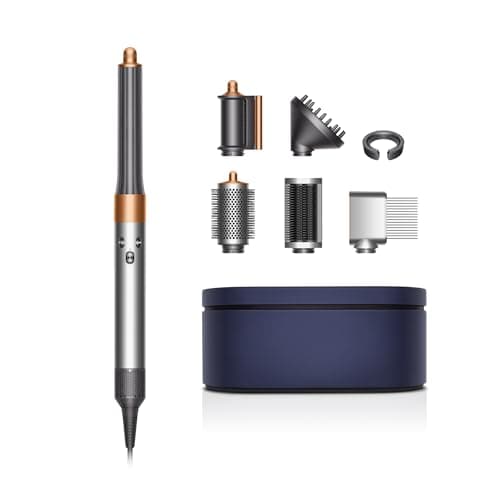
| 1 | Dyson Airwrap multi-styler (Complete Long) 1,300 W — the lowest mains rating in our registry — at about $15.50 a year. | Anyone for whom the electricity actually matters | |
| 2 | 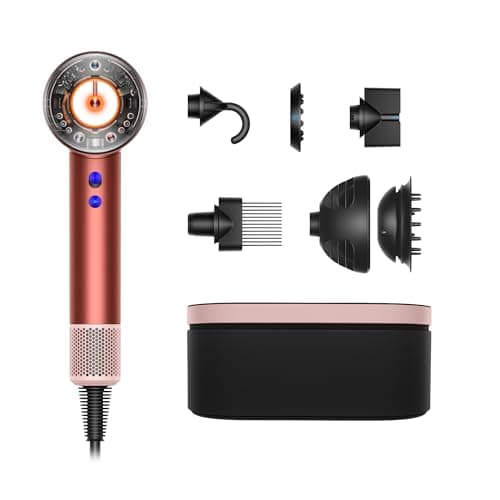 Dyson Supersonic hair dryer 1,600 W, 104 kWh a year, about $19.07 — and it is the most expensive conventional dryer here. | A representative figure | |
| 3 | 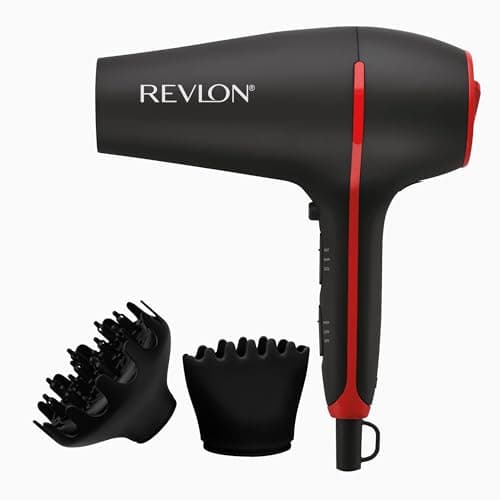 Revlon SmoothStay Coconut Oil-Infused hair dryer 1,875 W, 121.9 kWh a year, about $22.36 — the highest figure we can compute. | The top of the range | |
| — | 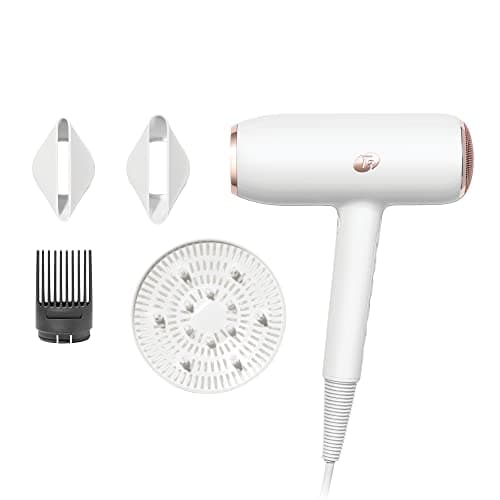 T3 Featherweight StyleMax professional hair dryer T3 publishes no wattage for any product, so no running cost can be computed for any of their tools. We’d skip this | Not comparable, because the figure is missing |
1. Cheapest to run
Dyson Airwrap multi-styler (Complete Long)
Best for: Anyone for whom the electricity actually matters
1,300 W — the lowest mains rating in our registry — at about $15.50 a year.
84.5 kWh a year under our standard usage assumption, or $15.50 at the current US average rate. That is the lowest figure we can compute for any mains tool on this site.
It is also, by a wide margin, the most expensive tool to buy. Which is the whole point of this page: the running cost and the purchase price point in opposite directions, and the purchase price is hundreds of times larger.
What’s wrong with it
Saving seven dollars a year against the highest-drawing tool takes decades to matter against the purchase-price difference.
Published specifications — Dyson Airwrap multi-styler (Complete Long)
| Wattage | 1,300 W |
|---|---|
| Heat settings | 3 heat settings |
| Speed settings | 3 speed settings |
| Weight | 1.4 lb |
| Cord length | 8.5 ft |
| Noise (dB) | Not published |
| Attachments | Curling barrels, smoothing brushes, round volumizing brush, drying nozzle |
| Plate / barrel | Coanda airflow barrels; no clamped heat plate |
| Dual voltage | No — 120 V |
| Warranty | 2-year limited warranty |
Every figure above is taken from Dyson — Airwrap Complete Long product page. “Not published” means the figure does not appear on that page — it is not an estimate withheld, it is a number the manufacturer does not state. How we compile these.
What it costs to run for a year
$15.50 a year
1,300 W × 65 hours a year = 84.5 kWh, at 18.34 cents per kilowatt-hour. The hours assume 15 minutes a session, 5 days a week — that is an assumption, not a measurement, so swap in your own if it is wrong.
2. The middle of the range
Dyson Supersonic hair dryer
Best for: A representative figure
1,600 W, 104 kWh a year, about $19.07 — and it is the most expensive conventional dryer here.
104 kWh a year is roughly what a modern LED-lit room uses over the same period. This is not a meaningful household expense and it is worth saying so plainly, because a lot of people worry about it.
Working: 1,600 ÷ 1,000 × 65 hours = 104 kWh; 104 × $0.1834 = $19.07.
What’s wrong with it
Costs about $3.30 a year more than the Airwrap, which over five years is under seventeen dollars — not a purchasing consideration.
Published specifications — Dyson Supersonic hair dryer
| Wattage | 1,600 W |
|---|---|
| Heat settings | 4 heat settings, including a cold shot |
| Speed settings | 3 speed settings |
| Weight | 1.8 lb |
| Cord length | 8.6 ft |
| Noise (dB) | Not published |
| Attachments | 3 — styling concentrator, diffuser, wide-tooth comb |
| Plate / barrel | Air-multiplier body; no heated styling surface |
| Dual voltage | No — 120 V |
| Warranty | 2-year limited warranty |
Every figure above is taken from Dyson — Supersonic hair dryer product page. “Not published” means the figure does not appear on that page — it is not an estimate withheld, it is a number the manufacturer does not state. How we compile these.
What it costs to run for a year
$19.07 a year
1,600 W × 65 hours a year = 104.0 kWh, at 18.34 cents per kilowatt-hour. The hours assume 15 minutes a session, 5 days a week — that is an assumption, not a measurement, so swap in your own if it is wrong.
3. Most expensive to run
Revlon SmoothStay Coconut Oil-Infused hair dryer
Best for: The top of the range
1,875 W, 121.9 kWh a year, about $22.36 — the highest figure we can compute.
The highest published wattage in our registry, and the highest annual cost. It is also by a wide margin the cheapest tool here to buy.
$22.36 against the Airwrap’s $15.50 is a difference of $6.86 a year. If the purchase-price gap is even a hundred dollars, the running cost takes fifteen years to close it.
What’s wrong with it
Highest running cost on the site — and it would take well over a decade of use for that to outweigh any realistic purchase-price saving.
Published specifications — Revlon SmoothStay Coconut Oil-Infused hair dryer
| Wattage | 1,875 W |
|---|---|
| Heat settings | 3 heat settings |
| Speed settings | 2 speed settings |
| Weight | Not published |
| Cord length | Not published |
| Noise (dB) | Not published |
| Attachments | Not published |
| Plate / barrel | 1 in grill, triple-coated ceramic; tourmaline ionic |
| Dual voltage | Not published |
| Warranty | Not published |
Every figure above is taken from Revlon Hair Tools — SmoothStay Coconut Oil-Infused hair dryer. “Not published” means the figure does not appear on that page — it is not an estimate withheld, it is a number the manufacturer does not state. How we compile these.
What it costs to run for a year
$22.35 a year
1,875 W × 65 hours a year = 121.9 kWh, at 18.34 cents per kilowatt-hour. The hours assume 15 minutes a session, 5 days a week — that is an assumption, not a measurement, so swap in your own if it is wrong.
The one we'd skip
T3 Featherweight StyleMax professional hair dryer
Best for: Not comparable, because the figure is missing
T3 publishes no wattage for any product, so no running cost can be computed for any of their tools.
This is a skip on a documentation basis, and on this page it is the honest one to name.
No T3 product page we examined publishes a wattage — not the dryers, not the irons, not the brushes. That means no running cost can be computed for any T3 tool, and none can be compared on power against Dyson, Shark or Revlon.
T3 makes some of the best-specified tools on this site on every other row — nine heat settings, published weights to a tenth of an ounce, genuine dual voltage. On a page that exists to compute costs from wattage, the one missing figure is the one that matters.
What’s wrong with it
No published wattage on any T3 product, so the entire premise of this page cannot be applied to their range.
Published specifications — T3 Featherweight StyleMax professional hair dryer
| Wattage | Not published |
|---|---|
| Heat settings | 5 heat settings |
| Speed settings | 3 speed settings |
| Weight | 16.6 oz (cord not included) |
| Cord length | 9 ft professional cord |
| Noise (dB) | Not published |
| Attachments | Not published |
| Plate / barrel | Ceramic |
| Dual voltage | No — 125 V |
| Warranty | 2-year warranty |
Every figure above is taken from T3 Micro — Featherweight StyleMax product page. “Not published” means the figure does not appear on that page — it is not an estimate withheld, it is a number the manufacturer does not state. How we compile these.
What it costs to run for a year
T3 does not publish a wattage for this tool, so there is nothing honest to compute. The formula is watts ÷ 1,000 × hours a year × your rate per kWh; if you find a rating plate on the handle, 65 hours a year and 18.34 cents per kilowatt-hour will get you the rest of the way.
Questions people actually ask
How much does a hair dryer cost to run per year?
Between about $15.50 and $22.36 for the tools we can compute, at 15 minutes a day five days a week and the June 2026 US average residential rate of 18.34 cents per kWh. The whole range across every price bracket is under seven dollars a year.
How much electricity does a hair dryer use?
A 1,600 W dryer uses 1.6 kWh per hour of running time. At 65 hours a year — 15 minutes a day, five days a week — that is 104 kWh annually, roughly what a modern LED-lit room uses in the same period.
Does a lower wattage hair dryer save money?
Technically yes, and not meaningfully. The gap between the lowest and highest published wattages in our registry is $6.86 a year, or $34.32 across five years, against purchase-price differences of hundreds.
How do I work out the running cost of my own dryer?
Watts divided by 1,000, times hours used per year, times your price per kilowatt-hour. The wattage is usually printed on the handle near the cord. Our figures assume 65 hours a year at 18.34 cents per kWh.