Hair Dryers
What Wattage Hair Dryer Do You Actually Need?
The most expensive hair tools publish the lowest wattages. Once you notice that, the number stops meaning what the box implies.
Updated September 2026 · Sawyer V.
Wattage measures the electricity a dryer draws, not the air it moves. Published ratings run from 1,300 W on the Dyson Airwrap to 1,875 W on a drugstore Revlon, with premium tools clustered at the bottom. Use it for one thing: working out running cost. It is a poor proxy for speed.

We earn a commission if you buy through the links on this page, at no extra cost to you. It never changes which tool we pick or which one we tell you to skip. How this site is funded.
The number, across the whole registry
Here is every published wattage we have, sorted by price bracket rather than by number. The pattern is the point.
Published wattage across the tools on this site
| Tool | Bracket | Published wattage |
|---|---|---|
| Revlon SmoothStay dryer | Drugstore | 1,875 W |
| Shark SpeedStyle Pro | Mid-premium | 1,750 W |
| Shark FlexStyle IonCurl | Mid-premium | 1,700 W |
| Dyson Supersonic | Flagship | 1,600 W |
| Shark FlexStyle | Mid-premium | 1,600 W |
| Dyson Airwrap Complete Long | Flagship | 1,300 W |
| Dyson Corrale (battery) | Flagship | 200 W |
| T3 dryers, irons and brushes | Mid-premium | Not published |
Every figure from the manufacturer's own product page. T3 publishes no wattage for any product we examined.
The most expensive tool in the category draws the least power. The cheapest draws the most. If wattage were a quality signal, the entire price structure of this industry would be upside down.
What a watt actually is here
A watt is a rate of energy consumption. A 1,875 W dryer converts 1,875 joules of electricity into heat and motion every second. Most of that goes to the heating element, because heating air takes far more energy than spinning a fan.
So wattage is mostly a statement about the heater. It tells you very little about the motor, and the motor is what moves air, and moving air is what dries hair. A dryer that puts more of its budget into airflow and less into raw heat can dry faster at a lower wattage — which is precisely the claim Dyson makes for the Supersonic, and precisely why the number on the box is misleading.
The one thing wattage settles completely
Running cost. This is simple arithmetic with no proxies involved: watts divided by 1,000, times hours of use, times your price per kilowatt-hour.
At fifteen minutes a day, five days a week — 65 hours a year — and the June 2026 US average residential price of 18.34 cents per kWh:
What a year of drying costs, by published wattage
| Wattage | kWh per year | Cost per year |
|---|---|---|
| 1,875 W | 121.9 | $22.36 |
| 1,750 W | 113.8 | $20.87 |
| 1,600 W | 104.0 | $19.07 |
| 1,300 W | 84.5 | $15.50 |
Usage of 15 minutes a day, 5 days a week is a stated assumption, not a measurement. Double the time and double the cost.
Seven dollars a year separates the most and least power-hungry tools we list. Nobody should choose a dryer on that, and now you have the number rather than our opinion about it. More at what your hair tools cost to run.
What to use instead when comparing
- Heat settings. Published, comparable, and it decides how gently you can work. This is the row we weight most heavily.
- Speed settings. Also published, and the one that decides whether curls survive the process.
- Weight and cord length. Boring, published, and they decide whether you finish the job properly.
- Attachments. A diffuser or concentrator changes results more than 200 W does.
Why nobody publishes airflow
The specification that would settle every argument on this page — cubic feet per minute of air at a stated pressure — is published by nobody in comparable units. Shark states a top speed in miles per hour. Dyson describes an air multiplier. T3 publishes neither. There is no shared measure and no standard that makes them comparable.
Until that changes, anyone telling you which dryer moves the most air is either guessing or has done testing they should be describing in detail. We have not done that testing, so we do not make the claim.
The tools on this page
Prices come from the live price layer. Where none is available the button says so rather than showing a number we cannot stand behind.
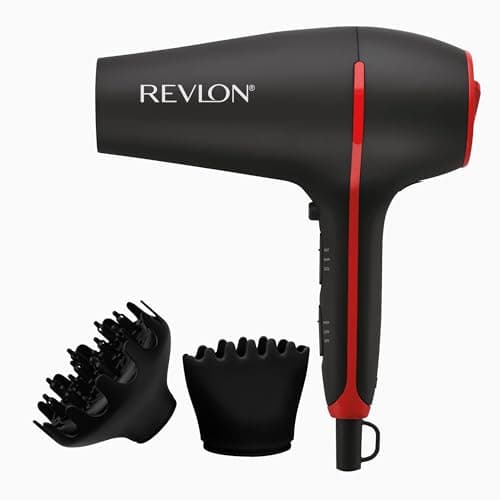
Revlon SmoothStay Coconut Oil-Infused hair dryer
The highest published wattage in this registry attached to the thinnest published spec sheet — Revlon states the watts and almost nothing else.
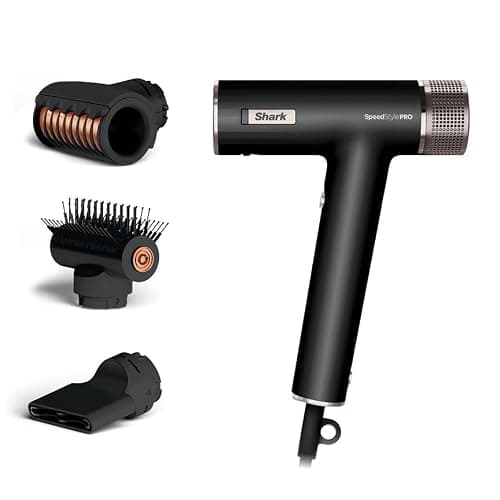
Shark SpeedStyle Pro hair dryer
The highest published wattage of the premium dryers here and the most attachments in the box, at a fraction of Dyson's asking price.
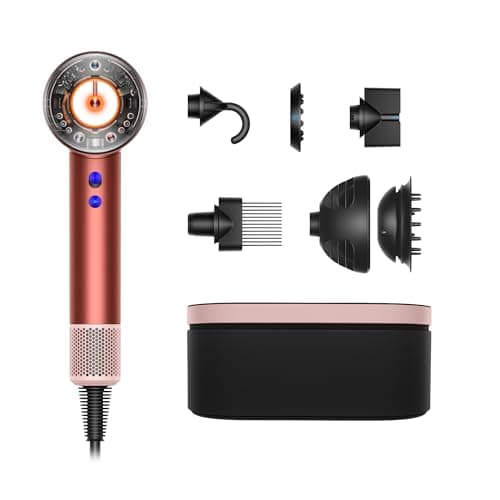
Dyson Supersonic hair dryer
1,600 W is less power than a drugstore dryer draws, and Dyson publishes that openly — the pitch is airflow and heat control, not wattage.
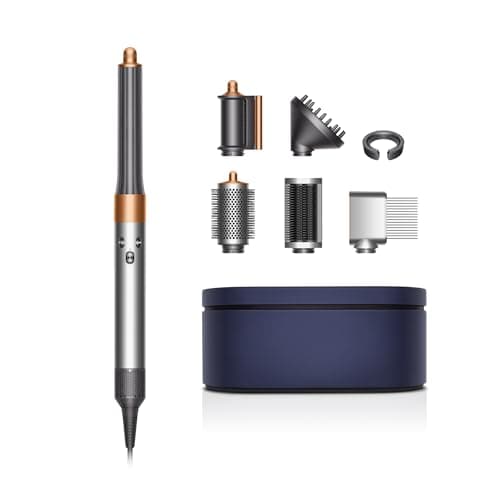
Dyson Airwrap multi-styler (Complete Long)
1,300 W is the lowest published wattage of any mains tool in this registry. That is the design argument, and it is also why it is slow on thick hair.
Questions people actually ask
Is 1875 watts too much for a hair dryer?
It is the highest rating commonly sold and it belongs to inexpensive dryers, not premium ones. It is not too much in itself, but high-wattage dryers tend to publish fewer heat settings, so the low end is less low — which matters for fine or damaged hair.
Is a 1600 watt hair dryer powerful enough?
It is what Dyson publishes for the Supersonic, its flagship. Wattage measures electricity drawn rather than air moved, so a well-engineered 1,600 W dryer can outperform a 1,875 W one. Nobody publishes airflow in comparable units, so this cannot be settled from spec sheets.
Does a higher wattage hair dryer damage hair more?
Not directly. What damages hair is the temperature reaching it and how long it stays there. Higher-wattage dryers can reach higher temperatures, and they typically offer fewer settings to sit below them, which is the real risk.
How many watts does a hair dryer use per hour?
A 1,600 W dryer uses 1.6 kWh per hour of running time, which at the June 2026 US average of 18.34 cents per kWh is about 29 cents an hour. Nobody runs one for an hour, which is why the annual figure lands under twenty dollars.