Hair Dryers
The Best Hair Dryers for Fine Hair in 2026
Fine hair does not need more power. It needs somewhere low to sit and a cool shot that actually works.
Updated September 2026 · Sawyer V.
For fine hair, choose the dryer with the lowest usable heat setting and the least weight, not the highest wattage. Fine strands heat through fast, so a 1,875 W drugstore dryer set to high is genuinely riskier here than on coarse hair. Four heat settings and a real cold shot beat raw power every time.
We earn a commission if you buy through the links on this page, at no extra cost to you. It never changes which tool we pick or which one we tell you to skip. How this site is funded.
Quick picks
Tap any row to jump to the full write-up. Prices come from the live price layer; where none is available the button says so rather than showing a number we cannot stand behind.
| # | Product | Best for | Price |
|---|---|---|---|
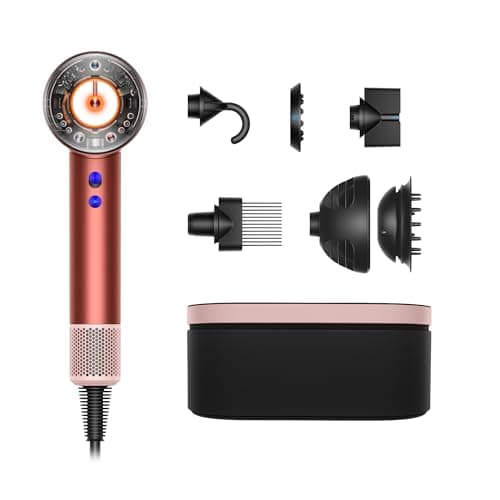
| 1 | Dyson Supersonic hair dryer Four heat settings, a cold shot, and Dyson publishes the lowest wattage of any conventional dryer we list. | Fine hair that has been over-dried before | |
| 2 | 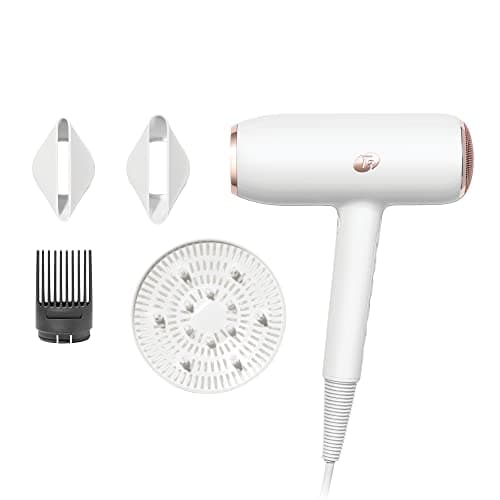 T3 Featherweight StyleMax professional hair dryer 16.6 oz published, five heat settings, and a 9 ft cord — the easiest of these to hold at head height. | Long sessions and shoulder fatigue | |
| 3 | 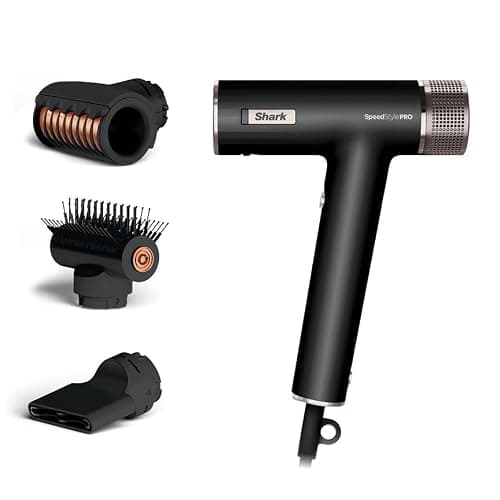 Shark SpeedStyle Pro hair dryer Six named attachments including a finishing tool, at a published 1.65 lb — lighter than the Dyson. | Fine hair that also needs smoothing | |
| — | 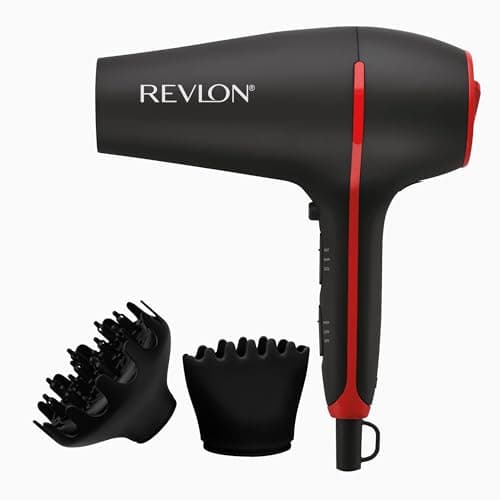 Revlon SmoothStay Coconut Oil-Infused hair dryer 1,875 W with only three heat settings — the most power and the fewest places to put it. We’d skip this | Not fine hair |
1. Best heat control
Dyson Supersonic hair dryer
Best for: Fine hair that has been over-dried before
Four heat settings, a cold shot, and Dyson publishes the lowest wattage of any conventional dryer we list.
The specification that matters for fine hair is the bottom of the range, not the top, and this is where the Supersonic’s headline number stops being a weakness. Dyson publishes 1,600 W — 275 W below the drugstore Revlon SmoothStay — alongside four heat settings and a cold shot. Fewer watts and more steps is precisely the combination fine hair wants.
Dyson also states the dryer measures air temperature over forty times a second and regulates the heat accordingly. We have not verified that claim and we are not going to write as though we have. What we can say is that it is a claim about restraint rather than power, which is unusual in a category that sells on airflow.
The published cord is 8.6 ft, longer than the Shark’s 8.0 ft and shorter than T3’s 9 ft. Weight is 1.8 lb — the heaviest conventional dryer in our registry, which is a real consideration if your arm is up for fifteen minutes.
What’s wrong with it
The heaviest dryer here at a published 1.8 lb, 120 V only so it will not travel, and Dyson publishes no decibel figure despite noise being a common complaint.
Published specifications — Dyson Supersonic hair dryer
| Wattage | 1,600 W |
|---|---|
| Heat settings | 4 heat settings, including a cold shot |
| Speed settings | 3 speed settings |
| Weight | 1.8 lb |
| Cord length | 8.6 ft |
| Noise (dB) | Not published |
| Attachments | 3 — styling concentrator, diffuser, wide-tooth comb |
| Plate / barrel | Air-multiplier body; no heated styling surface |
| Dual voltage | No — 120 V |
| Warranty | 2-year limited warranty |
Every figure above is taken from Dyson — Supersonic hair dryer product page. “Not published” means the figure does not appear on that page — it is not an estimate withheld, it is a number the manufacturer does not state. How we compile these.
What it costs to run for a year
$19.07 a year
1,600 W × 65 hours a year = 104.0 kWh, at 18.34 cents per kilowatt-hour. The hours assume 15 minutes a session, 5 days a week — that is an assumption, not a measurement, so swap in your own if it is wrong.
2. Lightest in the hand
T3 Featherweight StyleMax professional hair dryer
Best for: Long sessions and shoulder fatigue
16.6 oz published, five heat settings, and a 9 ft cord — the easiest of these to hold at head height.
At a published 16.6 oz this is about 1.04 lb, meaningfully lighter than the Supersonic’s 1.8 lb. Fine hair often means a lot of small sections and a long session, and the difference between one pound and nearly two in your raised hand is not a detail.
Five heat settings and three speeds gives fifteen combinations, more granularity than anything else on this page. The 9 ft cord is the longest here, which matters more than it sounds if your outlet is behind you.
The catch is that T3 publishes no wattage for this dryer, or for any dryer of theirs we looked at. That means we cannot compute what it costs to run and you cannot compare it on power with Dyson or Shark. We leave that row blank rather than filling it in from a retailer listing.
What’s wrong with it
No published wattage at all, so no running cost can be computed and no power comparison is possible. 125 V only, and no attachments are listed on the product page.
Published specifications — T3 Featherweight StyleMax professional hair dryer
| Wattage | Not published |
|---|---|
| Heat settings | 5 heat settings |
| Speed settings | 3 speed settings |
| Weight | 16.6 oz (cord not included) |
| Cord length | 9 ft professional cord |
| Noise (dB) | Not published |
| Attachments | Not published |
| Plate / barrel | Ceramic |
| Dual voltage | No — 125 V |
| Warranty | 2-year warranty |
Every figure above is taken from T3 Micro — Featherweight StyleMax product page. “Not published” means the figure does not appear on that page — it is not an estimate withheld, it is a number the manufacturer does not state. How we compile these.
What it costs to run for a year
T3 does not publish a wattage for this tool, so there is nothing honest to compute. The formula is watts ÷ 1,000 × hours a year × your rate per kWh; if you find a rating plate on the handle, 65 hours a year and 18.34 cents per kilowatt-hour will get you the rest of the way.
3. Most attachments in the box
Shark SpeedStyle Pro hair dryer
Best for: Fine hair that also needs smoothing
Six named attachments including a finishing tool, at a published 1.65 lb — lighter than the Dyson.
Shark publishes the fullest attachment list of any dryer here: a turbo concentrator, a QuickSmooth brush, a DefrizzFast diffuser, a wide-tooth comb, a touch-up brush and the FrizzFighter finishing tool. For fine hair prone to flyaways, a dedicated finishing attachment is more useful than another heat setting.
The published weight of 1.65 lb undercuts the Dyson by about two and a half ounces, and Shark publishes an exact cord length — 96.1 in, or 8.0 ft — which almost nobody else in the category does.
The complication for fine hair specifically is the 1,750 W rating, the second-highest here. Shark does not publish how many heat settings the tool has, so we cannot tell you how low its lowest setting goes, and that is the number this page is built around.
What’s wrong with it
Shark publishes no heat-setting or speed-setting count, so the low end is unknown on a page where the low end is the whole point. 120 V only.
Published specifications — Shark SpeedStyle Pro hair dryer
| Wattage | 1,750 W (peak 1,750 W) |
|---|---|
| Heat settings | Not published |
| Speed settings | Not published |
| Weight | 1.65 lb |
| Cord length | 96.1 in (8.0 ft) |
| Noise (dB) | Not published |
| Attachments | Turbo concentrator, QuickSmooth brush, DefrizzFast diffuser, wide-tooth comb, touch-up brush, FrizzFighter finishing tool |
| Plate / barrel | High-velocity airflow; no heated styling surface |
| Dual voltage | No — 120 V |
| Warranty | 2-year limited warranty |
Every figure above is taken from SharkNinja — Shark SpeedStyle Pro (HD731) product page. “Not published” means the figure does not appear on that page — it is not an estimate withheld, it is a number the manufacturer does not state. How we compile these.
What it costs to run for a year
$20.86 a year
1,750 W (peak 1,750 W) × 65 hours a year = 113.8 kWh, at 18.34 cents per kilowatt-hour. The hours assume 15 minutes a session, 5 days a week — that is an assumption, not a measurement, so swap in your own if it is wrong.
The one we'd skip
Revlon SmoothStay Coconut Oil-Infused hair dryer
Best for: Not fine hair
1,875 W with only three heat settings — the most power and the fewest places to put it.
This is not a bad dryer and it is not a bad deal. It is the wrong tool for the hair type this page is about, and the published specs say so without any help from us.
1,875 W is the highest rating in our registry. Three heat settings is the fewest of any dryer here. Put those together and the practical low setting on this dryer is likely hotter than the low setting on tools with four or five steps, because the range is being divided into fewer pieces from a higher ceiling.
Revlon also publishes no weight, no cord length, no voltage and no warranty on this product page. On a page about a hair type whose defining constraint is heat tolerance, buying a tool where the relevant specifications are unavailable is not a risk worth taking to save money.
What’s wrong with it
Highest published wattage and fewest heat settings on this page, with no published weight, cord length, voltage or warranty to fall back on.
Published specifications — Revlon SmoothStay Coconut Oil-Infused hair dryer
| Wattage | 1,875 W |
|---|---|
| Heat settings | 3 heat settings |
| Speed settings | 2 speed settings |
| Weight | Not published |
| Cord length | Not published |
| Noise (dB) | Not published |
| Attachments | Not published |
| Plate / barrel | 1 in grill, triple-coated ceramic; tourmaline ionic |
| Dual voltage | Not published |
| Warranty | Not published |
Every figure above is taken from Revlon Hair Tools — SmoothStay Coconut Oil-Infused hair dryer. “Not published” means the figure does not appear on that page — it is not an estimate withheld, it is a number the manufacturer does not state. How we compile these.
What it costs to run for a year
$22.35 a year
1,875 W × 65 hours a year = 121.9 kWh, at 18.34 cents per kilowatt-hour. The hours assume 15 minutes a session, 5 days a week — that is an assumption, not a measurement, so swap in your own if it is wrong.
What fine hair actually needs from a dryer
Fine describes the thickness of an individual strand, not how much hair you have. A fine strand has less mass, so it reaches a given temperature faster and holds less water to buffer the heat. The same two minutes on high that a coarse strand shrugs off is a longer, hotter exposure for a fine one.
That single fact reorders the whole spec sheet. Wattage stops being the headline and becomes a running-cost figure. Heat-setting count becomes the most important row, because it decides how low you can actually work. Weight becomes the second most important, because fine hair usually means more, smaller sections and a longer session.
It also means the marketing works against you. Dryers are sold on speed, speed is sold as power, and power on fine hair is the thing you are trying to use less of.
The heat settings, side by side
Published heat and speed settings across the dryers on this page
| Dryer | Heat settings | Speed settings | Published wattage |
|---|---|---|---|
| Dyson Supersonic | 4 + cold shot | 3 | 1,600 W |
| T3 Featherweight StyleMax | 5 | 3 | Not published |
| Shark SpeedStyle Pro | Not published | Not published | 1,750 W |
| Revlon SmoothStay | 3 | 2 | 1,875 W |
Every figure from the manufacturer's own product page, linked in each spec block below. Blank rows are blank on the source page — we do not fill them in from retailer listings.
Read that table for a moment and the pattern is hard to miss. The two tools that publish the most heat settings publish the least power, and the tool with the most power publishes the fewest settings. If you are buying for fine hair, that inverse relationship is the single most useful thing on this page.
What the extra money buys, in cents
The premium dryers on this page cost several times what the Revlon does. Here is what that difference actually works out to per use, so you can decide with a number rather than a feeling.
Price per use, at 5 uses a week over 5 years
| What you pay | Cost per use | Cost per year |
|---|---|---|
| $30 | $0.02 | $6.00 |
| $60 | $0.05 | $12.00 |
| $100 | $0.08 | $20.00 |
| $150 | $0.12 | $30.00 |
| $200 | $0.15 | $40.00 |
| $300 | $0.23 | $60.00 |
| $400 | $0.31 | $80.00 |
| $500 | $0.38 | $100.00 |
5 uses a week for 5 years is 1300 uses. Both figures are stated assumptions, not measurements — halve the life and every cost per use doubles. We publish the ladder rather than a worked example for one specific product because a price we typed into a sentence would be wrong within a week.
Electricity does not enter into it. At the June 2026 US average residential rate of 18.34 cents per kWh, the 1,600 W Supersonic costs about $19 a year to run and the 1,875 W Revlon about $22. Three dollars a year separates them. The purchase price is the entire decision, which is why we published the ladder instead of a hand-wave. The longer version of this argument is in are expensive hair dryers worth it.
Technique that matters more than the tool
- Rough-dry to eighty percent on cool or low before you do anything precise. Most heat exposure on fine hair happens during the boring part.
- Use the cold shot at the end of every section. Fine hair holds the shape it cools into and drops the shape it was released from while warm. This is why your blow-dry falls by lunch.
- Keep the nozzle pointing down the strand. Air across the cuticle lifts it; air along it lays it flat. Fine hair shows the difference more than any other type.
- Do not compensate for a weak result with a higher setting. If it is not drying, the section is too thick.
If you are here because your hair looks worse than it used to
Fine hair shows damage sooner than any other type, and a new dryer is often the wrong purchase for it. Before you spend, check the signs of heat damage and how often heat is too often. If your hair is already damaged, the tool is not the variable that needs changing first.
Different hair? The curly-hair dryers and thick-hair dryers are built around completely different priorities, and the fine hair page routes you across every other tool category.
Questions people actually ask
Is a high wattage hair dryer bad for fine hair?
Not inherently, but higher wattage tools in this category tend to publish fewer heat settings, which means the low end is less low. What matters is the lowest usable setting, not the maximum power, and that is the row most people never check.
What heat setting should I use on fine hair?
The lowest one that still dries your hair in a reasonable time, finishing every section with the cool shot. If the low setting is not drying it, the section is too thick rather than the setting being too cool.
Does an ionic hair dryer help fine hair?
Manufacturers credit ionic output with reduced frizz and faster drying, and it is close to universal on current dryers, which makes it hard to treat as a reason to choose one over another.