Guides
Styling for Humidity: What Actually Helps
There is a published number behind bad hair days, and it is a humidity figure. Your style is not failing — the fiber changed underneath it.
Updated September 2026 · Sawyer V.
Hair absorbs moisture from the air, and above roughly 60 to 70 percent relative humidity it passes a glass transition — its mechanical behavior measurably changes. A style set in dry air is being asked to hold in a softer material than the one you shaped.

We earn a commission if you buy through the links on this page, at no extra cost to you. It never changes which tool we pick or which one we tell you to skip. How this site is funded.
There is a number, and it explains a lot
Most humidity advice is folklore. There is actually published measurement here, and it is more useful than the folklore.
Hair takes up water from the air, and how much it holds changes with relative humidity. Work analyzing moisture sorption and desorption by human hair identifies a glass transition occurring at around 60 to 70 percent relative humidity, plus a second, less-examined transition at around 30 percent — and notes that both transitions are reflected by corresponding changes in the fiber’s mechanical behavior — Breakspear et al., International Journal of Cosmetic Science.
A glass transition is the point at which a material shifts from stiff and brittle toward soft and pliable. Above it, hair is measurably a different material from the one you styled in a dry bathroom — softer, more mobile, less inclined to hold a shape you imposed on it.
So the style is not failing because you did it badly. The substrate changed underneath it.
Why hair swells, and why that shows
Water does not sit on the outside of a hair. It is absorbed into the fiber, and the fiber swells as it takes it up. Later work on the kinetics of that process separated the sorption happening in the cuticle from the sorption happening in the cortex, and identified the same transition at around 30 percent relative humidity, assigned to the opening of the hair’s inner structure and the accommodation of more water molecules — Breakspear et al., International Journal of Cosmetic Science.
Swelling is what you see as frizz and volume. A fiber that has taken on water is fatter and its cuticle scales sit less flat, which scatters light and lifts individual strands away from the group. That is the mechanism — not humidity “attacking” anything.
It also explains why the effect is worse on damaged and bleached hair. A worn cuticle is a more open door, and bleaching measurably changes how hair binds water — the same research found bleaching produced a larger “breaking of symmetry” in the sorption behavior than perming did. The wider case is on the bleached-hair page.
What follows, practically
1. The cool-down step matters more, not less
Hair sets as it cools, and a style that was never properly set has no margin at all when the humidity rises. On a humid day the cool finish stops being a refinement and becomes the thing holding your style together.
Two seconds of cool air per section, with the hair still on the brush or barrel, before you release. A dryer with a published cool shot is worth looking for — Dyson publishes a dedicated cold shot among four heat settings, and Revlon publishes a cool among four on the One-Step Volumizer Plus. The method is on why curls drop.
2. Dry completely, not nearly
Residual moisture inside the fiber will redistribute, and on a humid day there is nothing pulling it out again. Hair that is 90 percent dry when you leave the house is hair that reverts.
“Completely dry” is also the rule for irons and wands for a separate and more serious reason — steam forming inside the fiber, covered on the wet hair page.
3. Work with your texture, not against it
The bigger the gap between your natural pattern and the style you imposed, the more there is to revert to. Straightening curly hair in high humidity is the hardest version of this problem, and no tool wins it outright.
On genuinely humid days a style closer to your own texture — a smoothed, stretched version rather than a reversal — holds far better and costs less heat. That is the argument for a hot air brush over an iron on those days, made in full on brush versus flat iron.
4. Do not compensate with temperature
The instinct on a humid day is to go hotter, on the theory that a stronger set resists more. It does not work that way: heat makes hair reshapeable and cooling sets it, so more heat buys you no extra hold — it only costs you cuticle, and a worn cuticle absorbs moisture more readily.
That is a genuine feedback loop. Fighting humidity with heat produces hair that is more sensitive to humidity. The arithmetic is on the how-often page.
5. Seal the outside, lightly
Anything that slows water reaching the cuticle helps at the margin. Published work has looked at the effect of oil films on moisture vapor absorption by hair, which is the mechanism behind the traditional advice to finish with a light oil or serum.
The key word is light. Weight is one of the forces pulling a style out, especially on long hair, so a small amount through the mid-lengths and ends beats a heavy application everywhere.
What does not help
- A hotter tool. Covered above. It is the most common humid-day mistake.
- More passes. Repeat passes are the dominant term in total heat exposure, and they do not make a set more permanent.
- Heavy product through the roots. Adds weight where you need lift, and the style collapses faster.
- Brushing it back into shape mid-day. On any hair with texture, a brush separates the clumps and turns a softened style into frizz.
- Ionic claims. Every brand in this category prints them and none publishes a measurement, which is why we treat them as vocabulary rather than as a differentiator — the ionic page.
A humid-day routine
What to change when the forecast is above 60 percent
| Step | Normal day | Humid day |
|---|---|---|
| Towel and wait | Ten minutes | Ten minutes — unchanged, still the biggest saving |
| Dry to | Fully dry | Fully dry, then a little longer |
| Temperature | Your usual setting | The same — do not go up |
| Cool finish | Two seconds per section | Two seconds per section, without exception |
| Target style | Whatever you want | Closer to your natural texture |
| Product | As usual | Light seal on mid-lengths and ends only |
| Mid-day repair | Brush | Fingers, not a brush |
Only two rows change meaningfully. That is the honest summary: humidity is not a different discipline, it is the same technique with no slack in it.
Price per use, at 5 uses a week over 5 years
| What you pay | Cost per use | Cost per year |
|---|---|---|
| $30 | $0.02 | $6.00 |
| $60 | $0.05 | $12.00 |
| $100 | $0.08 | $20.00 |
| $150 | $0.12 | $30.00 |
| $200 | $0.15 | $40.00 |
| $300 | $0.23 | $60.00 |
| $400 | $0.31 | $80.00 |
| $500 | $0.38 | $100.00 |
5 uses a week for 5 years is 1300 uses. Both figures are stated assumptions, not measurements — halve the life and every cost per use doubles. We publish the ladder rather than a worked example for one specific product because a price we typed into a sentence would be wrong within a week.
The realistic expectation
None of this makes hair humidity-proof, and any page claiming otherwise is overselling. Above the transition, the fiber is genuinely a different material, and no tool or product changes the physics of water uptake.
What the routine above buys you is hours rather than immunity — a style that softens gradually instead of reverting by mid-morning. On the worst days the cheapest answer is a style that does not depend on beating the weather at all, and those are on the heat-free styling page.
The tools on this page
Prices come from the live price layer. Where none is available the button says so rather than showing a number we cannot stand behind.
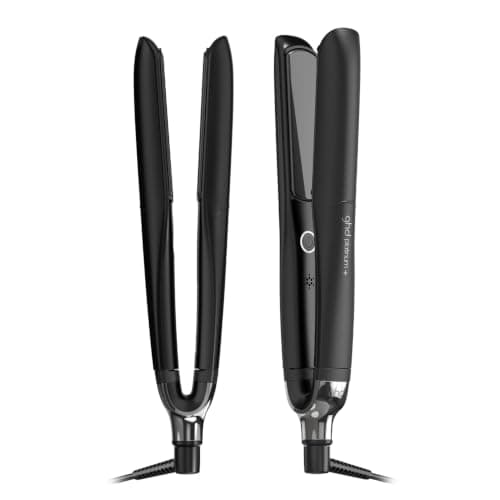
ghd Platinum+ flat iron (1 inch plate)
One temperature, 365°F, no dial to get wrong — the strongest heat-discipline argument in the category, and the longest iron warranty here at three years.
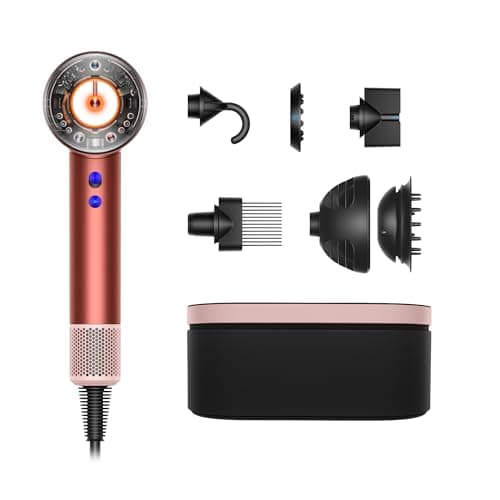
Dyson Supersonic hair dryer
1,600 W is less power than a drugstore dryer draws, and Dyson publishes that openly — the pitch is airflow and heat control, not wattage.
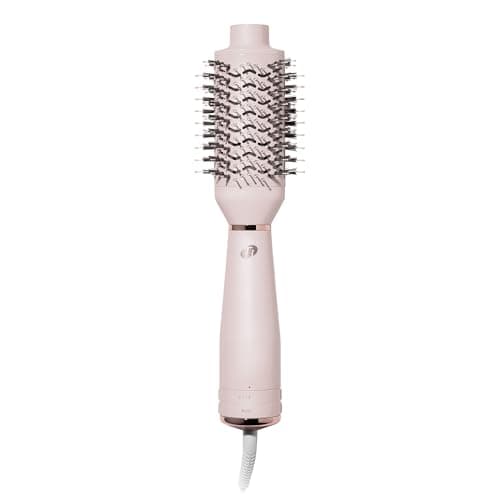
T3 AireBrush One-Step smoothing and volumizing dryer brush
Six heat-and-speed combinations against the Revlon's four heat steps, and a published weight — but half the warranty.
Questions people actually ask
Why does humidity ruin my hair?
Hair absorbs water from the air and swells, and above roughly 60 to 70 percent relative humidity it passes a glass transition where its mechanical behavior measurably changes. The style is holding in a softer material than the one you shaped.
Does a higher heat setting help my style survive humidity?
No. Heat makes hair reshapeable and cooling is what sets it, so more heat adds no hold. It does wear the cuticle, and a worn cuticle takes up moisture more readily — so it makes the problem worse over time.
What actually helps against frizz in humidity?
Drying completely, finishing every section on cool, styling closer to your natural texture, and a light seal on the mid-lengths and ends. None of it makes hair humidity-proof; it buys hours.
Is frizz just dryness?
Not quite. Frizz in humidity is the fiber swelling as it takes up water, which lifts the cuticle scales and separates strands from the group. Damaged hair shows it more because a worn cuticle absorbs more readily.