Heat Damage & Protection
Heat Styling on Bleached Hair: What Changes
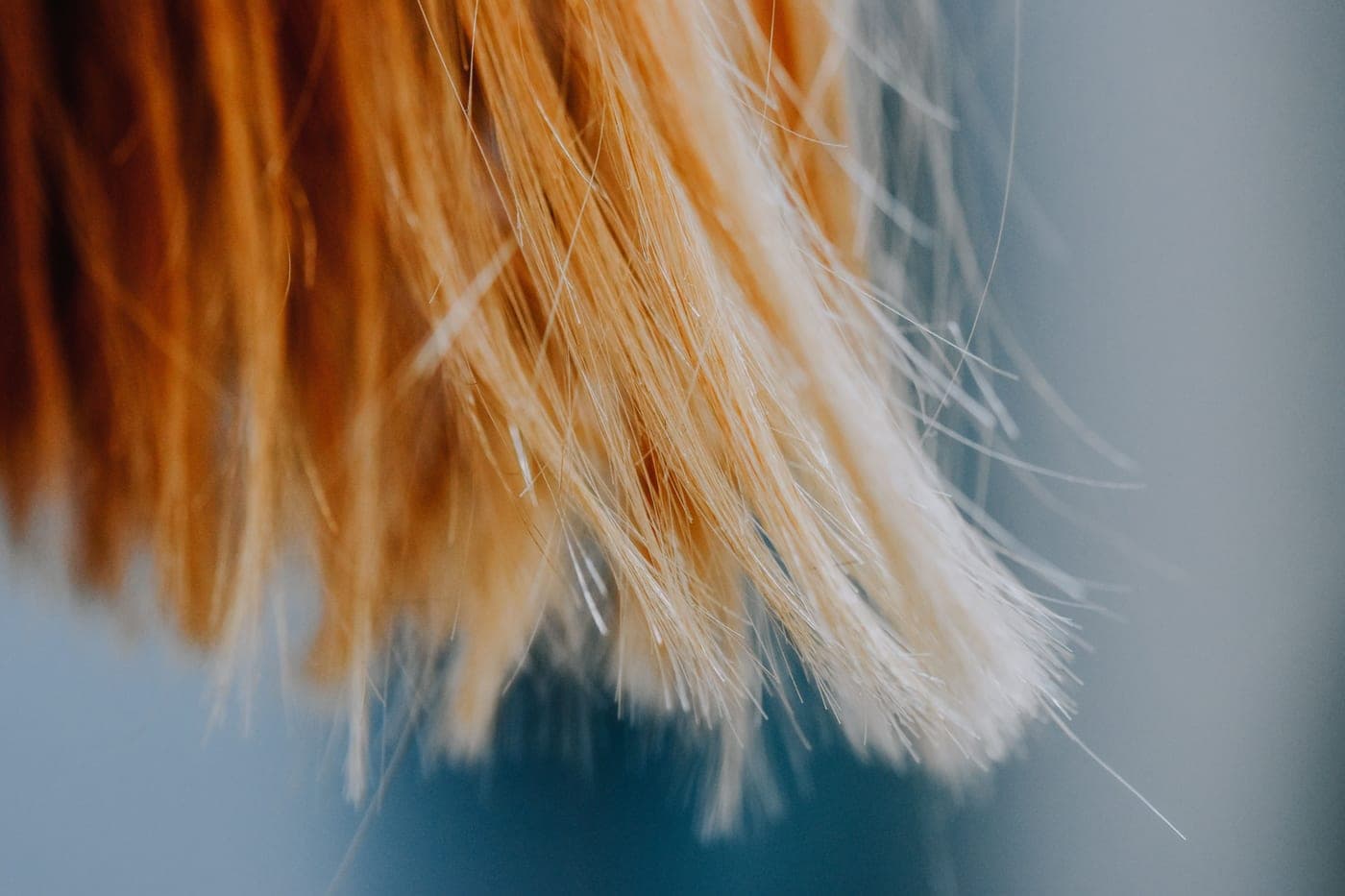
Peroxide leaves behind the same kind of damage marker heat does. Which is why bleached hair behaves as though it has already been ironed once.
Updated September 2026 · Sawyer V.
Bleaching oxidizes the fiber and produces dehydroalanine and dehydration products — modifications normally associated with alkali or thermal treatment. Practically, bleached hair arrives at the iron already carrying heat-type damage, so the setting that was fine before the bleach is not fine after it.
We earn a commission if you buy through the links on this page, at no extra cost to you. It never changes which tool we pick or which one we tell you to skip. How this site is funded.
What bleaching actually does
Bleaching lightens hair by using hydrogen peroxide to oxidize the melanin inside the cortex. To reach the cortex it has to get past the cuticle, and to work at speed it is usually run alkaline, which swells the fiber and lifts the cuticle scales.
The measured consequences are not subtle. Redox proteomic profiling of virgin, bleached and relaxed hair found that peroxide bleaching produced significantly increased levels of oxidative damage at the molecular level, with cysteine the predominant modification site — Dyer et al., International Journal of Cosmetic Science. Cysteine is the amino acid that forms the disulfide bonds holding keratin’s structure together, so modifying it is not cosmetic damage.
The finding that matters most here
The same study reported something more specific and more useful. Along with the oxidation you would expect, bleaching produced enhanced levels of dehydroalanine and dehydration products — and the authors noted these are modifications typically associated with alkali or thermal treatment, which had not previously been reported as a product of hair bleaching.
Read that plainly: chemical bleaching leaves behind some of the same molecular signatures that heat does. Bleached hair does not merely become more vulnerable to future heat damage in the abstract — it turns up at the iron already carrying markers of the kind of change a hot plate produces.
That is the honest basis for the advice everyone gives and few people justify. It is not that bleached hair is delicate in a general way. It is that a portion of the damage budget has already been spent, using the same currency.
What it does not mean
A few things this finding does not support, because overstating it is how good research turns into bad advice.
- It does not give you a safe temperature. No study here establishes a threshold, and any site quoting one for bleached hair specifically is going beyond the evidence.
- It does not mean heat is now forbidden. It means the same session costs more than it did, so the sensible response is to make each session cheaper rather than to make none.
- It does not mean a product can undo it. The modifications described are structural changes to the protein. Conditioners improve how hair behaves; they do not restore disulfide bonds. The full version is on the repair page.
The cuticle is the other half
Separately from the molecular chemistry, bleaching physically wears the cuticle. The 2019 study of chemical and physical treatments found that bleaching and dyeing caused wear on cuticles with high protein loss and reduced tryptophan content, confirmed by scanning electron microscopy, independently of the hair’s curl pattern — Bloch et al., JEADV.
That matters for heat styling in a mechanical way. The cuticle is the layer that takes contact from a plate, and a worn cuticle transmits more of that contact to the cortex underneath. It is also why bleached hair feels rougher and tangles more, which leads to more combing, which is its own damage pathway — covered on the split ends page.
What to change, concretely
Work below 365°F, which most premium tools cannot
This is the awkward finding of this whole site. The ghd Platinum+ is fixed at 365°F. The ghd Chronos, Chronos Curve Classic, Curve Thin and Wave are all fixed at 365°F. The Dyson Corrale has three settings and Dyson states 365°F as the starting point.
So on bleached hair, four of the most respected tools in the category cannot go where you need to be. The T3 SinglePass StyleMax publishes nine heat settings and is the only iron in our registry that can, which is why it is the pick here and on the color-treated page.
Cut passes before you cut temperature
Total exposure is roughly temperature multiplied by contact time. Two passes at a lower setting can easily exceed one pass at a higher one, so lowering the dial and then going over the section three times is not the win it feels like.
On bleached hair the practical order is: dry properly first, section smaller than feels necessary, one slow pass, and accept a slightly less perfect result rather than reaching for a second pass.
Treat the head as two different heads
Almost nobody is uniformly bleached. There is virgin regrowth at the root and progressively more processed hair toward the ends, and the ends are also the oldest and most weathered hair on your head regardless of color.
A tool with enough settings lets you use one temperature at the root and a lower one on the lengths. A fixed-temperature tool makes that impossible, which is the entire argument for adjustability on this page.
Get the water out mechanically first
Bleached hair holds water differently and takes longer to dry, which means longer heat exposure for the same result. Squeezing with a towel and waiting ten minutes removes surface water at zero thermal cost — the method is on the drying time page.
The interaction nobody mentions
If your hair is bleached and chemically straightened, you are in the case where published measurements show damage compounding rather than adding. Protein loss from combining oxidative dye with a sodium-hydroxide relaxer was measured at 356 percent above virgin hair, against 208 percent for the same comparison against dyed-only hair — França-Stefoni et al., Journal of Cosmetic Dermatology.
That study measured chemical treatments, not flat irons, and it should not be quoted as though it did. The principle it establishes is the one worth carrying: stacked processes are worse than their parts, and if you have already stacked two, heat is the third.
How often is reasonable
There is no published number and we will not invent one. What we can say is that the framework on the how-often page — count applications rather than minutes, and reduce the highest-temperature ones first — applies with a tighter budget here.
If the honest answer for your hair right now is “less”, the alternatives that cost nothing are on the heat-free styling page, and what actual damage looks like as it develops is on the signs page.
The tools on this page
Prices come from the live price layer. Where none is available the button says so rather than showing a number we cannot stand behind.
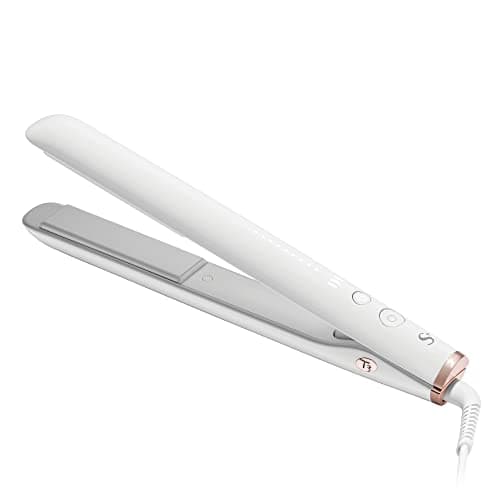
T3 SinglePass StyleMax 1 inch flat iron
Nine heat settings and genuine 100–240 V dual voltage: the most adjustable iron here and the only one you can pack for Europe without a thought.
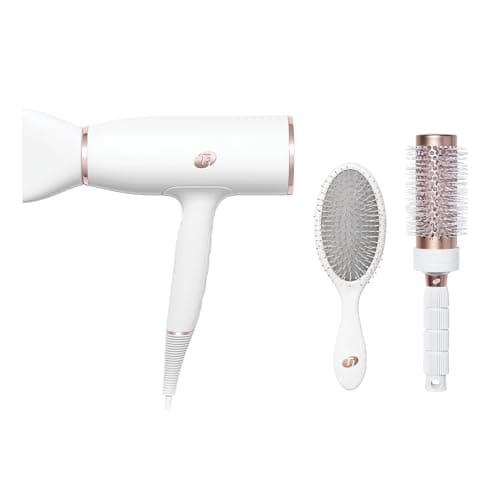
T3 AireLuxe professional hair dryer
Effectively the Featherweight with half an ounce more mass; the same missing wattage figure, and the same 9-foot cord.
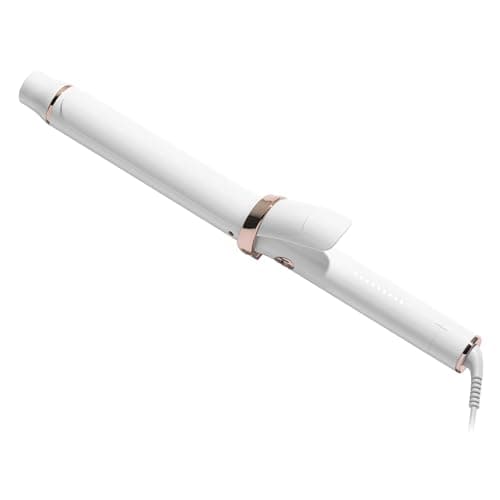
T3 SinglePass Curl X extra-long barrel curling iron
A 6.5-inch barrel and a separate published weight for every barrel size — unusual disclosure in a category where most makers publish a diameter and stop.
Questions people actually ask
What temperature should I use on bleached hair?
Lower than 365°F, which is where most premium tools are fixed or start. No published study establishes a safe threshold, so the honest guidance is to use the lowest setting that works and reduce passes rather than to chase a number.
Can you flat iron bleached hair?
Yes, carefully, with a tool that goes below 365°F. Bleaching already produces molecular changes associated with thermal treatment, so the same setting costs more than it did before the bleach.
Does heat protectant work on bleached hair?
It reduces the rate of heat transfer and improves surface condition, which is real. It does not restore the disulfide bonds that bleaching modifies, so it lowers the cost of a session rather than removing it.
How long should I wait after bleaching before using heat?
There is no published interval to cite, and we will not invent one. What the research supports is that the damage from bleaching is structural and permanent, so waiting does not restore the fiber — it only avoids adding to it sooner.
Sources
- Dyer et al. — Redox proteomic evaluation of bleaching and alkali damage in human hair, Int J Cosmet Sci 2013
- Bloch et al. — Chemical and physical treatments damage Caucasian and Afro-ethnic hair fiber, JEADV 2019
- França-Stefoni et al. — Protein loss from combination straightening and coloring treatments, J Cosmet Dermatol 2015