Hair Dryers
How Long Should It Take to Blow-Dry Your Hair?
The number every dryer advert implies and no maker publishes. What genuinely decides how long you stand there, in order of how much it matters.
Updated September 2026 · Sawyer V.
There is no published answer, because no manufacturer in this category publishes airflow in comparable units — and airflow, not wattage, is what removes water. What you can control is section size, how wet the hair is when you start, and whether you use an attachment for the whole session. Those three change drying time more than any dryer upgrade.
We earn a commission if you buy through the links on this page, at no extra cost to you. It never changes which tool we pick or which one we tell you to skip. How this site is funded.
Why the number does not exist
Drying hair is evaporation. Evaporation depends on how much warm air passes over the wet surface and how much water is there to begin with. The specification that predicts the first half of that is volumetric airflow — cubic feet per minute, or liters per second — and not one manufacturer in our registry publishes it.
What they publish instead is wattage, which is how much electricity the heating element can convert into heat. It is a real number and it is not the same number. A dryer can be very powerful and move air slowly; it will make the air hotter without making the hair dry faster, and it will do more damage doing it.
So when a dryer is advertised as drying hair in some number of minutes, that figure is coming from the manufacturer’s own testing on their own tresses under conditions they chose, and it is not on the spec sheet where you could check it. We do not repeat those claims here. The complete version of this argument is on the wattage page.
What the published numbers can tell you
Wattage is not useless — it is just narrower than it looks. It sets a ceiling on how much heat the dryer can add, and between two dryers of broadly similar design, more watts does usually mean a faster dry. Across different designs it stops being comparable, which is why the Dyson Supersonic at 1,600 W is not straightforwardly slower than a Revlon at 1,875 W.
What each published number does and does not predict
| Published figure | Predicts | Does not predict |
|---|---|---|
| Wattage | Heat available; running cost | Airflow, and therefore drying time |
| Speed settings count | Whether you can turn the air down | How much air there is on the highest setting |
| Heat settings count | How finely you can control temperature | What those temperatures are — almost nobody publishes °F |
| Weight | How your arm feels at minute twelve | Anything about drying performance |
| Attachments | What jobs the dryer can do | How fast it does them |
The four things that actually change your time
1. How wet the hair is when you start
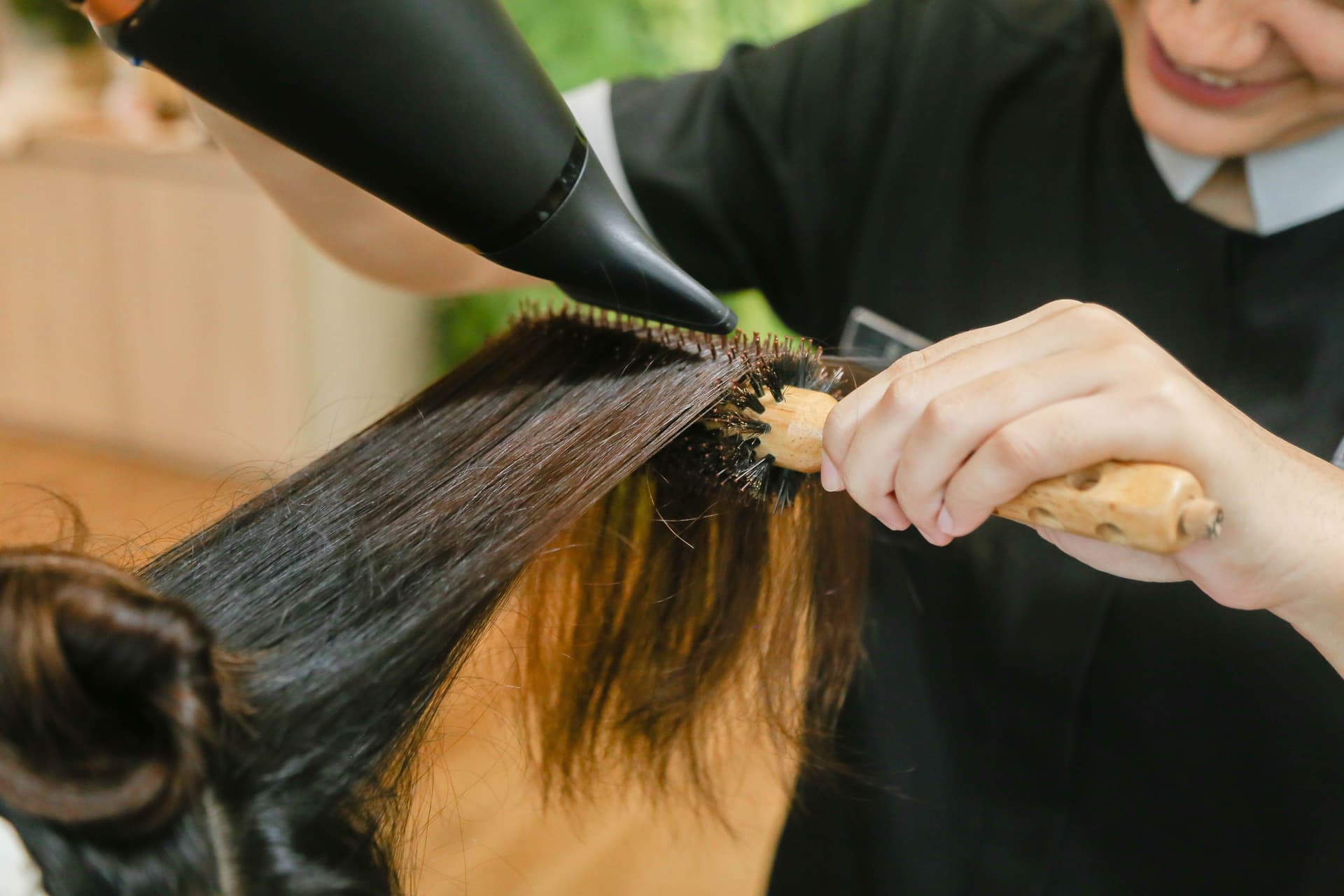
This is the largest single variable and it is free. Hair coming straight out of the shower is holding water on the surface as well as inside the fiber, and a dryer is an extremely inefficient towel. Squeezing — not rubbing — with a towel or a cotton t-shirt, then waiting ten minutes, removes surface water at no energy cost and no heat exposure.
If your hair takes half an hour to dry, this step alone will often take five to eight minutes off it. It is also the step most people skip, because it does not feel like doing anything. The trade-offs of taking it further are on the air-drying page.
2. Section size
A dryer only dries the hair the air actually reaches. Working on a thick handful means the outside dries, the inside stays damp, and you go back over it — which is why a rushed dry so often takes longer than a methodical one.
Clip the hair into four to six sections and work through them deliberately. On thick hair this feels slower for the first two minutes and finishes sooner. It is the same principle that makes flat ironing in small sections quicker overall than trying to do it in three passes.
3. Whether the attachment is on the whole time
A concentrator narrows the airflow. Narrower airflow reaches less hair per second, so it dries a smaller area faster and the whole head slower. Fitting it at the start of the session and leaving it on is one of the most common reasons a blow-dry takes twenty-five minutes instead of fifteen.
Rough-dry on the bare nozzle until the hair stops feeling wet and starts moving freely — around 70 to 80 percent — then fit the attachment for the styling. Full method on the attachments page.
4. Hair length and density, which you cannot change
More hair holds more water. This is the reason drying time comparisons between people are meaningless, and the reason a dryer that transforms one person’s routine does nothing for another’s. If your hair is dense and past your shoulders, fifteen to twenty-five minutes is an ordinary blow-dry and no purchase is going to halve it.
The assumption this site runs on
Every running-cost figure on Strand & Steam assumes fifteen minutes a session, five days a week — sixty-five hours a year. That is a stated assumption, not a measurement, and it is printed underneath every cost box on the site precisely so you can substitute your own.
If your sessions are half that, halve every annual figure we publish. If you dry twice a week rather than five times, multiply by 0.4. The arithmetic is deliberately simple so that you can redo it rather than trust it.
Price per use, at 5 uses a week over 5 years
| What you pay | Cost per use | Cost per year |
|---|---|---|
| $30 | $0.02 | $6.00 |
| $60 | $0.05 | $12.00 |
| $100 | $0.08 | $20.00 |
| $150 | $0.12 | $30.00 |
| $200 | $0.15 | $40.00 |
| $300 | $0.23 | $60.00 |
| $400 | $0.31 | $80.00 |
| $500 | $0.38 | $100.00 |
5 uses a week for 5 years is 1300 uses. Both figures are stated assumptions, not measurements — halve the life and every cost per use doubles. We publish the ladder rather than a worked example for one specific product because a price we typed into a sentence would be wrong within a week.
Faster is not automatically gentler
There is a tempting logic that says a more powerful dryer finishes sooner and therefore does less damage. It is half right, and the half that is wrong matters.
Total heat exposure is roughly temperature multiplied by contact time, so cutting the time does reduce the total. But a more powerful dryer raises the temperature at the same moment it cuts the time, and the measured effects of heat on hair start lower than most people expect. A 1984 study of drying conditions found hair stiffness beginning to increase markedly at around 40°C for a drying time of two to three minutes — Bories et al., International Journal of Cosmetic Science. That is barely warm to the touch.
The practical reading is not “never use heat”. It is that the win comes from removing water mechanically before you apply any heat at all, and from not going back over sections you already dried. What that looks like day to day is on how often you can safely use heat.
A method that reliably saves time
- Squeeze, do not rub, then wait ten minutes with the hair up in a towel or a cotton shirt.
- Clip into four to six sections before switching the dryer on. Two minutes here, five minutes back.
- Rough-dry on the bare nozzle, highest comfortable speed, moderate heat, until the hair moves freely.
- Fit the attachment only for the last quarter, and work section by section with tension.
- Finish each section on cool. Hair sets as it cools; skipping this is why a blowout drops by lunchtime.
If after all of that your dry is still long, the honest diagnosis is usually density rather than equipment. That is the case where a genuinely higher-airflow tool helps, and where the thick-hair page is the right place to start.
The tools on this page
Prices come from the live price layer. Where none is available the button says so rather than showing a number we cannot stand behind.
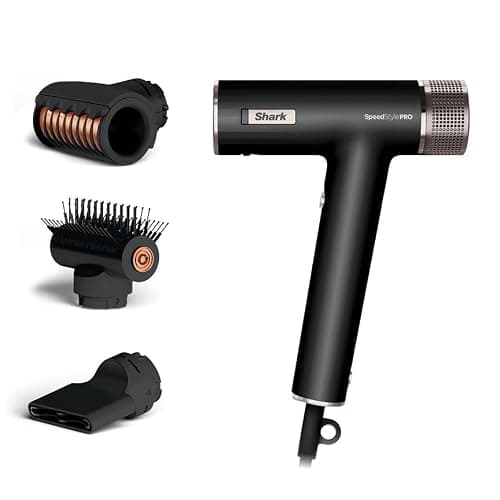
Shark SpeedStyle Pro hair dryer
The highest published wattage of the premium dryers here and the most attachments in the box, at a fraction of Dyson's asking price.
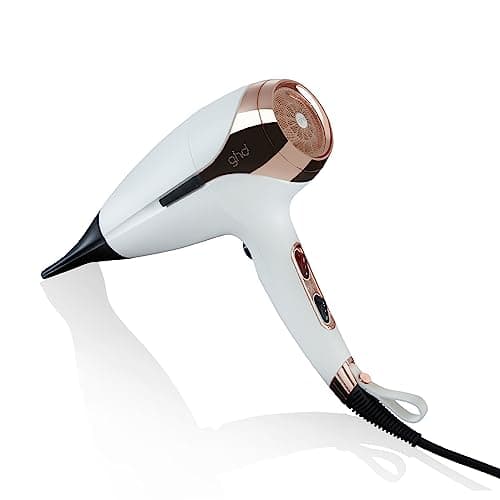
ghd Helios 1875W advanced professional hair dryer
A premium brand publishing exactly the same 1,875 W as a drugstore Revlon — the clearest evidence on this site that wattage is not what the money buys.
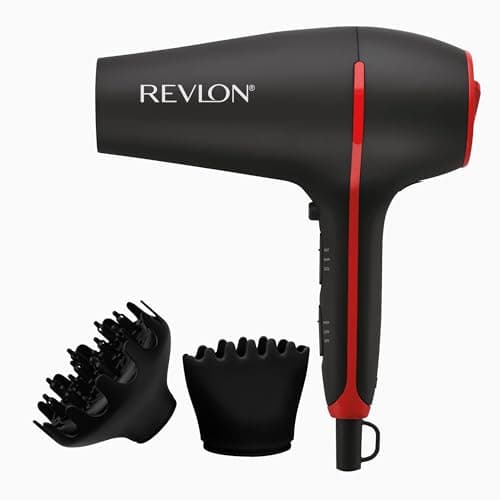
Revlon SmoothStay Coconut Oil-Infused hair dryer
The highest published wattage in this registry attached to the thinnest published spec sheet — Revlon states the watts and almost nothing else.
Questions people actually ask
How long should blow-drying take?
There is no published standard, because no manufacturer publishes airflow in comparable units. For dense hair past the shoulders, fifteen to twenty-five minutes is ordinary. Removing surface water with a towel first is what changes that number most.
Does a more powerful dryer dry hair faster?
Not reliably. Wattage measures heat, not air movement, and air movement is what removes water. Between similar designs more watts usually helps; across different designs the comparison stops meaning anything.
Is it faster to use a diffuser or a concentrator?
Neither. Both narrow or spread the airflow rather than increasing it, so both make the whole-head dry slower than a bare nozzle. Use the bare nozzle for the rough dry and fit the attachment for the styling.
Is it better to air dry first, then blow-dry?
Removing surface water before applying heat reduces total heat exposure and shortens the session. Leaving hair fully wet for hours has its own downsides, so the useful version is a partial air-dry rather than an all-or-nothing choice.