Flat Irons & Straighteners
How to Use a Flat Iron Without Wrecking Your Hair
Almost all flat iron damage comes from three habits, and none of them is the temperature people worry about.
Updated September 2026 · Sawyer V.
Work on completely dry hair, in sections thin enough to see through, at the lowest temperature that finishes in one pass — around 365°F for typical hair, which is where two manufacturers fix their own irons. One slow pass beats three fast ones at the same setting.
We earn a commission if you buy through the links on this page, at no extra cost to you. It never changes which tool we pick or which one we tell you to skip. How this site is funded.
The three habits that cause the damage
Not the tool. Not the brand. Three things people do:
- Ironing hair that is not completely dry. Published DSC work shows the melting point of ordered keratin falls from about 205°C dry to 155°C at 23% moisture — 401°F down to 311°F, a ninety-degree drop from water alone. Damp hair at a setting you consider conservative is past the line.
- Taking sections that are too thick. The plate only reaches the outside, the middle stays unstraightened, and you pass again. Every extra pass is extra exposure.
- Turning the dial up when a pass does not take. This is the habit that turns an occasional iron into damaged hair over months, and it is why ghd sells irons with no dial at all.
The method
- Start with clean, completely dry hair. Not towel-dried, not nearly dry. Dry.
- Apply a heat protectant made for dry hair — a cream, oil or dry spray — and let it absorb fully. Do not spray a wet product onto hair you are about to iron; that is putting the water back.
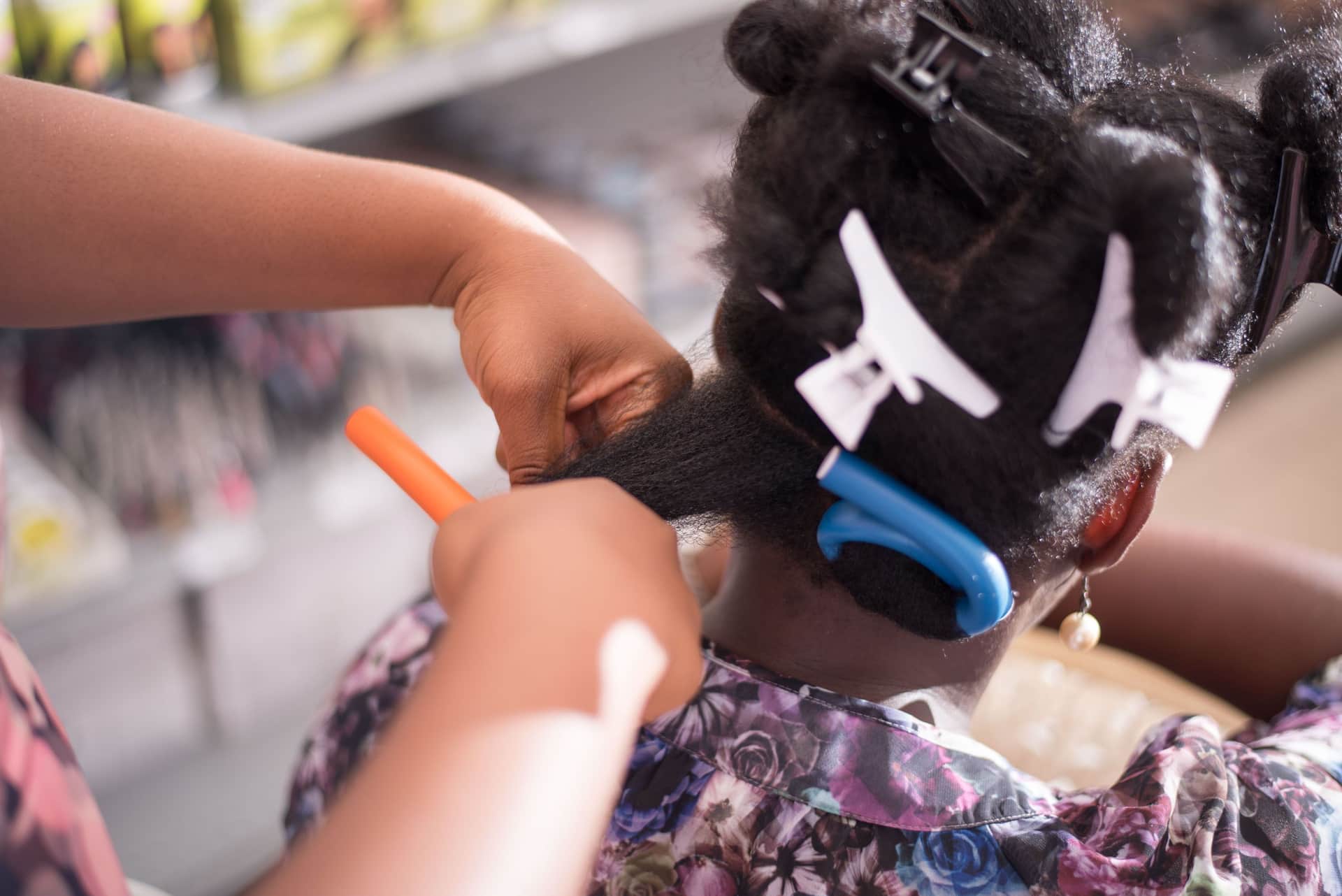
- Section properly. Four sections minimum: nape, back, and each side. Clip everything you are not working on out of the way.
- Take sub-sections you can see through. If you cannot see the clip behind the piece, it is too thick.
- Set the temperature and leave it. Start around 365°F. Only go up if a single pass genuinely fails, and never past 400°F.
- One slow, continuous pass from near the root to the ends. Slow and steady beats fast and repeated.
- Move on. Do not go back to perfect a section — that is the second pass you were avoiding.
- Let it cool completely before touching it. Hair sets in the shape it cools into.
Where to start the pass
About half an inch to an inch from the scalp. Closer and you risk burning skin; further and you leave a visible bend at the root that undoes the point of the exercise.
On short hair the margin is much tighter, and the standard technique is to hold a fine-tooth comb under the section as a barrier — covered on the short-hair page.
The temperature, from the manufacturers
Where to set it, and who says so
| Hair | Starting point | Source of the number |
|---|---|---|
| Fine, damaged or color-treated | Below 365°F | Our reasoning from the published melting-point data |
| Normal / medium | 365°F | ghd fixes both its irons here; Dyson names it for the Corrale |
| Thick or coarse | 365°F, up only if one pass fails | Same anchors; coarse hair is not more heat-tolerant in published terms |
| Coily, pressing | Higher, but under 400°F | 401°F is the published dry melting point — no headroom above it |
| Any hair, still damp | Do not iron it | Melting point falls to about 311°F at 23% moisture |
Where a manufacturer publishes a number we name them. Where nobody publishes a per-hair-type figure, the row is our reasoning from the research and is labeled as such.
Curling with it
Rotate the iron a half-turn as you pull it through the section, so the hair bends around the plate edge rather than passing between two flat surfaces. Keep moving — a stationary rotated iron is exactly the concentrated exposure you are trying to avoid.
This produces an S-shaped wave rather than a round spiral, which suits undone looks well and uniform curls poorly. It also takes practice, and the practice period involves slow hesitant passes that sit on one spot. Full comparison at curling iron vs flat iron.
What to do afterwards
- Do not wash it that day. The style is on the hair; washing removes it and buys you another heat session sooner.
- Clean the plates once they are cold. Baked-on product changes how heat transfers and makes the next session worse — how to do that properly.
- Space the next session out. Frequency is the biggest lever on cumulative damage, bigger than temperature — the arithmetic.
If it still is not working
Hair that will not hold straight is usually still slightly damp, or was not stretched during the blow-dry so the iron is doing all the work. Hair that goes straight and then reverts within hours is a humidity problem, which is a cuticle-condition question rather than a technique one — start at the signs of heat damage.
The tools on this page
Prices come from the live price layer. Where none is available the button says so rather than showing a number we cannot stand behind.
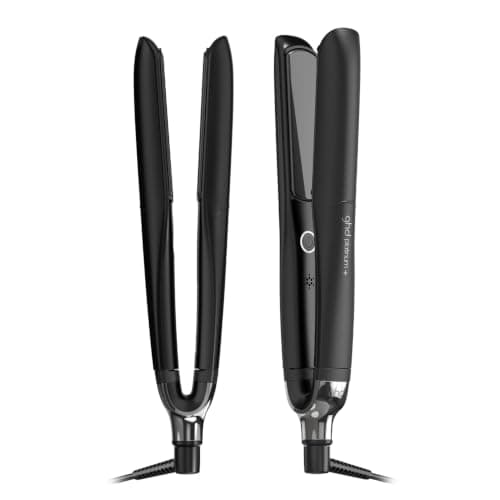
ghd Platinum+ flat iron (1 inch plate)
One temperature, 365°F, no dial to get wrong — the strongest heat-discipline argument in the category, and the longest iron warranty here at three years.
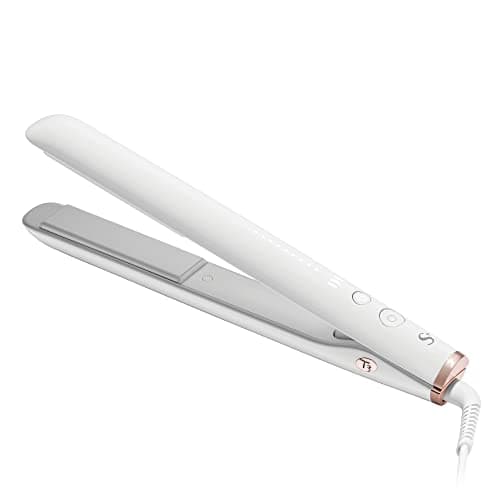
T3 SinglePass StyleMax 1 inch flat iron
Nine heat settings and genuine 100–240 V dual voltage: the most adjustable iron here and the only one you can pack for Europe without a thought.
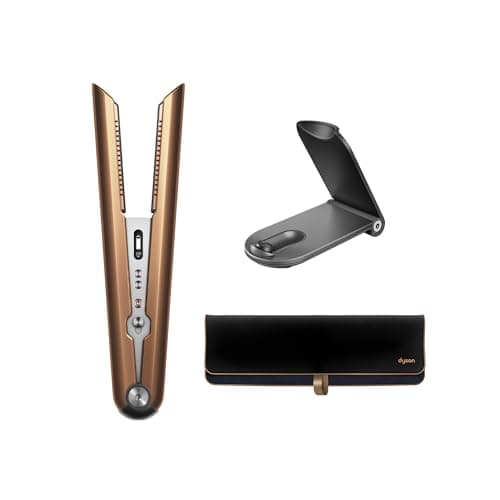
Dyson Corrale straightener
Cordless, and the only iron here whose plates flex. The 200 W figure is a battery rating and is not comparable to a corded iron's draw.
Questions people actually ask
What temperature should I set my flat iron to?
Around 365 degrees Fahrenheit for typical hair — that is where ghd fixes both its irons and where Dyson tells Corrale owners to start. Below that for fine or damaged hair, and never above 400, which is close to the published melting point of dry hair keratin.
Can you flat iron damp hair?
No. Published research shows the melting point of the ordered keratin in hair falls from about 401 degrees Fahrenheit when dry to about 311 degrees at 23% moisture. Damp hair at a conservative setting is already past the point where structural change is observed.
How many passes should I do?
One, slowly. Three passes at 380 degrees is more total heat exposure than one at 420. If a single pass is not working, the section is too thick or the hair is not fully dry — those are the fixes, not more passes.
How thin should my sections be?
Thin enough to see through. If you cannot see the clip behind the piece you are holding, the plate will only reach the outside of the section and you will end up passing again.
Sources
- ghd — Platinum+ published fixed 365°F styling temperature
- Dyson — Corrale published starting-temperature guidance
- Cao J, Leroy F., “Depression of the melting temperature by moisture for alpha-form crystallites in human hair keratin”, Biopolymers 2005;77(1):38–43
- Lima CRRC et al., “Heat-damaged evaluation of virgin hair”, Journal of Cosmetic Dermatology 2019;18(6):1885–1892