Flat Irons & Straighteners
What Flat Iron Plate Size Do You Actually Need?
One inch is the default because it is the only width that does every job acceptably. Everything else is a trade you should make deliberately.
Updated September 2026 · Sawyer V.
One inch suits most hair and is the right default. Go wider — 1.5 inch and up — only if your hair is both long and dense and you want fewer passes. Go narrower if your hair is short, if you have a fringe, or if you want to curl with the iron.
We earn a commission if you buy through the links on this page, at no extra cost to you. It never changes which tool we pick or which one we tell you to skip. How this site is funded.
What plate width actually changes
Three things, and they pull against each other.
- Coverage per pass. A wider plate grips a wider section, so a full head takes fewer strokes. This is the only reason wide plates exist and it is a real one on long dense hair.
- Root access. A wide plate is a physically larger object to maneuver near your scalp. On short hair it simply cannot get there.
- Curl ability. Curling with a flat iron means rotating it so the hair bends around the plate edge. Narrow plates do this cleanly; wide plates produce a slack, uneven bend.
The table
Plate width by hair length and density
| Hair | Width | What you gain | What you give up |
|---|---|---|---|
| Short / bob / pixie | 0.5–1 in | Root access, clean end turns, scalp clearance | Coverage — irrelevant when there is little hair |
| Shoulder length, medium density | 1 in | The all-rounder; straightens and curls | Nothing meaningful |
| Long, medium density | 1–1.5 in | Fewer passes without losing control | Slightly harder near the root |
| Long and dense | 1.5 in and up | Materially shorter sessions | Root access, curl ability, fringe work |
| Coily, any length | 1 in | Control and grip on small sections | Coverage — sections are small regardless |
| Fringe or heavy layers | 1 in or narrower | Ability to style short pieces at all | Coverage on the lengths |
Of the irons in our registry only the ghd Chronos is published in more than one plate width. Every other iron we list is 1 inch.
Why 1 inch is the default
Because it is the only width that does every job acceptably. It straightens long hair without being tedious, it reaches a root on a bob, it turns an end under, and it can be rotated to curl. Nothing about it is optimal and everything about it is adequate, which for a tool most people own exactly one of is the correct design.
If you are buying your first iron, buy 1 inch. If you are buying your second because the first was frustrating, the frustration tells you which direction to move.
Plate length matters too, and nobody publishes it
Width gets printed on the box. Plate length — how far the heated surface runs down the tool — is almost never stated, and it changes how the iron behaves as much as width does. Longer plates suit long straight strokes; shorter plates turn ends and work near a root more cleanly.
Not one iron in our registry publishes a plate length. That is a real gap, and it is the sort of thing you can only judge by handling the tool — which is precisely why we will not rank irons on it.
What width does not fix
Temperature. A wide plate at 450°F does more damage per pass than a narrow plate at 450°F, simply because it is touching more hair. Choosing a plate width is a decision about efficiency and access, not about safety, and the safety decision is the temperature you set.
Both ghd irons in our registry fix that decision at 365°F and remove the dial. Published research puts the melting point of ordered keratin in dry hair at about 401°F, which is the number that should govern your setting whatever width you buy — the full evidence.
Buying for the hair you have
The most common expensive mistake in this category is buying a wide plate because your hair is long, without accounting for the fringe you also have, or the bob you are growing out, or the fact that you curl with your iron more often than you straighten with it.
Be honest about what you actually do on a normal week rather than what you imagine doing. If you curl with your iron at all, do not buy a wide plate — the two are functionally incompatible, and that is covered at curling iron vs flat iron.
Per hair type: the case for narrow is at flat irons for short hair, and the case for wide is at flat irons for thick hair.
The tools on this page
Prices come from the live price layer. Where none is available the button says so rather than showing a number we cannot stand behind.
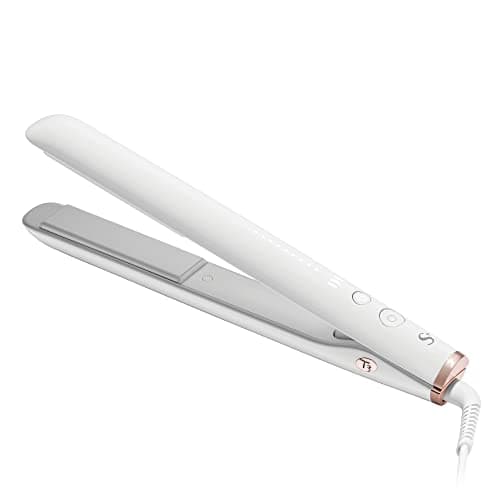
T3 SinglePass StyleMax 1 inch flat iron
Nine heat settings and genuine 100–240 V dual voltage: the most adjustable iron here and the only one you can pack for Europe without a thought.
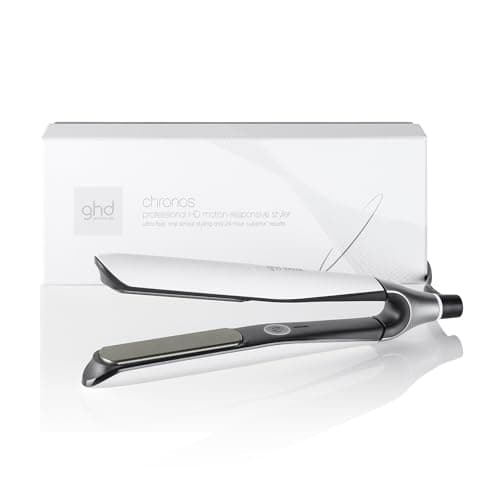
ghd Chronos flat iron (1 inch plate)
The Platinum+ argument with a re-engineered hinge and a wide-plate option — same fixed 365°F, same three-year warranty, more plate choice.
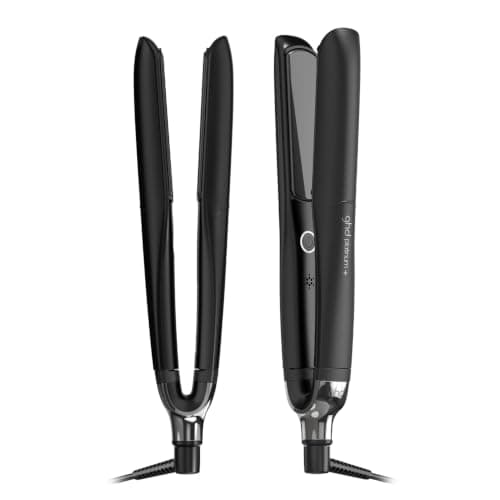
ghd Platinum+ flat iron (1 inch plate)
One temperature, 365°F, no dial to get wrong — the strongest heat-discipline argument in the category, and the longest iron warranty here at three years.
Questions people actually ask
Is a 1 inch or 1.5 inch flat iron better?
1 inch for most people, because it straightens, reaches a root and can curl. 1.5 inch only if your hair is both long and dense and shortening the session matters more than root access or curl ability.
What plate size do I need for long hair?
1 to 1.5 inch depending on density. Long but fine hair does fine on 1 inch; long and genuinely dense hair is where a wider plate earns its place by cutting the number of passes.
Can you curl with a wide flat iron?
Poorly. Curling means rotating the iron so hair bends around the plate edge, and a wide plate produces a slack, uneven bend. If you curl with your iron, buy 1 inch or narrower.
Does plate size affect heat damage?
Only in the sense that a wider plate touches more hair per pass. The damage decision is the temperature you set, not the width you buy — and published research puts the melting point of dry hair keratin at about 401 degrees Fahrenheit.