Flat Irons & Straighteners
The Best Flat Irons for Short Hair and Bobs in 2026
On a bob every section is within two inches of your scalp. That single fact rules out most of what gets recommended for long hair.
Updated September 2026 · Sawyer V.
Short hair needs a narrow plate — 1 inch at most — and a body light enough to control near the scalp. Power is close to irrelevant because there is so little hair. The real hazard is burning your scalp, since every section sits within a couple of inches of it.
We earn a commission if you buy through the links on this page, at no extra cost to you. It never changes which tool we pick or which one we tell you to skip. How this site is funded.
Quick picks
Tap any row to jump to the full write-up. Prices come from the live price layer; where none is available the button says so rather than showing a number we cannot stand behind.
| # | Product | Best for | Price |
|---|---|---|---|
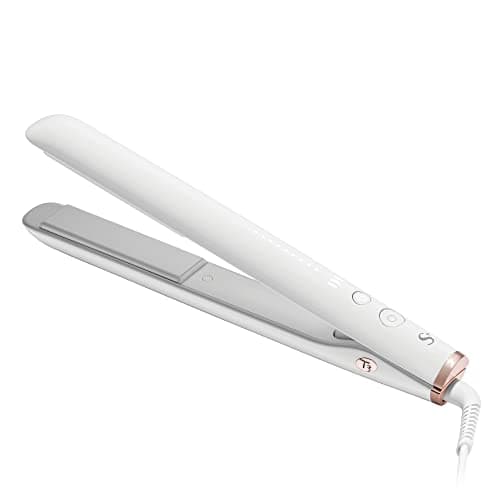
| 1 | T3 SinglePass StyleMax 1 inch flat iron 11.1 oz published — the lightest iron in our registry — with 1 inch ceramic plates and nine heat settings. | Precision work close to the scalp | |
| 2 | 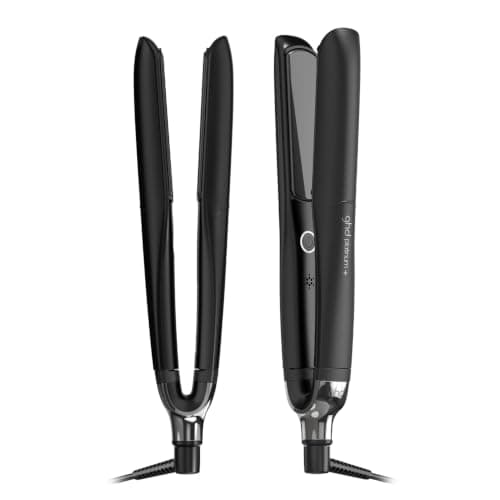 ghd Platinum+ flat iron (1 inch plate) One fixed 365°F with no dial, 1 inch floating plates, and a three-year warranty. | Short hair that has been over-ironed before | |
| 3 | 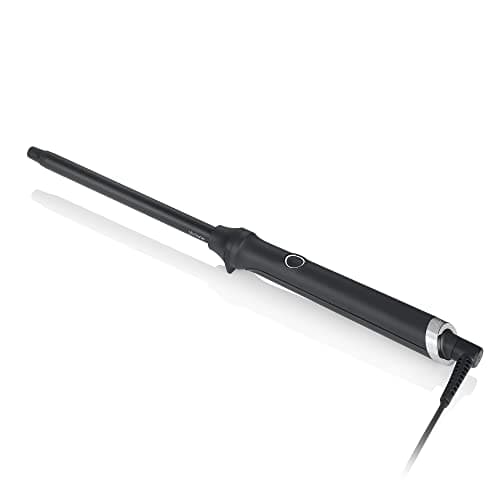 ghd Curve Thin curling wand (0.5 inch barrel) A 0.5 inch barrel — the smallest in our registry — for hair too short to wrap around anything larger. | Movement and shape in a short cut | |
| — | 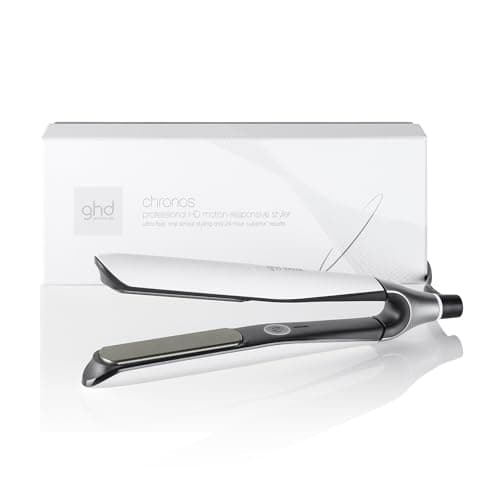 ghd Chronos flat iron (1 inch plate) Sold in a wide-plate version, and wide plates cannot reach a short root. We’d skip this | Not a bob |
1. Lightest and most controllable
T3 SinglePass StyleMax 1 inch flat iron
Best for: Precision work close to the scalp
11.1 oz published — the lightest iron in our registry — with 1 inch ceramic plates and nine heat settings.
On a bob the iron spends its whole life two inches from your head, held at awkward angles, often working against a mirror. Weight and plate width are the two specifications that decide whether that is manageable, and this iron leads our registry on both.
11.1 oz without the cord is meaningfully lighter than everything else we list. 1 inch CeraGloss ceramic plates are the sensible maximum for short hair rather than a compromise.
Nine heat settings, which on short hair matters because you can genuinely work low — sections are small and straighten in one pass far more easily than long hair does.
What’s wrong with it
No published wattage, and no published cord length beyond noting that it swivels. Nine settings also means nine chances to pick one hotter than a bob needs.
Published specifications — T3 SinglePass StyleMax 1 inch flat iron
| Wattage | Not published |
|---|---|
| Heat settings | 9 heat settings |
| Speed settings | Not applicable |
| Weight | 11.1 oz (cord not included) |
| Cord length | 360-degree swivel cord — length not published |
| Noise (dB) | Not applicable |
| Attachments | None supplied |
| Plate / barrel | CeraGloss ceramic plates, 1 in |
| Dual voltage | Yes — auto world voltage, 100–240 V |
| Warranty | 2-year warranty |
Every figure above is taken from T3 Micro — SinglePass StyleMax 1 inch flat iron product page. “Not published” means the figure does not appear on that page — it is not an estimate withheld, it is a number the manufacturer does not state. How we compile these.
What it costs to run for a year
T3 does not publish a wattage for this tool, so there is nothing honest to compute. The formula is watts ÷ 1,000 × hours a year × your rate per kWh; if you find a rating plate on the handle, 65 hours a year and 18.34 cents per kilowatt-hour will get you the rest of the way.
2. The setting you cannot overshoot
ghd Platinum+ flat iron (1 inch plate)
Best for: Short hair that has been over-ironed before
One fixed 365°F with no dial, 1 inch floating plates, and a three-year warranty.
Short hair gets ironed more often than long hair, because the whole style is visible and a bob that has gone flat is obvious. More frequency at a fixed sensible temperature is a much better position than less frequency at a temperature you keep nudging up.
365°F fixed, with no way to overshoot. 1 inch precision-milled floating high-gloss plates, a 20-second heat-up, universal voltage and a 30-minute automatic sleep mode.
Three-year warranty, the longest of any iron here.
What’s wrong with it
You cannot go below 365°F either, and a very short pixie takes so little heat that a lower option would be welcome. No published weight, which matters on a tool you hold at odd angles.
Published specifications — ghd Platinum+ flat iron (1 inch plate)
| Wattage | Not published |
|---|---|
| Heat settings | One fixed temperature — 365°F |
| Speed settings | Not applicable |
| Weight | Not published |
| Cord length | 9 ft power cable |
| Noise (dB) | Not applicable |
| Attachments | None supplied |
| Plate / barrel | Precision-milled floating high-gloss plates, 1 in |
| Dual voltage | Yes — universal voltage |
| Warranty | 3-year warranty |
Every figure above is taken from ghd — Platinum+ flat iron (1 inch plate) product page. “Not published” means the figure does not appear on that page — it is not an estimate withheld, it is a number the manufacturer does not state. How we compile these.
What it costs to run for a year
ghd does not publish a wattage for this tool, so there is nothing honest to compute. The formula is watts ÷ 1,000 × hours a year × your rate per kWh; if you find a rating plate on the handle, 65 hours a year and 18.34 cents per kilowatt-hour will get you the rest of the way.
3. For bend rather than straight
ghd Curve Thin curling wand (0.5 inch barrel)
Best for: Movement and shape in a short cut
A 0.5 inch barrel — the smallest in our registry — for hair too short to wrap around anything larger.
Short hair frequently does not want to be straighter, it wants shape. A flat iron flattens; a very small barrel puts bend into a length that a normal barrel cannot even hold.
At 0.5 inch this is the smallest barrel we list, and it is the one size that reliably takes a curl in a bob. ghd publishes a 30-second heat-up, a cool tip, a built-in safety stand and a 60-minute automatic sleep mode.
Universal voltage, 8.8 ft swivel cord, fixed 365°F, two-year warranty.
What’s wrong with it
It is not a straightener, so it does not replace an iron. Clipless wands also need a heat glove and more practice than a clamped tool.
Published specifications — ghd Curve Thin curling wand (0.5 inch barrel)
| Wattage | Not published |
|---|---|
| Heat settings | One fixed temperature — 365°F |
| Speed settings | Not applicable |
| Weight | Not published |
| Cord length | 8.8 ft, 360-degree swivel cord |
| Noise (dB) | Not applicable |
| Attachments | Cool tip, built-in safety stand |
| Plate / barrel | 0.5 in thin barrel, clipless |
| Dual voltage | Yes — universal voltage |
| Warranty | 2-year warranty |
Every figure above is taken from ghd — Curve Thin curling wand product page. “Not published” means the figure does not appear on that page — it is not an estimate withheld, it is a number the manufacturer does not state. How we compile these.
What it costs to run for a year
ghd does not publish a wattage for this tool, so there is nothing honest to compute. The formula is watts ÷ 1,000 × hours a year × your rate per kWh; if you find a rating plate on the handle, 65 hours a year and 18.34 cents per kilowatt-hour will get you the rest of the way.
The one we'd skip
ghd Chronos flat iron (1 inch plate)
Best for: Not a bob
Sold in a wide-plate version, and wide plates cannot reach a short root.
This is a skip about buying the wrong variant rather than about a bad tool, and it is the most common short-hair mistake we can point at.
ghd publishes the Chronos in a wide-plate version, and on long dense hair that is genuinely the right choice — we recommend it on the thick-hair page. On a bob a wide plate cannot get near the root, cannot turn an end under cleanly, and will burn your scalp long before it straightens the first inch.
The 1 inch Chronos is a perfectly good short-hair iron. It is the wide plate that is wrong here, and the two sit next to each other on the same product page — which is exactly how people buy the wrong one.
What’s wrong with it
The wide-plate variant is unusable on short hair, and ghd publishes no weight or cord length for either version.
Published specifications — ghd Chronos flat iron (1 inch plate)
| Wattage | Not published |
|---|---|
| Heat settings | One fixed temperature — 365°F |
| Speed settings | Not applicable |
| Weight | Not published |
| Cord length | Not published |
| Noise (dB) | Not applicable |
| Attachments | None supplied |
| Plate / barrel | Floating ceramic plates with ultra-gloss coating, 1 in; wide-plate version also sold |
| Dual voltage | Not published |
| Warranty | 3-year warranty |
Every figure above is taken from ghd — Chronos flat iron (1 inch plate) product page. “Not published” means the figure does not appear on that page — it is not an estimate withheld, it is a number the manufacturer does not state. How we compile these.
What it costs to run for a year
ghd does not publish a wattage for this tool, so there is nothing honest to compute. The formula is watts ÷ 1,000 × hours a year × your rate per kWh; if you find a rating plate on the handle, 65 hours a year and 18.34 cents per kilowatt-hour will get you the rest of the way.
What changes when hair is short
How the priorities shift on a short cut
| Specification | On long hair | On short hair |
|---|---|---|
| Plate width | Wider covers more per pass | 1 in maximum — root access decides everything |
| Weight | Matters over a long session | Matters for control at awkward angles |
| Heat settings | Range for varied texture | Low end matters; sections are tiny |
| Cord length | Freedom of movement | Working close to a mirror |
| Plate length | Longer strokes on long hair | Shorter plates turn ends more cleanly |
| Power | Shortens the session | Nearly irrelevant — there is little hair |
The hazard nobody mentions
Burning your scalp. On long hair you have several inches of runway before precision matters. On a pixie the entire style lives within two inches of skin, and a plate at 365°F is at 365°F whether it is touching hair or not.
- Use a comb as a barrier between the plate and your scalp on root work. A fine-tooth comb held under the section is the standard salon technique for exactly this.
- Work at lower temperatures than long hair needs. Short sections straighten in one pass far more easily, so the headroom is unnecessary.
- Choose narrow plates. More clearance around the tool means more margin for error near skin.
- Do not iron the last half-inch at the root at all unless the style demands it. Most bobs read better with a little root lift anyway.
Straight is often not the goal
This is the thing most short-hair styling advice gets backwards. A bob that is genuinely poker-straight from root to tip frequently reads flat and heavy. What usually looks better is a straight mid-length with the ends turned under or flicked out — which is a bend, not a straighten.
A flat iron does that with a wrist rotation at the last inch. A very small barrel does it more easily. If your short hair looks lifeless after ironing, the tool is probably doing exactly what you asked and the ask is the problem — worth reading the curling irons for short hair before buying another straightener.
Frequency is the real risk
Short cuts get styled more often, because there is nowhere for an off-day to hide. That means more heat sessions per month than a long-haired person doing the same routine, which makes temperature discipline matter more rather than less.
The arithmetic on frequency — and it is stark — is at how often you can use heat. Going from daily to three times a week more than halves your total exposure, which is a bigger change than any tool upgrade available.
Price per use, at 5 uses a week over 5 years
| What you pay | Cost per use | Cost per year |
|---|---|---|
| $30 | $0.02 | $6.00 |
| $60 | $0.05 | $12.00 |
| $100 | $0.08 | $20.00 |
| $150 | $0.12 | $30.00 |
| $200 | $0.15 | $40.00 |
| $300 | $0.23 | $60.00 |
| $400 | $0.31 | $80.00 |
| $500 | $0.38 | $100.00 |
5 uses a week for 5 years is 1300 uses. Both figures are stated assumptions, not measurements — halve the life and every cost per use doubles. We publish the ladder rather than a worked example for one specific product because a price we typed into a sentence would be wrong within a week.
Questions people actually ask
What size flat iron is best for short hair?
1 inch plates or narrower. Wide plates cannot reach close to the root on a bob and fight you when turning an end under, so plate width matters more here than on any other length.
How do I flat iron short hair without burning my scalp?
Hold a fine-tooth comb under the section as a barrier for root work, use a narrower plate for clearance, and work at a lower temperature — short sections straighten in one pass much more easily than long ones.
Why does my bob look flat after straightening?
Because a flat iron flattens, and a bob that is poker-straight from root to tip usually reads heavy. A bend at the ends, from a wrist rotation or a small barrel, tends to look better than more straightening.