Guides
Heat-Free Styling That Actually Works
The most effective thing on this entire site costs nothing and earns us nothing. Here it is anyway.
Updated September 2026 · Sawyer V.
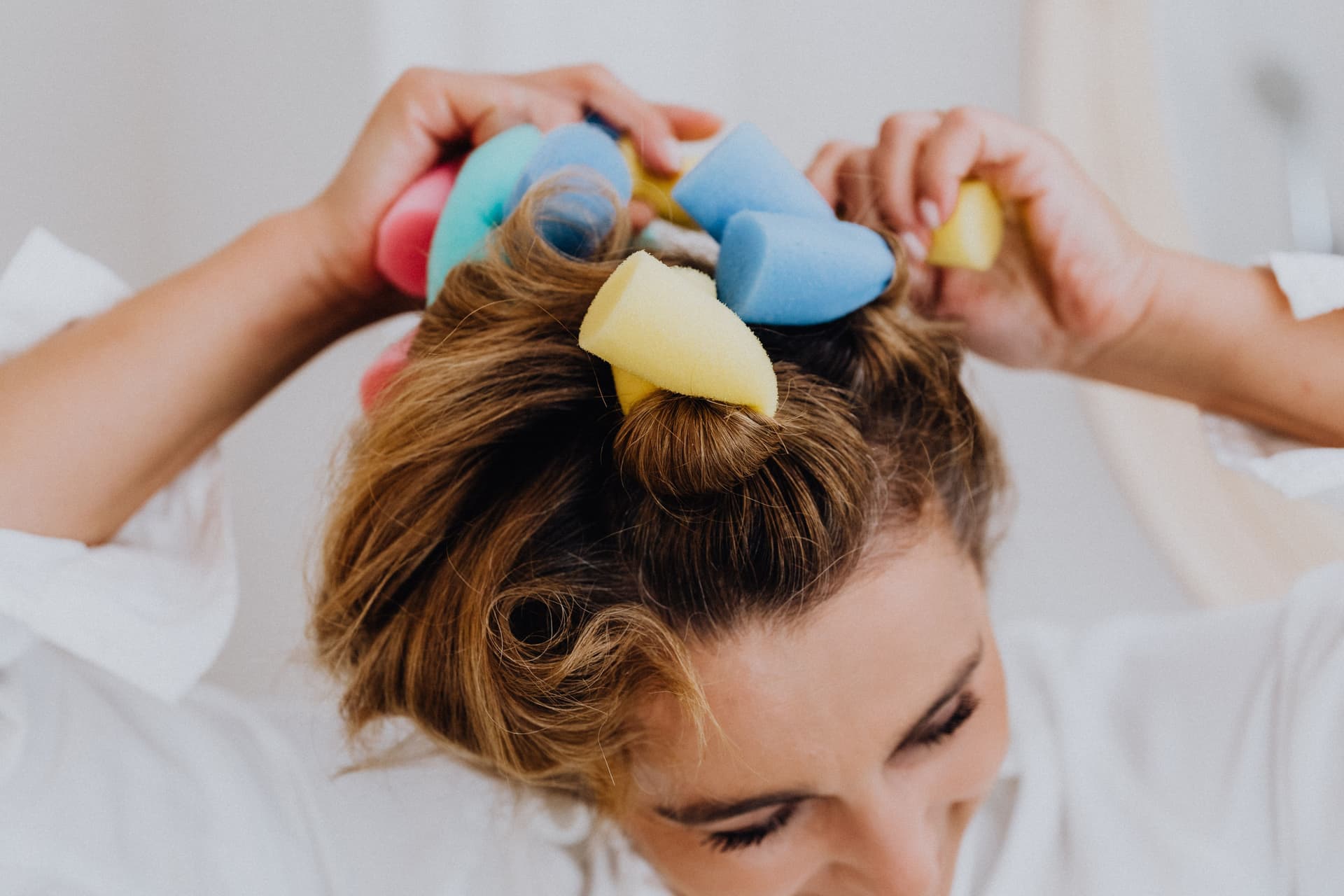
Heatless methods set hair by drying it in a shape rather than heating it into one, which works because hair holds whatever form it dries and cools in. They take longer and give softer results. Going from five heat sessions a week to three cuts your exposure by forty percent.
We earn a commission if you buy through the links on this page, at no extra cost to you. It never changes which tool we pick or which one we tell you to skip. How this site is funded.
Why heatless methods work at all
The same mechanism heat styling uses. Hair is held in shape by hydrogen bonds that break when the fiber is wet and reform as it dries — which is why a blow-dry holds until you next wash it, and why sleeping on wet hair leaves a crease you cannot brush out.
Heat speeds that process up and lets you use tension precisely. Heatless methods do the same thing slowly, using time and a physical form instead. The bonds do not know the difference.
What you lose is precision and speed. What you avoid is the thing that actually damages hair: published research puts the melting point of the ordered keratin in dry hair at about 401°F, and at about 311°F once hair carries 23% moisture. No heatless method goes anywhere near either figure.
The methods, and what each actually gives you
Heatless methods by result and effort
| Method | Result | Time | Suits |
|---|---|---|---|
| Overnight rollers or curlers | Defined, bouncy curls | Set on damp, sleep on it | Most hair types; the most reliable curl |
| Robe-cord or sock wrap | Loose spiral waves | Set on damp, several hours | Long hair; the most popular current method |
| Braids, damp | Crimped waves; tighter with more braids | Overnight | Any length; least equipment |
| Twisted buns | Soft bend, mostly through the length | A few hours | Quick, low-commitment shape |
| Pin curls | Tight, vintage-style curls | Overnight | Short to mid-length hair |
| Air-dry with product and no handling | Your own texture, at its best | Passive | Wavy and curly hair specifically |
The rules that decide whether it works
Almost every heatless failure comes from getting one of these wrong.
- Damp, not wet, not dry. Soaking hair will still be damp in the morning and the shape will fall out within an hour. Dry hair will not take a set at all. Roughly eighty percent dry is the target.
- It must be completely dry before you take it down. This is the single biggest cause of disappointment. If any part is damp, the shape has not set.
- Smaller sections give tighter, longer-lasting results. Same rule as a curling barrel.
- Tension needs to be even. Uneven tension gives uneven curls, and unlike a barrel you cannot go back and fix one.
- Do not brush it out immediately. Separate with fingers, then brush only if you want it looser.
What heatless will not do
Straighten anything. There is no heatless method that makes curly hair straight — wrapping and banding can stretch it, and stretched is not straight. If genuinely straight is the goal, that is a flat iron job and the honest move is to do it well and infrequently rather than badly and often.
It also will not give you the crisp, uniform result a barrel produces. Heatless curls are softer and less consistent, which many people prefer and some genuinely do not.
The arithmetic, which is the actual point
You do not have to eliminate heat. Displacing some of it is where nearly all the benefit is, because damage accumulates with total exposure and hair does not recover between sessions.
Relative annual heat exposure by frequency
| Heat sessions per week | Per year | Relative exposure |
|---|---|---|
| 7 | 364 | 100% |
| 5 | 260 | 71% |
| 3 | 156 | 43% |
| 2 | 104 | 29% |
| 1 | 52 | 14% |
Assumes the same temperature and contact time each session. Arithmetic rather than a study — but it is the arithmetic that shows why frequency is the lever worth pulling.
Replacing two heat sessions a week with heatless ones takes you from five to three, which is a forty percent cut in annual exposure. No tool upgrade available on this site changes anything by forty percent.
The realistic version
Heatless styling is slower and requires planning, and most people who try to switch entirely give up within a fortnight. The version that sticks is partial: heatless on the days you can set it the night before, heat on the days you cannot.
Wash days are the natural fit, since the hair is already damp and you were going to wait for it to dry anyway. That alone is one or two sessions a week displaced with no extra effort at all.
Where this leaves the tools
Still useful, and used less. This is an odd thing for a site funded by product links to publish, which is exactly why we would rather publish it — the most effective change available to most readers is free, and saying so is the whole basis on which anything else here can be believed.
When you do use heat, the tools that make restraint easiest are at the lowest-heat tools we can document, and the frequency argument in full is at how often you can use heat.
The tools on this page
Prices come from the live price layer. Where none is available the button says so rather than showing a number we cannot stand behind.
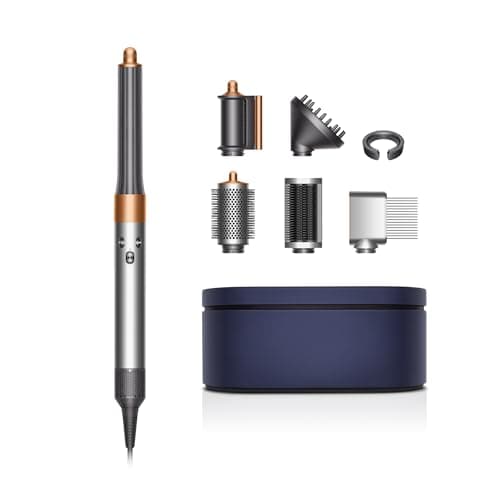
Dyson Airwrap multi-styler (Complete Long)
1,300 W is the lowest published wattage of any mains tool in this registry. That is the design argument, and it is also why it is slow on thick hair.
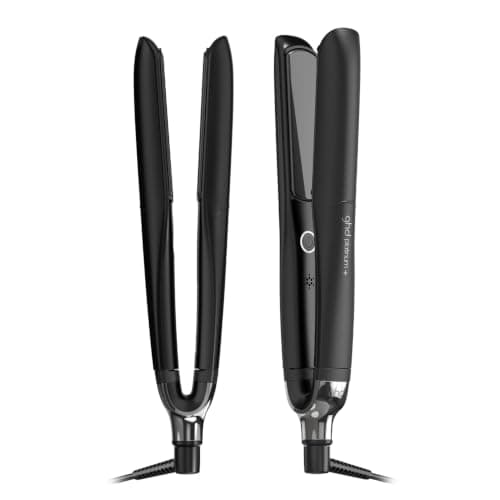
ghd Platinum+ flat iron (1 inch plate)
One temperature, 365°F, no dial to get wrong — the strongest heat-discipline argument in the category, and the longest iron warranty here at three years.
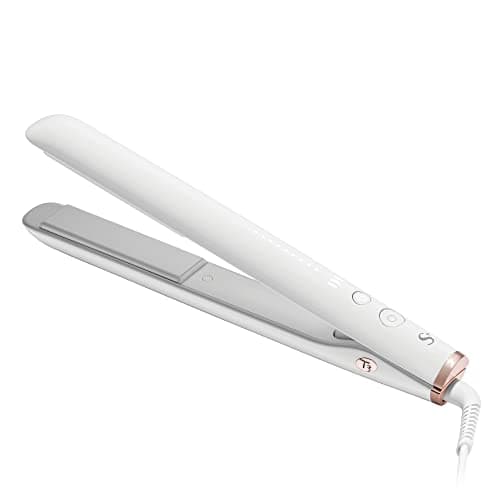
T3 SinglePass StyleMax 1 inch flat iron
Nine heat settings and genuine 100–240 V dual voltage: the most adjustable iron here and the only one you can pack for Europe without a thought.
Questions people actually ask
Do heatless curls actually work?
Yes, by the same mechanism heat styling uses — hair holds whatever shape it dries and cools in. Set on damp hair, leave it until completely dry, and use smaller sections for tighter results.
Why did my heatless curls fall out?
Almost always because the hair was not completely dry when you took it down, or it was too wet when you set it. Both leave the bonds unset, and the shape relaxes within the hour.
Can you straighten hair without heat?
Not genuinely. Wrapping and banding can stretch curly hair, and stretched is not straight. If straight is the goal, a flat iron used well and infrequently is more honest than a method that will disappoint you.
How much does cutting heat styling actually help?
Going from five sessions a week to three is a forty percent cut in annual exposure, and damage accumulates because hair does not recover between sessions. No tool upgrade changes anything by that margin.