Heat Damage & Protection
The Hair Tools That Put the Least Heat on Your Hair
No hot tool is a gentle tool. But the published specifications do separate them, and the gaps are larger than the marketing suggests.
Updated September 2026 · Sawyer V.
The lowest-heat powered options are air stylers, which shape with moving air rather than a clamped plate and publish the lowest wattages in the category, and irons with a genuinely low fixed or fine-grained setting. No powered tool is heat-free, and using heat less often beats all of them.
We earn a commission if you buy through the links on this page, at no extra cost to you. It never changes which tool we pick or which one we tell you to skip. How this site is funded.
Quick picks
Tap any row to jump to the full write-up. Prices come from the live price layer; where none is available the button says so rather than showing a number we cannot stand behind.
| # | Product | Best for | Price |
|---|---|---|---|
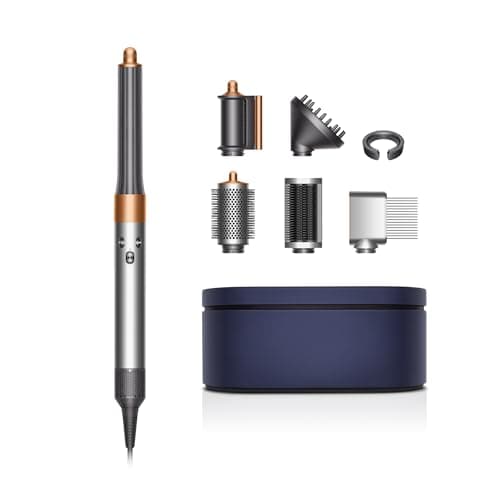
| 1 | Dyson Airwrap multi-styler (Complete Long) 1,300 W — the lowest mains rating in our registry — and no heated plate touching the hair. | Curling and shaping without clamping | |
| 2 | 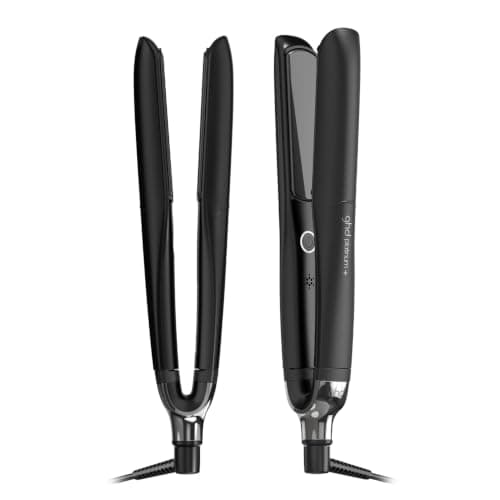 ghd Platinum+ flat iron (1 inch plate) One fixed temperature at 365°F, well below the published 401°F melting point of dry hair keratin. | Anyone whose damage came from turning the dial up | |
| 3 | 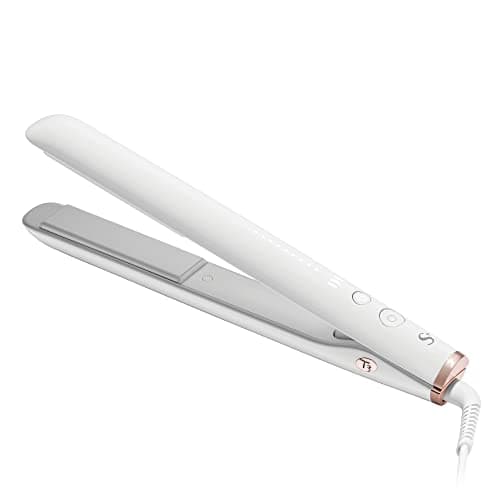 T3 SinglePass StyleMax 1 inch flat iron Nine heat settings, so the bottom of the range is genuinely low rather than a third of the way up. | Hair that needs to work below 365°F | |
| — | 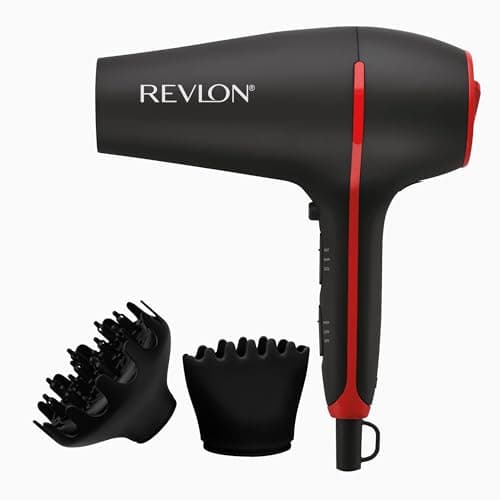 Revlon SmoothStay Coconut Oil-Infused hair dryer The highest published wattage on the site, divided into the fewest heat settings. We’d skip this | Not a low-heat purchase |
1. Lowest published wattage
Dyson Airwrap multi-styler (Complete Long)
Best for: Curling and shaping without clamping
1,300 W — the lowest mains rating in our registry — and no heated plate touching the hair.
Two things make this the lowest-heat powered styling option we can document. Dyson publishes 1,300 W, lower than every dryer we list and 575 W below a drugstore Revlon. And the mechanism shapes hair with moving air around a barrel rather than clamping a heated surface onto it.
Three heat settings and three speeds. The curl sets as the hair dries and cools, which is a mechanically sound way to get hold without relying on temperature.
It is still a heated tool. Three heat settings exist because it gets hot, and drying hair with warm air is applying heat. But on published figures nothing else in the powered category is gentler.
What’s wrong with it
The most expensive tool on this site, 120 V only, and the low power means longer sessions on dense hair — which is its own kind of exposure.
Published specifications — Dyson Airwrap multi-styler (Complete Long)
| Wattage | 1,300 W |
|---|---|
| Heat settings | 3 heat settings |
| Speed settings | 3 speed settings |
| Weight | 1.4 lb |
| Cord length | 8.5 ft |
| Noise (dB) | Not published |
| Attachments | Curling barrels, smoothing brushes, round volumizing brush, drying nozzle |
| Plate / barrel | Coanda airflow barrels; no clamped heat plate |
| Dual voltage | No — 120 V |
| Warranty | 2-year limited warranty |
Every figure above is taken from Dyson — Airwrap Complete Long product page. “Not published” means the figure does not appear on that page — it is not an estimate withheld, it is a number the manufacturer does not state. How we compile these.
What it costs to run for a year
$15.50 a year
1,300 W × 65 hours a year = 84.5 kWh, at 18.34 cents per kilowatt-hour. The hours assume 15 minutes a session, 5 days a week — that is an assumption, not a measurement, so swap in your own if it is wrong.
2. The setting you cannot get wrong
ghd Platinum+ flat iron (1 inch plate)
Best for: Anyone whose damage came from turning the dial up
One fixed temperature at 365°F, well below the published 401°F melting point of dry hair keratin.
Most heat damage is a habit rather than an accident: reaching for a higher setting when a pass does not take, and never going back down. An iron with no dial makes that impossible at the hardware level.
ghd fixes the Platinum+ at 365°F. Published DSC work puts the melting point of the ordered keratin in dry hair at about 401°F, so that fixed setting sits roughly thirty-six degrees below the line — with no way to cross it.
ghd also publishes infinity sensors monitoring heat 250 times a second across the plates, a 20-second heat-up, universal voltage and a three-year warranty.
What’s wrong with it
You cannot go below 365°F either, and very damaged hair might want to. ghd publishes no wattage and no weight.
Published specifications — ghd Platinum+ flat iron (1 inch plate)
| Wattage | Not published |
|---|---|
| Heat settings | One fixed temperature — 365°F |
| Speed settings | Not applicable |
| Weight | Not published |
| Cord length | 9 ft power cable |
| Noise (dB) | Not applicable |
| Attachments | None supplied |
| Plate / barrel | Precision-milled floating high-gloss plates, 1 in |
| Dual voltage | Yes — universal voltage |
| Warranty | 3-year warranty |
Every figure above is taken from ghd — Platinum+ flat iron (1 inch plate) product page. “Not published” means the figure does not appear on that page — it is not an estimate withheld, it is a number the manufacturer does not state. How we compile these.
What it costs to run for a year
ghd does not publish a wattage for this tool, so there is nothing honest to compute. The formula is watts ÷ 1,000 × hours a year × your rate per kWh; if you find a rating plate on the handle, 65 hours a year and 18.34 cents per kilowatt-hour will get you the rest of the way.
3. Lowest reachable setting
T3 SinglePass StyleMax 1 inch flat iron
Best for: Hair that needs to work below 365°F
Nine heat settings, so the bottom of the range is genuinely low rather than a third of the way up.
A three-setting iron divides the usable span into thirds, which puts its lowest setting well above the lowest setting on a nine-setting tool. If your hair needs to be under 365°F, that difference is the entire decision.
T3 publishes nine heat settings on the SinglePass StyleMax, plus CeraGloss ceramic plates positioned for even heat without hot spots. Even heat is what makes a low setting actually finish a section, rather than forcing a second pass that undoes the benefit.
11.1 oz, the lightest iron in our registry, and 100–240 V auto world voltage.
What’s wrong with it
Nine settings means nine chances to pick a hot one — it offers no guardrail against the habit that causes most damage.
Published specifications — T3 SinglePass StyleMax 1 inch flat iron
| Wattage | Not published |
|---|---|
| Heat settings | 9 heat settings |
| Speed settings | Not applicable |
| Weight | 11.1 oz (cord not included) |
| Cord length | 360-degree swivel cord — length not published |
| Noise (dB) | Not applicable |
| Attachments | None supplied |
| Plate / barrel | CeraGloss ceramic plates, 1 in |
| Dual voltage | Yes — auto world voltage, 100–240 V |
| Warranty | 2-year warranty |
Every figure above is taken from T3 Micro — SinglePass StyleMax 1 inch flat iron product page. “Not published” means the figure does not appear on that page — it is not an estimate withheld, it is a number the manufacturer does not state. How we compile these.
What it costs to run for a year
T3 does not publish a wattage for this tool, so there is nothing honest to compute. The formula is watts ÷ 1,000 × hours a year × your rate per kWh; if you find a rating plate on the handle, 65 hours a year and 18.34 cents per kilowatt-hour will get you the rest of the way.
The one we'd skip
Revlon SmoothStay Coconut Oil-Infused hair dryer
Best for: Not a low-heat purchase
The highest published wattage on the site, divided into the fewest heat settings.
1,875 W is the highest rating in our registry, and three heat settings is among the fewest. Dividing the largest range into the fewest steps puts the lowest available setting higher than it would be on a tool with more granularity.
Revlon also publishes no weight, cord length, voltage or warranty for this dryer. On a page specifically about minimizing heat, a tool whose relevant specifications are unavailable cannot be recommended, whatever it costs.
For robust hair and fast drying it is a perfectly sensible purchase, and we say so on the budget page. This is not that page.
What’s wrong with it
Highest published wattage and fewest heat settings on the site, with no published weight, cord, voltage or warranty.
Published specifications — Revlon SmoothStay Coconut Oil-Infused hair dryer
| Wattage | 1,875 W |
|---|---|
| Heat settings | 3 heat settings |
| Speed settings | 2 speed settings |
| Weight | Not published |
| Cord length | Not published |
| Noise (dB) | Not published |
| Attachments | Not published |
| Plate / barrel | 1 in grill, triple-coated ceramic; tourmaline ionic |
| Dual voltage | Not published |
| Warranty | Not published |
Every figure above is taken from Revlon Hair Tools — SmoothStay Coconut Oil-Infused hair dryer. “Not published” means the figure does not appear on that page — it is not an estimate withheld, it is a number the manufacturer does not state. How we compile these.
What it costs to run for a year
$22.35 a year
1,875 W × 65 hours a year = 121.9 kWh, at 18.34 cents per kilowatt-hour. The hours assume 15 minutes a session, 5 days a week — that is an assumption, not a measurement, so swap in your own if it is wrong.
The honest hierarchy
Ranked by how directly heat reaches the hair, from gentlest to harshest:
Heat contact by tool type
| Tool type | How heat arrives | Published wattage range |
|---|---|---|
| No heat at all | It does not | 0 W |
| Air styler | Moving warm air around a barrel, no clamping | 1,300–1,700 W |
| Hair dryer with diffuser | Diffused warm air, no contact surface | 1,300–1,875 W |
| Hot air brush | Warm air through a heated barrel, intermittent contact | Rarely published |
| Curling iron | Heated barrel wrapped in hair | Rarely published |
| Flat iron | Two heated plates clamped at full temperature | Rarely published |
Wattage measures electricity drawn, not the temperature reaching your hair — it is a rough proxy. Most iron and brush makers publish no wattage at all.
A flat iron is at the bottom because it is the highest-contact heat tool most people own: two plates at the set temperature, directly against the hair, for the whole length of the pass.
The thing that beats every tool on this page
Using heat less often. Going from five sessions a week to two is a sixty percent reduction in exposure, which is larger than any difference between the tools listed here, and it is free.
We are aware that this is an odd thing to write above a set of buy buttons. It is also the correct order of operations, and the arithmetic is at how often you can use heat.
What no tool can do
Change the temperature at which hair keratin gives. Published DSC work puts the melting point of ordered keratin at about 401°F for dry hair and 311°F at 23% moisture, and a flat-iron study reported denaturation at 459°F with observed cuticle damage. Those are properties of the protein and no purchase moves them.
What a tool can do is make it easy to stay below them — which is what every pick on this page is selected for. The evidence is at the temperature page.
Price per use, at 5 uses a week over 5 years
| What you pay | Cost per use | Cost per year |
|---|---|---|
| $30 | $0.02 | $6.00 |
| $60 | $0.05 | $12.00 |
| $100 | $0.08 | $20.00 |
| $150 | $0.12 | $30.00 |
| $200 | $0.15 | $40.00 |
| $300 | $0.23 | $60.00 |
| $400 | $0.31 | $80.00 |
| $500 | $0.38 | $100.00 |
5 uses a week for 5 years is 1300 uses. Both figures are stated assumptions, not measurements — halve the life and every cost per use doubles. We publish the ladder rather than a worked example for one specific product because a price we typed into a sentence would be wrong within a week.
Questions people actually ask
What hair tools do the least damage?
Air stylers, which shape with moving air rather than a clamped plate and publish the lowest wattages in the category, followed by irons with a genuinely low fixed or fine-grained setting. No powered tool is heat-free.
Is there a flat iron that does not damage hair?
No. Every flat iron clamps a heated surface onto your hair. What varies is how easy a tool makes it to stay at a low temperature — a fixed 365 degree setting or a nine-step range both help in different ways.
Are air stylers really gentler than curling irons?
In mechanism, yes — heat arrives through moving air rather than a barrel clamped against the hair, and published wattages in the category are the lowest of any powered tool. They still apply heat, and they publish heat settings because they get hot.
Sources
- Cao J, Leroy F., “Depression of the melting temperature by moisture for alpha-form crystallites in human hair keratin”, Biopolymers 2005;77(1):38–43
- Lima CRRC et al., “Heat-damaged evaluation of virgin hair”, Journal of Cosmetic Dermatology 2019;18(6):1885–1892
- ghd — Platinum+ published fixed 365°F styling temperature
- Dyson — Corrale straightener published starting-temperature guidance