Shop by Hair Type
The Best Hair Tools for Color-Treated Hair in 2026
Colored hair is not a hair type, it is a hair history. The tool decision follows from what the color already took out.
Updated September 2026 · Sawyer V.
Oxidative color removes protein and lipid from the cuticle before you apply any heat, so the specification that matters is how far down a tool goes, not how high. Buy the tool with the most heat steps below 365°F, because that is where colored hair should be working.
We earn a commission if you buy through the links on this page, at no extra cost to you. It never changes which tool we pick or which one we tell you to skip. How this site is funded.
Color is a history, not a texture
Every other page in this section sorts by what your hair is — fine, thick, coily. This one sorts by what has been done to it, and that changes the reasoning.
Oxidative coloring works by opening the cuticle and altering pigment inside the cortex. That process is measurable in what it removes. A 2019 study comparing chemical and physical treatments across hair types found that bleaching and dyeing caused wear on the cuticles with high protein loss and a reduction in tryptophan content, and that this happened independently of how curly the hair was — Bloch et al., JEADV. Colored hair of every texture starts a styling session with less material than it had.
So the tool question is not “what suits colored hair” in some cosmetic sense. It is: given that the fiber has already given up protein and lipid, what does the tool let you do with less heat?
Damage stacks, and it does not stack politely
The most useful published finding for anyone deciding how careful to be concerns combinations. Researchers measuring protein loss found that combining oxidative dye with a chemical relaxer produced far more protein loss than either alone — a 356 percent increase over virgin hair for the dye-plus-sodium-hydroxide combination, and 208 percent against hair that had only been dyed — França-Stefoni et al., Journal of Cosmetic Dermatology.
Two things need saying about that number so it is not overread. It concerns chemical relaxers rather than heat tools, and it is a laboratory measurement on tresses rather than a prediction about your head. What it demonstrates is the principle: processes that each cause moderate damage do not simply add when combined.
The practical reading is that if your hair is both colored and heat- styled, you are already in combination territory and the margin for additional error is thinner than either factor alone suggests.
What to change, in order of how much it helps
- Work below 365°F. The single change with the most effect, and the one that decides which tools are even candidates.
- Cut pass count. Total exposure is temperature multiplied by contact time. On colored hair the temptation is to go over a section again because it did not behave; that is the expensive move.
- Dry to 80 percent before any heat tool touches you. Free, and it removes the longest, wettest, hottest part of the session. Method on the drying time page.
- Use a protectant, understanding its limits. It is a real intervention and not a license — see the protectant page.
- Finish on cool. Hair sets as it cools, so the last two seconds of every section can cost nothing.
Bleached is a different case from tinted
“Color-treated” covers a huge range. A single-process tint that goes darker does relatively little structural harm; lightening does considerably more, because it works by oxidizing pigment inside the fiber and cannot do that without collateral effect.
How much the color process changes your tool decision
| Process | Structural cost | What to change |
|---|---|---|
| Semi-permanent, deposit only | Low | Nothing; treat as untreated hair |
| Permanent tint, going darker | Moderate | Prefer a tool with a step below your usual setting |
| Highlights or partial lightening | High on the lightened sections | Different temperature for lightened pieces than for the rest |
| Full bleach or double process | Highest | Work well below 365°F; adjustable tools only |
If you are in the bottom row, the dedicated page is heat styling on bleached hair, which goes into what bleaching does at a molecular level and why the damage it causes resembles thermal damage before you have applied any heat.
The tools we would not buy for this
Fixed-temperature tools, and it is worth being blunt about it because several of them are otherwise excellent. Every ghd product in our registry runs at one fixed 365°F: the Platinum+, the Chronos, the Chronos Curve Classic, the Curve Thin and the Wave.
That design is a genuine virtue on hair that has never been processed, and we say so on the Platinum+ review. On lightened hair it removes the one adjustment you actually need.
The Dyson Corrale has three settings and also starts at 365°F, so it runs into the same wall from the other direction. That leaves T3 — nine settings on both the flat iron and the curling iron — as the only brand here that answers this page properly, which is a narrower field than we would like.
Price per use, at 5 uses a week over 5 years
| What you pay | Cost per use | Cost per year |
|---|---|---|
| $30 | $0.02 | $6.00 |
| $60 | $0.05 | $12.00 |
| $100 | $0.08 | $20.00 |
| $150 | $0.12 | $30.00 |
| $200 | $0.15 | $40.00 |
| $300 | $0.23 | $60.00 |
| $400 | $0.31 | $80.00 |
| $500 | $0.38 | $100.00 |
5 uses a week for 5 years is 1300 uses. Both figures are stated assumptions, not measurements — halve the life and every cost per use doubles. We publish the ladder rather than a worked example for one specific product because a price we typed into a sentence would be wrong within a week.
Where to go next
If your hair is colored and a particular texture, the texture pages still apply and the advice composes: take the lower-temperature discipline from this page and the attachment reasoning from curly, fine or thick.
If what you actually want to know is whether existing damage can be undone, the honest answer is on the repair page, and it is not the answer most sites give.
Quick picks
Tap any row to jump to the full write-up. Prices come from the live price layer; where none is available the button says so rather than showing a number we cannot stand behind.
| # | Product | Best for | Price |
|---|---|---|---|
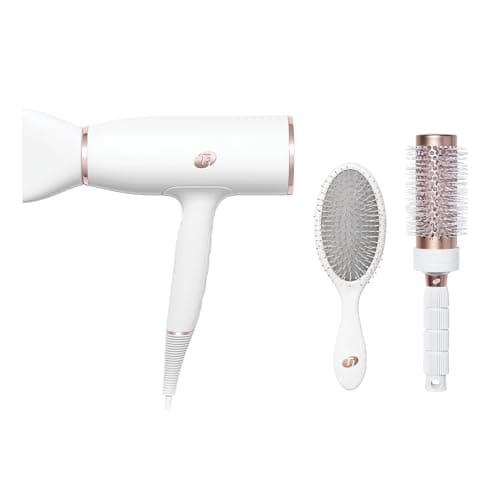
| 1 | T3 AireLuxe professional hair dryer Five heat settings and three speeds — fifteen combinations, the most granular published control of any dryer we list. | Drying colored hair without defaulting to the middle setting | |
| 2 | 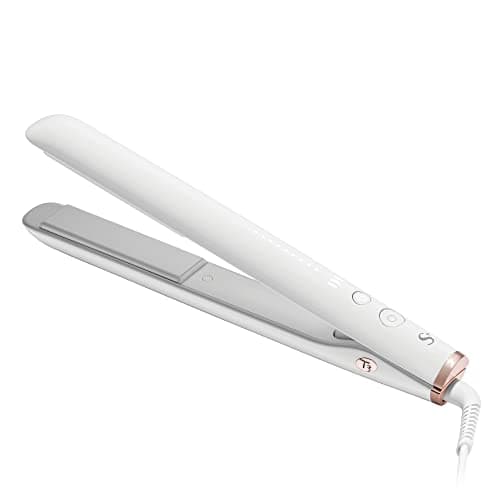 T3 SinglePass StyleMax 1 inch flat iron Nine heat settings — the only iron here that lets you work meaningfully below 365°F. | Straightening bleached or highlighted lengths | |
| 3 | 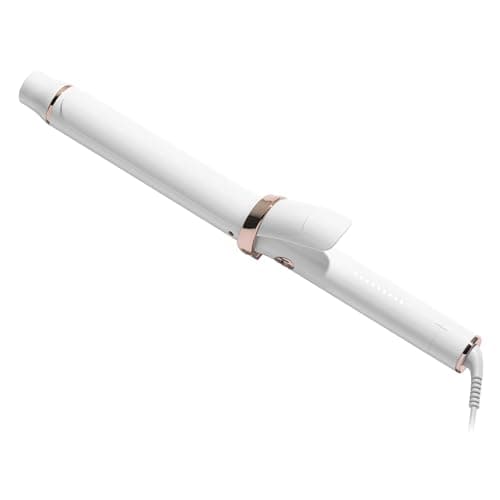 T3 SinglePass Curl X extra-long barrel curling iron Nine heat settings and a published 6.5 in barrel, in three diameters with a published weight for each. | Curling color-treated hair without a fixed temperature | |
| 4 | 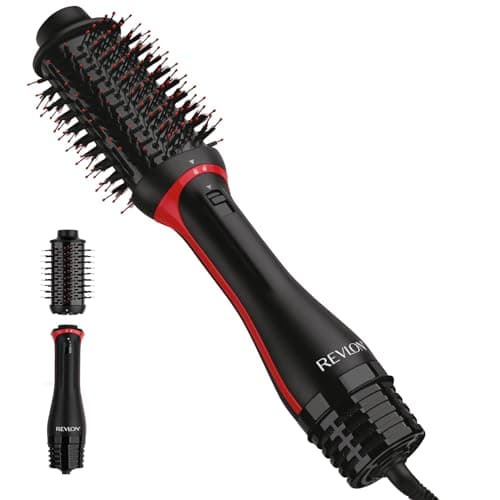 Revlon One-Step Volumizer Plus hair dryer and hot air brush Four heat settings including a dedicated cool, a detachable head, and a four-year warranty. | Everyday drying with a genuine cool finish | |
| — | 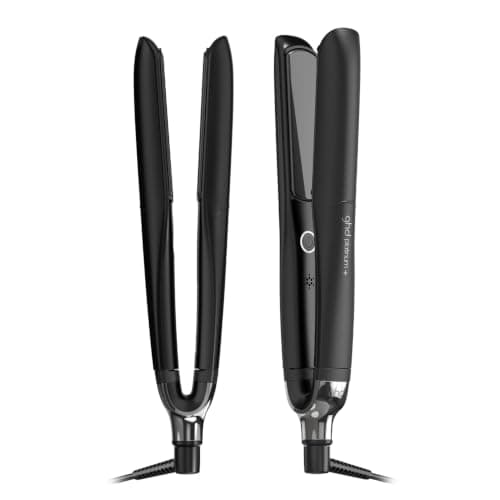 ghd Platinum+ flat iron (1 inch plate) One fixed temperature of 365°F, with no way to go lower on hair that needs lower. We’d skip this | Not double-processed hair |
1. Most heat steps on a dryer
T3 AireLuxe professional hair dryer
Best for: Drying colored hair without defaulting to the middle setting
Five heat settings and three speeds — fifteen combinations, the most granular published control of any dryer we list.
Granularity is the whole argument on colored hair. The useful question is never “is this setting safe” but “is there a step below the one I am on”, and with three heat settings the answer is usually no.
Five is the most any dryer here publishes. Dyson publishes four plus a cold shot; Revlon publishes three; Shark and ghd publish no settings count at all for their dryers, which on this page is disqualifying rather than merely disappointing.
17.1 oz without the cord, a 9 ft professional cord — joint longest here — 125 V, two-year warranty. Full spec sheet on our AireLuxe review.
What’s wrong with it
T3 publishes no wattage at all for it, so neither drying capacity nor running cost can be worked out, and no attachment list either.
Published specifications — T3 AireLuxe professional hair dryer
| Wattage | Not published |
|---|---|
| Heat settings | 5 heat settings |
| Speed settings | 3 speed settings |
| Weight | 17.1 oz (cord not included) |
| Cord length | 9 ft professional cord |
| Noise (dB) | Not published |
| Attachments | Not published |
| Plate / barrel | Ceramic-coated barrel |
| Dual voltage | No — 125 V |
| Warranty | 2-year warranty |
Every figure above is taken from T3 Micro — AireLuxe professional hair dryer product page. “Not published” means the figure does not appear on that page — it is not an estimate withheld, it is a number the manufacturer does not state. How we compile these.
What it costs to run for a year
T3 does not publish a wattage for this tool, so there is nothing honest to compute. The formula is watts ÷ 1,000 × hours a year × your rate per kWh; if you find a rating plate on the handle, 65 hours a year and 18.34 cents per kilowatt-hour will get you the rest of the way.
2. Most heat steps on an iron
T3 SinglePass StyleMax 1 inch flat iron
Best for: Straightening bleached or highlighted lengths
Nine heat settings — the only iron here that lets you work meaningfully below 365°F.
Both flagship irons on this site — the ghd Platinum+ and the Dyson Corrale — start at 365°F and have nothing below it. On virgin hair that is a defensible floor. On bleached lengths it is not, and this is the only iron in our registry that gives you somewhere lower to go.
Nine settings also lets you treat a colored head as the mixed surface it usually is: a virgin root regrowth and a double-processed mid-length do not want the same temperature, and most irons make you compromise on one.
11.1 oz without the cord, CeraGloss ceramic plates, and genuine 100–240 V auto world voltage.
What’s wrong with it
Nine settings is also nine chances to choose a hotter one, and T3 publishes no wattage or cord length for it.
Published specifications — T3 SinglePass StyleMax 1 inch flat iron
| Wattage | Not published |
|---|---|
| Heat settings | 9 heat settings |
| Speed settings | Not applicable |
| Weight | 11.1 oz (cord not included) |
| Cord length | 360-degree swivel cord — length not published |
| Noise (dB) | Not applicable |
| Attachments | None supplied |
| Plate / barrel | CeraGloss ceramic plates, 1 in |
| Dual voltage | Yes — auto world voltage, 100–240 V |
| Warranty | 2-year warranty |
Every figure above is taken from T3 Micro — SinglePass StyleMax 1 inch flat iron product page. “Not published” means the figure does not appear on that page — it is not an estimate withheld, it is a number the manufacturer does not state. How we compile these.
What it costs to run for a year
T3 does not publish a wattage for this tool, so there is nothing honest to compute. The formula is watts ÷ 1,000 × hours a year × your rate per kWh; if you find a rating plate on the handle, 65 hours a year and 18.34 cents per kilowatt-hour will get you the rest of the way.
3. Most heat steps on a curling iron
T3 SinglePass Curl X extra-long barrel curling iron
Best for: Curling color-treated hair without a fixed temperature
Nine heat settings and a published 6.5 in barrel, in three diameters with a published weight for each.
Every ghd curling tool is fixed at 365°F. That is a coherent position for hair that has never been processed and the wrong one for hair that has, and this is the only adjustable curling iron in the registry.
The 6.5 inch barrel matters on this page for a second reason: longer barrel, fewer sections, fewer separate applications of heat to hair that is already compromised. Pass count is a damage variable in its own right.
Auto world voltage 100–240 V, an 8 ft swivel cord, published weights of 10.6 oz, 13.2 oz and 15.1 oz by barrel size, two-year warranty.
What’s wrong with it
No published wattage, and the larger barrels are noticeably heavier — 15.1 oz at 1.5 in against 10.6 oz at 1 in.
Published specifications — T3 SinglePass Curl X extra-long barrel curling iron
| Wattage | 78 W |
|---|---|
| Heat settings | 9 heat settings |
| Speed settings | Not applicable |
| Weight | 10.6 oz (1 in), 13.2 oz (1.25 in), 15.1 oz (1.5 in) — cord not included |
| Cord length | 8 ft, 360-degree swivel cord |
| Noise (dB) | Not applicable |
| Attachments | None supplied |
| Plate / barrel | CeraGloss ceramic barrel, 6.5 in long |
| Dual voltage | Yes — auto world voltage, 100–240 V |
| Warranty | 2-year warranty |
Every figure above is taken from T3 Micro — SinglePass Curl X product page. “Not published” means the figure does not appear on that page — it is not an estimate withheld, it is a number the manufacturer does not state. How we compile these.
What it costs to run for a year
$0.93 a year
78 W × 65 hours a year = 5.1 kWh, at 18.34 cents per kilowatt-hour. The hours assume 15 minutes a session, 5 days a week — that is an assumption, not a measurement, so swap in your own if it is wrong.
4. Best cool-setting value
Revlon One-Step Volumizer Plus hair dryer and hot air brush
Best for: Everyday drying with a genuine cool finish
Four heat settings including a dedicated cool, a detachable head, and a four-year warranty.
A dedicated cool setting matters on colored hair because it is how you finish a style without adding heat. Hair sets as it cools, so the last few seconds of every section can be done at no thermal cost at all — if the tool has a cool step.
T3’s AireBrush One-Step publishes three heat settings with no cool among them. Revlon publishes four including cool, on the cheapest tool in this registry.
The detachable head is the other reason: these brushes clog, and a clogged intake makes the element run hotter than you selected — which is a heat problem, not just a maintenance one.
What’s wrong with it
Revlon publishes no wattage, weight, cord length, speed count or voltage, so five rows of the standard spec block are simply unavailable.
Published specifications — Revlon One-Step Volumizer Plus hair dryer and hot air brush
| Wattage | Not published |
|---|---|
| Heat settings | 4 heat settings — low, medium, high, cool |
| Speed settings | Not published |
| Weight | Not published |
| Cord length | Not published |
| Noise (dB) | Not published |
| Attachments | Detachable brush head |
| Plate / barrel | Ceramic titanium barrel; tourmaline ionic |
| Dual voltage | Not published |
| Warranty | 4-year limited warranty |
Every figure above is taken from Revlon Hair Tools — One-Step Volumizer Plus product page. “Not published” means the figure does not appear on that page — it is not an estimate withheld, it is a number the manufacturer does not state. How we compile these.
What it costs to run for a year
Revlon does not publish a wattage for this tool, so there is nothing honest to compute. The formula is watts ÷ 1,000 × hours a year × your rate per kWh; if you find a rating plate on the handle, 65 hours a year and 18.34 cents per kilowatt-hour will get you the rest of the way.
The one we'd skip
ghd Platinum+ flat iron (1 inch plate)
Best for: Not double-processed hair
One fixed temperature of 365°F, with no way to go lower on hair that needs lower.
We recommend this iron more than almost anything else on this site. It wins the fine-hair page, it has the longest iron warranty here at three years, and the argument for removing the temperature dial is genuinely good.
It is the wrong tool for this page for exactly the reason it is the right one elsewhere. A fixed setting protects you from going up. It also prevents you going down, and bleached or double-processed hair is the case where down is where you need to be.
If your color is a single-process tint on otherwise healthy hair, 365°F is fine and the Platinum+ is an excellent buy. If you are lightened, buy the iron with nine settings.
What’s wrong with it
No adjustment at all on the hair type that most needs a lower setting, and ghd publishes no weight or wattage for it.
Published specifications — ghd Platinum+ flat iron (1 inch plate)
| Wattage | Not published |
|---|---|
| Heat settings | One fixed temperature — 365°F |
| Speed settings | Not applicable |
| Weight | Not published |
| Cord length | 9 ft power cable |
| Noise (dB) | Not applicable |
| Attachments | None supplied |
| Plate / barrel | Precision-milled floating high-gloss plates, 1 in |
| Dual voltage | Yes — universal voltage |
| Warranty | 3-year warranty |
Every figure above is taken from ghd — Platinum+ flat iron (1 inch plate) product page. “Not published” means the figure does not appear on that page — it is not an estimate withheld, it is a number the manufacturer does not state. How we compile these.
What it costs to run for a year
ghd does not publish a wattage for this tool, so there is nothing honest to compute. The formula is watts ÷ 1,000 × hours a year × your rate per kWh; if you find a rating plate on the handle, 65 hours a year and 18.34 cents per kilowatt-hour will get you the rest of the way.
Questions people actually ask
What temperature should I use on color-treated hair?
Lower than the 365°F that most premium tools fix or start at. Colored hair has already lost protein and lipid from the cuticle, so the useful specification is how far down a tool goes, not how high.
Does heat styling fade hair color faster?
Heat opens the cuticle, and an open cuticle loses dye more readily. Published work on hair treated with both color and other processes shows damage compounding rather than simply adding, so the two interact.
Can I use a ghd on colored hair?
On a single-process tint over healthy hair, yes — 365°F is a reasonable working temperature. On bleached or double-processed hair, a tool with no setting below 365°F is the wrong choice.