Blow-Dry Brushes
Blow-Dry Brush vs Flat Iron: Which Do You Need?
They are not competitors. They produce different finishes, from different starting points, with very different heat contact.
Updated September 2026 · Sawyer V.
A hot air brush dries and shapes damp hair with airflow, giving a soft blowout with volume. A flat iron presses dry hair between heated plates, giving a genuinely sleek finish. The brush is gentler because heat arrives through moving air rather than direct plate contact.
We earn a commission if you buy through the links on this page, at no extra cost to you. It never changes which tool we pick or which one we tell you to skip. How this site is funded.
Side by side
Hot air brush and flat iron compared
| Hot air brush | Flat iron | |
|---|---|---|
| Hair state | Damp | Completely dry |
| Mechanism | Airflow through a heated brush barrel | Two heated plates clamp the section |
| Heat contact | Indirect, through moving air | Direct, plate against hair at full temperature |
| Result | Soft blowout with volume | Sleek, genuinely straight |
| Adds volume | Yes, at the root | No — it removes it |
| Replaces a dryer | Yes, for most of the job | No |
| Longest published warranty | 4 years (Revlon) | 3 years (ghd) |
| Typical published heat settings | 3–4 | 1–9 |
The heat difference is real, and it has a limit
A flat iron is the highest-contact heat tool most people own. Two plates at the set temperature, held directly against the hair, for the whole length of the pass. A hot air brush transfers heat through moving air onto a barrel that is in contact intermittently as you pull through.
So the brush is genuinely the gentler tool. What it is not is a low-heat tool: it is applying heat for as long as you keep it there, and people frequently use one for longer than they would use an iron precisely because it feels gentler. Total exposure is what matters, and a long session with a mild tool can exceed a short session with a harsh one.
What each one cannot do
- A brush cannot make hair genuinely straight. It smooths and stretches. If you want sleek, only an iron delivers it.
- An iron cannot add volume. It works against it. For fine, limp hair the iron is often the tool making the problem worse.
- A brush cannot work on dry hair. The mechanism is drying hair into shape. On dry hair you get heat and very little result.
- An iron cannot work on damp hair. Water in the cuticle turns to steam against the plate, and that is the fastest way to damage hair there is.
Which to buy
Buy a hot air brush if
- Your hair is fine or limp and volume is the goal.
- You want a blowout finish without two-handed technique.
- You are trying to reduce direct heat contact.
- You want one tool that mostly replaces your dryer for daily styling.
Buy a flat iron if
- You want genuinely sleek, straight hair.
- Your hair is coarse, curly or resistant and a brush will not hold enough tension.
- You need to smooth a section quickly on dry hair.
- You travel — several irons publish 100–240 V, and no brush in our registry does.
If you can only have one
For most people with fine to medium hair whose complaint is frizz or flatness, the brush is the more useful daily tool and the gentler one. For anyone whose hair is coarse or curly and who wants it straight, only the iron actually does the job.
If your hair is already damaged, start at tools that put less heat on your hair before choosing either.
The tools on this page
Prices come from the live price layer. Where none is available the button says so rather than showing a number we cannot stand behind.
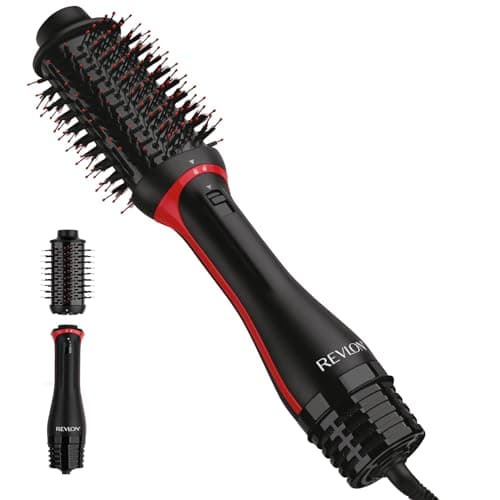
Revlon One-Step Volumizer Plus hair dryer and hot air brush
A 4-year limited warranty, the longest in this registry, on the cheapest kind of tool in it. Worth noticing before paying six times more elsewhere.
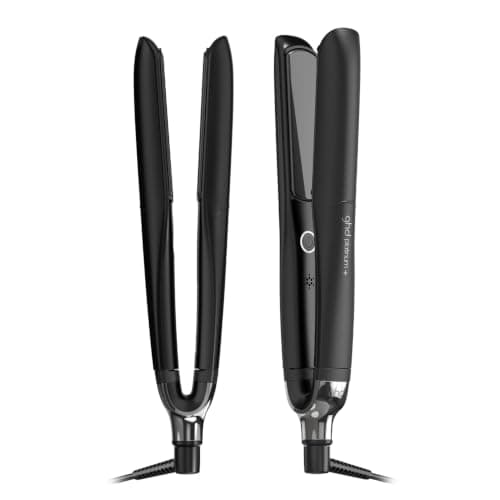
ghd Platinum+ flat iron (1 inch plate)
One temperature, 365°F, no dial to get wrong — the strongest heat-discipline argument in the category, and the longest iron warranty here at three years.
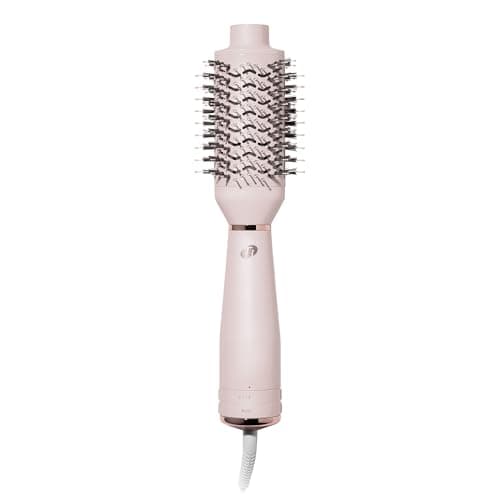
T3 AireBrush One-Step smoothing and volumizing dryer brush
Six heat-and-speed combinations against the Revlon's four heat steps, and a published weight — but half the warranty.
Questions people actually ask
Which is better for my hair, a blow-dry brush or a flat iron?
Neither is better in general. A brush gives a soft blowout with volume from damp hair; an iron gives a sleek straight finish on dry hair. If your complaint is flatness, a brush. If it is that your hair will not go straight, an iron.
Does a hot air brush damage hair less than a flat iron?
In mechanism yes — heat arrives through moving air rather than a plate clamped against the hair at full temperature. But a longer session with a gentler tool can still exceed a short session with a harsher one, so total exposure is what to watch.
Can I use a blow-dry brush on dry hair?
You can, and you lose most of the mechanism. These tools set the shape as hair dries, so on dry hair you are applying heat for very little result.
Do I need both?
Only if you want both finishes. Most people with fine or medium hair get more daily value from the brush; anyone who wants genuinely straight hair needs the iron because nothing else does it.