Travel & Dual Voltage
The Hair Tools That Are Genuinely Dual Voltage
Every dryer in our registry is single voltage. Several irons are not. That asymmetry is the whole packing decision.
Updated September 2026 · Sawyer V.
Irons and curling barrels are far more likely to be dual voltage than dryers. In our registry the ghd Platinum+ publishes universal voltage and the T3 SinglePass StyleMax and Curl X publish 100–240 V. Every dryer we list — Dyson, Shark and T3 — is single voltage.
We earn a commission if you buy through the links on this page, at no extra cost to you. It never changes which tool we pick or which one we tell you to skip. How this site is funded.
Quick picks
Tap any row to jump to the full write-up. Prices come from the live price layer; where none is available the button says so rather than showing a number we cannot stand behind.
| # | Product | Best for | Price |
|---|---|---|---|
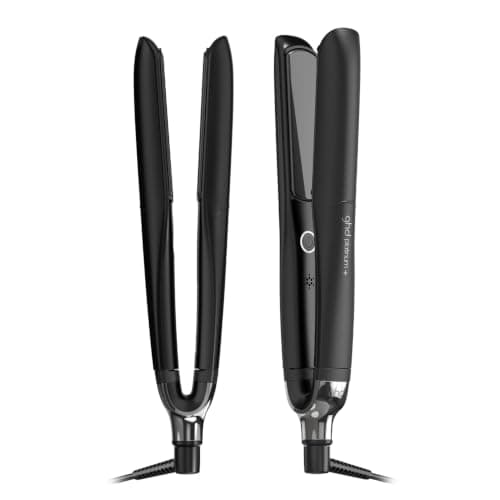
| 1 | ghd Platinum+ flat iron (1 inch plate) ghd publishes universal voltage — plug adapter only, no converter, no thinking about it. | Straightening anywhere, on an adapter alone | |
| 2 | 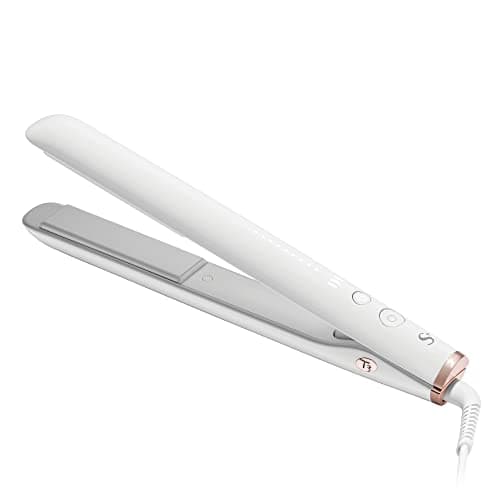 T3 SinglePass StyleMax 1 inch flat iron 100–240 V auto world voltage at a published 11.1 oz — the lightest iron in our registry. | Packing light with full temperature control | |
| 3 | 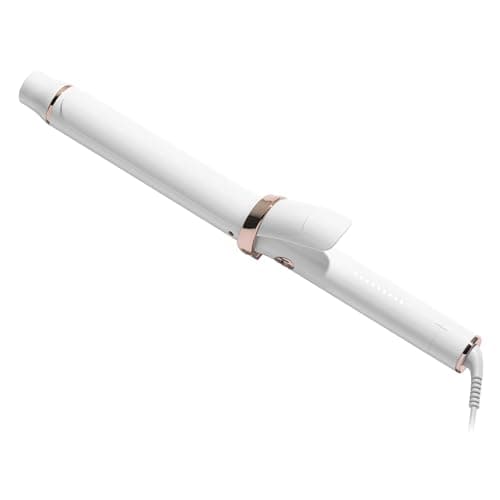 T3 SinglePass Curl X extra-long barrel curling iron 100–240 V auto world voltage, nine heat settings and an 8 ft swivel cord. | Curls on a trip, without a converter | |
| — | 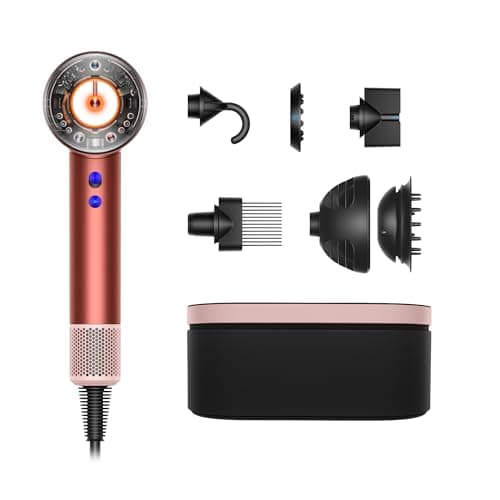 Dyson Supersonic hair dryer Dyson publishes 120 V. A plug adapter will not save it, and a converter for 1,600 W is not a travel item. We’d skip this | Not travel, at any price |
1. Genuinely universal
ghd Platinum+ flat iron (1 inch plate)
Best for: Straightening anywhere, on an adapter alone
ghd publishes universal voltage — plug adapter only, no converter, no thinking about it.
ghd states universal voltage on the Platinum+ product page, and says it delivers the same performance wherever you are in the world. On a tool with a single fixed temperature, that consistency is more meaningful than it sounds — the setting is the same in Rome as at home.
9 ft power cable, 20-second heat-up, 30-minute automatic sleep mode and a three-year warranty, the longest of any iron we list.
For a two-week trip this is the single tool we would pack.
What’s wrong with it
One fixed temperature with no adjustment, and ghd publishes no wattage or weight — the latter being something you would want to know before packing it.
Published specifications — ghd Platinum+ flat iron (1 inch plate)
| Wattage | Not published |
|---|---|
| Heat settings | One fixed temperature — 365°F |
| Speed settings | Not applicable |
| Weight | Not published |
| Cord length | 9 ft power cable |
| Noise (dB) | Not applicable |
| Attachments | None supplied |
| Plate / barrel | Precision-milled floating high-gloss plates, 1 in |
| Dual voltage | Yes — universal voltage |
| Warranty | 3-year warranty |
Every figure above is taken from ghd — Platinum+ flat iron (1 inch plate) product page. “Not published” means the figure does not appear on that page — it is not an estimate withheld, it is a number the manufacturer does not state. How we compile these.
What it costs to run for a year
ghd does not publish a wattage for this tool, so there is nothing honest to compute. The formula is watts ÷ 1,000 × hours a year × your rate per kWh; if you find a rating plate on the handle, 65 hours a year and 18.34 cents per kilowatt-hour will get you the rest of the way.
2. Lightest dual voltage iron
T3 SinglePass StyleMax 1 inch flat iron
Best for: Packing light with full temperature control
100–240 V auto world voltage at a published 11.1 oz — the lightest iron in our registry.
T3 publishes auto world voltage at 100–240 V, which is the specification you want stated as a range rather than as a marketing phrase. It switches itself; you supply the plug adapter.
11.1 oz without the cord makes it the lightest iron we list, which matters when the alternative is not packing an iron at all. Nine heat settings and CeraGloss ceramic plates.
What’s wrong with it
T3 publishes no cord length beyond noting it swivels, and no wattage — the latter being useful when working out what a converter would need to handle.
Published specifications — T3 SinglePass StyleMax 1 inch flat iron
| Wattage | Not published |
|---|---|
| Heat settings | 9 heat settings |
| Speed settings | Not applicable |
| Weight | 11.1 oz (cord not included) |
| Cord length | 360-degree swivel cord — length not published |
| Noise (dB) | Not applicable |
| Attachments | None supplied |
| Plate / barrel | CeraGloss ceramic plates, 1 in |
| Dual voltage | Yes — auto world voltage, 100–240 V |
| Warranty | 2-year warranty |
Every figure above is taken from T3 Micro — SinglePass StyleMax 1 inch flat iron product page. “Not published” means the figure does not appear on that page — it is not an estimate withheld, it is a number the manufacturer does not state. How we compile these.
What it costs to run for a year
T3 does not publish a wattage for this tool, so there is nothing honest to compute. The formula is watts ÷ 1,000 × hours a year × your rate per kWh; if you find a rating plate on the handle, 65 hours a year and 18.34 cents per kilowatt-hour will get you the rest of the way.
3. Dual voltage curling
T3 SinglePass Curl X extra-long barrel curling iron
Best for: Curls on a trip, without a converter
100–240 V auto world voltage, nine heat settings and an 8 ft swivel cord.
Curling barrels are the other category that travels reliably, for the same reason irons do: lower power draw and simpler electronics than a dryer’s motor.
T3 publishes 100–240 V here as well, plus a separate weight for each barrel size — 10.6 oz for the 1 inch, 13.2 oz for the 1.25, 15.1 oz for the 1.5. If you are packing, take the 1 inch.
What’s wrong with it
No published wattage, and a 6.5 inch barrel is a long object to fit in hand luggage next to an iron.
Published specifications — T3 SinglePass Curl X extra-long barrel curling iron
| Wattage | 78 W |
|---|---|
| Heat settings | 9 heat settings |
| Speed settings | Not applicable |
| Weight | 10.6 oz (1 in), 13.2 oz (1.25 in), 15.1 oz (1.5 in) — cord not included |
| Cord length | 8 ft, 360-degree swivel cord |
| Noise (dB) | Not applicable |
| Attachments | None supplied |
| Plate / barrel | CeraGloss ceramic barrel, 6.5 in long |
| Dual voltage | Yes — auto world voltage, 100–240 V |
| Warranty | 2-year warranty |
Every figure above is taken from T3 Micro — SinglePass Curl X product page. “Not published” means the figure does not appear on that page — it is not an estimate withheld, it is a number the manufacturer does not state. How we compile these.
What it costs to run for a year
$0.93 a year
78 W × 65 hours a year = 5.1 kWh, at 18.34 cents per kilowatt-hour. The hours assume 15 minutes a session, 5 days a week — that is an assumption, not a measurement, so swap in your own if it is wrong.
The one we'd skip
Dyson Supersonic hair dryer
Best for: Not travel, at any price
Dyson publishes 120 V. A plug adapter will not save it, and a converter for 1,600 W is not a travel item.
This is the most expensive tool most people own and it is the one you should leave at home, which surprises people every summer.
Dyson publishes 120 V for the US Supersonic. Plugged into European mains through an adapter alone, it will be damaged — usually immediately. A voltage converter rated to handle 1,600 W exists but is heavy, expensive and not a sensible thing to carry.
The same applies to every dryer in our registry: Shark publishes 120 V for the SpeedStyle Pro and the FlexStyle, T3 publishes 125 V for its dryers, and Dyson publishes 120 V for the Airwrap. Spending more does not buy you a dryer that travels.
What’s wrong with it
Single voltage at 120 V, like every other dryer we list. There is no configuration in which this is the right thing to pack.
Published specifications — Dyson Supersonic hair dryer
| Wattage | 1,600 W |
|---|---|
| Heat settings | 4 heat settings, including a cold shot |
| Speed settings | 3 speed settings |
| Weight | 1.8 lb |
| Cord length | 8.6 ft |
| Noise (dB) | Not published |
| Attachments | 3 — styling concentrator, diffuser, wide-tooth comb |
| Plate / barrel | Air-multiplier body; no heated styling surface |
| Dual voltage | No — 120 V |
| Warranty | 2-year limited warranty |
Every figure above is taken from Dyson — Supersonic hair dryer product page. “Not published” means the figure does not appear on that page — it is not an estimate withheld, it is a number the manufacturer does not state. How we compile these.
What it costs to run for a year
$19.07 a year
1,600 W × 65 hours a year = 104.0 kWh, at 18.34 cents per kilowatt-hour. The hours assume 15 minutes a session, 5 days a week — that is an assumption, not a measurement, so swap in your own if it is wrong.
The published voltages, all of them
Voltage rating for every tool in our registry
| Tool | Published voltage | Travels on an adapter alone? |
|---|---|---|
| ghd Platinum+ | Universal voltage | Yes |
| T3 SinglePass StyleMax | 100–240 V auto world voltage | Yes |
| T3 SinglePass Curl X | 100–240 V auto world voltage | Yes |
| Dyson Supersonic | 120 V | No |
| Dyson Airwrap Complete Long | 120 V | No |
| Shark SpeedStyle Pro | 120 V | No |
| Shark FlexStyle | 120 V | No |
| Shark FlexStyle IonCurl | 120 V | No |
| T3 Featherweight StyleMax | 125 V | No |
| T3 AireLuxe | 125 V | No |
| T3 AireBrush One-Step | 125 V | No |
| Dyson Corrale | Battery, 10.8–16.8 V cell | Charger only — check the charger |
| Revlon SmoothStay dryer | Not published | Unknown — check the rating plate |
| Revlon One-Step brushes | Not published | Unknown — check the rating plate |
Every figure from the manufacturer's own product page. Where a maker publishes nothing, check the plate on the tool itself before you pack it.
Read down the third column and the pattern is unambiguous: every dryer and every air styler is single voltage, and every dual-voltage tool is an iron or a barrel. That is not a coincidence — dryers draw far more power and their motors are matched to a supply.
The practical conclusion
Take your iron, leave your dryer, use the hotel one. It is unglamorous advice and it is correct. A hotel dryer will not be as good as yours, and a two-week trip is not worth destroying a four-hundred-dollar tool over.
If you genuinely cannot use a hotel dryer, buy a cheap dedicated travel dryer that publishes a 100–240 V rating, and accept that it will be a compromise. Do not take the good one.
Adapter is not converter
These two words get used interchangeably in luggage aisles and describe completely different objects.
- A plug adapter is a passive piece of plastic that lets an American plug fit a European socket. It changes nothing electrically.
- A voltage converter actively steps 230 V down and must be rated for the wattage of what you plug into it. A 1,875 W dryer needs a converter rated well above that.
The failure most people have is plugging a 120 V dryer into European mains through an adapter alone. Full explanation at how to read a hair tool voltage rating.
Checking a tool you already own
The rating is printed on the tool itself, usually on the handle near where the cord enters or on the plug. Look for a line like 120 V~ 60 Hz 1875 W or 100–240 V~ 50/60 Hz. A single voltage figure means single voltage; a range spanning 110 to 240 means dual voltage and you are fine with an adapter.
Do not rely on the retailer listing, and do not assume that expensive means capable. Read the plate. It takes ten seconds and it is the one place the manufacturer is obliged to tell you the truth.
Price per use, at 5 uses a week over 5 years
| What you pay | Cost per use | Cost per year |
|---|---|---|
| $30 | $0.02 | $6.00 |
| $60 | $0.05 | $12.00 |
| $100 | $0.08 | $20.00 |
| $150 | $0.12 | $30.00 |
| $200 | $0.15 | $40.00 |
| $300 | $0.23 | $60.00 |
| $400 | $0.31 | $80.00 |
| $500 | $0.38 | $100.00 |
5 uses a week for 5 years is 1300 uses. Both figures are stated assumptions, not measurements — halve the life and every cost per use doubles. We publish the ladder rather than a worked example for one specific product because a price we typed into a sentence would be wrong within a week.
Questions people actually ask
Which hair tools are dual voltage?
Irons and curling barrels far more often than dryers. In our registry the ghd Platinum+ publishes universal voltage and the T3 SinglePass StyleMax and Curl X publish 100 to 240 volts. Every dryer we list is single voltage.
Will my hair dryer work in Europe?
Only if the rating plate shows a range spanning 110 to 240 volts. Every premium dryer in our registry — Dyson, Shark and T3 — publishes a single 120 or 125 volt rating and will be damaged by European mains even with a plug adapter.
Can I use a voltage converter with a hair dryer?
Only one rated well above the dryer's wattage, which for a 1,600 to 1,875 W dryer means a heavy, expensive unit that is not a sensible travel item. Taking a dual-voltage iron and using the hotel dryer is the practical answer.
Is the Dyson Airwrap dual voltage?
No. Dyson publishes 120 V for the US model, the same as the Supersonic. Spending more does not buy a tool that travels.