Flat Irons & Straighteners
The Best Affordable Flat Irons in 2026
The gap between a cheap iron and an expensive one is narrower than the price suggests — except on one specification.
Updated September 2026 · Sawyer V.
On flat irons the money mostly buys heat-setting granularity, plate quality and warranty length. Running cost is irrelevant — irons draw little and most makers publish no wattage at all. If your hair is robust, a cheap iron is genuinely fine. If it is fine or damaged, it is not.
We earn a commission if you buy through the links on this page, at no extra cost to you. It never changes which tool we pick or which one we tell you to skip. How this site is funded.
Quick picks
Tap any row to jump to the full write-up. Prices come from the live price layer; where none is available the button says so rather than showing a number we cannot stand behind.
| # | Product | Best for | Price |
|---|---|---|---|
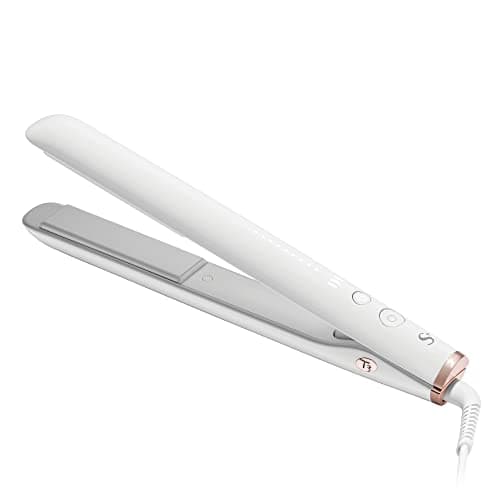
| 1 | T3 SinglePass StyleMax 1 inch flat iron Nine heat settings, 11.1 oz, ceramic plates and 100–240 V — the most published specification at this level. | Anyone who wants real control without flagship pricing | |
| 2 | 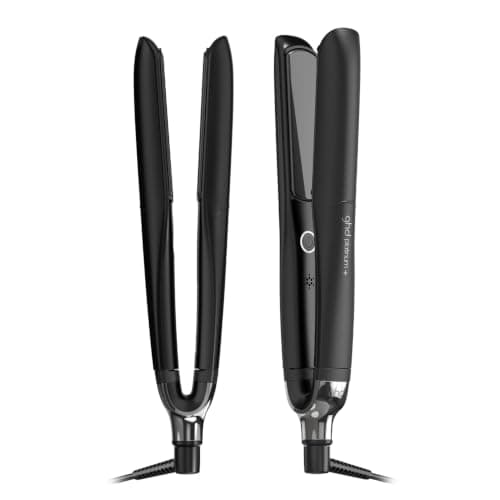 ghd Platinum+ flat iron (1 inch plate) Three years of warranty and universal voltage — the longest-covered iron on the site. | Buying once and keeping it | |
| — | 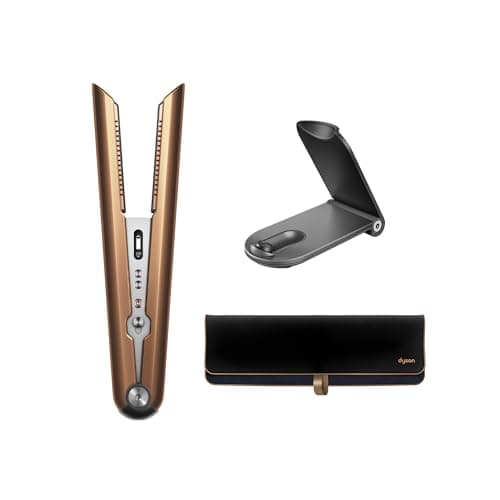 Dyson Corrale straightener Flagship price, three heat settings, two-year warranty, and a battery that will eventually stop holding charge. We’d skip this | Not a value purchase |
1. Best specification per dollar
T3 SinglePass StyleMax 1 inch flat iron
Best for: Anyone who wants real control without flagship pricing
Nine heat settings, 11.1 oz, ceramic plates and 100–240 V — the most published specification at this level.
This is the iron that makes the value argument on this site. Nine heat settings is more than the flagship Dyson Corrale offers. 100–240 V auto world voltage matches the ghd. 11.1 oz is the lightest published weight in our registry.
CeraGloss ceramic plates at 1 inch, a 360-degree swivel cord, and a two-year warranty. On every published row except warranty length it is competitive with tools costing considerably more.
T3 publishes no wattage, which is consistent across their whole range and means no running cost can be computed. On an iron that matters far less than on a dryer.
What’s wrong with it
Two-year warranty against ghd's three, and no published wattage or cord length. 1 inch plates make long dense hair a slow job.
Published specifications — T3 SinglePass StyleMax 1 inch flat iron
| Wattage | Not published |
|---|---|
| Heat settings | 9 heat settings |
| Speed settings | Not applicable |
| Weight | 11.1 oz (cord not included) |
| Cord length | 360-degree swivel cord — length not published |
| Noise (dB) | Not applicable |
| Attachments | None supplied |
| Plate / barrel | CeraGloss ceramic plates, 1 in |
| Dual voltage | Yes — auto world voltage, 100–240 V |
| Warranty | 2-year warranty |
Every figure above is taken from T3 Micro — SinglePass StyleMax 1 inch flat iron product page. “Not published” means the figure does not appear on that page — it is not an estimate withheld, it is a number the manufacturer does not state. How we compile these.
What it costs to run for a year
T3 does not publish a wattage for this tool, so there is nothing honest to compute. The formula is watts ÷ 1,000 × hours a year × your rate per kWh; if you find a rating plate on the handle, 65 hours a year and 18.34 cents per kilowatt-hour will get you the rest of the way.
2. Best warranty
ghd Platinum+ flat iron (1 inch plate)
Best for: Buying once and keeping it
Three years of warranty and universal voltage — the longest-covered iron on the site.
Value is not only about the purchase price. Three years of warranty is fifty percent more coverage than anything else in this category, and universal voltage means you are not buying a second iron for travel.
The fixed 365°F is also, unexpectedly, a value argument: it is the setting that avoids the damage that leads to replacing hair you cannot replace. An iron that removes the option to overheat is worth something over three years.
Published: 1 inch precision-milled floating high-gloss plates, 20-second heat-up, 9 ft power cable, 30-minute automatic sleep mode.
What’s wrong with it
The most expensive iron here after the Corrale, with no adjustment at all and no published wattage or weight.
Published specifications — ghd Platinum+ flat iron (1 inch plate)
| Wattage | Not published |
|---|---|
| Heat settings | One fixed temperature — 365°F |
| Speed settings | Not applicable |
| Weight | Not published |
| Cord length | 9 ft power cable |
| Noise (dB) | Not applicable |
| Attachments | None supplied |
| Plate / barrel | Precision-milled floating high-gloss plates, 1 in |
| Dual voltage | Yes — universal voltage |
| Warranty | 3-year warranty |
Every figure above is taken from ghd — Platinum+ flat iron (1 inch plate) product page. “Not published” means the figure does not appear on that page — it is not an estimate withheld, it is a number the manufacturer does not state. How we compile these.
What it costs to run for a year
ghd does not publish a wattage for this tool, so there is nothing honest to compute. The formula is watts ÷ 1,000 × hours a year × your rate per kWh; if you find a rating plate on the handle, 65 hours a year and 18.34 cents per kilowatt-hour will get you the rest of the way.
The one we'd skip
Dyson Corrale straightener
Best for: Not a value purchase
Flagship price, three heat settings, two-year warranty, and a battery that will eventually stop holding charge.
On a page about value the Corrale is straightforwardly the wrong answer, and the published figures say so without our help.
It has the fewest heat settings of the three irons here. It has the shortest warranty. It is by a distance the most expensive. And it is the only one with a battery, which is a consumable component — every rechargeable cell degrades, and when it does you have a cordless iron that is no longer cordless.
Its flexing plates are a genuine engineering advantage on thick and coily hair, which is where we recommend it. As a value purchase it does not stand up.
What’s wrong with it
Highest price, fewest heat settings, shortest warranty, and a battery whose capacity declines over the life of the tool.
Published specifications — Dyson Corrale straightener
| Wattage | 200 W |
|---|---|
| Heat settings | 3 heat settings; Dyson's stated starting point is 365°F |
| Speed settings | Not applicable |
| Weight | 1.23 lb |
| Cord length | 10.9 ft charging cable |
| Noise (dB) | Not applicable |
| Attachments | Charging dock and travel pouch |
| Plate / barrel | Flexing manganese-copper alloy plates |
| Dual voltage | Battery — 10.8 V–16.8 V cell |
| Warranty | 2-year limited warranty |
Every figure above is taken from Dyson — Corrale straightener product page. “Not published” means the figure does not appear on that page — it is not an estimate withheld, it is a number the manufacturer does not state. How we compile these.
What it costs to run for a year
$2.38 a year
200 W × 65 hours a year = 13.0 kWh, at 18.34 cents per kilowatt-hour. The hours assume 15 minutes a session, 5 days a week — that is an assumption, not a measurement, so swap in your own if it is wrong.
What you are actually paying for
Across the irons in our registry, the specifications that improve with price are narrower than the marketing suggests.
What improves with price on a flat iron, and what does not
| Specification | Improves with price? | Notes |
|---|---|---|
| Heat setting granularity | Yes | 3 to 9 settings across our registry — the row that matters most |
| Plate description | Yes | Premium makers describe milling, flotation and materials in detail |
| Warranty | Sometimes | 3 years on the ghd, 2 on the more expensive Corrale |
| Dual voltage | Not reliably | Both the ghd and the mid-priced T3 publish universal or 100–240 V |
| Published weight | Yes | Cheaper irons frequently publish no weight at all |
| Running cost | Irrelevant | Irons draw little, and most makers publish no wattage to compute it from |
Note the third and fourth rows. The three-year warranty belongs to the middle of the range, not the top, and dual voltage is available at the mid-price point. Neither tracks price the way you would assume.
Where a cheap iron genuinely costs you
Heat-setting count, and it is not a small thing. An iron with three settings divides the whole usable range into thirds, so its lowest setting sits well above the lowest setting on a nine-setting tool. If your hair needs to be under 365°F, a three-setting iron may simply not be able to take you there.
For robust hair that is a non-issue. For fine, colored or damaged hair, it is the single specification worth paying for, and it is why the damaged-hair page and the fine-hair page weight it above everything else.
The arithmetic
Price per use, at 5 uses a week over 5 years
| What you pay | Cost per use | Cost per year |
|---|---|---|
| $30 | $0.02 | $6.00 |
| $60 | $0.05 | $12.00 |
| $100 | $0.08 | $20.00 |
| $150 | $0.12 | $30.00 |
| $200 | $0.15 | $40.00 |
| $300 | $0.23 | $60.00 |
| $400 | $0.31 | $80.00 |
| $500 | $0.38 | $100.00 |
5 uses a week for 5 years is 1300 uses. Both figures are stated assumptions, not measurements — halve the life and every cost per use doubles. We publish the ladder rather than a worked example for one specific product because a price we typed into a sentence would be wrong within a week.
At five uses a week over five years, the difference between a $60 iron and a $250 one is about fifteen cents a use. Whether that is worth it depends on your hair, and the number is more useful than our opinion. The full treatment is at the value pages.
Questions people actually ask
Are cheap flat irons bad for your hair?
Not inherently. They tend to publish fewer heat settings, so the lowest available temperature is higher, which matters for fine or damaged hair. On robust hair the practical difference is much smaller than the price gap.
What is the most important specification on a flat iron?
Heat-setting granularity — how finely you can control the temperature, and specifically how low the low setting goes. Everything else, including plate material, matters less than being able to work at a temperature your hair tolerates.
Do expensive flat irons last longer?
Nothing published supports that. The longest iron warranty on this site is three years on the ghd Platinum+, while the more expensive Dyson Corrale publishes two — and the Corrale also has a battery, which degrades over time.