Travel & Dual Voltage
How to Read a Hair Tool's Voltage Rating
Ten seconds and one line of small print settles a question people get wrong every summer.
Updated September 2026 · Sawyer V.
Find the printed rating on the handle near the cord entry or on the plug. A single voltage figure like 120 V~ means single voltage. A range like 100–240 V~ means dual voltage and needs only a plug adapter abroad.
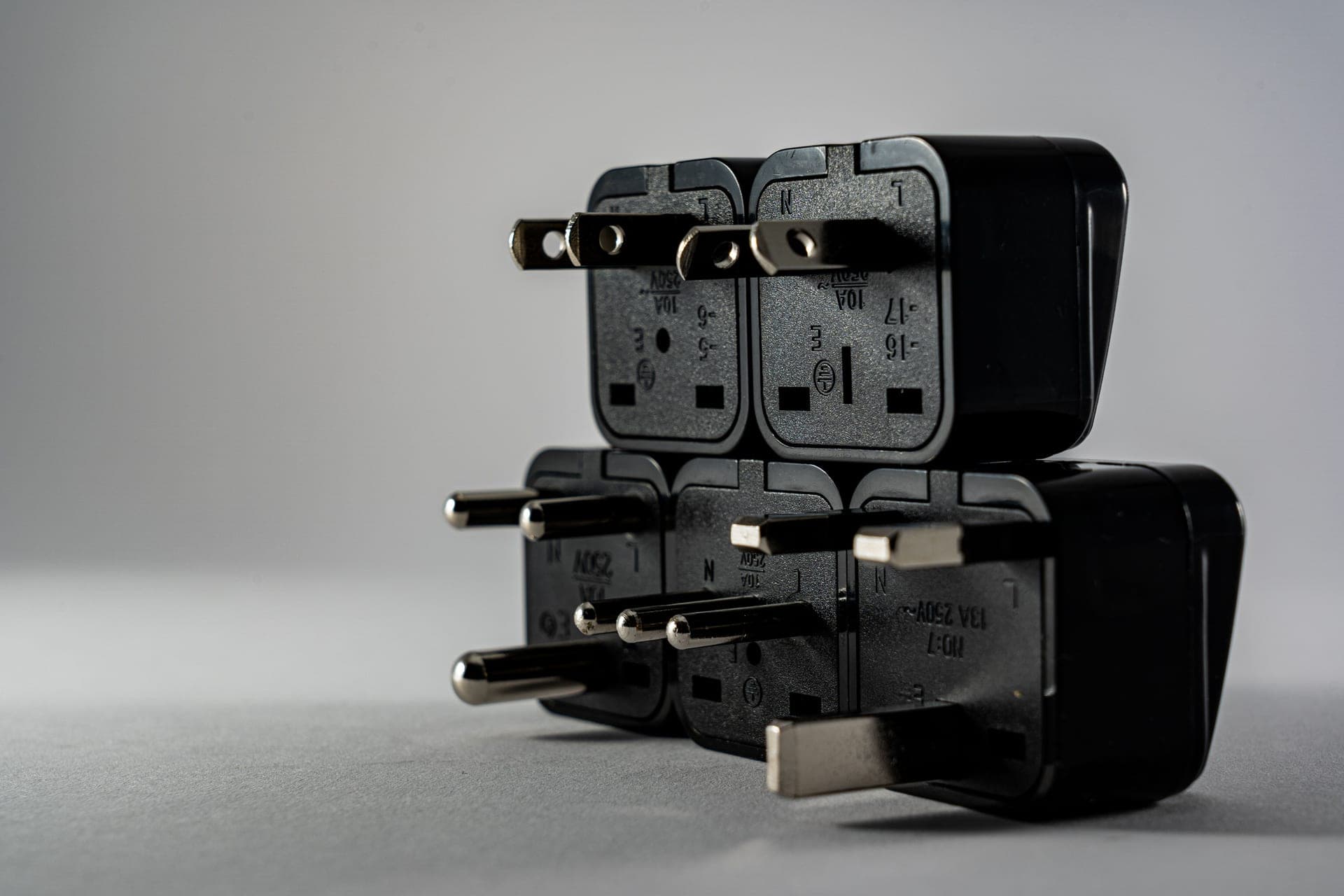
We earn a commission if you buy through the links on this page, at no extra cost to you. It never changes which tool we pick or which one we tell you to skip. How this site is funded.
Where to look
Manufacturers are required to print the electrical rating on the appliance. On hair tools it is almost always in one of three places:
- On the handle, near where the cord enters, often on a small molded panel.
- On the plug itself, molded or printed into the plastic.
- Inside the filter cap on some dryers, which is annoying but common.
It is small, it is usually gray-on-gray, and a phone camera is often the easiest way to read it.
Reading the line
A typical American hair dryer says something like 120 V~ 60 Hz 1875 W. Each part means something.
What each part of the rating means
| Part | Meaning | Why it matters |
|---|---|---|
| 120 V | Supply voltage the tool expects | A single number means single voltage — this is the one that decides travel |
| 100–240 V | A supply range the tool accepts | Dual voltage. A plug adapter is all you need |
| ~ | Alternating current | Standard for mains appliances; nothing to act on |
| 60 Hz | Supply frequency | Europe runs at 50 Hz. Dual voltage tools are almost always marked 50/60 Hz |
| 1875 W | Power drawn | What a voltage converter would have to be rated above |
The three cases
Single voltage — one figure
120 V~ 60 Hz. The tool expects American mains only. Abroad it needs a voltage converter rated above its wattage, or it will be damaged. For anything above about 1,000 W, that converter is not a practical travel item.
Dual voltage — a range
100–240 V~ 50/60 Hz. The tool handles both supplies, usually by switching automatically. You need a plug adapter and nothing else. T3 calls this “auto world voltage” and ghd calls it “universal voltage”; both mean the same thing.
Switched — two figures and a physical switch
Older travel dryers sometimes have a recessed slider marked 110/220 that you set yourself. These work, and the failure mode is forgetting to move it, or moving it back. Check it before every trip.
Why so few dryers are dual voltage
Physics rather than corner-cutting. A dryer’s heating element is designed for a specific voltage, and its motor is matched to a supply frequency. Building both to accept a doubled voltage means either a switching supply — heavy and expensive at these power levels — or accepting much lower performance on one of the two.
Irons and barrels draw far less power and use simpler electronics, which is why they cross over far more often. In our registry every dual-voltage tool is an iron or a barrel and every dryer is single voltage — the full table is here.
What to do if the plate is missing or unreadable
Check the manufacturer’s own product page, not the retailer listing. Manufacturers publish voltage; retailers frequently omit or get it wrong.
If neither the tool nor the manufacturer says, assume single voltage. The cost of assuming wrong in that direction is carrying an iron you did not need to leave behind. The cost of assuming wrong in the other direction is a destroyed tool and, occasionally, a tripped hotel circuit.
The tools on this page
Prices come from the live price layer. Where none is available the button says so rather than showing a number we cannot stand behind.
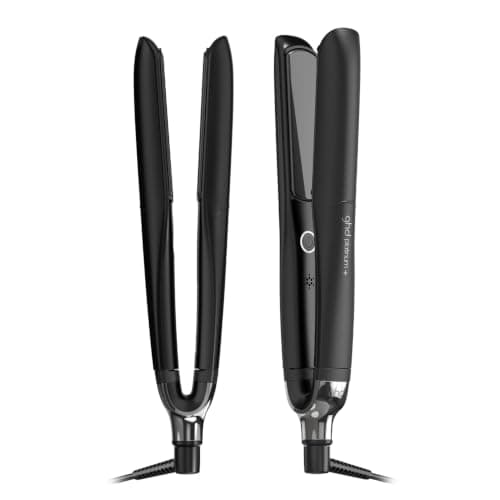
ghd Platinum+ flat iron (1 inch plate)
One temperature, 365°F, no dial to get wrong — the strongest heat-discipline argument in the category, and the longest iron warranty here at three years.
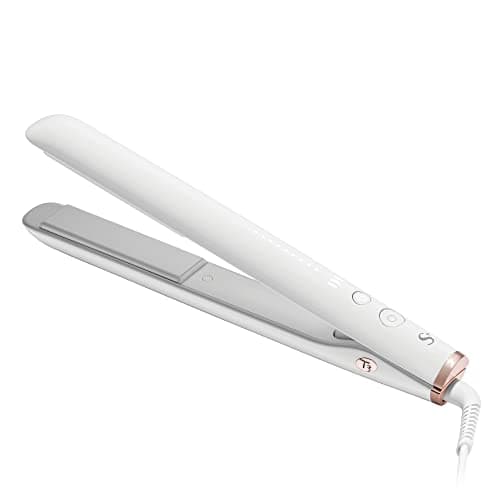
T3 SinglePass StyleMax 1 inch flat iron
Nine heat settings and genuine 100–240 V dual voltage: the most adjustable iron here and the only one you can pack for Europe without a thought.
Questions people actually ask
How do I know if my hair tool is dual voltage?
Read the printed rating on the handle near the cord entry or on the plug. A range like 100 to 240 volts means dual voltage; a single figure like 120 volts means single voltage and needs a converter abroad.
What does 100-240V mean on a hair tool?
It means the tool accepts any mains supply in that range and will work on both American and European electricity. You need only a plug adapter to change the shape of the pins.
Why are most hair dryers not dual voltage?
A dryer's heating element is designed for a specific voltage and its motor is matched to a supply frequency. Building both to accept a doubled voltage at 1,600 W or more means heavy, expensive switching hardware. Irons draw far less and cross over easily.
What if I cannot find the rating on my tool?
Check the manufacturer's own product page rather than the retailer listing. If neither states a voltage, assume single voltage — the cost of guessing wrong that way is leaving a tool at home rather than destroying it.