Travel & Dual Voltage
Hair Tools for Europe: What to Pack and What to Leave
The answer is short: take the iron, leave the dryer, and check the plate before you pack anything.
Updated September 2026 · Sawyer V.
European mains runs at roughly 230 V against America’s 120 V. A tool rated 100–240 V handles both and needs only a plug adapter. A tool rated 120 V needs a voltage converter or it will be destroyed — which, in our registry, means every dryer and every air styler.
We earn a commission if you buy through the links on this page, at no extra cost to you. It never changes which tool we pick or which one we tell you to skip. How this site is funded.
The voltage difference, plainly
The United States supplies about 120 volts at 60 hertz. Most of Europe supplies about 230 volts at 50 hertz — the UK, Ireland, France, Germany, Italy, Spain and effectively everywhere else you are likely to go.
Roughly double the voltage into an appliance built for half of it does not mean it runs twice as fast. It means the heating element and motor receive far more power than they were designed for, and the usual result is immediate failure, sometimes with smoke.
What to pack
Packing decisions, from our published-voltage table
| Tool | Take it? | Why |
|---|---|---|
| ghd Platinum+ iron | Yes | Publishes universal voltage — adapter only |
| T3 SinglePass StyleMax iron | Yes | Publishes 100–240 V auto world voltage |
| T3 SinglePass Curl X | Yes | Publishes 100–240 V auto world voltage |
| Dyson Supersonic | No | 120 V only — use the hotel dryer |
| Dyson Airwrap | No | 120 V only |
| Shark FlexStyle or SpeedStyle | No | 120 V only |
| T3 dryers and AireBrush | No | 125 V only |
| Revlon tools | Check first | Revlon publishes no voltage — read the plate on the tool |
| Dyson Corrale | Check the charger | The iron is battery powered; the charger is what needs to be dual voltage |
Every voltage figure from the manufacturer's own product page. The full table is on the dual voltage page.
Plug shapes, which are a separate problem
Voltage and plug shape are two different things and you need both right.
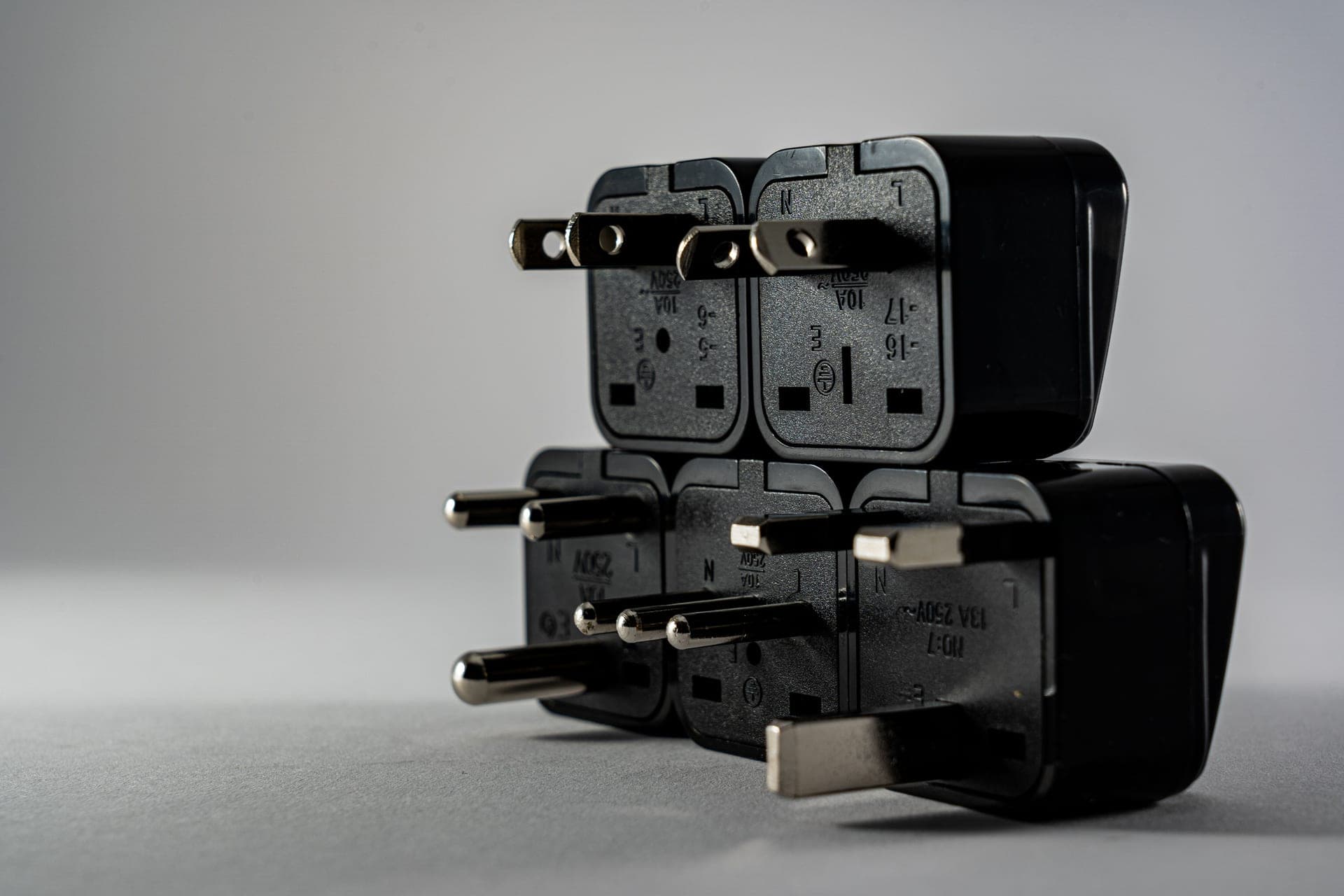
- Type C / F — two round pins. Most of continental Europe: France, Germany, Spain, Italy, the Netherlands, Scandinavia.
- Type G — three rectangular pins. UK and Ireland, and nowhere else in Europe.
- Type L — three round pins in a line. Italy, alongside Type C/F.
A universal adapter covers all of these and is worth the few dollars if you are visiting more than one country. It does nothing about voltage — that is the point people miss.
The hotel dryer question
Hotel dryers are usually wall-mounted, low-powered and not very good, and for a week they are fine. If you have thick or curly hair and that genuinely will not work, your options are:
- Buy a cheap dual-voltage travel dryer that publishes a 100–240 V rating. Low power, small, and it will not be destroyed.
- Buy a cheap dryer when you arrive. For a long trip this often costs less than a converter and works better.
- Take a dual-voltage iron and adjust your routine — air dry, then finish with the iron. This is what most people eventually settle on.
What is not a good option is a voltage converter for a 1,600 W dryer. They exist, they are heavy, and carrying one across Europe to run a hair dryer is not a reasonable trade.
Before you pack anything
Read the rating plate on each tool. It is on the handle near the cord entry or on the plug, and it says something like 120 V~ 60 Hz 1875 W or 100–240 V~ 50/60 Hz.
A single number means single voltage. A range spanning 110 to 240 means you are fine with an adapter. Do not rely on the retailer listing, do not rely on the box, and do not assume price correlates with capability — it does not, and this page explains how to read it.
The full list of what publishes what is at the dual voltage tools page.
The tools on this page
Prices come from the live price layer. Where none is available the button says so rather than showing a number we cannot stand behind.
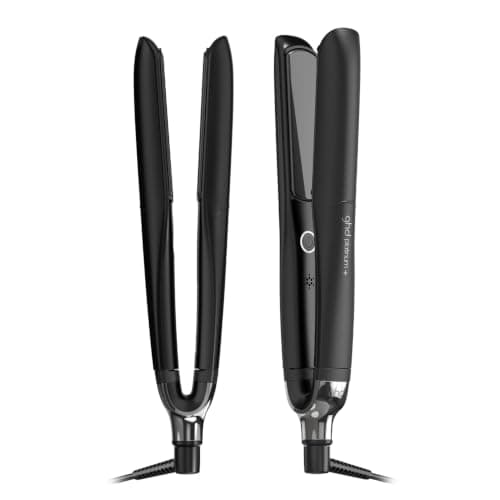
ghd Platinum+ flat iron (1 inch plate)
One temperature, 365°F, no dial to get wrong — the strongest heat-discipline argument in the category, and the longest iron warranty here at three years.
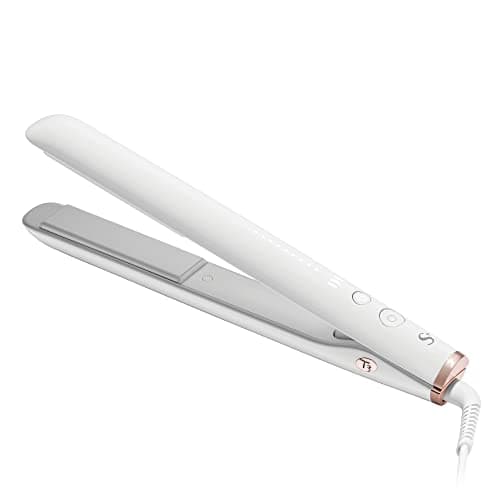
T3 SinglePass StyleMax 1 inch flat iron
Nine heat settings and genuine 100–240 V dual voltage: the most adjustable iron here and the only one you can pack for Europe without a thought.
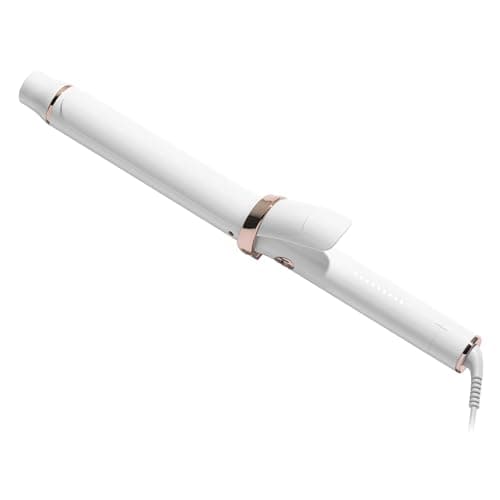
T3 SinglePass Curl X extra-long barrel curling iron
A 6.5-inch barrel and a separate published weight for every barrel size — unusual disclosure in a category where most makers publish a diameter and stop.
Questions people actually ask
Will my American hair dryer work in Europe?
Only if the rating plate shows a voltage range spanning 110 to 240 volts. Every premium dryer in our registry publishes a single 120 or 125 volt rating and will be damaged by European mains even with a plug adapter.
What plug adapter do I need for Europe?
Type C or F two-round-pin for most of continental Europe, Type G three-rectangular-pin for the UK and Ireland, and Type L for Italy alongside C and F. A universal adapter covers all of them and does nothing about voltage.
Which hair tools can I take to Europe?
Irons and curling barrels that publish a 100 to 240 volt range — in our registry, the ghd Platinum+ and the T3 SinglePass StyleMax and Curl X. Leave every dryer and air styler at home.
Should I buy a voltage converter for my hair dryer?
For a 1,600 to 1,875 W dryer you would need a heavy, expensive unit that is not a sensible travel item. Buying a cheap dual-voltage travel dryer, or using the hotel one, is the practical answer.