Curling Irons & Wands
The Best Travel Curling Irons in 2026
The rating plate decides whether your curling iron survives the trip. Two of the five we cover do not tell you what it says.
Updated September 2026 · Sawyer V.
Three curling tools in our registry publish a rating that travels: the ghd Curve Thin (universal voltage) and T3’s SinglePass Curl X and CurlWrap (auto world voltage, 100–240 V). ghd publishes no voltage rating at all for the Chronos Curve Classic or the Wave.
We earn a commission if you buy through the links on this page, at no extra cost to you. It never changes which tool we pick or which one we tell you to skip. How this site is funded.
Quick picks
Tap any row to jump to the full write-up. Prices come from the live price layer; where none is available the button says so rather than showing a number we cannot stand behind.
| # | Product | Best for | Price |
|---|---|---|---|
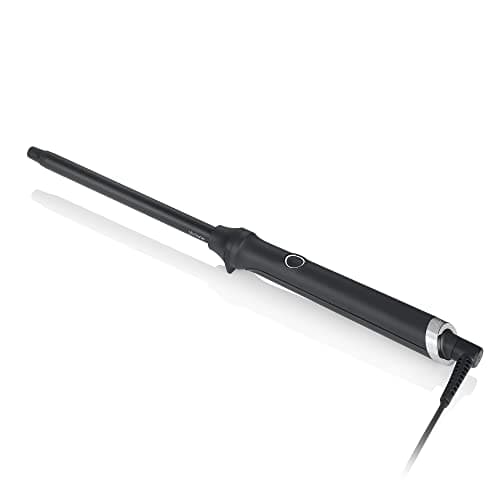
| 1 | ghd Curve Thin curling wand (0.5 inch barrel) Published universal voltage on the narrowest barrel in our registry, with a cool tip and a built-in safety stand. | Short hair and tight curls, in a carry-on | |
| 2 | 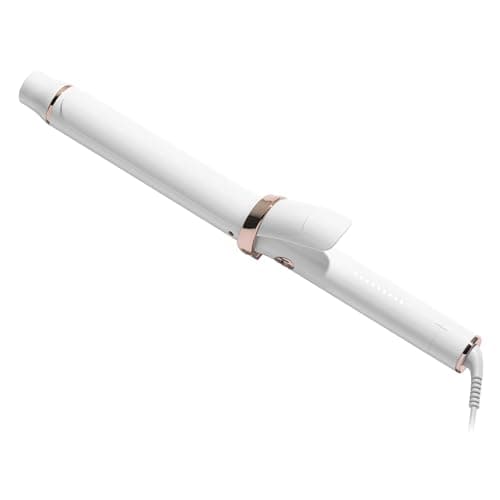 T3 SinglePass Curl X extra-long barrel curling iron Auto world voltage 100–240 V, nine heat settings, and a published weight for each of three barrel sizes. | One iron covering unfamiliar water and unfamiliar products | |
| 3 | 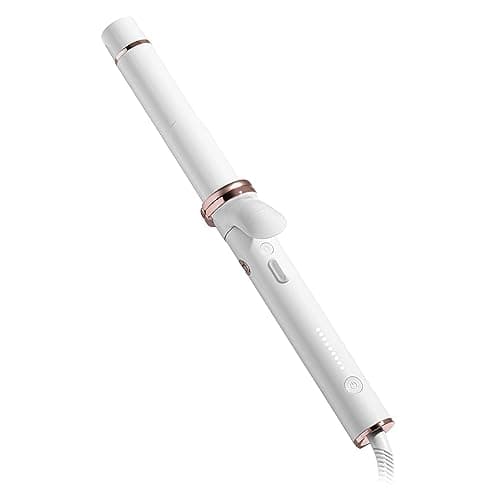 T3 CurlWrap automatic rotating curling iron Auto world voltage 100–240 V with a self-rotating barrel and nine heat settings. | Getting a consistent result somewhere unfamiliar | |
| — | 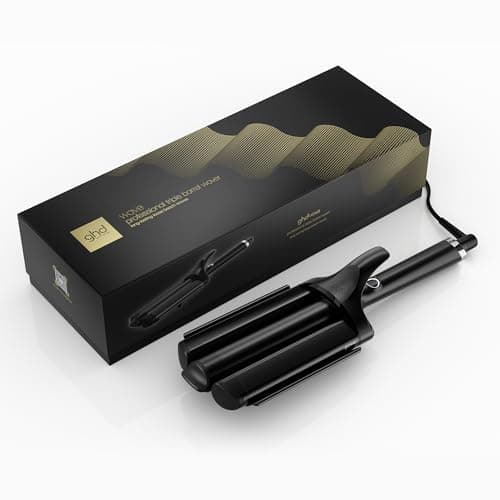 ghd Wave triple barrel hair waver No published voltage rating at all, on three heated barrels — the bulkiest and least confirmable tool here. We’d skip this | Not travel |
1. Best packing size
ghd Curve Thin curling wand (0.5 inch barrel)
Best for: Short hair and tight curls, in a carry-on
Published universal voltage on the narrowest barrel in our registry, with a cool tip and a built-in safety stand.
ghd states universal voltage plainly, which is the specification you are actually shopping for. A 0.5 inch barrel is also the smallest object in this category, which matters when the bag is already full.
The built-in safety stand is a genuinely useful travel feature and almost nobody publishes one. Unfamiliar bathrooms have less counter space and more surfaces you do not want to mark, and a stand keeps a 365°F barrel off them.
30-second heat-up matters more away from home than at home — it is the difference between using it and skipping it. 8.8 ft swivel cord, two-year warranty.
What’s wrong with it
Fixed at 365°F with no adjustment, a half-inch barrel only suits tight curls, and ghd publishes no weight — the one figure a traveler most wants.
Published specifications — ghd Curve Thin curling wand (0.5 inch barrel)
| Wattage | Not published |
|---|---|
| Heat settings | One fixed temperature — 365°F |
| Speed settings | Not applicable |
| Weight | Not published |
| Cord length | 8.8 ft, 360-degree swivel cord |
| Noise (dB) | Not applicable |
| Attachments | Cool tip, built-in safety stand |
| Plate / barrel | 0.5 in thin barrel, clipless |
| Dual voltage | Yes — universal voltage |
| Warranty | 2-year warranty |
Every figure above is taken from ghd — Curve Thin curling wand product page. “Not published” means the figure does not appear on that page — it is not an estimate withheld, it is a number the manufacturer does not state. How we compile these.
What it costs to run for a year
ghd does not publish a wattage for this tool, so there is nothing honest to compute. The formula is watts ÷ 1,000 × hours a year × your rate per kWh; if you find a rating plate on the handle, 65 hours a year and 18.34 cents per kilowatt-hour will get you the rest of the way.
2. Most adaptable abroad
T3 SinglePass Curl X extra-long barrel curling iron
Best for: One iron covering unfamiliar water and unfamiliar products
Auto world voltage 100–240 V, nine heat settings, and a published weight for each of three barrel sizes.
“Auto” is the word doing the work. It detects and adapts rather than needing a switch you have to remember to flip — which is the failure mode of older switched tools and the reason so many people still pack a converter they do not need.
Nine heat settings matter more abroad than at home. Different water, different products and different humidity change how your hair behaves, and having somewhere lower to go when a section misbehaves is worth more than a fixed setting chosen for your normal routine.
Published weights of 10.6 oz, 13.2 oz and 15.1 oz by barrel size — pack the 1 inch. 8 ft swivel cord, two-year warranty.
What’s wrong with it
The 1.5 in barrel is 42 percent heavier than the 1 in, T3 publishes no wattage, and a clipped iron is bulkier in a bag than a bare wand.
Published specifications — T3 SinglePass Curl X extra-long barrel curling iron
| Wattage | 78 W |
|---|---|
| Heat settings | 9 heat settings |
| Speed settings | Not applicable |
| Weight | 10.6 oz (1 in), 13.2 oz (1.25 in), 15.1 oz (1.5 in) — cord not included |
| Cord length | 8 ft, 360-degree swivel cord |
| Noise (dB) | Not applicable |
| Attachments | None supplied |
| Plate / barrel | CeraGloss ceramic barrel, 6.5 in long |
| Dual voltage | Yes — auto world voltage, 100–240 V |
| Warranty | 2-year warranty |
Every figure above is taken from T3 Micro — SinglePass Curl X product page. “Not published” means the figure does not appear on that page — it is not an estimate withheld, it is a number the manufacturer does not state. How we compile these.
What it costs to run for a year
$0.93 a year
78 W × 65 hours a year = 5.1 kWh, at 18.34 cents per kilowatt-hour. The hours assume 15 minutes a session, 5 days a week — that is an assumption, not a measurement, so swap in your own if it is wrong.
3. Least technique in a strange bathroom
T3 CurlWrap automatic rotating curling iron
Best for: Getting a consistent result somewhere unfamiliar
Auto world voltage 100–240 V with a self-rotating barrel and nine heat settings.
Bad light, a small mirror and a rush is exactly the situation where hand-wrapping goes wrong. A barrel that rotates itself gives you the same result in a hotel bathroom as at home, which is a genuine travel argument rather than a gimmick.
Genuine 100–240 V auto world voltage, so a plug adapter is all you need — no converter, no switch.
Nine heat settings, two published rotation speeds, CeraGloss ceramic long barrel, 8 ft swivel cord, two-year warranty.
What’s wrong with it
T3 publishes no weight or wattage, and it is the bulkiest tool here — a motor and a long barrel is a lot of bag for one job.
Published specifications — T3 CurlWrap automatic rotating curling iron
| Wattage | 77 W |
|---|---|
| Heat settings | 9 heat settings |
| Speed settings | Two barrel rotation speeds |
| Weight | 13.4 oz (cord not included) |
| Cord length | 8 ft, 360-degree swivel cord |
| Noise (dB) | Not published |
| Attachments | None supplied |
| Plate / barrel | Korean CeraGloss ceramic self-rotating long barrel, 1 in and 1¼ in |
| Dual voltage | Yes — auto world voltage, 100–240 V |
| Warranty | 2-year warranty |
Every figure above is taken from T3 Micro — CurlWrap automatic rotating curling iron product page. “Not published” means the figure does not appear on that page — it is not an estimate withheld, it is a number the manufacturer does not state. How we compile these.
What it costs to run for a year
$0.92 a year
77 W × 65 hours a year = 5.0 kWh, at 18.34 cents per kilowatt-hour. The hours assume 15 minutes a session, 5 days a week — that is an assumption, not a measurement, so swap in your own if it is wrong.
The one we'd skip
ghd Wave triple barrel hair waver
Best for: Not travel
No published voltage rating at all, on three heated barrels — the bulkiest and least confirmable tool here.
ghd publishes no voltage rating for the Wave. Not “no”, not “yes” — nothing. And a blank row is not a yes.
The consequence of guessing wrong is not inconvenience. UK supply is declared at 230 V and may legally reach 253 V under the ESQCR 2002 — more than double what a 120 V-only tool is built for.
What makes it odd is that ghd clearly knows the row matters: they publish universal voltage for the Curve Thin and the Platinum+, and state outright that the Helios is not universal voltage. Three products disclosed, two left blank. Take the Curve Thin.
What’s wrong with it
No published voltage, weight or cord length, and three barrels is the largest object in this category to pack.
Published specifications — ghd Wave triple barrel hair waver
| Wattage | Not published |
|---|---|
| Heat settings | One fixed temperature — 365°F |
| Speed settings | Not applicable |
| Weight | Not published |
| Cord length | Not published |
| Noise (dB) | Not applicable |
| Attachments | None supplied |
| Plate / barrel | Three ergonomic barrels, dual temperature sensors |
| Dual voltage | Not published |
| Warranty | 2-year warranty |
Every figure above is taken from ghd — Wave triple barrel hair waver product page. “Not published” means the figure does not appear on that page — it is not an estimate withheld, it is a number the manufacturer does not state. How we compile these.
What it costs to run for a year
ghd does not publish a wattage for this tool, so there is nothing honest to compute. The formula is watts ÷ 1,000 × hours a year × your rate per kWh; if you find a rating plate on the handle, 65 hours a year and 18.34 cents per kilowatt-hour will get you the rest of the way.
The rating plate is the whole decision
Everything else about a travel curling iron — size, weight, heat-up time — is a preference. The voltage rating is a binary, and getting it wrong destroys the tool on first use.
Published voltage across every curling tool we cover
| Tool | Published voltage | Travels? |
|---|---|---|
| ghd Curve Thin | Universal voltage | Yes, with a plug adapter |
| T3 SinglePass Curl X | Auto world voltage, 100–240 V | Yes, with a plug adapter |
| T3 CurlWrap | Auto world voltage, 100–240 V | Yes, with a plug adapter |
| ghd Chronos Curve Classic | Not published | Unknown — do not assume |
| ghd Wave | Not published | Unknown — do not assume |
Three yeses, two blanks. Note the pattern by brand: every T3 curling tool we cover travels and publishes that it does. ghd publishes it for one of its three and leaves the other two silent.
Adapter, not converter
These get used interchangeably and they are different objects. A plug adapter changes the shape of the pins and does nothing to the electricity — which is all a 100–240 V tool needs. A converter changes the voltage itself.
For hair tools we would buy the adapter and a dual-voltage tool, and skip voltage conversion entirely. The reasoning, including why we would not run a modern tool with a control board off a travel converter, is on the adapter page.
And read the actual rating plate on the tool rather than the product page. It is molded into the plug or printed on the handle, it takes ten seconds, and product pages get regionalized and occasionally left wrong.
What else changes on the road
- Heat-up time matters more. At home you switch it on and do something else. Traveling, a 30-second heat-up is the difference between using it and not.
- A stand or a pouch is worth real money. Unfamiliar surfaces, less counter space, and a hot barrel that has to go somewhere — the storage argument is on its own page.
- Corded is simpler than cordless. Battery tools bring lithium rules with them — the FAA position is here.
- Humidity will beat your technique. Above roughly 60 to 70 percent relative humidity, hair behaves as a measurably different material — what actually helps.
Price per use, at 5 uses a week over 5 years
| What you pay | Cost per use | Cost per year |
|---|---|---|
| $30 | $0.02 | $6.00 |
| $60 | $0.05 | $12.00 |
| $100 | $0.08 | $20.00 |
| $150 | $0.12 | $30.00 |
| $200 | $0.15 | $40.00 |
| $300 | $0.23 | $60.00 |
| $400 | $0.31 | $80.00 |
| $500 | $0.38 | $100.00 |
5 uses a week for 5 years is 1300 uses. Both figures are stated assumptions, not measurements — halve the life and every cost per use doubles. We publish the ladder rather than a worked example for one specific product because a price we typed into a sentence would be wrong within a week.
What we would buy
The ghd Curve Thin if you want the smallest thing that works and your hair suits a tight curl — published universal voltage, a stand, and a 30-second heat-up. The T3 SinglePass Curl X if you want adjustability abroad, which is where it counts most.
The complete list of what travels across every category is on the dual-voltage page, and the country-specific numbers are on the UK page and the Europe page.
Questions people actually ask
Which curling irons are dual voltage?
In our registry: the ghd Curve Thin publishes universal voltage, and T3's SinglePass Curl X and CurlWrap publish auto world voltage of 100-240 V. ghd publishes no voltage rating for the Chronos Curve Classic or the Wave.
Can I use my curling iron in Europe with an adapter?
Only if the rating plate shows a range like 100-240 V. An adapter changes the shape of the pins and nothing else, so a 120 V-only tool will be connected to roughly double what it was built for.
Is a cordless curling iron better for travel?
Not usually. Battery tools bring lithium-battery air rules with them, and butane cordless irons are limited to one per person in carry-on with no spare cartridges. A corded dual-voltage tool is simpler.