Travel & Dual Voltage
Adapter vs Converter vs Transformer
An adapter changes the shape of the pins. A converter changes the voltage. Buying the first when you need the second is how tools die abroad.
Updated September 2026 · Sawyer V.
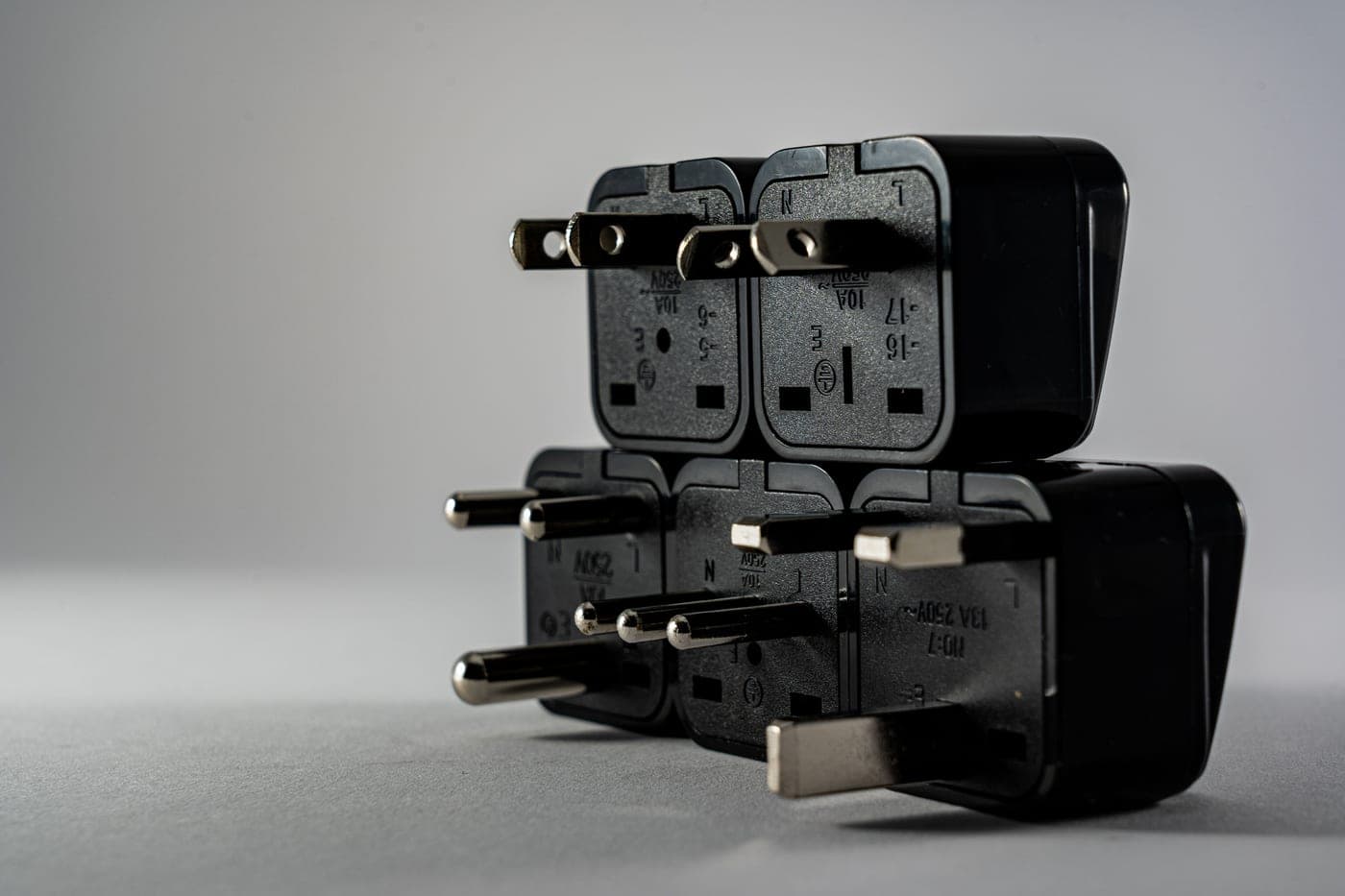
An adapter changes the plug shape and nothing else — it is all a 100–240 V tool needs. A converter or transformer changes the voltage itself. For hair tools we would buy the adapter and a dual-voltage tool, and skip voltage conversion entirely.
We earn a commission if you buy through the links on this page, at no extra cost to you. It never changes which tool we pick or which one we tell you to skip. How this site is funded.
Three objects, three jobs
What each device actually does
| Device | Changes | Typical use | Size |
|---|---|---|---|
| Plug adapter | The physical shape of the pins | Any tool already rated 100–240 V | Pocket sized |
| Converter | Voltage, usually by chopping the waveform | Simple resistive heating devices, short periods | Palm sized |
| Transformer | Voltage, properly, with windings | Electronics that need a clean supply | Heavy — often heavier than the tool |
The single most useful sentence here: an adapter does nothing to the electricity. It is a shape-changing socket. If your tool is single-voltage, an adapter will connect it perfectly to a supply that destroys it.
How to know which you need
Read the rating plate — molded into the plug or printed on the handle, not the marketing copy on the box.
- A range: 100–240 V, or the words dual voltage or universal voltage. You need an adapter, and nothing else. The tool handles the rest internally.
- A single figure: 120 V or 125 V. An adapter is not enough. You are now in converter territory, and for hair tools we would not go there.
- Two figures and a physical switch. An older design. Set the switch before you plug it in, then use an adapter. Forgetting the switch is the classic way to destroy one of these.
- Nothing at all. Assume single voltage. Several tools in our registry publish no voltage — that is a blank row, not a permission.
The full walkthrough of how to read the plate, including where makers hide it, is on the voltage page.
Why we would not run a hair dryer off a converter
This is the part most travel advice skips, and it is the reason this page exists.
Travel converters are generally rated for short-duration use and for simple resistive loads — the classic example is a travel kettle or an old-fashioned iron. A hair dryer is a resistive heating element plus a motor plus, on anything modern, a control board with heat and speed settings. The electronics are the problem: many converters deliver a chopped waveform rather than a clean sine wave, and control electronics do not always tolerate that.
There is also a straightforward power argument. The most powerful dryers in our registry publish 1,875 W. A converter rated to handle that continuously is not a small travel accessory — it is a heavy box, and it costs a meaningful fraction of what a dual-voltage tool costs.
So the arithmetic favors buying the right tool. A dual-voltage iron weighs less than a converter, works everywhere without a second object in your bag, and does not stop working when the converter fails.
What about frequency?
A fair question, and mostly a non-issue for hair tools. The UK and most of Europe run at 50 Hz where the US runs at 60 Hz — the UK figure is declared in regulation 27 of the ESQCR 2002 along with the 230 V figure.
Heating elements do not care about frequency at all — they just get hot. Motors do care, and a dryer motor designed for 60 Hz runs slightly slower on 50 Hz. In practice, tools published as 100–240 V are designed for both, and the makers who publish that range know where their products go.
The practical packing decision
For anyone traveling with hair tools more than once a year, the cheapest route is usually to own one dual-voltage version of the tool you cannot do without, rather than to build a converter kit.
What to own, by what you cannot travel without
| What you cannot do without | The tool that solves it |
|---|---|
| A dryer with your own settings | ghd flight+ — dual voltage, 0.99 lb including cord and nozzle |
| A flat iron | T3 SinglePass StyleMax (100–240 V) or ghd Platinum+ (universal voltage) |
| A curling iron | ghd Curve Thin, T3 SinglePass Curl X or T3 CurlWrap |
| An air styler | T3 Aire 360 — the only dual-voltage one we list |
Everything else in our registry is single voltage, including every Dyson, every Shark, both T3 dryers and the ghd Helios. That is not a gap in our coverage — it is what the category publishes, and the complete list is on the dual-voltage page.
Price per use, at 5 uses a week over 5 years
| What you pay | Cost per use | Cost per year |
|---|---|---|
| $30 | $0.02 | $6.00 |
| $60 | $0.05 | $12.00 |
| $100 | $0.08 | $20.00 |
| $150 | $0.12 | $30.00 |
| $200 | $0.15 | $40.00 |
| $300 | $0.23 | $60.00 |
| $400 | $0.31 | $80.00 |
| $500 | $0.38 | $100.00 |
5 uses a week for 5 years is 1300 uses. Both figures are stated assumptions, not measurements — halve the life and every cost per use doubles. We publish the ladder rather than a worked example for one specific product because a price we typed into a sentence would be wrong within a week.
The one thing to check before you leave
Look at the actual tool, not the product page. Rating plates are authoritative and product pages get updated, regionalized and occasionally left wrong. It takes ten seconds and it is the only step on this page that cannot be skipped.
Country-specific numbers are on the UK page and the Europe page, and the rules about what you can actually carry onto the plane are on the carry-on page.
The tools on this page
Prices come from the live price layer. Where none is available the button says so rather than showing a number we cannot stand behind.
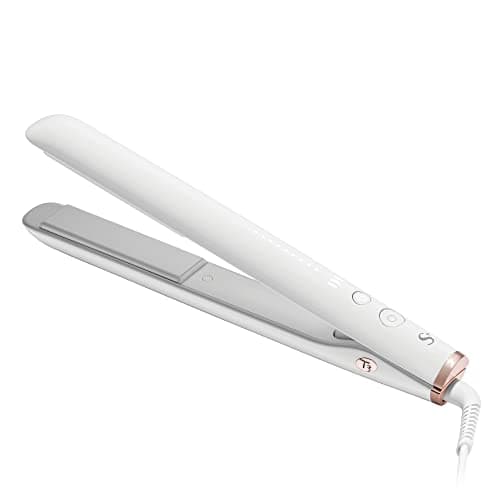
T3 SinglePass StyleMax 1 inch flat iron
Nine heat settings and genuine 100–240 V dual voltage: the most adjustable iron here and the only one you can pack for Europe without a thought.
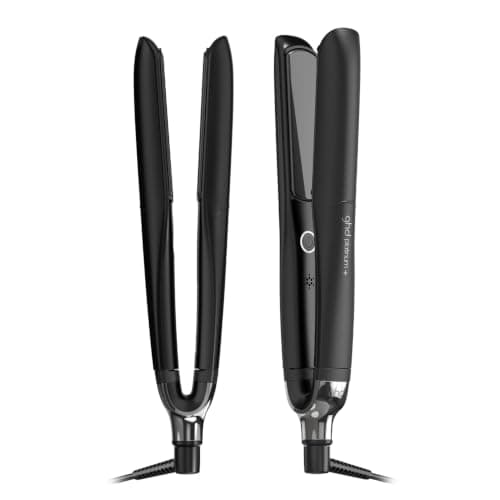
ghd Platinum+ flat iron (1 inch plate)
One temperature, 365°F, no dial to get wrong — the strongest heat-discipline argument in the category, and the longest iron warranty here at three years.
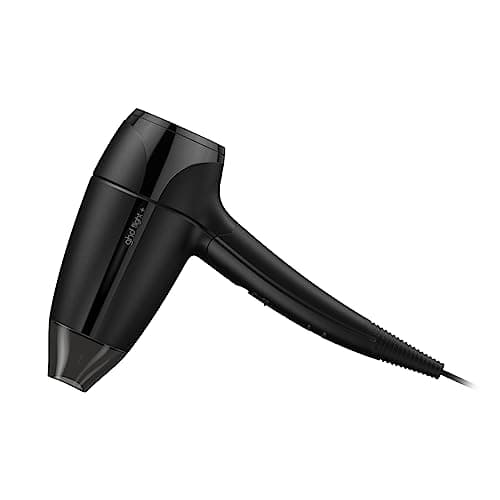
ghd flight+ travel hair dryer
The only dual-voltage dryer in this registry, at a published 0.99 lb with the cord on — the one dryer that genuinely travels.
Questions people actually ask
Do I need a converter or just an adapter?
If your tool's rating plate shows 100-240 V, or says dual or universal voltage, you need only a plug adapter. If it shows a single figure like 120 V, an adapter alone will destroy it.
Can I use a voltage converter with a hair dryer?
We would not. Converters are generally intended for simple resistive loads and short periods, while a modern dryer adds a motor and control electronics. A converter rated for 1,875 W continuously is also heavier than a dual-voltage tool.
What is the difference between a converter and a transformer?
A converter typically chops the waveform to reduce voltage and suits simple heating devices. A transformer steps voltage down properly using windings and suits electronics, but is heavy and often larger than the tool you are packing.
Does 50 Hz versus 60 Hz matter for hair tools?
Barely. Heating elements are indifferent to frequency; motors run slightly slower on 50 Hz. Tools published as 100-240 V are designed for both, so if the range is on the plate you are fine.