Travel & Dual Voltage
Taking Hair Tools to the UK
British sockets are declared at 230 volts and permitted to sit ten percent above that. A US-only dryer meets more than double what it was built for.
Updated September 2026 · Sawyer V.
UK low-voltage supply is declared at 230 V and 50 Hz, with permitted variation up to 10 percent above — so a socket may legally deliver up to 253 V. A 120 V-only US tool plugged into that through a shape adapter will be destroyed, usually immediately.
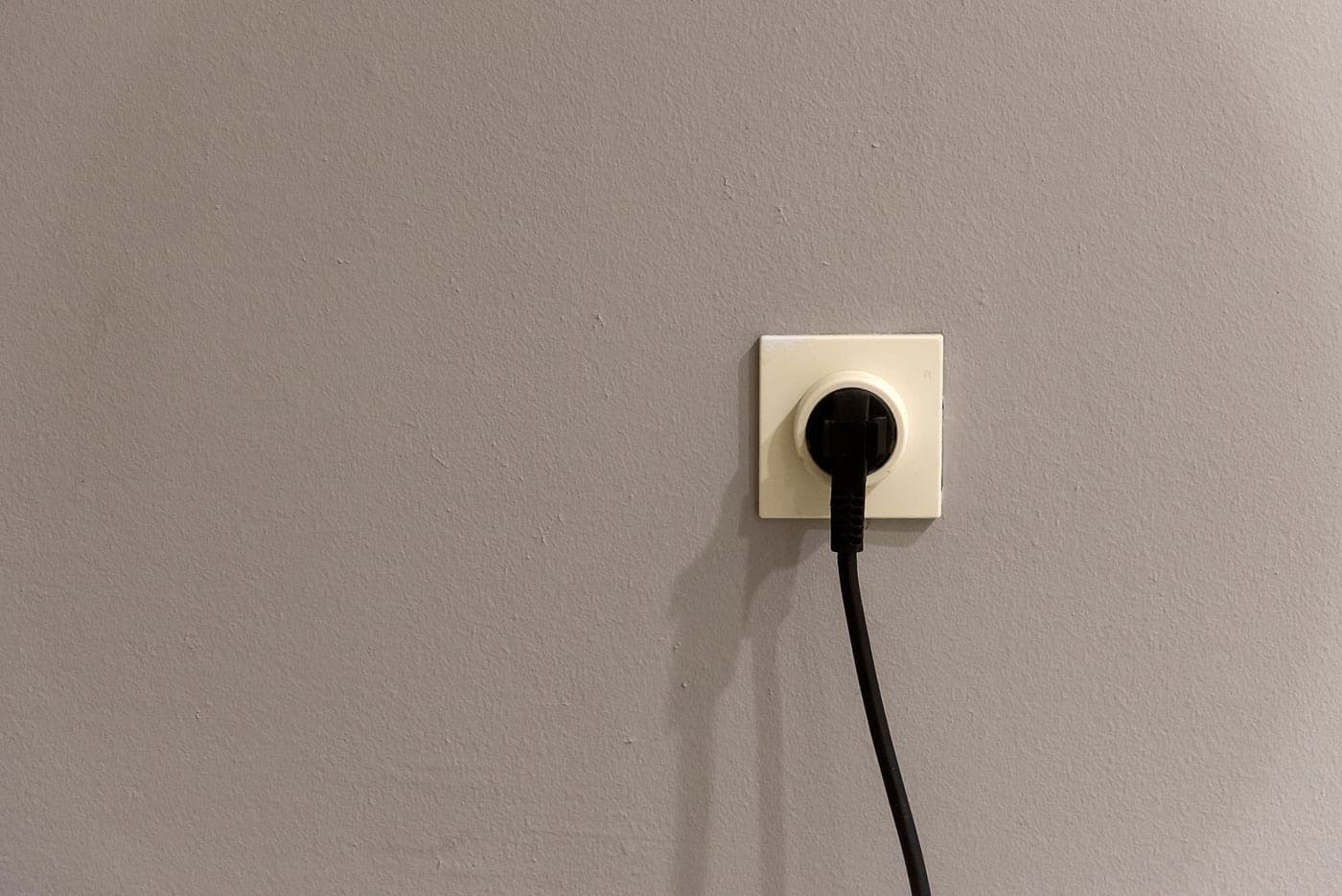
We earn a commission if you buy through the links on this page, at no extra cost to you. It never changes which tool we pick or which one we tell you to skip. How this site is funded.
The actual numbers, from the regulation
British electricity supply is not a matter of convention, it is a matter of law. The Electricity Safety, Quality and Continuity Regulations 2002 state that unless otherwise agreed in writing, the declared frequency shall be 50 hertz and the declared voltage for a low voltage supply shall be 230 volts between phase and neutral at the supply terminals.
The same regulation sets the permitted variations: for a low voltage supply, not exceeding 10 percent above or 6 percent below the declared voltage — ESQCR 2002, regulation 27.
What a UK socket may legally deliver
| Figure | Value |
|---|---|
| Declared voltage | 230 V |
| Declared frequency | 50 Hz |
| Permitted upper limit | 253 V (230 V + 10 percent) |
| Permitted lower limit | 216.2 V (230 V − 6 percent) |
| US nominal, for comparison | 120 V |
253 volts is more than twice the 120 V a US-only tool is built for. That is not a marginal overload that shortens its life — it is roughly four times the power dissipation in a resistive heating element, which is why the failure is usually instant and occasionally dramatic.
The plug is a separate problem, and the easy one
UK sockets take a plug with three rectangular pins, physically incompatible with US flat blades. That is what a travel adapter fixes, and adapters are cheap and widely sold.
Which is precisely why this trips people up: the adapter works. The pins fit, the tool switches on, and for about a second everything looks fine. An adapter changes the shape of the connection and does nothing at all to the voltage passing through it.
If you take one thing from this page: the adapter is not the question. The rating plate on your tool is. The distinction between adapters, converters and transformers is on its own page.
Which of our tools survive the UK
Published voltage ratings, and what they mean for a UK trip
| Tool | Published voltage | Takes a UK socket? |
|---|---|---|
| ghd flight+ travel dryer | Dual voltage | Yes, with a plug adapter |
| ghd Platinum+ flat iron | Universal voltage | Yes, with a plug adapter |
| ghd Curve Thin wand | Universal voltage | Yes, with a plug adapter |
| T3 SinglePass StyleMax iron | Auto world voltage, 100–240 V | Yes, with a plug adapter |
| T3 SinglePass Curl X | Auto world voltage, 100–240 V | Yes, with a plug adapter |
| T3 CurlWrap | Auto world voltage, 100–240 V | Yes, with a plug adapter |
| T3 Aire 360 styler | Dual voltage | Yes, with a plug adapter |
| Dyson Supersonic | 120 V | No |
| Dyson Airwrap | 120 V | No |
| Shark FlexStyle and IonCurl | 120 V | No |
| ghd Helios | ghd states not universal voltage | No |
| T3 AireLuxe and Featherweight | 125 V | No |
| ghd Chronos and Chronos Curve Classic | Not published | Unknown — do not risk it |
| Revlon tools | Not published | Unknown — do not risk it |
Note the shape of that table. Every dryer that is not the ghd flight+ stays home. Dryers are the hardest tools to make dual voltage, because the heating element is the highest-power component in the category, and the industry has largely solved it by not solving it — the reasoning is on the voltage page.
The two rows that say “not published”
ghd publishes universal voltage for the Platinum+ and the Curve Thin, states plainly that the Helios is not universal voltage, and publishes nothing at all for the Chronos or the Chronos Curve Classic. Revlon publishes no voltage for anything.
A blank row is not a yes. On every other specification an absence is an inconvenience; here the downside of guessing wrong is a destroyed tool and possibly a tripped circuit in a rented flat. Check the rating plate molded into the plug or printed on the handle, and if it shows a single figure rather than a range, leave it at home.
The hotel dryer question
Most UK hotels supply a dryer, and most of them are wall-mounted units with limited power and no attachments. They will dry your hair. They will not diffuse curls, and they are usually the wrong tool for fine hair that needs a low setting.
If you are going for a week and your hair is straightforward, the hotel dryer plus a dual-voltage iron is the light packing answer. If you have curls or fine hair, the ghd flight+ at a published 0.99 lb including cord and nozzle is the only dryer in our registry that solves it — the full list is here.
One more thing about bathrooms
UK bathrooms often have no standard power socket at all, only a shaver socket, and shaver sockets are low-current fittings not intended for high-power appliances. A hair dryer will typically trip it or simply not run.
The practical consequence is that you will probably be drying your hair in the bedroom rather than the bathroom, which makes cord length matter more than it does at home. Both 9 ft cords in our registry — the ghd Helios and the T3 dryers — are the tools that would help, and neither of them can go to the UK. That is the sort of thing you only find out once.
Price per use, at 5 uses a week over 5 years
| What you pay | Cost per use | Cost per year |
|---|---|---|
| $30 | $0.02 | $6.00 |
| $60 | $0.05 | $12.00 |
| $100 | $0.08 | $20.00 |
| $150 | $0.12 | $30.00 |
| $200 | $0.15 | $40.00 |
| $300 | $0.23 | $60.00 |
| $400 | $0.31 | $80.00 |
| $500 | $0.38 | $100.00 |
5 uses a week for 5 years is 1300 uses. Both figures are stated assumptions, not measurements — halve the life and every cost per use doubles. We publish the ladder rather than a worked example for one specific product because a price we typed into a sentence would be wrong within a week.
The tools on this page
Prices come from the live price layer. Where none is available the button says so rather than showing a number we cannot stand behind.
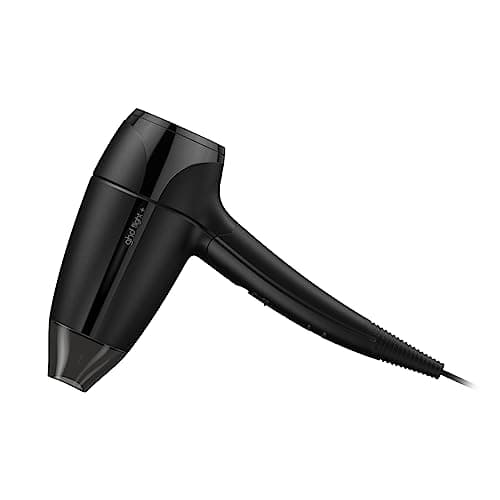
ghd flight+ travel hair dryer
The only dual-voltage dryer in this registry, at a published 0.99 lb with the cord on — the one dryer that genuinely travels.
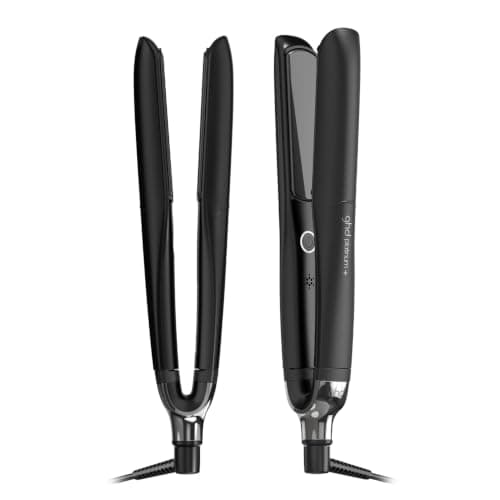
ghd Platinum+ flat iron (1 inch plate)
One temperature, 365°F, no dial to get wrong — the strongest heat-discipline argument in the category, and the longest iron warranty here at three years.
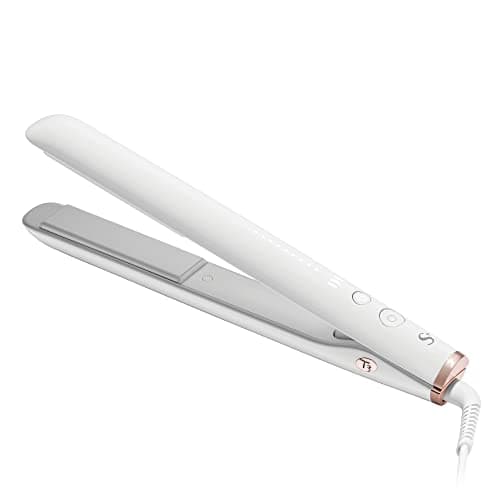
T3 SinglePass StyleMax 1 inch flat iron
Nine heat settings and genuine 100–240 V dual voltage: the most adjustable iron here and the only one you can pack for Europe without a thought.
Questions people actually ask
Can I use my US hair dryer in the UK with an adapter?
No, unless the rating plate shows a range like 100-240 V. UK supply is declared at 230 V and may legally reach 253 V, and an adapter only changes the shape of the pins. A 120 V-only dryer will be destroyed.
What voltage is the UK?
230 V at 50 Hz, declared under the Electricity Safety, Quality and Continuity Regulations 2002, with permitted variation of up to 10 percent above and 6 percent below — so between about 216 V and 253 V.
Which hair tools can I take to the UK?
In our registry: the ghd flight+, Platinum+ and Curve Thin, and the T3 SinglePass StyleMax, SinglePass Curl X, CurlWrap and Aire 360. Every Dyson, every Shark, both T3 dryers and the ghd Helios are single voltage.
Why is there no socket in UK bathrooms?
UK wiring practice restricts standard sockets in bathrooms, leaving only low-current shaver sockets. Those are not intended for high-power appliances, so plan on drying your hair in the bedroom.