Flat Irons & Straighteners
The Best Flat Irons for Travel in 2026
Weight is not the travel specification people think it is. The voltage line on the rating plate is, and most makers leave it blank.
Updated September 2026 · Sawyer V.
Buy an iron that publishes either 100–240 V or universal voltage — in our registry that is the T3 SinglePass StyleMax and the ghd Platinum+. A plug adapter changes the shape of the pins and nothing else, so a single-voltage iron abroad is a broken iron, not a slow one.
We earn a commission if you buy through the links on this page, at no extra cost to you. It never changes which tool we pick or which one we tell you to skip. How this site is funded.
Quick picks
Tap any row to jump to the full write-up. Prices come from the live price layer; where none is available the button says so rather than showing a number we cannot stand behind.
| # | Product | Best for | Price |
|---|---|---|---|
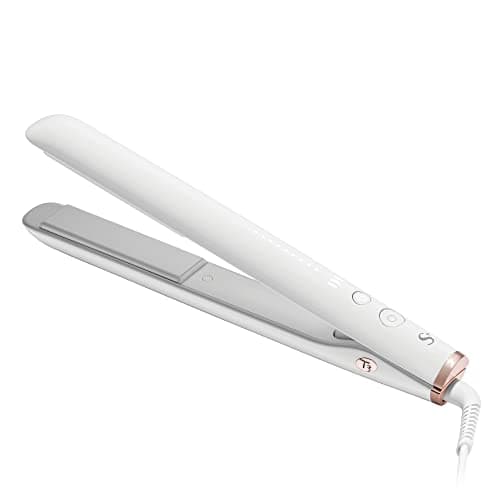
| 1 | T3 SinglePass StyleMax 1 inch flat iron Auto world voltage 100–240 V published outright, 11.1 oz without the cord, and nine heat settings. | One iron that goes everywhere and adjusts to everything | |
| 2 | 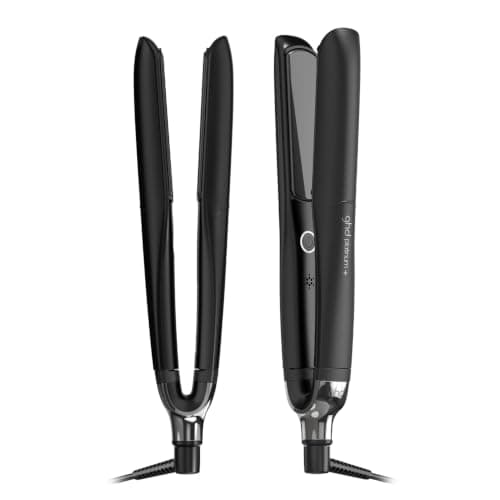 ghd Platinum+ flat iron (1 inch plate) Universal voltage published, a fixed 365°F with no dial to get wrong, and the longest iron warranty here at three years. | Traveling without thinking about temperature at all | |
| 3 | 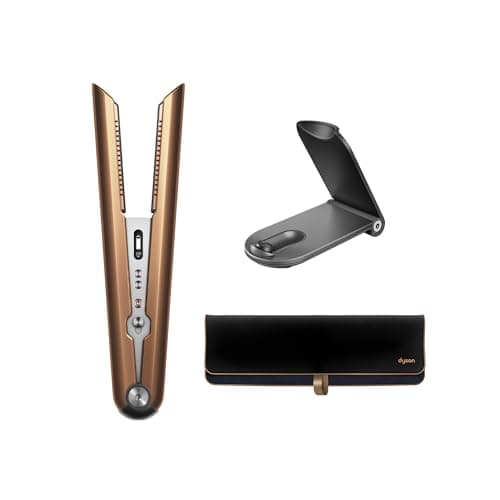 Dyson Corrale straightener Cordless, so voltage never applies while you use it — but the charger and the lithium battery bring their own rules. | Getting ready somewhere with no socket at all | |
| — | 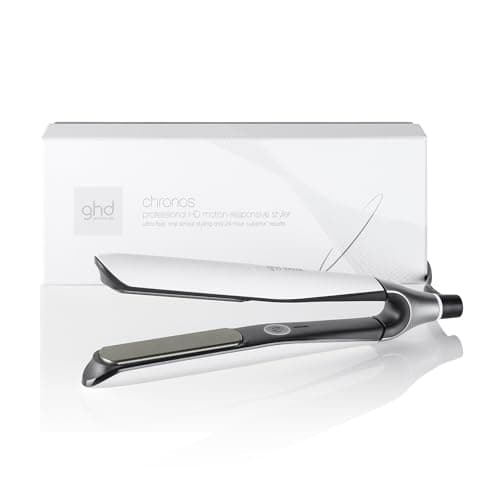 ghd Chronos flat iron (1 inch plate) ghd does not publish a voltage rating for the Chronos, and on this page that single blank row is disqualifying. We’d skip this | Not travel |
1. Best overall for travel
T3 SinglePass StyleMax 1 inch flat iron
Best for: One iron that goes everywhere and adjusts to everything
Auto world voltage 100–240 V published outright, 11.1 oz without the cord, and nine heat settings.
T3 publishes auto world voltage, 100–240 V, which is the specification you are actually shopping for. Auto means it detects and adapts rather than needing a switch you can forget to flip — the switched irons of twenty years ago are why so many people still travel with a converter they do not need.
11.1 oz without the cord is the lightest published iron weight in our registry, and on a tool that has to fit a carry-on that is a real advantage over an unpublished figure you cannot plan around.
Nine heat settings matter more abroad than at home, because hotel water and unfamiliar products change how your hair behaves. Having somewhere lower to go when a section is behaving oddly is worth more than a fixed setting chosen for your normal routine.
CeraGloss ceramic plates, 1 inch, 360-degree swivel cord, two-year warranty.
What’s wrong with it
T3 publishes no wattage and no cord length for it, and 1 inch plates mean more sections on thick hair — a longer session in a hotel bathroom.
Published specifications — T3 SinglePass StyleMax 1 inch flat iron
| Wattage | Not published |
|---|---|
| Heat settings | 9 heat settings |
| Speed settings | Not applicable |
| Weight | 11.1 oz (cord not included) |
| Cord length | 360-degree swivel cord — length not published |
| Noise (dB) | Not applicable |
| Attachments | None supplied |
| Plate / barrel | CeraGloss ceramic plates, 1 in |
| Dual voltage | Yes — auto world voltage, 100–240 V |
| Warranty | 2-year warranty |
Every figure above is taken from T3 Micro — SinglePass StyleMax 1 inch flat iron product page. “Not published” means the figure does not appear on that page — it is not an estimate withheld, it is a number the manufacturer does not state. How we compile these.
What it costs to run for a year
T3 does not publish a wattage for this tool, so there is nothing honest to compute. The formula is watts ÷ 1,000 × hours a year × your rate per kWh; if you find a rating plate on the handle, 65 hours a year and 18.34 cents per kilowatt-hour will get you the rest of the way.
2. Best if you want no decisions abroad
ghd Platinum+ flat iron (1 inch plate)
Best for: Traveling without thinking about temperature at all
Universal voltage published, a fixed 365°F with no dial to get wrong, and the longest iron warranty here at three years.
ghd states universal voltage plainly. That is the same commitment T3 makes in different words, and on the same brand’s Helios dryer ghd states the opposite just as plainly — which is a good sign about how they write spec sheets.
The fixed temperature suits travel specifically. Unfamiliar bathroom, bad light, running late for something: those are the conditions under which people reach for a higher setting, and this iron does not have one.
Three-year warranty, and a 9 ft cable, which is longer than the distance between a hotel socket and a hotel mirror rather more often than you would hope.
Full spec sheet on our Platinum+ review.
What’s wrong with it
ghd publishes no weight for it, which is the one specification a traveler most wants, and 365°F fixed is not enough for coarse, resistant hair.
Published specifications — ghd Platinum+ flat iron (1 inch plate)
| Wattage | Not published |
|---|---|
| Heat settings | One fixed temperature — 365°F |
| Speed settings | Not applicable |
| Weight | Not published |
| Cord length | 9 ft power cable |
| Noise (dB) | Not applicable |
| Attachments | None supplied |
| Plate / barrel | Precision-milled floating high-gloss plates, 1 in |
| Dual voltage | Yes — universal voltage |
| Warranty | 3-year warranty |
Every figure above is taken from ghd — Platinum+ flat iron (1 inch plate) product page. “Not published” means the figure does not appear on that page — it is not an estimate withheld, it is a number the manufacturer does not state. How we compile these.
What it costs to run for a year
ghd does not publish a wattage for this tool, so there is nothing honest to compute. The formula is watts ÷ 1,000 × hours a year × your rate per kWh; if you find a rating plate on the handle, 65 hours a year and 18.34 cents per kilowatt-hour will get you the rest of the way.
3. The cordless case
Dyson Corrale straightener
Best for: Getting ready somewhere with no socket at all
Cordless, so voltage never applies while you use it — but the charger and the lithium battery bring their own rules.
A battery iron sidesteps the voltage problem while you are styling, which is genuinely useful on a train, at a venue, or in a bathroom with one socket already occupied by the kettle.
It does not sidestep it entirely. The charger still has to work wherever you are, and Dyson publishes the cell as 10.8–16.8 V rather than publishing a charger voltage range on the page we cite — so confirm before you rely on it.
There is also an air-travel dimension. The FAA permits lithium batteries installed in a device, but spare uninstalled lithium-ion batteries are carry-on only and capped at 100 watt-hours each. Keep the iron with you rather than in the hold — the full rules are here.
1.23 lb published, 10.9 ft charging cable, charging dock and travel pouch in the box — the only iron here that ships a pouch.
What’s wrong with it
A charge can run out mid-session on long hair, and the battery is the one component that degrades whether you use it or not.
Published specifications — Dyson Corrale straightener
| Wattage | 200 W |
|---|---|
| Heat settings | 3 heat settings; Dyson's stated starting point is 365°F |
| Speed settings | Not applicable |
| Weight | 1.23 lb |
| Cord length | 10.9 ft charging cable |
| Noise (dB) | Not applicable |
| Attachments | Charging dock and travel pouch |
| Plate / barrel | Flexing manganese-copper alloy plates |
| Dual voltage | Battery — 10.8 V–16.8 V cell |
| Warranty | 2-year limited warranty |
Every figure above is taken from Dyson — Corrale straightener product page. “Not published” means the figure does not appear on that page — it is not an estimate withheld, it is a number the manufacturer does not state. How we compile these.
What it costs to run for a year
$2.38 a year
200 W × 65 hours a year = 13.0 kWh, at 18.34 cents per kilowatt-hour. The hours assume 15 minutes a session, 5 days a week — that is an assumption, not a measurement, so swap in your own if it is wrong.
The one we'd skip
ghd Chronos flat iron (1 inch plate)
Best for: Not travel
ghd does not publish a voltage rating for the Chronos, and on this page that single blank row is disqualifying.
We rate the Chronos highly elsewhere. It carries the same fixed 365°F and the same three-year warranty as the Platinum+, plus a wide-plate option the Platinum+ does not have, and it is a pick on the thick-hair page.
But on the page where voltage is the entire decision, ghd publishes nothing for it. Not “no”, not “yes” — nothing. And the consequence of guessing wrong is not inconvenience: plugging a 120 V-only tool into a 230 V supply destroys it, sometimes spectacularly.
The odd part is that ghd publishes universal voltage for the Platinum+ and states the Helios is not universal voltage. They clearly know the row matters. For travel, buy the sibling that states it.
What’s wrong with it
No published voltage rating at all, on the one specification where an unpublished figure cannot be safely assumed either way.
Published specifications — ghd Chronos flat iron (1 inch plate)
| Wattage | Not published |
|---|---|
| Heat settings | One fixed temperature — 365°F |
| Speed settings | Not applicable |
| Weight | Not published |
| Cord length | Not published |
| Noise (dB) | Not applicable |
| Attachments | None supplied |
| Plate / barrel | Floating ceramic plates with ultra-gloss coating, 1 in; wide-plate version also sold |
| Dual voltage | Not published |
| Warranty | 3-year warranty |
Every figure above is taken from ghd — Chronos flat iron (1 inch plate) product page. “Not published” means the figure does not appear on that page — it is not an estimate withheld, it is a number the manufacturer does not state. How we compile these.
What it costs to run for a year
ghd does not publish a wattage for this tool, so there is nothing honest to compute. The formula is watts ÷ 1,000 × hours a year × your rate per kWh; if you find a rating plate on the handle, 65 hours a year and 18.34 cents per kilowatt-hour will get you the rest of the way.
Weight is not the travel specification
Search for travel flat irons and you will mostly find small ones. Size is a real consideration for a carry-on, but it is second, and treating it as first is how people end up with a tiny iron that dies the moment they plug it in.
The specification that decides whether an iron works abroad is the voltage range on its rating plate. Nothing else on the tool matters if that line is wrong.
Published voltage across every iron in our registry
| Iron | Published voltage | Travels? |
|---|---|---|
| T3 SinglePass StyleMax | Auto world voltage, 100–240 V | Yes, with a plug adapter |
| ghd Platinum+ | Universal voltage | Yes, with a plug adapter |
| Dyson Corrale | Battery — 10.8–16.8 V cell | Cordless; confirm the charger |
| ghd Chronos | Not published | Unknown — do not assume |
Adapter, converter, transformer
These three words get used interchangeably and they are three different objects.
- An adapter changes the shape of the pins. It does nothing to the electricity. This is all a 100–240 V tool needs.
- A converter chops the voltage down, usually for short periods, and is generally rated for simple heating devices rather than electronics. Most are not appropriate for a modern iron with a control board.
- A transformer genuinely steps the voltage down and is heavy, expensive, and larger than the iron you are trying to take.
The full version of that distinction, and why we would not run a single-voltage iron off a converter at all, is on the adapter page.
Where you are going changes the stakes
Going from the US to a 230 V country is the dangerous direction. UK supply is declared at 230 V, 50 Hz, with permitted variation of up to 10 percent above — the Electricity Safety, Quality and Continuity Regulations 2002 — so a US-only iron can meet something close to double what it was built for.
Going the other way is a different failure: a 230 V-only tool on a 120 V supply usually just underperforms rather than dying. Neither is worth risking a flagship iron on. Country-by-country detail is on the UK page and the Europe page.
What to check before you pack
- Read the actual rating plate, not the product page. It is printed on the handle or molded into the plug. A range like 100–240 V means you are fine; a single figure means you are not.
- Buy the plug adapter, skip the converter. If your tool needs a converter, take a different tool.
- Check the hotel. Many supply a dryer, almost none supply an iron, and the ones that do are usually not the ones you want near fine hair.
- Keep battery tools in the cabin. Not a preference — an FAA rule for spare lithium batteries, and sensible practice for installed ones.
Price per use, at 5 uses a week over 5 years
| What you pay | Cost per use | Cost per year |
|---|---|---|
| $30 | $0.02 | $6.00 |
| $60 | $0.05 | $12.00 |
| $100 | $0.08 | $20.00 |
| $150 | $0.12 | $30.00 |
| $200 | $0.15 | $40.00 |
| $300 | $0.23 | $60.00 |
| $400 | $0.31 | $80.00 |
| $500 | $0.38 | $100.00 |
5 uses a week for 5 years is 1300 uses. Both figures are stated assumptions, not measurements — halve the life and every cost per use doubles. We publish the ladder rather than a worked example for one specific product because a price we typed into a sentence would be wrong within a week.
Questions people actually ask
Can I use my US flat iron in Europe with just an adapter?
Only if the rating plate shows a range like 100-240 V. If it shows a single figure such as 120 V, an adapter will connect it to roughly double the voltage it was built for and destroy it.
Which flat irons are dual voltage?
In our registry, the T3 SinglePass StyleMax publishes auto world voltage of 100-240 V and the ghd Platinum+ publishes universal voltage. ghd publishes no voltage rating at all for the Chronos.
Is a cordless flat iron better for travel?
It removes the voltage problem while you style, but the charger still has to work abroad and lithium batteries bring air-travel rules. It is the best option for styling somewhere with no socket, not automatically the best for flying.