Guides
How to Store Hair Tools Without Wrecking Them
Nobody replaces a flat iron because the plates wore out. They replace it because the cord stopped working where it meets the handle.
Updated September 2026 · Sawyer V.
Let it cool completely, then coil the cord loosely without wrapping it around the tool. Cord failure where the cable enters the handle is the most common way a heated tool dies, and wrapping is what causes it. Everything else — bags, mats, drawers — is secondary to those two habits.
We earn a commission if you buy through the links on this page, at no extra cost to you. It never changes which tool we pick or which one we tell you to skip. How this site is funded.
What storage is actually protecting
Two things, and neither is the part you would guess.
The first is the cord where it enters the handle. That junction is called the strain relief, and it is the most stressed point on any corded tool. Every time you wrap a cord tightly around a barrel or a pair of plates, you put a bend into the conductors at that exact spot. Do it daily for two years and the copper inside fatigues, usually before anything else on the tool has worn out at all.
The second is the heating element, which in a dryer is a coil of resistance wire suspended in the airflow path. It is more fragile than the plastic body around it suggests, and a tool dropped into a drawer under everything else can have that coil deformed in ways that are invisible from the outside until it fails.
Notice what is not on that list: plates, barrels and grills. Those are the parts people worry about and they are the parts that last. Storage is a cord-management problem wearing a tidiness costume.
Cool completely, and what that means
Everything else here is downstream of one rule: nothing goes away until it is genuinely cold.
A flat iron at a working temperature of 365°F does not become safe to put in a fabric bag in ninety seconds. Ceramic and metal hold heat well — which is the whole reason they are used — and the outside of a barrel cools faster than the core. A tool that feels merely warm can still mark the surface it is resting on.
Some manufacturers design around this and publish it, which is worth knowing before you buy.
- ghd publishes a 20-minute sleep mode on the Chronos Curve Classic. Curling is an interrupted activity — set a section, do something else, come back — and a tool that switches itself off is one fewer 365°F object left on a counter.
- ghd publishes a built-in safety stand on the Curve Thin, along with a cool tip. A stand keeps a hot barrel off whatever it is lying on, which is a storage feature that happens during use.
- Dyson publishes a charging dock and a travel pouch with the Corrale — the only iron in our registry that ships either.
- A cool shot is a storage feature too. Running cool air through a dryer for a few seconds before switching it off pulls residual heat out of the element rather than leaving it to soak into the housing. Dyson publishes a dedicated cold shot; ghd publishes a cool shot on the Helios.
The cord rule, in one line
Coil it loosely, and never around the tool.
Wrapping a cord around the body of a flat iron is the standard way people store them and it is the worst thing you can do to a cord. It forces a tight radius at the strain relief and holds it there for hours. A loose loop — the way an extension cable is coiled — takes a second longer and removes the bend entirely.
Two published specifications interact with this, and both are worth checking before you buy.
Published cord specifications across our registry
| Tool | Published cord | Swivel? |
|---|---|---|
| Dyson Corrale | 10.9 ft charging cable | Not published |
| T3 dryers (Featherweight, AireLuxe) | 9 ft professional cord | Not published |
| ghd Helios | 9 ft power cable | Not published |
| ghd Platinum+ | 9 ft power cable | Not published |
| ghd Curve Thin | 8.8 ft | Yes — 360-degree |
| ghd Chronos Curve Classic | 8.8 ft professional cable | Not published |
| Dyson Supersonic | 8.6 ft | Not published |
| T3 SinglePass Curl X | 8 ft | Yes — 360-degree |
| T3 AireBrush (both) | 8 ft | Yes — 360-degree |
| Shark FlexStyle and IonCurl | 8 ft | Not published |
A swivel is the more useful of the two. It lets the cord rotate rather than twisting on itself while you work, and accumulated twist is what becomes a kink that then gets stored in. T3 publishes a 360-degree swivel across most of its range; ghd publishes one on the Curve Thin; Dyson and Shark publish none.
Length matters in a way that is not obvious: a longer cord is more cord to manage badly. Nine feet is genuinely useful while you are styling — it is why we like it on the T3 dryers — and it is nine feet that has to go somewhere afterwards. That is an argument for a hook or a drawer with room, not for a shorter cord.
Bags, pouches and mats: what to look for
This is the part people are usually searching for, so we should be direct about what we can and cannot tell you.
We do not rank storage bags or organizers. Every product on this site carries a spec block read off the manufacturer’s own product page, and heat-resistant pouches are sold overwhelmingly by brands that publish no temperature rating, no material specification and no dimensions you can rely on. Ranking them would mean inventing the data, so we would rather give you the criteria and let you apply them.
What a heat-resistant pouch actually has to do:
- Survive contact with a hot surface without transmitting it. Silicone and glass-fiber linings are the usual materials. If a listing says “heat resistant” without naming a material or a temperature, treat it as a decorative claim.
- Not become a reason to skip the cooling step. This is the important one. A pouch that lets you bag a hot iron is solving the wrong problem — the heat still has to go somewhere, and now it is going into a zipped fabric envelope. Cool first, then bag.
- Hold the cord separately. A pouch that makes you wrap the cord around the tool to fit has cost you more than it saved.
- Open flat if it is a travel case. A mat you can put a hot tool down on in an unfamiliar bathroom is more useful than a drawstring bag, and it doubles as the thing you pack it in.
The honest shortcut: if a tool ships with its own pouch, that pouch was designed around that tool’s dimensions and heat profile by the people who built it. Dyson publishes one with the Corrale. Almost nobody else does, which is a gap in the category rather than a failure of any one product.
The bathroom question
Storing heated tools in a bathroom is the default because that is where people use them, and it is the worst room in the house for electronics.
The mechanism is not dramatic. Repeated humidity cycles — hot shower, cool room, hot shower — condense moisture on and inside a cold appliance, and where it collects is the switch contacts and the element housing. No manufacturer in our registry publishes an ingress protection rating for any product, so there is no figure to check and no way to compare tools on this.
What follows is modest and free: store tools outside the bathroom if you have anywhere else, and if you do not, keep them in a closed drawer rather than open on a shelf, and never straight after a shower. This is about the tool, not the hair — for what humidity does to your style, which is a separate and better-evidenced subject, see the humidity page.
Drawers, hooks and organizers
The specific failure a drawer causes is impact, and it lands on the part you cannot see. A dryer’s heating element is a suspended coil, and a tool at the bottom of a drawer with three other things on top of it takes small repeated impacts every time the drawer is opened.
Storage options, honestly assessed
| Where | Protects the cord? | Protects the element? | Verdict |
|---|---|---|---|
| Wall hook or over-door hook | Yes — the cord hangs in a loose loop | Yes — nothing on top of it | The best option, and the cheapest |
| Dedicated drawer, tools laid flat | Yes, if you coil loosely | Yes | Good — keep it a single layer |
| Shared drawer under other things | No — cords get compressed and kinked | No — repeated impact | The most common setup and the most damaging |
| Open shelf in a bathroom | Yes | Yes, but humidity cycling | Fine outside a bathroom, second-best inside one |
| The tool's own pouch or dock | Yes | Yes | Best, if the maker publishes one |
A heat-resistant mat on the counter is worth more than any organizer, because it addresses the moment the damage actually happens: the two minutes between switching a tool off and it being cool enough to move.
Battery tools are a different case
One tool in our registry is cordless — the Dyson Corrale, which Dyson publishes with a 10.8–16.8 V cell and a charging dock.
A dock is the storage answer the manufacturer designed, and using it is the straightforward advice. Beyond that we are going to be careful about what we claim, because most home lithium-storage advice online is unsourced.
What is published and authoritative is the air-travel position: the FAA states that damaged or recalled batteries and battery-powered devices likely to create sparks or generate a dangerous evolution of heat must not be carried aboard an aircraft, and that battery terminals must be protected from short circuit — FAA PackSafe. That is a rule about flying rather than about your bathroom shelf, but the underlying signal transfers: a battery tool that is visibly damaged, swollen or behaving oddly is not something to store and keep using.
The full set of rules that apply when you actually fly with one is on the carry-on rules page.
Travel storage
Packing is storage under worse conditions, and two published features do most of the work.
A folding handle. ghd publishes one on the flight+, along with a weight of 0.99 lb including cord and nozzle — a stricter figure than the cord-excluded weights most makers publish. It is the only dryer in our registry that folds, and the only one with a published dual voltage rating.
A supplied pouch. Dyson publishes one with the Corrale. On a cordless iron that also solves the problem of putting a recently-hot metal object into a bag with clothes.
Everything else is the same rules under more pressure: cool completely before packing, do not wrap the cord around the tool to make it fit, and keep the tool in the cabin rather than the hold — it is the fragile expensive thing in your luggage. Which tools can practically make the trip is on the dual-voltage page.
Why any of this is worth five seconds a day
Because lifespan is one of only two variables that meaningfully change what a tool costs you, and it is the one you control. The other is how often you use it.
Price per use, at 5 uses a week over 5 years
| What you pay | Cost per use | Cost per year |
|---|---|---|
| $30 | $0.02 | $6.00 |
| $60 | $0.05 | $12.00 |
| $100 | $0.08 | $20.00 |
| $150 | $0.12 | $30.00 |
| $200 | $0.15 | $40.00 |
| $300 | $0.23 | $60.00 |
| $400 | $0.31 | $80.00 |
| $500 | $0.38 | $100.00 |
5 uses a week for 5 years is 1300 uses. Both figures are stated assumptions, not measurements — halve the life and every cost per use doubles. We publish the ladder rather than a worked example for one specific product because a price we typed into a sentence would be wrong within a week.
Every price-per-use figure on this site assumes a five-year service life. A flagship that dies at two years costs more than twice per use what the same flagship costs at five, and cord failure at the strain relief is the most common reason it dies early. Five seconds of loose coiling is the cheapest intervention available anywhere on this site.
It also interacts with the warranty. Cord damage from wrapping is wear rather than a manufacturing fault, and a three-year ghd warranty or a four-year Revlon one does not cover a failure you caused — the argument about reading warranty terms is on the warranty page, and how long tools actually last is on the lifespan page.
The whole routine
- Cool shot, then off. A few seconds of cool air on anything with a motor.
- Leave it out until genuinely cold. Not warm. Cold.
- Coil the cord loosely, never around the tool. The one habit that matters most.
- Hang it, or lay it in a single layer. Nothing on top of a dryer.
- Out of the bathroom if you have anywhere else.
- Clean the intake monthly. Storage does not fix a clogged filter — that routine is on the maintenance guide.
The three tools below are the ones in our registry that publish a storage feature of their own, which is the closest thing to a shortcut this category offers.
The tools on this page
Prices come from the live price layer. Where none is available the button says so rather than showing a number we cannot stand behind.
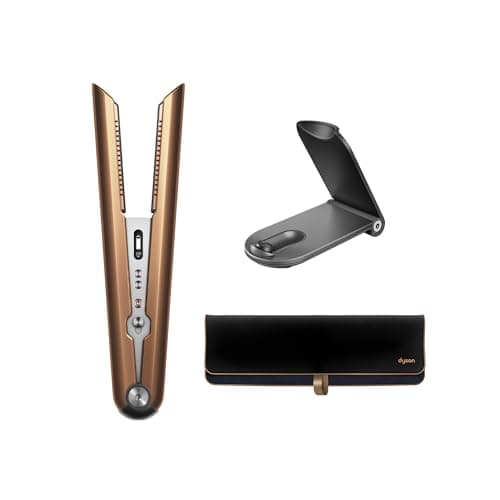
Dyson Corrale straightener
Cordless, and the only iron here whose plates flex. The 200 W figure is a battery rating and is not comparable to a corded iron's draw.
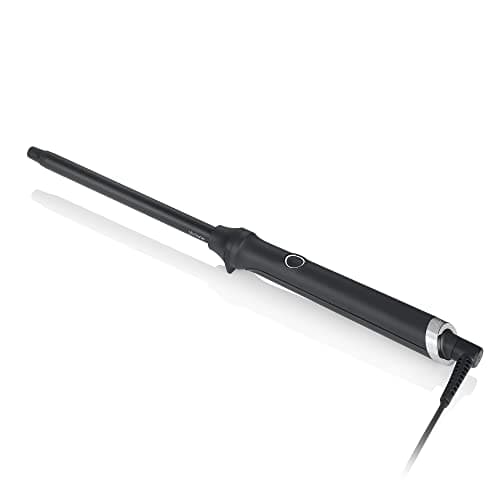
ghd Curve Thin curling wand (0.5 inch barrel)
A 0.5 inch barrel is the smallest in this registry and the one that holds a curl on short hair, with a 30-second heat-up and universal voltage.
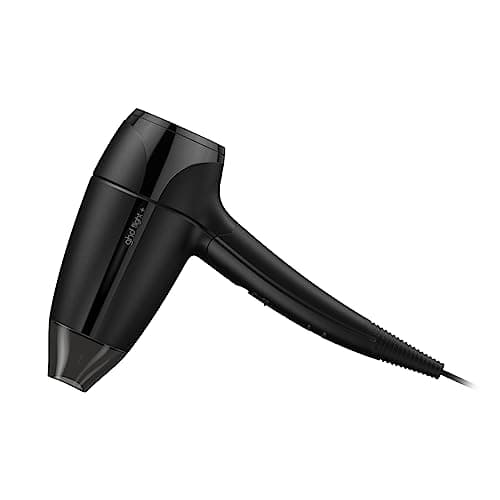
ghd flight+ travel hair dryer
The only dual-voltage dryer in this registry, at a published 0.99 lb with the cord on — the one dryer that genuinely travels.
Questions people actually ask
How should I store my flat iron?
Let it cool completely, then coil the cord loosely without wrapping it around the plates. Wrapping puts a tight bend into the cord where it enters the handle, which is the most common point of failure on a heated tool.
Is it bad to wrap the cord around my hair tools?
Yes, and it is the single most damaging storage habit. The stress lands at the strain relief, and repeated tight bends fatigue the conductors inside long before the plates or barrel wear out.
Do I need a heat-resistant bag for hair tools?
Only if you cannot leave the tool out to cool. A pouch that lets you bag a hot iron is solving the wrong problem, since the heat still has to go somewhere. We do not rank bags because the brands selling them publish no material or temperature specifications.
Can I store hair tools in the bathroom?
It is the worst room for them. Repeated humidity cycling condenses moisture on switch contacts and inside the housing, and no manufacturer in our registry publishes an ingress rating you could check. A closed drawer beats an open shelf.
Which hair tools come with storage included?
In our registry, Dyson publishes a charging dock and a travel pouch with the Corrale, ghd publishes a built-in safety stand on the Curve Thin, and ghd publishes a folding handle on the flight+ travel dryer. Nothing else ships storage.