Guides
Second-Day Hair: Refreshing Without Rewashing
The cheapest way to reduce heat damage is to halve the number of times you style. Second-day hair is how people actually do that.
Updated September 2026 · Sawyer V.
Refresh the front sections only, on dry hair, and leave the rest alone. A full rewash means a full dry plus a full restyle — two heat events — where a refresh is a handful of sections. Halving your styling frequency does more than any tool upgrade.
We earn a commission if you buy through the links on this page, at no extra cost to you. It never changes which tool we pick or which one we tell you to skip. How this site is funded.
Why this is the highest-leverage page on the site
Total heat exposure is roughly temperature multiplied by contact time, summed across everything you do in a week. Every intervention we recommend elsewhere — a lower setting, a wider plate, fewer passes — chips at one of those terms.
Skipping a wash day removes an entire session. Not a few degrees, not a pass: the whole thing, dry and style. Going from five styling days a week to three is a 40 percent reduction in total exposure, and it costs nothing and requires no purchase.
Nothing else on this site comes close to that, which is why it is worth a page even though it sells almost nothing.
The arithmetic, plainly
What a rewash actually costs against a refresh
| Full rewash | Refresh | |
|---|---|---|
| Heat events | Two — dry, then style | One partial, or none |
| Sections styled | All of them | Usually 4–8 at the front |
| Time | 20–40 minutes | 5 minutes |
| Mechanical stress | Wet detangling on the most extensible hair | Dry detangling, gently |
| Style longevity | Resets the clock | Extends what you had |
The middle row is the one people underrate. A refresh touches the sections that frame your face, which is most of what anyone sees. The back does not need restyling to look fine on day two.
How to refresh, by what you had
A blowout
- Sleep on it properly. Loosely pinned up, or a satin or silk surface if you have one. Most day-two damage to a blowout happens overnight through friction.
- Refresh the roots, not the lengths. The lengths are still smooth; the roots have gone flat. A few seconds of cool air at the root, lifting, then let it cool in position.
- If you must use heat, use the brush on four sections. Front, sides, and the part. That is the whole job — the technique.
- Dry shampoo at the root, not through the lengths. Product weight is one of the forces that pulls a style down.
Curls
- Water, not heat. A light mist re-activates the product already in your hair and lets the clump re-form. This is the single most effective curl refresh and it involves no tool at all.
- Scrunch, do not brush. A brush separates the clump, and a separated clump is what frizz is.
- Diffuse on low only if needed. Cool or low heat, and only until damp turns to dry — which dryers publish a diffuser.
- Re-curl a few pieces at the front if the pattern has gone uneven. A half-inch barrel matches a tight pattern better than anything wider — the reasoning.
Straightened hair
- Do not re-iron the whole head. This is the most common second-day mistake and the most expensive one. Iron the front sections and the part if they have kinked, and leave the rest.
- Never iron over dry shampoo buildup. Clamping a 365°F plate onto product residue bakes it onto the plate and onto the hair.
- Completely dry, always. Contact heat on damp hair produces steam inside the fiber — the published microscopy.
The overnight half of the problem
How you sleep decides how much refreshing you have to do, and it is entirely free.
The mechanism is friction. Repeated brushing and rubbing behaves as a fatigue process — flaws propagate through a fiber until it fails — Evans and Park, Journal of Cosmetic Science. A night of movement against a rough surface is a lot of small loading events on hair you are not even styling.
What helps: hair loosely up rather than loose, a smoother pillow surface, and not sleeping on hair that is still damp. What does not help: a tight elastic in the same place every night, which concentrates tension at one point.
What this does to the price-per-use arithmetic
Price per use, at 5 uses a week over 5 years
| What you pay | Cost per use | Cost per year |
|---|---|---|
| $30 | $0.02 | $6.00 |
| $60 | $0.05 | $12.00 |
| $100 | $0.08 | $20.00 |
| $150 | $0.12 | $30.00 |
| $200 | $0.15 | $40.00 |
| $300 | $0.23 | $60.00 |
| $400 | $0.31 | $80.00 |
| $500 | $0.38 | $100.00 |
5 uses a week for 5 years is 1300 uses. Both figures are stated assumptions, not measurements — halve the life and every cost per use doubles. We publish the ladder rather than a worked example for one specific product because a price we typed into a sentence would be wrong within a week.
One consequence worth naming honestly, since we are an affiliate site: styling less often makes every tool on this site worse value, because the denominator in the price-per-use calculation goes down.
A tool used three times a week for five years is 780 uses rather than 1,300. If you are cutting your styling days, that is an argument for buying at the entry tier rather than the flagship — the budget bands and how many tools you need.
When to just wash it
Refreshing is not a virtue in itself, and stretching a style past its natural life is how people end up ironing over buildup.
- Product buildup at the root that dry shampoo is now adding to rather than fixing.
- The refresh is taking longer than a wash would. At that point you are doing the work twice.
- Scalp discomfort or itch. Hair goals do not outrank that.
- You are about to apply heat to sections you have refreshed twice already. Wash it and start clean.
The framework for how much heat a week is reasonable is on the how-often page, and the no-heat options for the days in between are on the heat-free styling page.
The tools on this page
Prices come from the live price layer. Where none is available the button says so rather than showing a number we cannot stand behind.
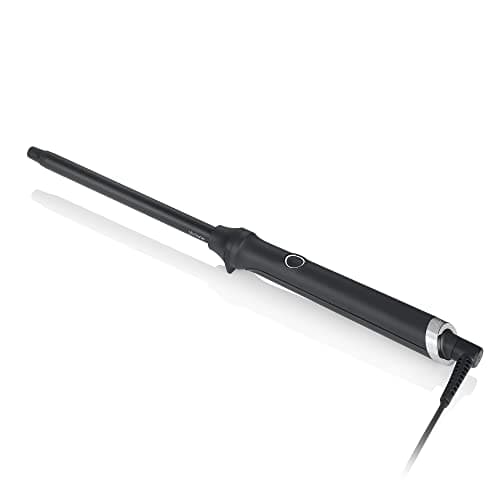
ghd Curve Thin curling wand (0.5 inch barrel)
A 0.5 inch barrel is the smallest in this registry and the one that holds a curl on short hair, with a 30-second heat-up and universal voltage.
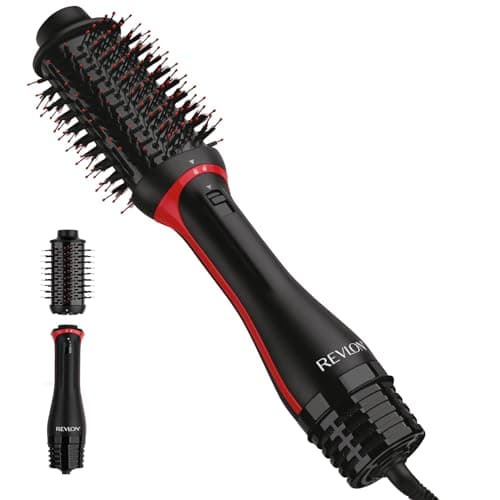
Revlon One-Step Volumizer Plus hair dryer and hot air brush
A 4-year limited warranty, the longest in this registry, on the cheapest kind of tool in it. Worth noticing before paying six times more elsewhere.
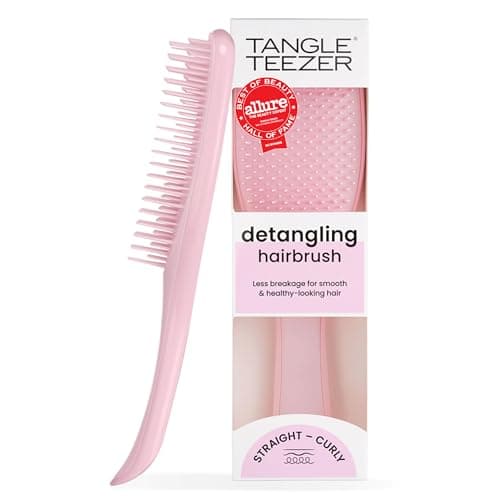
Tangle Teezer The Ultimate Detangler
Three published sizes and a two-tier bristle design, on the one tool in this registry whose whole job is reducing the force you pull with.
Questions people actually ask
How do I refresh second-day hair without washing it?
Refresh only the sections that frame your face, on completely dry hair. For curls, a light mist of water re-activates existing product; for a blowout, lift the roots with cool air; for straightened hair, iron the front and the part only.
Is it better for your hair to wash it less?
For heat damage specifically, yes — a rewash means a full dry plus a full restyle, which is two heat events. Going from five styling days a week to three is a 40 percent cut in total exposure and costs nothing.
Can I use a flat iron on second-day hair?
On the front sections, yes, if the hair is completely dry and free of dry shampoo buildup. Clamping a 365°F plate onto product residue bakes it onto both the plate and the hair.
How do I refresh curls on day two?
Water rather than heat. A light mist re-activates the product already in your hair and lets the clump re-form, then scrunch rather than brush — a brush separates the clump, and a separated clump is frizz.