Is It Worth It?
How Many Hair Tools Do You Actually Need?
We sell hair tools for a living and the honest answer is two. Here is which two, and why the third one usually gathers dust.
Updated September 2026 · Sawyer V.
Two, for most people: something that dries and something that shapes. A third tool only earns its place if it does a job the first two genuinely cannot — and a multi-styler can sometimes collapse both into one.
We earn a commission if you buy through the links on this page, at no extra cost to you. It never changes which tool we pick or which one we tell you to skip. How this site is funded.
The honest number
Two. And we are an affiliate site, so it is worth saying plainly that recommending fewer purchases is not the obvious move for us.
The reason is that the categories overlap far more than the marketing suggests. A hot air brush dries and smooths. An air styler dries and curls. A flat iron can produce waves. Buy without thinking about that overlap and you end up with four tools covering two jobs.
The two jobs
Every tool we cover, sorted by what it actually does
| Job | Tools that do it | Notes |
|---|---|---|
| Remove water | Hair dryers; air stylers in dryer mode | The daily job for most people |
| Impose a shape | Flat irons, curling tools, hot air brushes, air stylers | The occasional job |
| Both at once | Hot air brushes, air stylers | Why these can be a complete kit on their own |
| Neither | Detangling brushes, rollers | No heat, and the cheapest damage reduction available |
Read down that table and the overlap is obvious. The tools in row three are the reason a lot of people need one tool rather than two.
What to buy, by what your hair does untouched
Fine hair that dries fast and goes flat
One tool: a hot air brush. It dries and lifts in the same pass, and fine hair does not need much drying power. Adding a separate dryer buys you very little.
Picks on the fine-hair brushes page.
Curly or coily hair you want to keep curly
One tool: a dryer with a published diffuser. The shaping job is already done by your hair. What you need is to dry it without disturbing the pattern, and that is a diffuser and a genuinely low speed.
Which dryers publish one is on the diffusers page.
Thick or long hair you wear straight
Two tools: a powerful dryer and a flat iron. This is the case where two is genuinely correct. Drying is a real job on dense hair and a brush will not do it at a reasonable speed; the iron then does the last ten percent.
Dryers and irons for that case.
Wavy hair that goes either way
One tool: an air styler, or two if you are decisive. Waves are the texture that genuinely uses both a diffuser and a concentrator, which is what makes a configurable air styler a good fit — the reasoning.
The third purchase, and why it gathers dust
There is a predictable pattern to which tool ends up unused, and it is almost always the one bought for a look rather than for a job.
- A curling wand bought by someone who wears their hair straight. Used twice, then never. Occasional-use tools have terrible price-per-use arithmetic — five uses a year over five years is twenty-five uses.
- A second dryer. Almost never justified unless one genuinely travels — and only one dryer in our registry does.
- A crimper or waver. A specific look, and the only tool here that cannot do anything else.
- An air styler bought alongside a dryer and an iron. Now you own three tools that all dry hair.
The test worth applying before any third purchase: name the job the first two cannot do. If you cannot, the money is better spent on a tool that lasts longer or on nothing at all.
When more tools is actually right
Not never, and the cases are specific.
- You travel often. A dual-voltage second tool is a genuine need rather than a duplicate, because almost nothing in this category travels — the list.
- Your hair is long and dense. Drying and shaping are each big enough jobs to want a dedicated tool.
- You genuinely wear two different looks. Straight during the week and curled at weekends is two jobs, not one.
- Your hair is damaged. Then the extra purchase should be a detangling brush, which costs almost nothing and addresses a documented mechanical failure mode — why.
The arithmetic of owning fewer
Price per use, at 5 uses a week over 5 years
| What you pay | Cost per use | Cost per year |
|---|---|---|
| $30 | $0.02 | $6.00 |
| $60 | $0.05 | $12.00 |
| $100 | $0.08 | $20.00 |
| $150 | $0.12 | $30.00 |
| $200 | $0.15 | $40.00 |
| $300 | $0.23 | $60.00 |
| $400 | $0.31 | $80.00 |
| $500 | $0.38 | $100.00 |
5 uses a week for 5 years is 1300 uses. Both figures are stated assumptions, not measurements — halve the life and every cost per use doubles. We publish the ladder rather than a worked example for one specific product because a price we typed into a sentence would be wrong within a week.
Two tools used often beat four used occasionally on every measure that matters. Price per use improves because the denominator goes up. Heat exposure falls because you are not adding sessions. And the tools you do own get cleaned and maintained, which is what actually decides whether they last five years — the routine.
There is a storage argument too, and it is less trivial than it sounds: fewer tools means each one is not at the bottom of a drawer under the others, which is one of the two ways they die — the other being the cord.
What we would buy, starting from nothing
A hot air brush and nothing else, for most people, and then add a dryer only if drying turns out to be the bottleneck. That order is deliberately the reverse of how the category is usually sold.
If your hair is dense enough that a brush cannot dry it in a reasonable time, reverse it: dryer first, then decide whether the shaping tool is an iron or a brush. The full first-purchase reasoning is on the beginner kit page.
The tools on this page
Prices come from the live price layer. Where none is available the button says so rather than showing a number we cannot stand behind.
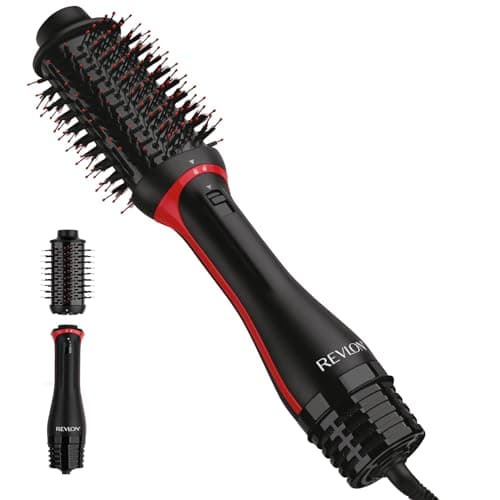
Revlon One-Step Volumizer Plus hair dryer and hot air brush
A 4-year limited warranty, the longest in this registry, on the cheapest kind of tool in it. Worth noticing before paying six times more elsewhere.
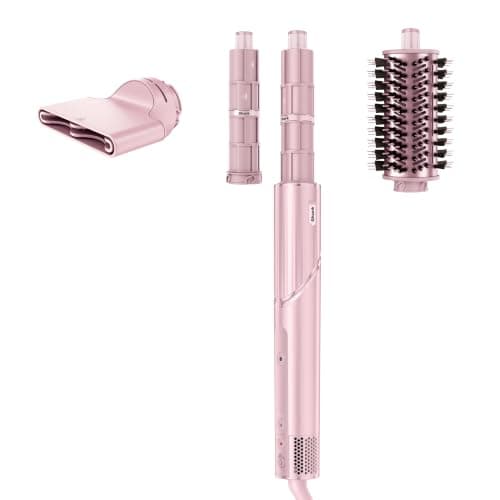
Shark FlexStyle air styling and drying system
Exactly the same published wattage as the Dyson Supersonic, in a tool that also converts to a dryer — the single strongest number in the dupe argument.
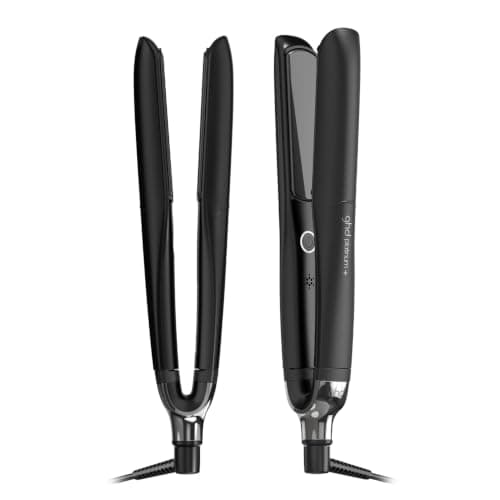
ghd Platinum+ flat iron (1 inch plate)
One temperature, 365°F, no dial to get wrong — the strongest heat-discipline argument in the category, and the longest iron warranty here at three years.
Questions people actually ask
How many hair tools do I actually need?
Two for most people — something that dries and something that shapes. Sometimes one, because hot air brushes and air stylers do both. A third only earns its place if it does a job the first two cannot.
Do I need a hair dryer if I have a hot air brush?
Not if your hair is fine or dries quickly — the brush does both jobs. If your hair is dense, yes: a brush pushes air through a bristle field rather than a nozzle, so it is slow at bulk drying.
Which hair tool gets used least?
Predictably, the one bought for a look rather than a job — usually a curling wand owned by someone who wears their hair straight. Occasional-use tools have poor price-per-use arithmetic.