Curling Irons & Wands
Curling Iron Barrel Size: What Diameter Actually Does
Three separate published numbers get called barrel size, and they do three different jobs. Only one of them decides what the curl looks like.
Updated September 2026 · Sawyer V.
Barrel diameter sets how tight the curl is: half an inch gives ringlets, one inch gives a defined curl, one and a quarter to one and a half gives a wave. Barrel length is a separate figure that decides how much hair fits per wrap, and it is the one that changes how long the session takes.
We earn a commission if you buy through the links on this page, at no extra cost to you. It never changes which tool we pick or which one we tell you to skip. How this site is funded.
Diameter: the number that decides the look
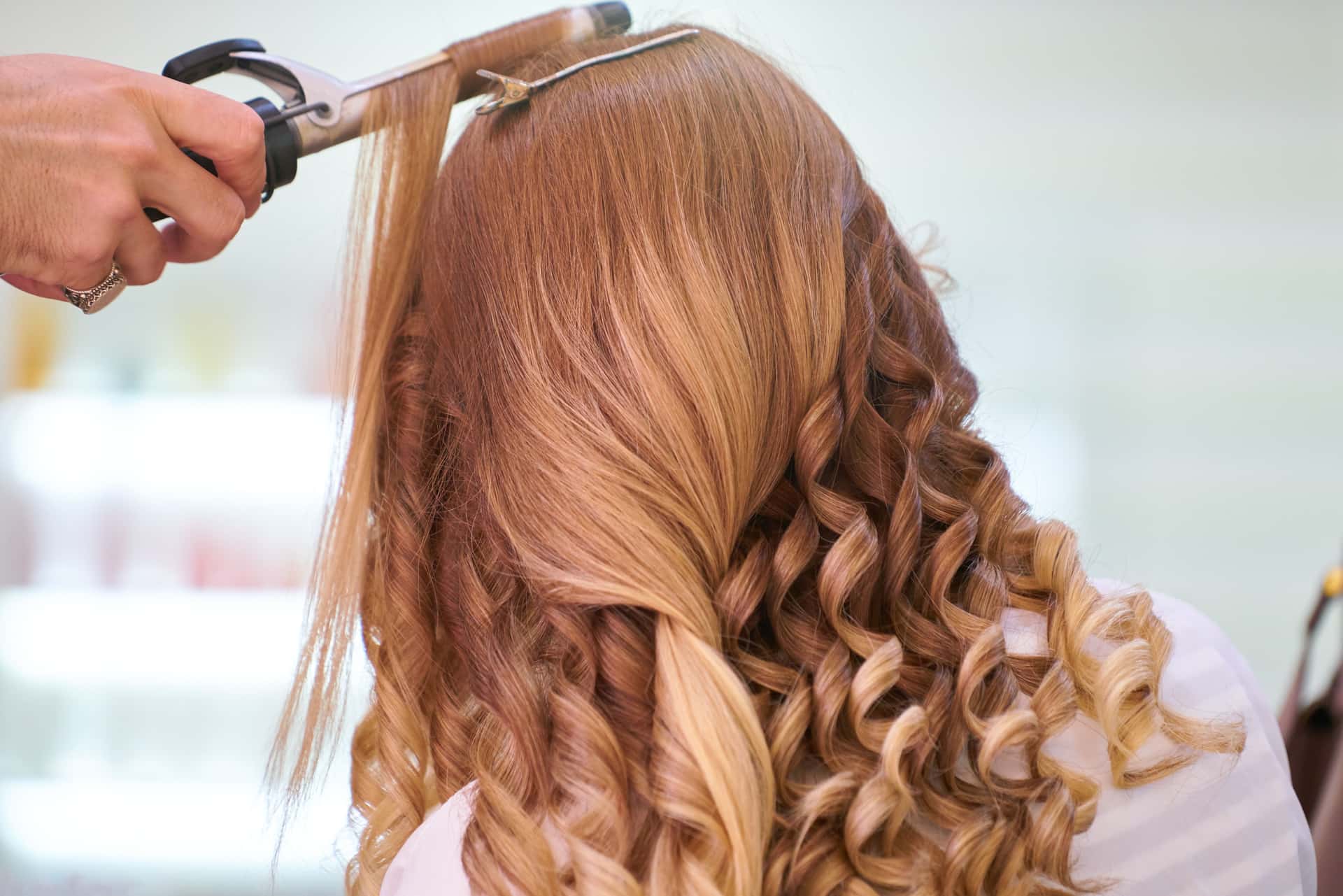
A curl is a spiral, and the barrel is the object it is wrapped around. A narrower barrel means a tighter spiral, more turns per length of hair, and a curl that reads as a ringlet. A wider barrel means fewer turns and a shape that reads as a wave.
Barrel diameter against the shape it produces
| Diameter | Result | Suits |
|---|---|---|
| 0.5 in | Tight ringlets; holds on short hair | Short cuts, tight natural patterns, hair that drops curl fast |
| 1 in | A defined, classic curl | The default for most lengths and most people |
| 1.25 in | A loose curl that relaxes into a wave | Shoulder length and past, everyday styling |
| 1.5 in | A wave rather than a curl | Long hair, beach-wave looks, blowout-style bends |
There is one correction to make to that table straight away: the curl you get is always looser than the barrel suggests, because hair relaxes as it cools and drops further over the day. If you want a one-inch curl, buy the one-inch barrel and expect a slightly looser result, not a tighter one.
This is also why hair that drops curl quickly does better on a smaller barrel than the look would imply. Fine hair in particular holds a half-inch curl into the evening where a one-inch curl is gone by lunchtime — the reasoning is on the fine-hair curling page.
Length: the number nobody looks at
Barrel length is how far the heated section runs, and it decides how much hair you can wrap in a single pass. It is entirely separate from diameter, and almost nobody publishes it.
T3 does. They publish a 6.5 inch barrel on the SinglePass Curl X, which is unusually forthcoming and unusually useful: on long or dense hair a longer barrel means fewer sections, which means fewer heat applications for the same head of hair.
The arithmetic is the same one that governs every heated tool. Total exposure is temperature multiplied by contact time, and the term you can actually reduce is the number of times you apply the tool. Anything that lets you cover more hair per pass is a damage argument as well as a time argument — which is exactly the case made for wide plates on the flat iron plate size page.
Weight: what a bigger barrel costs your wrist
A curling iron is held at shoulder height with the wrist rotating, which makes weight matter more than it does on a flat iron. And weight scales with barrel size in a way most makers leave you to guess at.
T3 is again the exception, publishing a separate weight for every barrel size of the same product.
T3 SinglePass Curl X — published weight by barrel size, cord not included
| Barrel | Published weight |
|---|---|
| 1 in | 10.6 oz |
| 1.25 in | 13.2 oz |
| 1.5 in | 15.1 oz |
That is a 42 percent increase from the smallest barrel to the largest — four and a half ounces, on a tool you hold above your shoulder for twenty minutes. It is a real consideration on long hair, where you are also doing the most sections.
ghd publishes no weight for any of its curling tools, so the same trade-off exists there and cannot be planned around.
Clipped or clipless
A separate decision from size, and the two get confused constantly.
- Clipped (a curling iron). A spring clamp holds the end of the section while you wrap. Easier to control, and it leaves a small crease where the clamp sits. The ghd Chronos Curve Classic is clipped.
- Clipless (a wand). You hold the end yourself, usually with a heat-resistant glove. No crease, more even from root to tip, and a steeper learning curve. The ghd Curve Thin is clipless with a cool tip.
- Rotating. The barrel turns itself, which removes the wrist technique entirely. T3’s CurlWrap does this, with two published rotation speeds.
The full comparison, including which is genuinely easier for a beginner, is on the wand versus clamp page.
What about multi-barrel tools
A triple-barrel waver like the ghd Wave is a different object entirely. Instead of wrapping hair around one cylinder, you clamp a section between three and produce a repeating S-bend in one press.
The result is uniform and fast, and it is not a curl — it is a crimp pattern at a large scale. If what you want is the irregular, varied shape of a natural wave, a single barrel used inconsistently on purpose produces it and a triple barrel cannot. If what you want is a deliberate, even, repeating wave, the triple barrel does it in a third of the time.
Matching the barrel to what you already have
If your hair has a natural pattern, the barrel that works best is usually the one closest to that pattern or slightly tighter. Going much looser produces a hybrid that reads as neither, and it drops fastest because you have fought the hair rather than worked with it.
On genuinely curly hair the question is usually whether to use a curling iron at all, and often the answer is no — that page makes the case both ways.
What to buy
- One barrel, first purchase: 1 inch. It is the default for a reason — it produces a curl that brushes out into a wave, so it covers two looks.
- Short hair or hair that drops curl: 0.5 inch. The ghd Curve Thin is the only half-inch barrel in our registry.
- Long or dense hair: prioritize barrel length over diameter, and accept the extra weight. Fewer sections is the win.
- Beach waves specifically: 1.25 to 1.5 inch, used inconsistently — see the beach waves page.
Price per use, at 5 uses a week over 5 years
| What you pay | Cost per use | Cost per year |
|---|---|---|
| $30 | $0.02 | $6.00 |
| $60 | $0.05 | $12.00 |
| $100 | $0.08 | $20.00 |
| $150 | $0.12 | $30.00 |
| $200 | $0.15 | $40.00 |
| $300 | $0.23 | $60.00 |
| $400 | $0.31 | $80.00 |
| $500 | $0.38 | $100.00 |
5 uses a week for 5 years is 1300 uses. Both figures are stated assumptions, not measurements — halve the life and every cost per use doubles. We publish the ladder rather than a worked example for one specific product because a price we typed into a sentence would be wrong within a week.
The tools on this page
Prices come from the live price layer. Where none is available the button says so rather than showing a number we cannot stand behind.
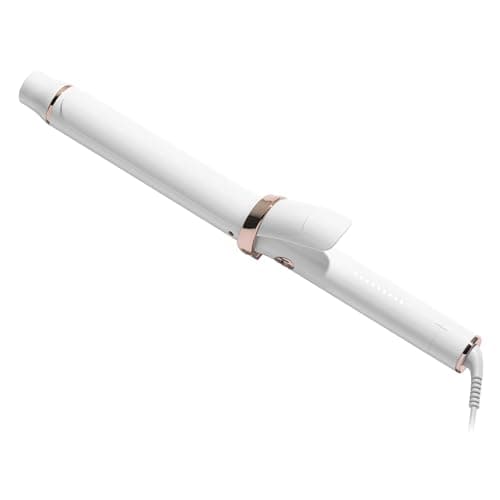
T3 SinglePass Curl X extra-long barrel curling iron
A 6.5-inch barrel and a separate published weight for every barrel size — unusual disclosure in a category where most makers publish a diameter and stop.
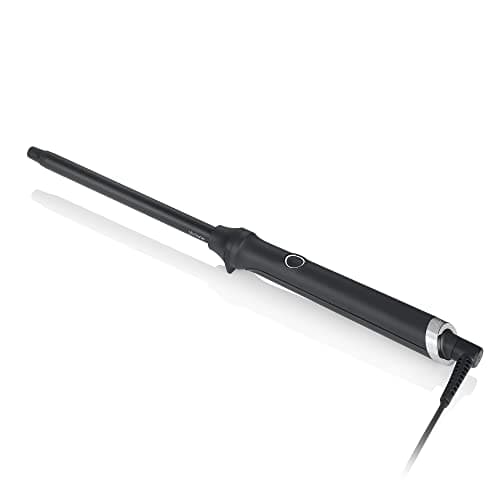
ghd Curve Thin curling wand (0.5 inch barrel)
A 0.5 inch barrel is the smallest in this registry and the one that holds a curl on short hair, with a 30-second heat-up and universal voltage.
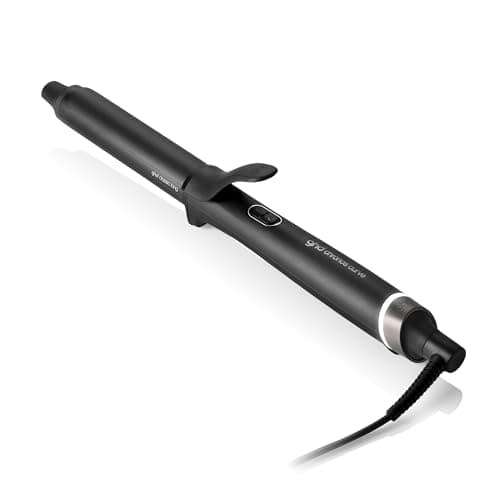
ghd Chronos Curve Classic curling iron (1 inch barrel)
A curling iron with no temperature dial at all — 365°F fixed, and a 20-minute sleep mode, which is unusual restraint in this category.
Questions people actually ask
What barrel size gives beach waves?
1.25 to 1.5 inch, wrapped inconsistently and with the ends left out. An even, uniform wrap on a large barrel gives a blowout curl rather than a beach wave, so the irregularity is the technique.
Is a 1 inch or 1.25 inch curling iron better?
1 inch is the more versatile first purchase because the curl brushes out into a wave. 1.25 inch suits shoulder-length hair and past when you want a looser result straight away.
Does barrel length matter?
On long or dense hair, a lot. A longer barrel wraps more hair per pass, which means fewer sections and fewer heat applications for the same head. T3 publishes a 6.5 inch barrel on the SinglePass Curl X; most makers publish no length at all.
Are bigger barrels heavier?
Yes, and by more than people expect. T3 publishes 10.6 oz for the 1 inch Curl X and 15.1 oz for the 1.5 inch, both without the cord, on an identical tool.