Blow-Dry Brushes
What Size Blow-Dry Brush Do You Actually Need?
Barrel size is the one specification in this category that changes the result more than the brand does — and almost nobody explains it.
Updated September 2026 · Sawyer V.
Larger barrels smooth and create loose body; smaller barrels create curl and get closer to the root for lift. Round barrels lift, paddle and oval shapes smooth. Match the diameter to your hair length — longer hair needs a larger barrel to avoid a set, curled look.
We earn a commission if you buy through the links on this page, at no extra cost to you. It never changes which tool we pick or which one we tell you to skip. How this site is funded.
Two variables, not one
People shop these tools on brand and heat settings. The two things that actually change the result are barrel diameter and barrel shape, and they do different jobs.
- Diameter decides how much bend goes into the hair. A small barrel wraps more turns into the same length, producing curl. A large barrel produces a gentle sweep or none at all.
- Shape decides whether you get lift. A round barrel can be rolled under a section and lifted at the root; a paddle or oval shape passes over the hair and smooths it flat.
Getting the shape wrong is why people buy a hot air brush for volume and end up with very smooth, very flat hair.
Diameter by hair length
Barrel diameter against hair length and goal
| Hair length | For volume and body | For smoothing | Why |
|---|---|---|---|
| Short / bob | 1–1.5 in | 1.5 in | A large barrel cannot get near a short root |
| Shoulder length | 1.5–2 in | 2 in | The all-round size for most people |
| Mid-back | 2–2.4 in | 2.4 in and up | Longer hair needs a larger barrel or it curls rather than sweeps |
| Waist length | 2.4 in and up | Largest available | Weight pulls shape out; small barrels just add unwanted curl |
These are our conclusions from how barrel geometry works, not manufacturer recommendations — no maker in our registry publishes a barrel-size chart.
The rule that trips people up is the opposite of the curling-iron rule. On a curling iron, longer hair needs a smaller barrel because weight pulls the curl out and you want more turns. On a blow-dry brush, longer hair needs a larger barrel because you are not trying to create curl at all — you are trying to smooth, and a small barrel puts an unwanted bend in.
Shape, and what each one is for
Barrel shapes and their jobs
| Shape | What it does | Best for |
|---|---|---|
| Round | Wraps a section; lifts at the root when rolled under | Volume, body, curved ends — fine or flat hair |
| Oval | Part smoothing, part lift; the compromise shape | Most people, most hair — the default |
| Paddle / flat | Passes over the section and presses it smooth | Frizz and smoothing where volume is not wanted |
The Revlon One-Step Volumizer Plus and T3 AireBrush One-Step are oval-shape tools; the T3 AireBrush Round is a round barrel.
Bristle type matters less, with one exception
Most of what is written about boar versus nylon versus mixed bristles on hot air brushes is not worth acting on. The exception is grip: a brush whose bristles cannot hold tension on your hair will not straighten or lift it, whatever the heat setting.
Coarse, dense or coily hair needs firmer, longer bristles that reach through a section. Fine hair needs softer ones or the brush drags. T3 publishes SmoothGrip bristles on the AireBrush Round and heat-resistant bristles on the One-Step; Revlon publishes a ceramic titanium barrel with tourmaline ionic technology but does not describe its bristles.
What size will not fix
A blowout that drops by lunchtime. That is almost always a cooling problem rather than a barrel problem — hair sets in the shape it cools into, so releasing a section while it is still warm lets it relax straight back out.
Finish every section on the cool setting before you let go. That single change does more than any barrel upgrade, and it is covered properly at how to get a blowout that lasts.
If you can only buy one
An oval barrel around 1.5 to 2 inches, sized toward the larger end if your hair is long. It smooths acceptably, lifts acceptably, and suits the widest range of lengths — which for a tool most people own exactly one of is the right compromise.
Per hair type: the fine-hair case is at brushes for fine hair, dense hair at brushes for thick hair, and textured hair at brushes for 4C hair.
The tools on this page
Prices come from the live price layer. Where none is available the button says so rather than showing a number we cannot stand behind.
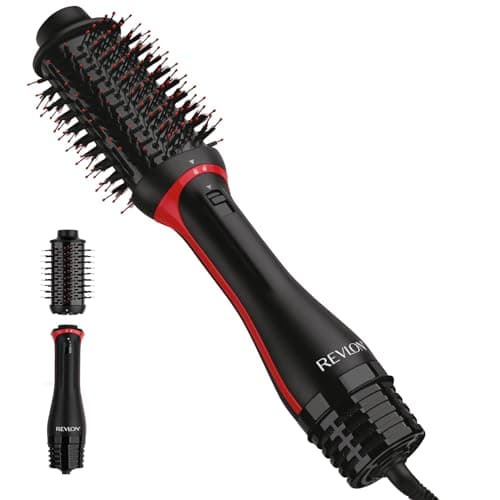
Revlon One-Step Volumizer Plus hair dryer and hot air brush
A 4-year limited warranty, the longest in this registry, on the cheapest kind of tool in it. Worth noticing before paying six times more elsewhere.
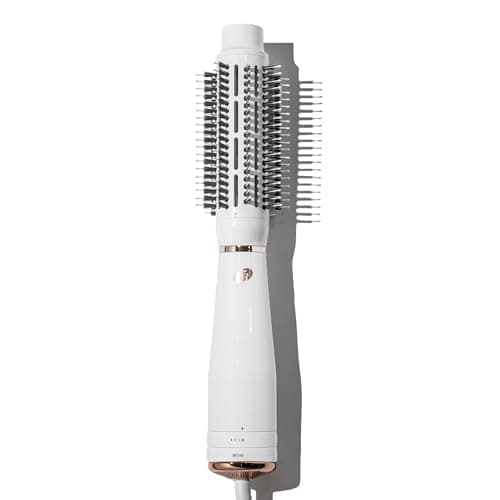
T3 AireBrush Round ionic blow-dry brush
A round barrel rather than a paddle, and the only T3 brush that publishes a wattage — the one built for lift rather than smoothing.
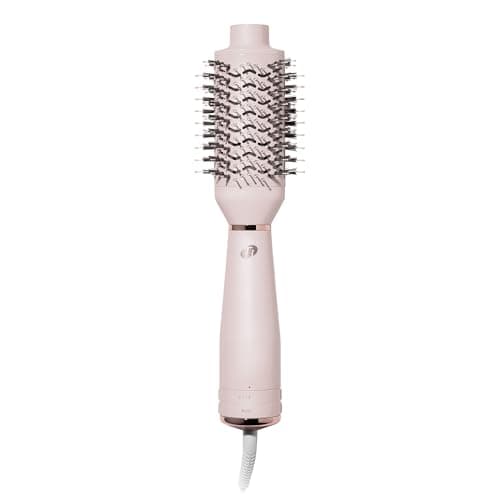
T3 AireBrush One-Step smoothing and volumizing dryer brush
Six heat-and-speed combinations against the Revlon's four heat steps, and a published weight — but half the warranty.
Questions people actually ask
What size blow-dry brush should I get?
An oval barrel around 1.5 to 2 inches suits most people, sized larger if your hair is long. Go smaller only if you want curl or root lift on a shorter cut.
Does a bigger barrel mean more volume?
Not necessarily — shape matters more than size for volume. A round barrel rolled under a section lifts at the root; a large paddle or oval shape smooths the hair flat regardless of how big it is.
What barrel size for long hair?
Larger, around 2 inches and up. This is the opposite of the curling-iron rule: with a brush you are smoothing rather than curling, so a small barrel just puts an unwanted bend into long hair.
Why does my blow-dry brush not give me volume?
Usually because the barrel shape is oval or paddle rather than round, so it smooths rather than lifts. Volume is created in the first inch at the root, which needs a round barrel rolled under the section.