Hair Dryers
Dyson Supersonic vs Shark SpeedStyle: The Published Numbers
Nine specification rows, both manufacturers' own figures, and the two rows where each of them declines to answer.
Updated September 2026 · Sawyer V.
Shark publishes more power (1,750 W vs 1,600 W), less weight (1.65 lb vs 1.8 lb) and twice the attachments, at a far lower price. Dyson publishes a longer cord and, crucially, its heat and speed settings — which Shark does not. For fine hair, buy Dyson. For thick hair, buy Shark.
We earn a commission if you buy through the links on this page, at no extra cost to you. It never changes which tool we pick or which one we tell you to skip. How this site is funded.
Every row both companies publish
Dyson Supersonic against Shark SpeedStyle Pro
| Specification | Dyson Supersonic | Shark SpeedStyle Pro | Advantage |
|---|---|---|---|
| Wattage | 1,600 W | 1,750 W | Shark |
| Weight | 1.8 lb | 1.65 lb | Shark |
| Cord length | 8.6 ft | 96.1 in (8.0 ft) | Dyson |
| Heat settings | 4 + cold shot | Not published | Dyson |
| Speed settings | 3 | Not published | Dyson |
| Attachments | 3 named | 6 named | Shark |
| Voltage | 120 V | 120 V | Tie |
| Warranty | 2-year limited | 2-year limited | Tie |
| Noise (dB) | Not published | Not published | Neither |
Advantage is assessed on the published figure alone, not on how the tools perform — we have used neither.
What the table does not settle
Airflow. Neither company publishes it in units the other could be compared against. Shark states airflow speeds reaching 0 to 100 mph in under a second; Dyson describes an air multiplier and states the dryer measures air temperature over forty times a second. Those are two different claims about two different things, and no arithmetic reconciles them.
Since drying speed is mostly a function of airflow, that means the single question most people are asking — which one dries hair faster — cannot be answered from published information. Anyone who tells you otherwise is either testing (in which case they should describe the method) or guessing.
Noise is the other blank. Both describe their tools as engineered for the user experience; neither publishes a decibel figure. Zero of the ten competitor pages we examined in research published one either, because there is nothing to publish.
Running cost, both of them
At fifteen minutes a day, five days a week — 65 hours a year — and 18.34 cents per kWh:
Annual running cost, computed from published wattage
| Dryer | kWh per year | Cost per year | Over 5 years |
|---|---|---|---|
| Dyson Supersonic (1,600 W) | 104.0 | $19.07 | $95.35 |
| Shark SpeedStyle Pro (1,750 W) | 113.8 | $20.87 | $104.35 |
A nine-dollar difference across five years. Usage is a stated assumption; scale it to yours.
Nine dollars over five years. Whatever decides this purchase, it is not electricity — which is worth knowing precisely because the lower-wattage tool is the expensive one and it would be easy to imagine otherwise.
The price difference, in cents per use
Price per use, at 5 uses a week over 5 years
| What you pay | Cost per use | Cost per year |
|---|---|---|
| $30 | $0.02 | $6.00 |
| $60 | $0.05 | $12.00 |
| $100 | $0.08 | $20.00 |
| $150 | $0.12 | $30.00 |
| $200 | $0.15 | $40.00 |
| $300 | $0.23 | $60.00 |
| $400 | $0.31 | $80.00 |
| $500 | $0.38 | $100.00 |
5 uses a week for 5 years is 1300 uses. Both figures are stated assumptions, not measurements — halve the life and every cost per use doubles. We publish the ladder rather than a worked example for one specific product because a price we typed into a sentence would be wrong within a week.
Find the row for each price you are seeing and subtract. That difference, per use, is what the Dyson premium actually is. We publish the ladder rather than a worked example because a price we typed into this sentence would be wrong within a week — prices on this site come from the live price layer or the button says so.
Which to buy
Buy the Dyson if
- Your hair is fine, fragile or has been over-dried. Four published heat settings plus a cold shot on the lower wattage is the right combination, and knowing the count matters more here than anywhere.
- You dry your hair almost daily. Frequency is what makes the per-use arithmetic work.
- Your outlet is awkwardly placed. 8.6 ft against 8.0 ft is small but real.
Buy the Shark if
- Your hair is thick or dense and session length is the complaint. Higher published wattage plus a turbo concentrator.
- Your hair is curly or coily. Three textured-hair attachments against Dyson’s two, including a stretch comb.
- You want the money back for something else. On most comparable rows the cheaper tool wins, and the two rows it loses on are only decisive for fine hair.
What we have not done
Used either dryer. There is no test bench here, no drawer of loaner units and no timed comparison. Every number above came off the two manufacturers’ own product pages or was computed from those numbers with the working shown, and where both companies stay silent, this page stays silent too. Individual write-ups: the Supersonic and the SpeedStyle.
The tools on this page
Prices come from the live price layer. Where none is available the button says so rather than showing a number we cannot stand behind.
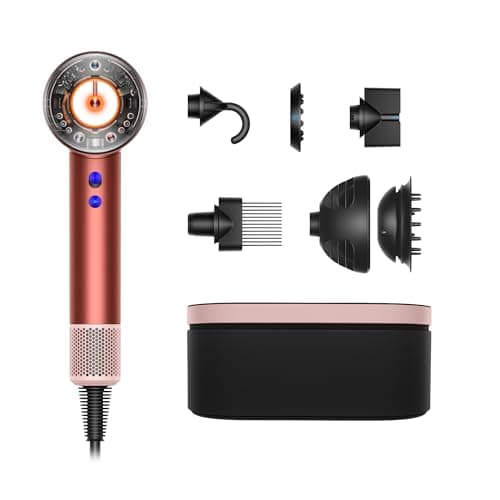
Dyson Supersonic hair dryer
1,600 W is less power than a drugstore dryer draws, and Dyson publishes that openly — the pitch is airflow and heat control, not wattage.
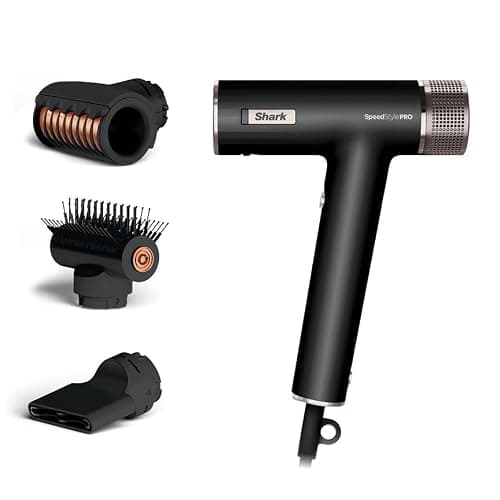
Shark SpeedStyle Pro hair dryer
The highest published wattage of the premium dryers here and the most attachments in the box, at a fraction of Dyson's asking price.
Questions people actually ask
Which is better, the Dyson Supersonic or the Shark SpeedStyle?
It depends on your hair. Shark publishes more power, less weight and twice the attachments; Dyson publishes its heat and speed settings, which Shark does not. For fine hair Dyson has the clear edge, for thick or textured hair Shark does.
Is the Shark SpeedStyle more powerful than the Dyson Supersonic?
On published wattage yes — 1,750 W against 1,600 W. But wattage measures electricity drawn rather than air moved, and neither company publishes airflow in comparable units, so drying speed cannot be settled from spec sheets.
Do they cost different amounts to run?
Barely. At 15 minutes a day five days a week and the June 2026 US average rate, the Dyson costs about $19.07 a year and the Shark about $20.87 — a difference of nine dollars across five years.
Which one is quieter?
Neither company publishes a decibel figure, so there is no honest answer available from published information. We have not measured either.