Hair Dryers
How to Clean a Hair Dryer (and Why It Stops Working)
The single most common reason a dryer feels like it has lost power is a filter nobody has ever cleaned.
Updated September 2026 · Sawyer V.
Clean the rear filter. Lint builds on the intake grille, airflow drops, the heating element runs hotter than designed, and the thermal cutout starts tripping — which people experience as a dryer that has lost power or keeps switching itself off. Most premium dryers have a removable filter and it takes about two minutes.
We earn a commission if you buy through the links on this page, at no extra cost to you. It never changes which tool we pick or which one we tell you to skip. How this site is funded.
Why a dryer stops working
A hair dryer pulls air in through a rear grille, heats it, and pushes it out of the front. Every one of those breaths brings in dust, lint and shed hair, and it collects on the intake.
As the intake clogs, less air moves through the body. The heating element is still producing the same heat into less airflow, so the internal temperature rises past what it was designed for. Every dryer has a thermal cutout that trips at that point — it switches off, and restarts once it cools.
That is the sequence behind almost every “my dryer keeps cutting out” and “it does not blow as hard as it used to” complaint. It is entirely preventable and costs nothing.
How to clean the filter
- Unplug it and let it cool completely. Not negotiable — this is a mains appliance and you are about to handle the end that gets hot.
- Find the filter. On most premium dryers it is a ring or cap at the base of the handle or the rear of the body that twists or pulls off. Some cheaper dryers have a fixed mesh grille instead.
- Remove the lint mat. It usually lifts off as a single felted disc. If it has been a while, it will look like a piece of gray felt and you will understand immediately why the dryer slowed.
- Brush the mesh. An old toothbrush or a soft brush, dry. Work outward so you are not pushing debris into the body.
- Vacuum the grille if you have a nozzle attachment. Optional, and effective.
- Refit and check. The filter should seat flush. Running a dryer with the filter off pulls debris straight onto the element.
Do not run water through it, do not use compressed air into the body (that drives lint deeper), and do not use a solvent on a plastic grille.
How often
A reasonable filter-cleaning cadence
| Usage | Cadence | Why |
|---|---|---|
| Daily drying | Monthly | Highest lint load; also the case where a cutout is most annoying |
| A few times a week | Every 2–3 months | Standard household use |
| Occasional | Twice a year | Dust accumulates even when the tool is idle |
| Long hair, shedding season | More often than you think | Shed hair is the main contributor |
| Immediately | If it cuts out or feels weak | That is the symptom this fixes |
No manufacturer in our registry publishes a recommended cleaning interval, so this is our reasoning from the failure mechanism rather than a maker's instruction. Check your own manual first — it takes precedence.
The rest of the tool
- Attachments. Product residue bakes onto a concentrator or diffuser and changes how it directs air. Wipe them cool with a barely damp cloth, dry them fully before refitting.
- The body. A damp cloth. Nothing goes inside the vents.
- The cord. Look at where it enters the handle. If the insulation is stiff, split or discoloured there, stop using the dryer. That is the failure that matters.
The habit that kills dryers
Wrapping the cord tightly around the body after every use. Repeated sharp bending at the point where the cord meets the handle fatigues the conductors inside the insulation until one breaks — which produces intermittent power, then none.
Loop the cord loosely, or leave it alone. That single change will outlast the filter cleaning in value, and it is the reason a dryer that lives in a drawer with its cord wound tight fails years before one that hangs on a hook.
Other things that shorten a dryer's life
- Storing it hot. Run the cool shot for a few seconds before switching off so the element is not put away at temperature.
- Blocking the intake with your hand. Easy to do while styling, and it causes the same overheating cycle as a blocked filter.
- Bathroom humidity. Electronics and steam are a poor pairing. Store it somewhere dry if you can.
- Dropping it. The heating element is a coil. A hard impact can deform or crack it in ways that are invisible from the outside.
When it is not the filter
If the dryer is clean, the cord is sound, and it still cuts out or runs weak, the element or motor is likely failing and it is not economically repairable. That is the point to check the warranty — and warranty length is the only durability figure any of these companies commits to in writing.
Across our registry those run from two years to four, and the longest belongs to the cheapest kind of tool in it. The full comparison is at how long hair dryers last, and what that coverage is actually worth is at what a hair tool warranty is worth.
The equivalent maintenance for irons, brushes and barrels — where the failure mode is baked-on product rather than lint — is at how to clean and maintain hair tools.
The tools on this page
Prices come from the live price layer. Where none is available the button says so rather than showing a number we cannot stand behind.
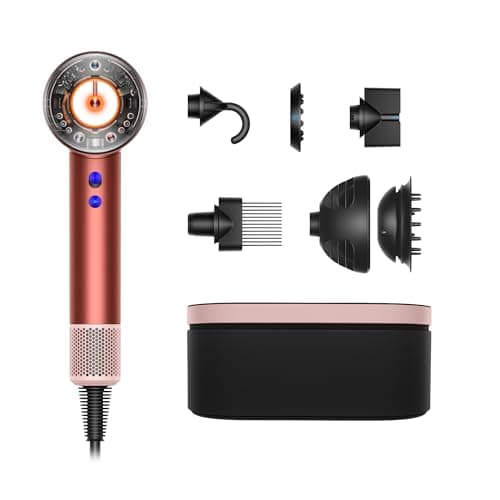
Dyson Supersonic hair dryer
1,600 W is less power than a drugstore dryer draws, and Dyson publishes that openly — the pitch is airflow and heat control, not wattage.
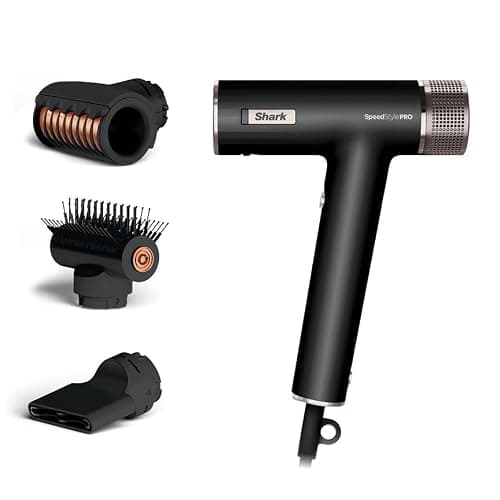
Shark SpeedStyle Pro hair dryer
The highest published wattage of the premium dryers here and the most attachments in the box, at a fraction of Dyson's asking price.
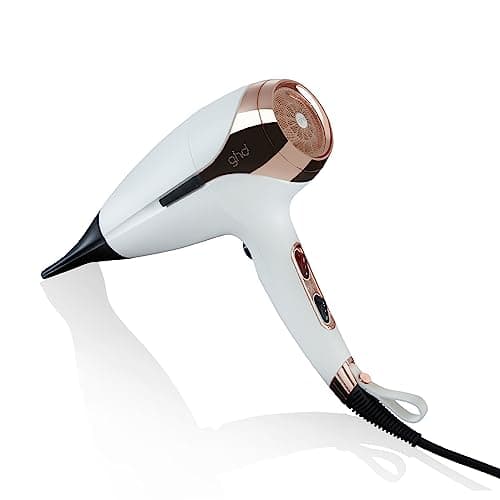
ghd Helios 1875W advanced professional hair dryer
A premium brand publishing exactly the same 1,875 W as a drugstore Revlon — the clearest evidence on this site that wattage is not what the money buys.
Questions people actually ask
Why does my hair dryer keep turning off?
Almost always a blocked filter. Lint restricts the intake, the element overheats into reduced airflow, and the thermal cutout trips. Cleaning the rear filter is the first thing to try and it takes about two minutes.
How often should I clean my hair dryer filter?
Monthly if you dry daily, every two to three months for a few times a week, and immediately if the dryer feels weak or cuts out. No manufacturer in our registry publishes an interval, so treat this as reasoning from the failure mechanism.
Can I wash a hair dryer filter?
Do not run water through it. Brush the mesh dry with a soft brush and vacuum the grille if you can. Water and a heating element are a bad combination even after drying time.
Why has my hair dryer lost power?
Reduced airflow from a clogged intake is the usual cause, and it is reversible. If the filter is clean and the cord is sound, the motor or element is likely failing, at which point warranty length is the thing to check.