Brushes & Accessories
Scalp Massagers: What the Claims Rest On
The gap between what this category is marketed on and what is published about it is the largest on this site. Worth knowing before you spend.
Updated September 2026 · Sawyer V.
A scalp massager is genuinely useful for one thing we can stand behind: distributing product and loosening buildup without your fingernails. The hair-growth claims that sell the category are not something we can support from published evidence, and we will not repeat them.
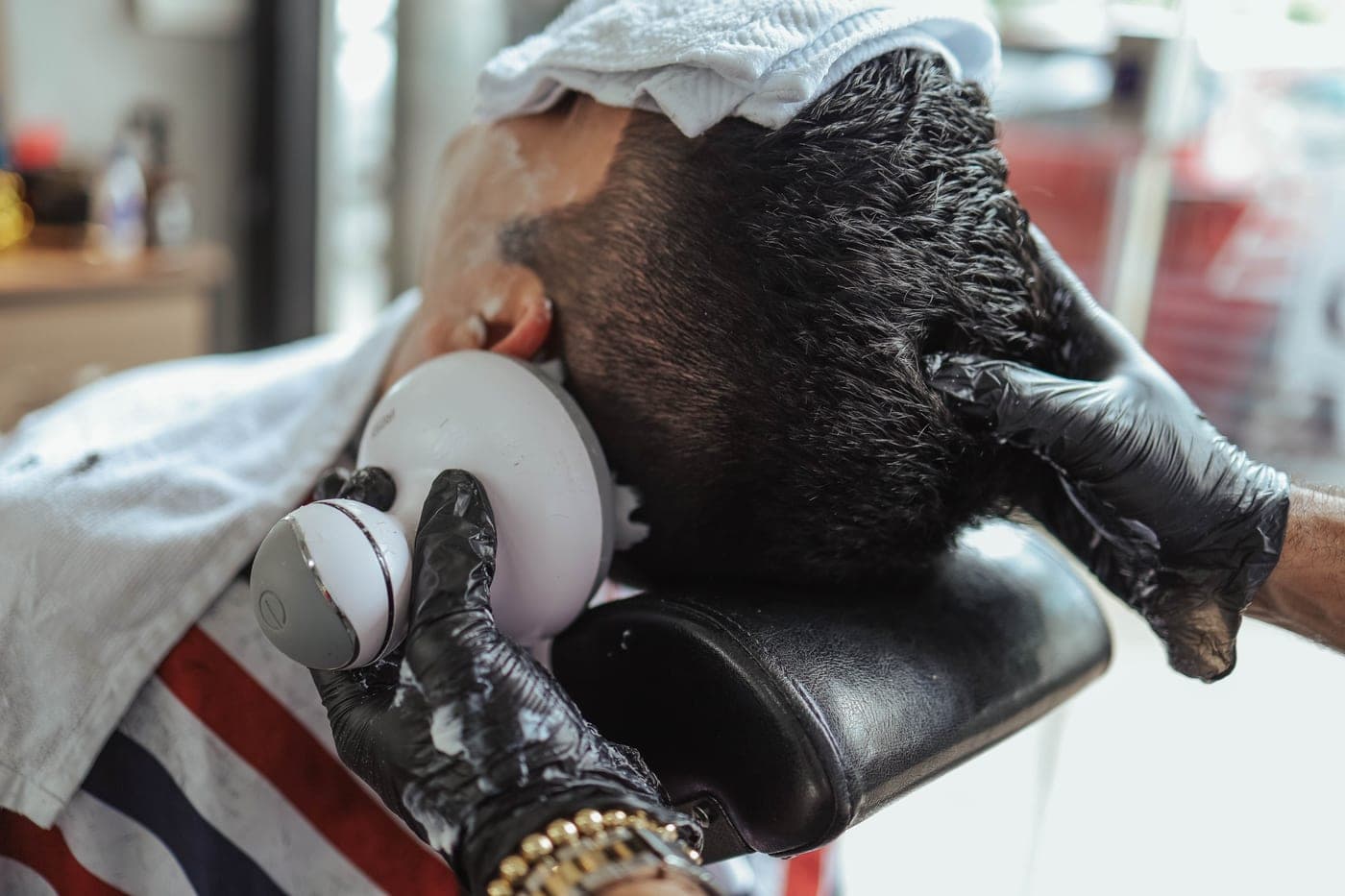
Why this page has no ranked picks
Two reasons, and they compound.
The first is sourcing. Every product on this site carries a spec block read off the manufacturer’s own product page. Scalp massagers are sold almost entirely by brands with no product page, no published material specification and no company you can look up — they are a commodity category with a marketing layer on top.
The second is the claim itself. This category is sold on hair growth, and that is a health claim rather than a styling one. We have no trichologist, no dermatologist and no test lab, and our editorial policy commits us to not making claims we cannot support. Ranking scalp massagers by how confidently they assert growth would be exactly that.
So this is a buying guide with no picks, which is a first for this site, and we would rather publish that than a list we do not believe.
What a scalp massager is genuinely good at
There are real, modest, defensible uses, and they are all mechanical rather than physiological.
- Distributing product evenly. Shampoo applied to one spot and rubbed around with fingertips does not reach the whole scalp. A massager spreads it.
- Loosening buildup without fingernails. This is the best argument for one. Nails scratch the scalp; silicone or plastic fingers do not, and scratching is a genuine cause of irritation.
- Working conditioner through dense hair. On thick or coily hair, getting product to the scalp at all is a real problem.
- It feels good. Not nothing. If it makes you take longer over washing, you are washing more thoroughly.
Notice that none of those are growth claims. They are reasons a cheap plastic object might earn its place in your shower, and they are enough to justify buying one — just not the reasons on the packaging.
What we are not going to tell you
That it will regrow hair, thicken hair, or reverse thinning. Those are medical claims. If hair loss is your concern, the person to talk to is a dermatologist rather than a hair tool site, and we would rather say that plainly than sell you a brush.
We are also not going to tell you it does nothing. We do not know, and asserting the negative would be the same failure in the opposite direction. What we can tell you is that we could not find published evidence we would stake this site’s method on, and that our rule is to report what is published rather than what is plausible — how we research.
What actually reduces breakage, in order
If you are here because your hair is thinning or breaking, this is the more useful list — and everything on it is better documented than the scalp massager category.
Interventions with published mechanisms, ranked by cost
| Change | What supports it | Cost |
|---|---|---|
| Detangle from the ends up, never yank | Impact loading breaks hair at lower forces than steady tension | Free |
| Condition before combing | Measured to considerably retard breakage in repeated-grooming tests | A product you own |
| Reduce heat frequency | Total exposure is temperature multiplied by contact time | Free |
| Style completely dry with contact tools | Wet thermal treatment adds steam bubbling to the usual cracking | Free |
| Cut fewer, better passes | Pass count dominates total exposure on a whole head | Free, or a wider plate |
The detangling mechanism is on the detangling page, the heat framework on how often you can use heat, and the wet-hair evidence on the wet hair page.
If you are buying one anyway
Entirely reasonable — it is a cheap object with real mechanical uses. The criteria are short because there is not much to compare.
- Rounded tips, not pointed. The whole advantage over fingernails is not scratching.
- Flexible fingers rather than rigid. Rigid ones drag on hair rather than moving through it.
- Something you can actually hold when wet. The main use case is in the shower with shampoo on your hands.
- Silicone over hard plastic if your scalp is sensitive.
- Skip anything motorized unless you specifically want that — it adds a battery, a failure point and a price, for a mechanism that works fine by hand.
And use it gently. Vigorous scrubbing on a wet scalp is friction on hair at its most extensible, which is the opposite of what you were trying to achieve.
Price per use, at 5 uses a week over 5 years
| What you pay | Cost per use | Cost per year |
|---|---|---|
| $30 | $0.02 | $6.00 |
| $60 | $0.05 | $12.00 |
| $100 | $0.08 | $20.00 |
| $150 | $0.12 | $30.00 |
| $200 | $0.15 | $40.00 |
| $300 | $0.23 | $60.00 |
| $400 | $0.31 | $80.00 |
| $500 | $0.38 | $100.00 |
5 uses a week for 5 years is 1300 uses. Both figures are stated assumptions, not measurements — halve the life and every cost per use doubles. We publish the ladder rather than a worked example for one specific product because a price we typed into a sentence would be wrong within a week.
The honest summary
Buy one if you want to spread product better and stop using your nails. Both are real. Do not buy one expecting it to grow hair, and do not let it substitute for the changes above, all of which are better supported and most of which are free.
The rest of this section — the tools with no heating element and a genuine mechanical case — is on the brushes and accessories hub.
Questions people actually ask
Do scalp massagers help hair growth?
We could not find published evidence we would stake this site's method on, so we do not repeat the claim. We are also not asserting the opposite. If hair loss is your concern, a dermatologist is the right person rather than a hair tool site.
What is a scalp massager actually good for?
Distributing product evenly, loosening buildup without using your fingernails, and working conditioner through dense hair. Those are mechanical benefits and they are enough to justify a cheap one.
Why don't you recommend a specific scalp massager?
Because the category is sold almost entirely by brands with no product page or published specification, and because the growth claims that sell it are health claims we are not qualified to evaluate.
Are electric scalp massagers worth it over manual ones?
They add a battery, a failure point and a price to a mechanism that works by hand. If you specifically want the sensation, fine — but there is no published reason to expect a different outcome.