Hair Dryers
How Loud Is a Hair Dryer? Nobody Will Tell You
Twenty-four products, one empty row on every single spec sheet. The health thresholds are published; the product figures are not.
Updated September 2026 · Sawyer V.
No manufacturer in our registry publishes a decibel figure for any product — all 24 spec sheets leave that row empty. Health guidance is clear that sounds at or above 85 dBA cause hearing loss with long or repeated exposure, so the number would be useful. It simply is not available.
We earn a commission if you buy through the links on this page, at no extra cost to you. It never changes which tool we pick or which one we tell you to skip. How this site is funded.
Twenty-four products, zero numbers
Our standard spec block has ten rows and runs identically on every product on this site. One of those rows is noise, in decibels. It is blank on all twenty-four.
Dyson does not publish one. Shark does not. ghd, T3 and Revlon do not. This is not a gap in our research — we read each manufacturer’s own product page and cite it underneath every spec block. The figure is not there to read.
That is worth sitting with, because noise is one of the most common complaints about hair dryers and one of the few product attributes that is objectively measurable with cheap, standardized equipment. Weight is published. Wattage is published. Cord length is published. The one people actually complain about is not.
What the health guidance actually says
The thresholds, unlike the product figures, are published and authoritative.
The National Institute on Deafness and Other Communication Disorders states that sounds at or below 70 A-weighted decibels are unlikely to cause hearing loss even after long exposure, and that long or repeated exposure to sounds at or above 85 dBA can cause hearing loss. They give normal conversation as 60–70 dBA — NIDCD, noise-induced hearing loss.
In the workplace, OSHA requires a hearing conservation program when employee exposure reaches 85 dBA as an eight-hour time-weighted average, and sets a permissible exposure limit of 90 dBA on the same basis — OSHA, occupational noise. OSHA also notes a useful field test: if you need to raise your voice to speak to someone three feet away, the noise level might be over 85 dBA.
Published hearing-health reference points
| Level | What it means | Source |
|---|---|---|
| At or below 70 dBA | Unlikely to cause hearing loss even after long exposure | NIDCD |
| 60–70 dBA | Normal conversation | NIDCD |
| At or above 85 dBA | Long or repeated exposure can cause hearing loss | NIDCD |
| 85 dBA, 8-hour average | Workplace hearing conservation program required | OSHA |
| 90 dBA, 8-hour average | Workplace permissible exposure limit | OSHA |
Two things this does not mean
We are going to be careful here, because this is exactly the subject where sites overreach.
- We are not telling you your hair dryer damages your hearing. We have no decibel figure for any of these products, so we cannot say where they sit against 85 dBA. Anyone publishing specific dryer decibel numbers without a citation is either testing them or making them up.
- The OSHA limits are eight-hour averages for workers. A fifteen-minute domestic blow-dry is a completely different exposure profile from a stylist standing next to dryers all day. The thresholds are context, not a verdict on your morning routine.
What we can say is that duration and distance both matter, that a hair dryer is held close to your ear by design, and that a published figure would let you factor that in. Its absence is the finding.
Why wattage does not predict noise
The intuition is that more powerful means louder, and it is not reliable. Dryer noise comes from two sources: the motor, and turbulence as air moves through the housing and the attachment.
Wattage describes the heating element, not the motor and not the aerodynamics. A dryer can publish 1,875 W and be quieter than one publishing 1,300 W, depending entirely on how the air path is designed. This is the same reason wattage does not predict drying speed — the full argument is here.
Some makers do market motor design in ways that imply quietness. Those are engineering claims without published measurements attached, and we do not repeat them as findings. If a claim is not a number with a source, it does not go in our spec block.
What you can actually do
- Buy where you can return it. Since the figure does not exist, the only reliable test is running the tool in your own bathroom. A returns window is the specification standing in for the missing one.
- Use a lower speed setting. Air speed drives turbulence noise, so a dryer with more speed steps gives you a quieter option. Dyson publishes three speed settings; Revlon publishes two; Shark and ghd publish no count at all.
- Take the attachment off for the rough dry. Forcing air through a narrowed slot adds turbulence. It is also faster — the reasoning is here.
- Shorten the session. The one variable entirely under your control. Removing surface water with a towel first cuts several minutes off — method on the drying time page.
- Consider whether you need the dryer at all that day. Not a joke, and not moralizing — heat-free styling is a real option some days.
What we would buy, given the gap
Since no figure exists, we rank on the thing that is published and correlates: how much control you have over air speed.
The Dyson Supersonic publishes three speed settings and four heat settings, which is the most complete published control of any dryer here and gives you a genuine low option. The T3 dryers publish three speeds and five heats. The ghd flight+ publishes a low stated airflow temperature of 149°F and variable speed control, though not a count.
At the other end, two published speed settings — the fewest here — is the least room to move on a dryer that also publishes the joint highest wattage. That is a reasonable proxy and it is not a measurement, and we would rather say so than invent a decibel number to rank on.
Price per use, at 5 uses a week over 5 years
| What you pay | Cost per use | Cost per year |
|---|---|---|
| $30 | $0.02 | $6.00 |
| $60 | $0.05 | $12.00 |
| $100 | $0.08 | $20.00 |
| $150 | $0.12 | $30.00 |
| $200 | $0.15 | $40.00 |
| $300 | $0.23 | $60.00 |
| $400 | $0.31 | $80.00 |
| $500 | $0.38 | $100.00 |
5 uses a week for 5 years is 1300 uses. Both figures are stated assumptions, not measurements — halve the life and every cost per use doubles. We publish the ladder rather than a worked example for one specific product because a price we typed into a sentence would be wrong within a week.
If a maker starts publishing it
We will put it in the spec block the day it appears, the same as every other figure on this site. Our rule does not change for inconvenient rows: if the manufacturer publishes it we print it with the source, and if they do not we write “Not published” and leave it visible.
A blank row is information. Twenty-four blank rows in a row is a category telling you something about itself. How we handle that generally is on how we research.
The tools on this page
Prices come from the live price layer. Where none is available the button says so rather than showing a number we cannot stand behind.
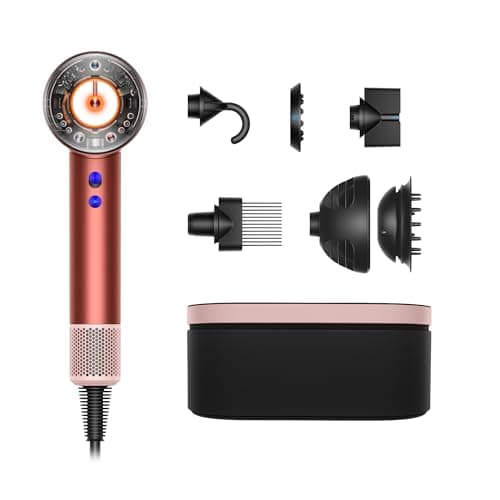
Dyson Supersonic hair dryer
1,600 W is less power than a drugstore dryer draws, and Dyson publishes that openly — the pitch is airflow and heat control, not wattage.
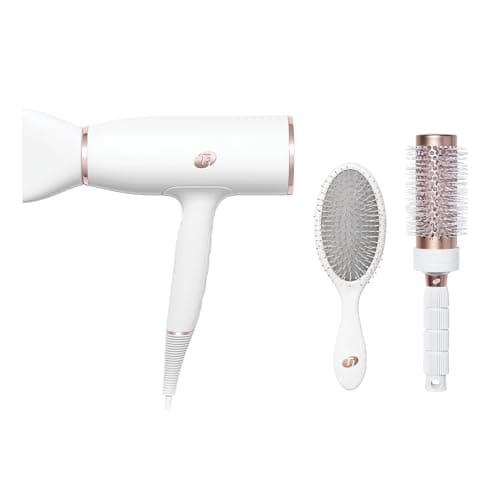
T3 AireLuxe professional hair dryer
Effectively the Featherweight with half an ounce more mass; the same missing wattage figure, and the same 9-foot cord.
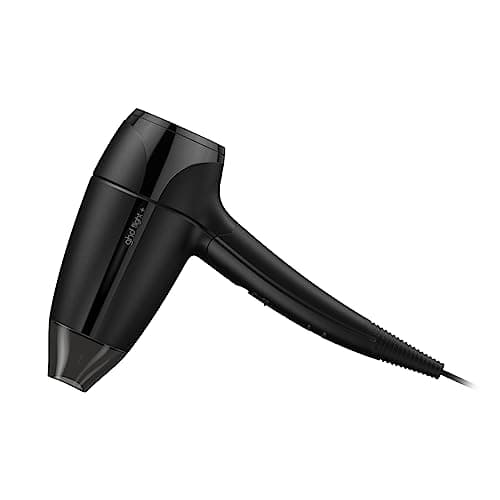
ghd flight+ travel hair dryer
The only dual-voltage dryer in this registry, at a published 0.99 lb with the cord on — the one dryer that genuinely travels.
Questions people actually ask
How many decibels is a hair dryer?
No manufacturer in our registry publishes a decibel figure for any of their tools — the row is blank on all 24 products. We will not print a number we cannot source.
Can a hair dryer damage your hearing?
We cannot say, because no maker publishes the decibel level. What is published is the threshold: NIDCD states that long or repeated exposure at or above 85 dBA can cause hearing loss, and that sounds at or below 70 dBA are unlikely to.
Which is the quietest hair dryer?
Unanswerable from published data. What you can check is speed-setting count, since air speed drives turbulence noise — Dyson publishes three speeds, Revlon publishes two, and Shark and ghd publish no count at all.
Does a more powerful hair dryer mean a louder one?
Not reliably. Wattage describes the heating element; noise comes from the motor and from air turbulence. A 1,875 W dryer can be quieter than a 1,300 W one depending on how the air path is designed.