Is It Worth It?
Are Professional Hair Tools Actually Different?
The word is unregulated, so it tells you nothing on its own. Three published specifications do change, and one of them is a manufacturer admitting something.
Updated September 2026 · Sawyer V.
“Professional” is a marketing word with no standard behind it. What the published specs actually show changing is cord length, warranty structure and heat-setting granularity — and one brand publishes a shorter warranty for professional use, which is the most informative fact on this page.
We earn a commission if you buy through the links on this page, at no extra cost to you. It never changes which tool we pick or which one we tell you to skip. How this site is funded.
The word means nothing on its own
Three of the tools in our registry carry “professional” in their published product names: the T3 Featherweight StyleMax professional hair dryer, the T3 AireLuxe professional hair dryer, and the ghd Helios advanced professional hair dryer.
There is no certification behind any of it. No body defines what a professional hair tool must do, no test has to be passed, and nothing prevents any manufacturer printing it on any box. So the useful exercise is not asking what the word means — it is asking which published numbers actually differ on tools that carry it.
What genuinely changes: three specifications
1. Cord length
This is the most consistent real difference, and it is the least discussed. Both T3 dryers publish a 9 ft professional cord and ghd publishes a 9 ft cable on the Helios. The Dyson Supersonic publishes 8.6 ft and the Shark SpeedStyle Pro 8.0 ft.
Nine feet is a salon-floor length: it exists because a stylist works around a chair with the socket behind them. At home it does something less dramatic and still useful, which is letting you reach the back of your own head without the plug arguing with you.
T3 also describes theirs specifically as a professional cord, which in salon usage implies it is built to survive being pulled. That is a durability claim rather than a measured figure, so treat it as such.
2. Heat-setting granularity
Both professional-branded T3 dryers publish five heat settings and three speeds — fifteen combinations, the most in our registry. The Revlon SmoothStay, which does not carry the word, publishes three and two.
That difference is real and it is the one worth paying for, because a stylist needs to move between clients with different hair on the same tool. What it is not is a professional feature in any protected sense — Dyson publishes four heat settings and three speeds without using the word at all.
3. Warranty structure, which is the interesting one
ghd publishes two warranties for the Helios: a two-year consumer warranty and a one-year professional warranty.
Read that carefully, because it is the most informative sentence on this page. A manufacturer is stating, in binding commercial terms, that they expect the same tool to fail sooner in a salon than in a home. Salon use is harder use, and ghd is candid enough to price it.
Which quietly inverts the usual argument. If professional-grade meant built tougher, the professional warranty would be the longer one. It is the shorter one, because the professional context is more demanding, not because the tool is worse. The general case for reading warranties this way is on the warranty page.
What does not change
- Wattage. The most powerful dryer in this registry is tied between ghd’s professional Helios at 1,875 W and a drugstore Revlon at 1,875 W. Both figures are published by their makers.
- Disclosure quality. Both T3 dryers carry the word professional and publish no wattage at all. The Revlon does not carry it and publishes one.
- Dual voltage. ghd states the Helios is not universal voltage; both T3 dryers are 125 V only. A professional label does not travel any better than a drugstore one.
- Attachments. None of the three professional-named dryers publishes an attachment list. Shark’s consumer SpeedStyle Pro publishes six.
Salon-only distribution is a different claim
Sometimes “professional” means the tool was designed for a distribution channel rather than a performance standard: sold through salons and distributors, warranted differently, sometimes with a different service path.
That is a real distinction and it has one practical consequence worth knowing. A tool bought outside its intended channel may carry a different warranty than the one on the product page — which is exactly what the ghd consumer-versus-professional split describes. Check which term applies to how you bought it.
What to buy on this reasoning
What the professional-branded tools here actually give you
| If you want | Buy | Because |
|---|---|---|
| The most heat control | T3 Featherweight StyleMax or AireLuxe | 5 heat and 3 speed settings — 15 combinations, the most published here |
| The most published power | ghd Helios or Revlon SmoothStay | 1,875 W each — an exact tie across a large price gap |
| The longest reach | Any of the three 9 ft cords | T3 and ghd publish 9 ft; Dyson 8.6 ft, Shark 8.0 ft |
| The best-documented tool | Dyson Supersonic | Nine of ten spec rows published, and it does not use the word at all |
Price per use, at 5 uses a week over 5 years
| What you pay | Cost per use | Cost per year |
|---|---|---|
| $30 | $0.02 | $6.00 |
| $60 | $0.05 | $12.00 |
| $100 | $0.08 | $20.00 |
| $150 | $0.12 | $30.00 |
| $200 | $0.15 | $40.00 |
| $300 | $0.23 | $60.00 |
| $400 | $0.31 | $80.00 |
| $500 | $0.38 | $100.00 |
5 uses a week for 5 years is 1300 uses. Both figures are stated assumptions, not measurements — halve the life and every cost per use doubles. We publish the ladder rather than a worked example for one specific product because a price we typed into a sentence would be wrong within a week.
The honest summary
Professional-branded tools in this registry do tend to have longer cords and more heat settings, and those are genuine advantages. They do not have more power, better disclosure, better travel compatibility or more attachments, and one of them publishes a shorter warranty for professional use than for home use.
So use the word as a weak hint about cord and settings, and then ignore it and read the spec block. That is the same conclusion as the dupes page reached from the opposite direction, which is usually a sign the reasoning is sound.
The tools on this page
Prices come from the live price layer. Where none is available the button says so rather than showing a number we cannot stand behind.
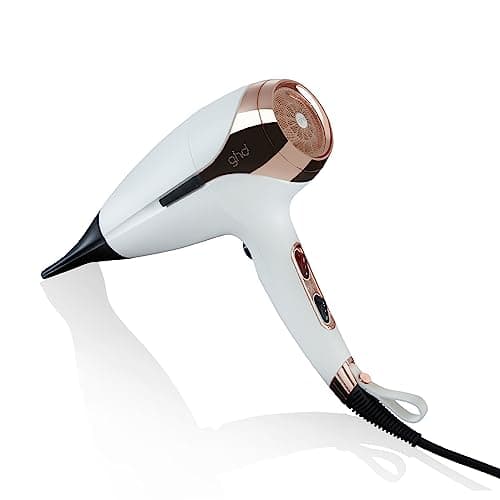
ghd Helios 1875W advanced professional hair dryer
A premium brand publishing exactly the same 1,875 W as a drugstore Revlon — the clearest evidence on this site that wattage is not what the money buys.
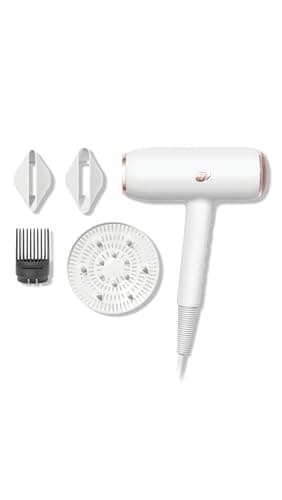
T3 Featherweight StyleMax professional hair dryer
Fifteen heat-and-speed combinations and the lightest published weight of the corded dryers here — but T3 does not publish a wattage figure at all.
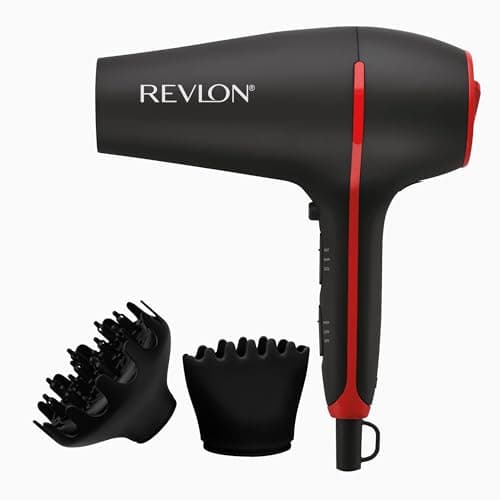
Revlon SmoothStay Coconut Oil-Infused hair dryer
The highest published wattage in this registry attached to the thinnest published spec sheet — Revlon states the watts and almost nothing else.
Questions people actually ask
Are professional hair dryers better?
They tend to publish longer cords and more heat settings, which are real advantages. They do not publish more power — the most powerful dryer in our registry is tied between a professional ghd and a drugstore Revlon at 1,875 W each.
Is professional a regulated term for hair tools?
No. There is no certification, no test and no standards body. Any manufacturer can print it on any product, which is why the published spec block is the only thing worth reading.
Why does ghd offer a shorter professional warranty?
Because salon use is harder use. ghd publishes a two-year consumer warranty and a one-year professional warranty on the Helios, which is a manufacturer pricing the difference in binding terms.