Hair Dryers
ghd Helios: What the Published Specs Say
A salon brand publishing the same wattage as the cheapest dryer on this site. That is either reassuring or damning, depending on what you thought you were paying for.
Updated September 2026 · Sawyer V.
ghd publishes 1,875 W, variable temperature control including a cool shot, variable power control, a 9 ft cable, and a two-year consumer warranty. It costs about $22.35 a year to run. It is the joint most powerful dryer we list — tied with a drugstore Revlon.
We earn a commission if you buy through the links on this page, at no extra cost to you. It never changes which tool we pick or which one we tell you to skip. How this site is funded.
The number that settles an argument
1,875 W. That is the figure on ghd’s own product page for the Helios, and it is the same figure on Revlon’s product page for the SmoothStay, which is the cheapest dryer in this registry.
It is also 275 W more than the Dyson Supersonic and 575 W more than the Dyson Airwrap. Line the four up and the price order and the power order have almost nothing to do with each other.
Published wattage across the registry, highest first
| Tool | Published wattage |
|---|---|
| ghd Helios | 1,875 W |
| Revlon SmoothStay | 1,875 W |
| Shark SpeedStyle Pro | 1,750 W |
| Shark FlexStyle IonCurl | 1,700 W |
| Dyson Supersonic | 1,600 W |
| Shark FlexStyle | 1,600 W |
| T3 Aire 360 | 1,200–1,400 W |
| Dyson Airwrap | 1,300 W |
| T3 AireLuxe | Not published |
| ghd flight+ | Not published |
If wattage were what you were buying, a Revlon would be the flagship and the industry’s pricing would be upside down. It is not, and that is the honest read: watts describe how much electricity the heating element can convert, not how quickly hair dries, which depends on airflow that nobody publishes in comparable units. The full argument is on the wattage page.
What it costs to run
What it costs to run for a year
$22.35 a year
1,875 W × 65 hours a year = 121.9 kWh, at 18.34 cents per kilowatt-hour. The hours assume 15 minutes a session, 5 days a week — that is an assumption, not a measurement, so swap in your own if it is wrong.
$22.35 a year makes it the most expensive dryer here to run, which is the direct arithmetic consequence of being the most powerful. Against the Dyson Airwrap at $15.50 a year, that is a difference of $6.85 annually, or about thirty-four dollars over the five-year service life we assume throughout the site.
Nobody should choose a dryer on running cost — thirty-four dollars over five years is inside the noise of a single purchase decision. The number is here because we publish it for every tool, and because the direction is worth knowing: the more powerful dryer is not the cheaper one to own, it is only the faster one, and only if the airflow matches the wattage. The complete arithmetic is on the running costs page.
“Variable” is not a settings count
Here is where the Helios spec sheet stops being satisfying. ghd publishes variable temperature control with a cool shot, and variable power control. Neither is a number.
Compare that with T3, which publishes five heat settings and three speeds, or Dyson, which publishes four and three. Those counts let you answer a specific question — is there a step below the one I am on — and “variable” does not. It might mean a continuous dial, which would be excellent. It might mean three positions. From the product page you cannot tell.
On the most powerful dryer we list, that gap has weight. 1,875 W is a lot of heat to be delivered by a control whose granularity is not stated, and it is the reason the Helios does not win the fine-hair page despite being a genuinely serious tool.
What ghd does publish well
- The wattage, plainly. Half this category treats power as a secret. ghd states it, and states a figure that undercuts their own premium positioning, which is more candid than the alternative.
- A nine-foot cable. Joint longest here with T3, and it is a salon-length cord on a dryer that is sold into salons.
- A cool shot. Explicitly stated rather than implied. Hair sets as it cools, so this is the setting that makes a blowout hold.
- The voltage limitation, honestly. ghd states that it is not universal voltage rather than leaving the row blank, which is the opposite of what most makers do with an inconvenient fact.
- Two warranties, differentiated. Two years consumer, one year professional. Publishing a shorter professional term is an admission that salon use is harder use, and it is unusually forthcoming.
What is missing
Weight is not published, which on a dryer you hold above your head for fifteen minutes is a real omission — Dyson publishes 1.8 lb and Shark 1.65 lb, and both of those numbers get used against them. The attachment list is not published either, so you cannot confirm whether a diffuser or a concentrator is in the box. Decibels are not published, though nobody in this category publishes those.
The pattern across ghd’s range is consistent: they publish temperature philosophy and warranty terms thoroughly, and physical specifications sparingly. The same is true of the Platinum+, where the missing weight matters less because you are not holding it up.
Who this is for
- Thick or dense hair where session length is the complaint. Joint highest published wattage, and unlike the Revlon it comes with a nine-foot salon cord and a stated cool shot.
- Anyone who wants a serious dryer without the Dyson price. More published power, a longer cord, and the same two-year consumer warranty.
- People who trust the brand’s temperature discipline. ghd fixes its irons at 365°F on principle; the same philosophy runs through the dryer, even if the settings count is not stated.
Who should skip it
- Fine or heat-damaged hair. The most power here with an unstated number of steps below it is the wrong combination. Buy the dryer that publishes five heat settings instead.
- Anyone who travels. ghd states plainly that it is not universal voltage. Their own flight+ is the answer to that, from the same brand.
- Buyers who need a diffuser confirmed. Attachment list not published.
What we cannot tell you
We have not used this dryer. We do not know its weight, what is in the box, how loud it is, or how many discrete steps “variable” resolves to. Everything above is read off ghd’s own product page or computed from it against a cited electricity rate, with the working shown.
The tools on this page
Prices come from the live price layer. Where none is available the button says so rather than showing a number we cannot stand behind.
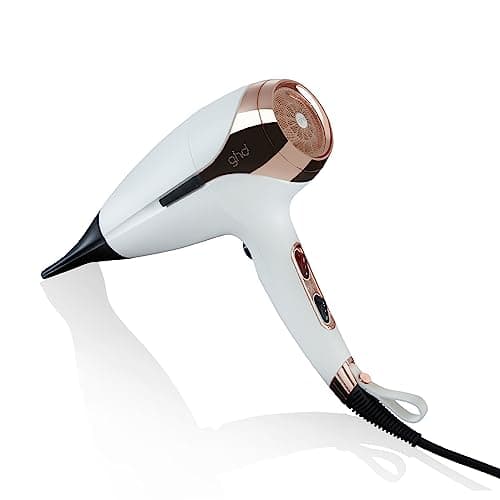
ghd Helios 1875W advanced professional hair dryer
A premium brand publishing exactly the same 1,875 W as a drugstore Revlon — the clearest evidence on this site that wattage is not what the money buys.
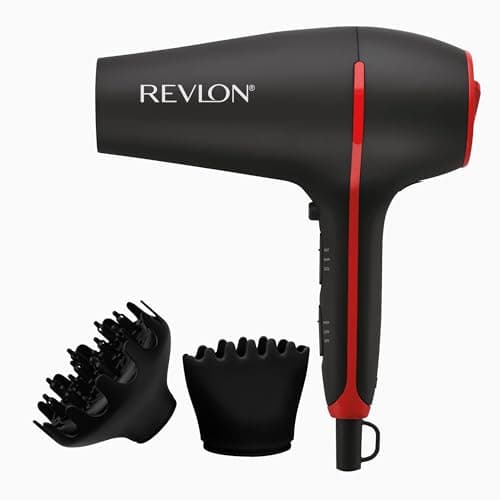
Revlon SmoothStay Coconut Oil-Infused hair dryer
The highest published wattage in this registry attached to the thinnest published spec sheet — Revlon states the watts and almost nothing else.
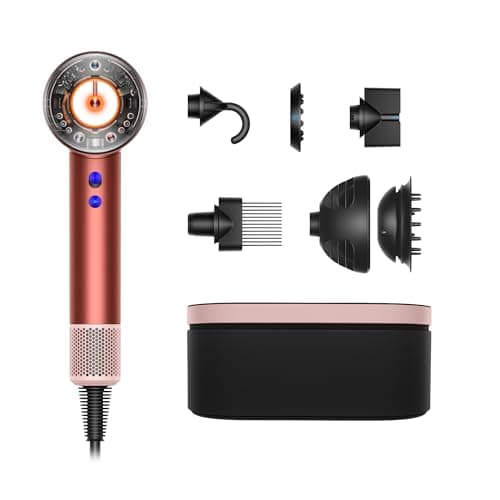
Dyson Supersonic hair dryer
1,600 W is less power than a drugstore dryer draws, and Dyson publishes that openly — the pitch is airflow and heat control, not wattage.
Questions people actually ask
How many watts is the ghd Helios?
1,875 W, published by ghd. That is the joint highest wattage in our registry, tied exactly with the Revlon SmoothStay, which is the cheapest dryer we list.
Is the ghd Helios dual voltage?
No. ghd states directly that it is not universal voltage. Their flight+ travel dryer is the dual-voltage option in the same range.
How much does the ghd Helios cost to run?
About $22.35 a year at 1,875 W and 65 hours of use, using the June 2026 US average residential rate of 18.34 cents per kWh. That makes it the most expensive dryer on this site to run, because it is the most powerful.