Guides
Upgrading From a Drugstore Tool: What Changes
The upgrade buyer's honest briefing. Four things genuinely improve, two famously do not, and one gets worse.
Updated September 2026 · Sawyer V.
Four things genuinely improve: published heat granularity, attachment breadth, cord length and disclosure. Two do not: power, which peaks at the cheap end, and warranty length, where the drugstore brush beats every premium brand in our registry.
We earn a commission if you buy through the links on this page, at no extra cost to you. It never changes which tool we pick or which one we tell you to skip. How this site is funded.
Start with what does not change
Because this is where most upgrade disappointment comes from, and both items are checkable before you spend anything.
Power does not improve. It usually falls.
The joint most powerful dryers in our registry are a ghd Helios and a drugstore Revlon SmoothStay, both publishing 1,875 W. The Dyson Supersonic publishes 1,600 W. The Dyson Airwrap publishes 1,300 W.
So if your complaint about your current dryer is “it takes too long”, upgrading may make that worse rather than better. The premium brands are selling airflow and heat regulation — neither of which anybody publishes in comparable units — the full argument.
Warranty does not improve. It halves.
Revlon publishes four years on the One-Step Volumizer Plus. ghd publishes three on its irons. Dyson, Shark and T3 publish two on everything.
The cheapest tool in our registry has double the cover of the most expensive one, and a warranty is one of the few numbers that cannot be marketing because being wrong about it costs money — why that matters.
What genuinely does change
1. Heat granularity — the one worth paying for
This is the real upgrade and it is rarely how the tools are marketed. The Revlon SmoothStay publishes three heat settings and two speeds: six combinations, the fewest of any dryer we list. The T3 dryers publish five and three: fifteen.
It matters because heat damage accumulates rather than crossing a threshold, so the useful question is never “is this setting safe” but “is there a step below the one I am using”. With three settings the answer is usually no.
Two speed settings in particular means the “low” option is a division of the highest wattage in the registry — which is not the same thing as a gentle setting.
2. Attachments — and whether you can confirm them
Revlon publishes no attachment list for the SmoothStay at all. Dyson publishes three named attachments; Shark publishes six.
If you have curls, this is the whole upgrade: you cannot confirm a drugstore dryer includes a diffuser, and on curly hair the diffuser decides the outcome — which tools publish one.
3. Cord length
Nine feet on both T3 dryers and the ghd Helios, 8.6 ft on the Dyson, 8.0 ft on the Shark. Revlon publishes no cord length, which means you cannot plan around it.
Unglamorous, and it changes how the tool feels every single time you use it — particularly if you reach around the back of your own head.
4. Disclosure itself
Five of the ten rows on the Revlon SmoothStay spec sheet are blank: weight, cord length, attachments, voltage and warranty. Nine of ten are filled on the Dyson Supersonic.
That is not a performance difference, and it is a real one. You can plan around a complete spec sheet and you cannot plan around a fragmentary one — which matters most when your hair has a specific requirement rather than a general one.
What gets worse
One thing, and it is worth knowing before rather than after: weight.
The Dyson Supersonic publishes 1.8 lb — the heaviest dryer in our registry. Shark publishes 1.65 lb. Revlon publishes no weight at all for the SmoothStay, but drugstore dryers are generally lighter because they have less in them.
If your hair is long and your sessions run twenty minutes, that is twelve extra ounces held above shoulder height, every time. The lightest corded dryer we list is a T3 at a published 16.6 oz — the long-hair page ranks on exactly this.
Which complaint are you actually upgrading to fix?
Match the complaint to whether an upgrade solves it
| Your complaint | Does upgrading fix it? | What actually does |
|---|---|---|
| It takes too long to dry | Often not — power falls at the premium end | Towel first, section properly, bare nozzle |
| It burns or over-dries my hair | Yes — this is the real upgrade | A tool with five heat steps rather than three |
| My curls come out frizzy | Yes, if the new tool publishes a diffuser | A confirmed diffuser and a low speed |
| It is too heavy already | No — premium dryers are heavier | Buy on published weight, not on price |
| It broke after two years | No — warranties get shorter | Cord care, and reading the warranty term |
| I cannot get a salon result | Partly — a hot air brush helps most | Technique, and merging the two hands |
Three of those six are not fixed by spending more, and two are fixed by technique that costs nothing — drying time and blow-dry method.
The arithmetic that should decide it
Price per use, at 5 uses a week over 5 years
| What you pay | Cost per use | Cost per year |
|---|---|---|
| $30 | $0.02 | $6.00 |
| $60 | $0.05 | $12.00 |
| $100 | $0.08 | $20.00 |
| $150 | $0.12 | $30.00 |
| $200 | $0.15 | $40.00 |
| $300 | $0.23 | $60.00 |
| $400 | $0.31 | $80.00 |
| $500 | $0.38 | $100.00 |
5 uses a week for 5 years is 1300 uses. Both figures are stated assumptions, not measurements — halve the life and every cost per use doubles. We publish the ladder rather than a worked example for one specific product because a price we typed into a sentence would be wrong within a week.
At five uses a week over five years, every $100 of purchase price is about four cents a use. That is the sentence that makes an upgrade reasonable — and it only holds at that frequency.
If you style twice a month, the same $100 is nearer eighty cents a use, and the drugstore tool is simply the correct answer. The full version is on are expensive hair dryers worth it.
What we would actually do
If your complaint is heat control, upgrade — it is the one thing that reliably improves, and it is the thing that matters most on fine, colored or damaged hair.
If your complaint is speed, do not. Fix the routine first: squeeze with a towel and wait ten minutes, section properly, and rough-dry on the bare nozzle before fitting anything. That is free and it usually beats the upgrade.
And if you are moving up from a drugstore dryer because you want a salon result, the highest-leverage purchase is not a better dryer — it is a hot air brush, which removes the two-handed coordination that is actually stopping you — the arithmetic.
The tools on this page
Prices come from the live price layer. Where none is available the button says so rather than showing a number we cannot stand behind.
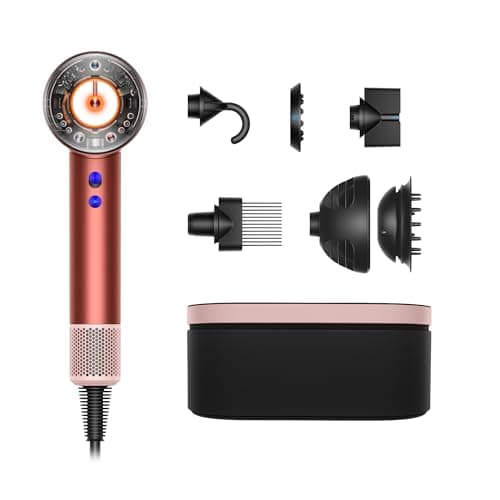
Dyson Supersonic hair dryer
1,600 W is less power than a drugstore dryer draws, and Dyson publishes that openly — the pitch is airflow and heat control, not wattage.
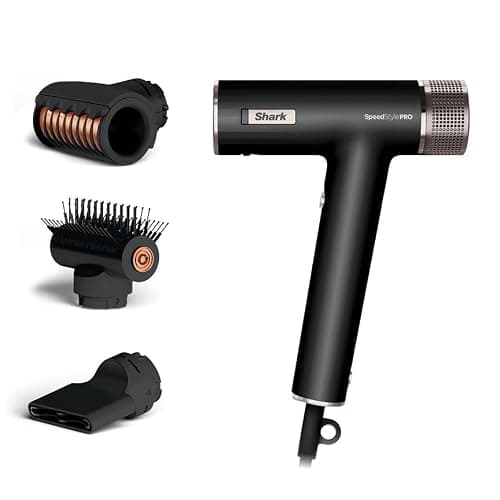
Shark SpeedStyle Pro hair dryer
The highest published wattage of the premium dryers here and the most attachments in the box, at a fraction of Dyson's asking price.
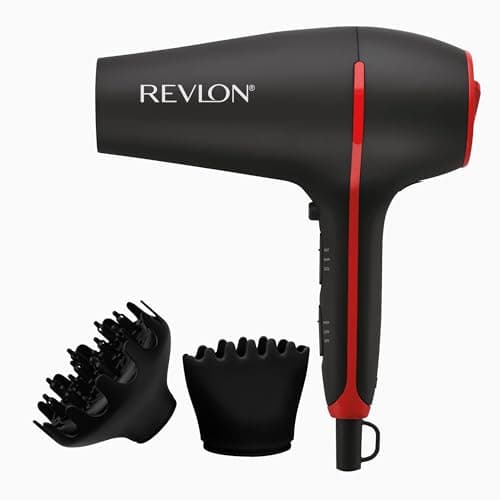
Revlon SmoothStay Coconut Oil-Infused hair dryer
The highest published wattage in this registry attached to the thinnest published spec sheet — Revlon states the watts and almost nothing else.
Questions people actually ask
Is it worth upgrading from a drugstore hair dryer?
If your complaint is heat control, yes — published heat granularity is the one thing that reliably improves. If your complaint is drying speed, often not: the joint most powerful dryers in our registry include a drugstore Revlon.
Do premium hair dryers dry hair faster?
Not necessarily. Wattage falls at the premium end — 1,600 W on the Dyson Supersonic against 1,875 W on a drugstore Revlon. Nobody publishes airflow, so the figure that would settle it is unavailable everywhere.
What is the biggest difference between cheap and expensive hair tools?
How much the maker will tell you. Five of the ten rows on a drugstore spec sheet are typically blank; nine of ten are filled on the best-documented flagship. That is not performance, and it is a real difference.
Do expensive hair tools last longer?
The published warranties say otherwise. Revlon publishes four years on its hot air brush; Dyson, Shark and T3 publish two on everything they make. The cheapest tool in our registry has the longest cover.