Is It Worth It?
What a Dupe Actually Copies, and What It Cannot
A drugstore dryer publishes the same wattage as a salon flagship, and a drugstore brush publishes double the warranty. The gaps are elsewhere, and they are findable.
Updated September 2026 · Sawyer V.
Dupes reliably match the headline number — wattage, barrel size, ceramic coating — because those are cheap to reproduce and easy to advertise. What they usually do not match is published disclosure, attachment breadth and heat granularity, and those are the three rows to check.
We earn a commission if you buy through the links on this page, at no extra cost to you. It never changes which tool we pick or which one we tell you to skip. How this site is funded.
Where the dupes genuinely win
Start with the uncomfortable part, because it is the honest one. Read the spec sheets side by side and several cheap tools in our registry match or beat expensive ones on figures the expensive ones use in their marketing.
Published figures where the cheaper tool matches or beats the flagship
| Specification | Cheaper tool | Flagship | Result |
|---|---|---|---|
| Wattage | Revlon SmoothStay — 1,875 W | ghd Helios — 1,875 W | Exact tie |
| Wattage | Shark FlexStyle — 1,600 W | Dyson Supersonic — 1,600 W | Exact tie |
| Warranty | Revlon One-Step Plus — 4 years | Dyson, Shark, T3 — 2 years | Cheaper tool wins by 2 years |
| Heat settings | Revlon One-Step Plus — 4, including cool | T3 AireBrush One-Step — 3, no cool | Cheaper tool wins |
| Converts to a dryer | Shark FlexStyle — yes | Dyson Airwrap — no | Cheaper tool wins |
None of that is cherry-picked. Those are the manufacturers’ own published figures, and the pattern holds across five separate rows. If you assumed premium price meant premium numbers, the numbers disagree.
Where they lose, and it is not where you expect
Published disclosure
The most consistent difference is how much the maker will tell you. Revlon publishes 1,875 W for the SmoothStay and then leaves weight, cord length, attachments, dual voltage and warranty blank — five of the ten rows in our standard spec block.
Dyson publishes all ten for the Supersonic except decibels, which nobody publishes. That is not a performance difference, but it is a real one: you can plan around a spec sheet that is complete and you cannot plan around one that is not.
Shark sits awkwardly in the middle. The FlexStyle matches the Supersonic’s wattage exactly and publishes weight, cord and a full attachment list — but publishes no heat- or speed-setting count at all, which is the specification that decides whether it suits fine or curly hair. On the IonCurl, Shark publishes no attachment list either.
Heat granularity
This is the substantive one. Cheap tools tend to have fewer heat steps, and the number of steps is what decides whether you can go lower when your hair needs it.
Revlon publishes three heat settings and two speed settings on the SmoothStay — six combinations, the fewest here. T3 publishes five and three, which is fifteen. Two speed settings in particular means the “low” option is a division of the highest wattage in this registry, and that is not the same thing as a gentle setting.
For robust hair being rough-dried, six combinations is plenty. For fine, colored or damaged hair it is not, and that is the honest boundary of the dupe argument — the fuller version is on the color-treated page.
Attachment breadth
Attachments are where the price gap is most visible in the box. Dyson publishes three for the Supersonic including a diffuser and a wide-tooth comb; Shark publishes six for the SpeedStyle Pro. Revlon publishes no attachment list at all for the SmoothStay.
If a diffuser is the reason you are buying a dryer, that blank row is disqualifying regardless of what the wattage says — the attachments page works through why.
The three questions that separate a real dupe from a lookalike
- Does it publish the number, or does it publish a word? “Powerful” is not a wattage. “Variable heat” is not a settings count. A tool that states figures is one you can hold to them.
- How many rows are blank? Count them. Our standard spec block is ten rows, and the blank count is itself a specification — it tells you how much you are being asked to take on trust.
- What is the warranty? This is the one number that cannot be marketing, because it costs the maker money when they are wrong about it. A four-year warranty on a cheap tool is a stronger signal than any material name.
What a dupe genuinely cannot copy
Two things, and both are less exciting than the marketing arguments on either side.
The first is a mechanism that is actually novel. Dyson publishes flexing plates on the Corrale — plates that bend around the section rather than pressing through it. Nothing else in this registry does that, and no amount of ceramic coating reproduces it. Where a flagship has a real mechanical difference, it stays a real difference — which is why the Corrale wins the thick-hair page on merit.
The second is a settled after-sales path, which is exactly what a warranty term describes. And here the direction reverses: Revlon publishes four years where Dyson, Shark and T3 publish two. The dupe is winning the row that is hardest to fake.
Where the dupe argument genuinely fails
It fails when the flagship’s advantage is a published number the cheap tool does not have, rather than a marketing claim. Three concrete cases from this registry:
When to pay more, on published evidence
| Your situation | Why the cheap tool loses |
|---|---|
| Fine or damaged hair | You need heat steps below the middle setting; two speeds and three heats do not have them |
| Curly hair needing a diffuser | You cannot confirm one is in the box when no attachment list is published |
| Thick hair taking repeat passes | Flexing plates are a real mechanism with no cheap equivalent |
| Traveling | Dual voltage is published or it is not; there is no dupe for a rating plate |
Price per use, at 5 uses a week over 5 years
| What you pay | Cost per use | Cost per year |
|---|---|---|
| $30 | $0.02 | $6.00 |
| $60 | $0.05 | $12.00 |
| $100 | $0.08 | $20.00 |
| $150 | $0.12 | $30.00 |
| $200 | $0.15 | $40.00 |
| $300 | $0.23 | $60.00 |
| $400 | $0.31 | $80.00 |
| $500 | $0.38 | $100.00 |
5 uses a week for 5 years is 1300 uses. Both figures are stated assumptions, not measurements — halve the life and every cost per use doubles. We publish the ladder rather than a worked example for one specific product because a price we typed into a sentence would be wrong within a week.
What we would actually buy
The Shark FlexStyle is the strongest dupe on this site, and it is strongest on the specific claim that matters: the same published 1,600 W as the Dyson Supersonic, in a tool that also converts to a dryer. The full head-to-head is on the Airwrap versus FlexStyle page and the wider question on the Airwrap dupes page.
The Revlon One-Step Volumizer Plus is not really a dupe at all — it is the best value tool on this site outright, and the four-year warranty is the reason. It wins the under-$100 page comfortably.
Where we would pay the premium: an iron for hair that takes repeat passes, and a dryer for hair that needs a genuinely low setting. Both are cases where the flagship has a published advantage rather than a reputational one.
The tools on this page
Prices come from the live price layer. Where none is available the button says so rather than showing a number we cannot stand behind.
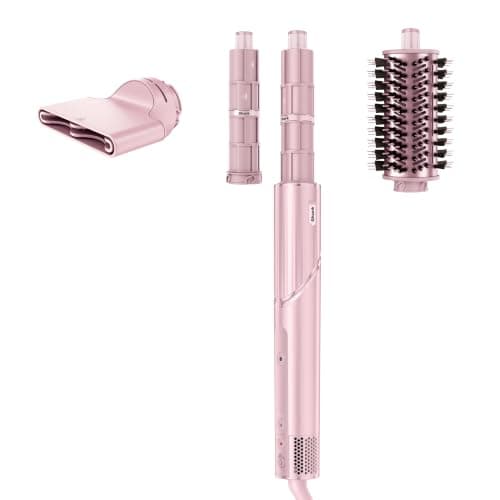
Shark FlexStyle air styling and drying system
Exactly the same published wattage as the Dyson Supersonic, in a tool that also converts to a dryer — the single strongest number in the dupe argument.
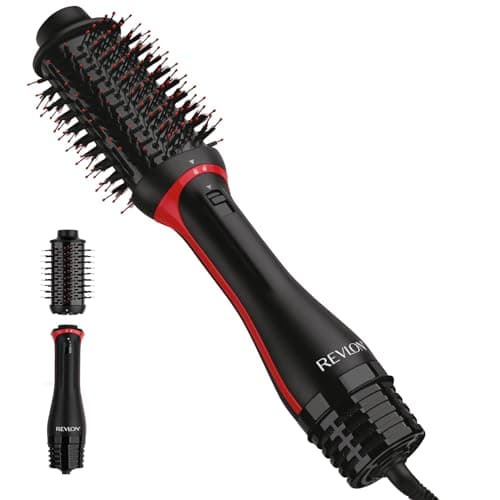
Revlon One-Step Volumizer Plus hair dryer and hot air brush
A 4-year limited warranty, the longest in this registry, on the cheapest kind of tool in it. Worth noticing before paying six times more elsewhere.
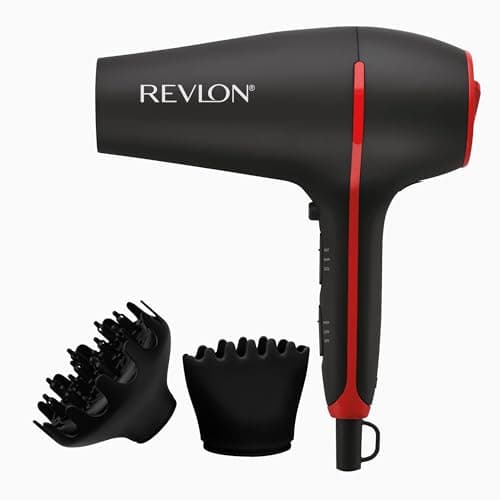
Revlon SmoothStay Coconut Oil-Infused hair dryer
The highest published wattage in this registry attached to the thinnest published spec sheet — Revlon states the watts and almost nothing else.
Questions people actually ask
Are hair tool dupes actually as good?
On published wattage, sometimes exactly. The Shark FlexStyle matches the Dyson Supersonic at 1,600 W and the Revlon SmoothStay matches the ghd Helios at 1,875 W. Where they lose is heat granularity, attachment breadth and how much the maker publishes at all.
What should I check before buying a cheaper alternative?
Count the blank rows on the spec sheet, check whether heat and speed settings are published as numbers rather than as the word variable, and read the warranty term. The warranty is the number hardest to fake.
Is the Shark FlexStyle a real Dyson Airwrap dupe?
On published wattage it beats it — 1,600 W against the Airwrap's 1,300 W — and it converts to a dryer, which the Airwrap does not. Shark publishes no heat- or speed-setting count, though, and Dyson publishes three of each.