Blow-Dry Brushes
The Best Blow-Dry Brushes for Beginners in 2026
The one heated tool where the technique is something you already know how to do.
Updated September 2026 · Sawyer V.
A hot air brush is the easiest heated tool to learn because it collapses the dryer and the round brush into one object — the technique is brushing. Look for a cool setting, a detachable head you can clean, and a barrel sized to your hair rather than to the photograph.
We earn a commission if you buy through the links on this page, at no extra cost to you. It never changes which tool we pick or which one we tell you to skip. How this site is funded.
Why this is the easiest tool to start with
A conventional blow-dry asks you to hold a dryer in one hand and a round brush in the other, maintain tension, and rotate both in time. That is a genuine skill and plenty of people never acquire it.
A hot air brush removes the coordination entirely. The airflow comes out through the bristles, so you brush and the drying happens. For a first heated tool that is a far lower barrier than a flat iron, where the most common beginner error — turning the heat up when a pass fails — is available on every dial.
What to look for
A cool setting
The single most useful feature for a beginner, and the one most often skipped. Hair sets as it cools, so a cool pass with the brush still under tension fixes the shape. Without it, the instinct is a second hot pass, which costs the hair twice.
A head that comes off
Lint and product collect on the grill behind the bristles. Airflow drops, the tool runs hotter for longer to compensate, and the drying time you bought it for disappears over months. A head that detaches turns that into a two-minute clean — see cleaning and maintenance.
A barrel sized to your hair
Diameter decides how much of your natural texture survives the pass. A wide oval paddle smooths and elongates; a narrower one keeps some movement; a round barrel puts a deliberate bend in the ends. See barrel size.
Heat you can actually read
Most brushes sell you a setting count. If your hair is fine, colored or recovering, a published temperature is worth more, because it is the only form in which the number can be checked rather than guessed.
The free half of the answer
- Rough-dry to about 80 percent first. A brush used on soaking hair spends the session evaporating rather than shaping.
- Take sections you can see through. Thick sections dry on the outside and stay damp within.
- Work with the direction the hair falls, root to tip, with the cuticle rather than against it.
- Hold tension until the section is cool. The highest-return habit in the whole category.
None of that costs anything, and it does more than the difference between any two brushes below. How to use a blow-dry brush walks through a full session.
One thing to avoid buying by mistake
A heated brush is not a hot air brush. It has no fan and works on hair that is already dry, so it cannot replace a blow-dry — which is the job most beginners are trying to simplify. If a spec sheet lists speed settings, the tool has a fan; if it does not, it probably does not. See hot air brush vs hair dryer.
Quick picks
Tap any row to jump to the full write-up. Prices come from the live price layer; where none is available the button says so rather than showing a number we cannot stand behind.
| # | Product | Best for | Price |
|---|---|---|---|
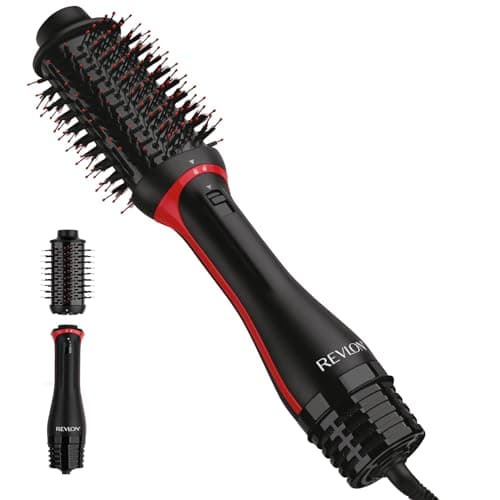
| 1 | Revlon One-Step Volumizer Plus hair dryer and hot air brush Four heat settings including a cool option, a detachable head for cleaning, and a four-year warranty. | A finished blow-dry without learning to blow-dry | |
| 2 | 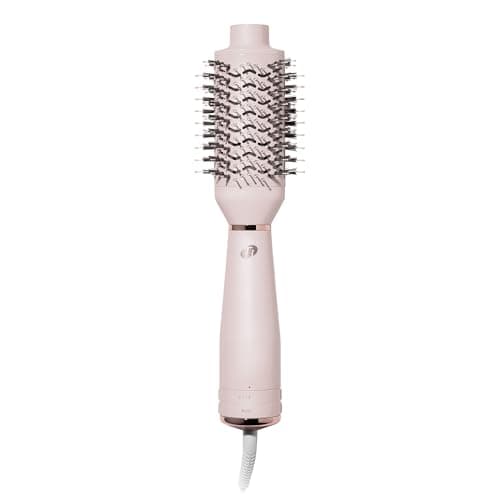 T3 AireBrush One-Step smoothing and volumizing dryer brush 16 oz published, an 8 ft swivel cord, three heat settings and two speeds, with a two-year warranty. | Knowing what you are holding before it arrives | |
| 3 | 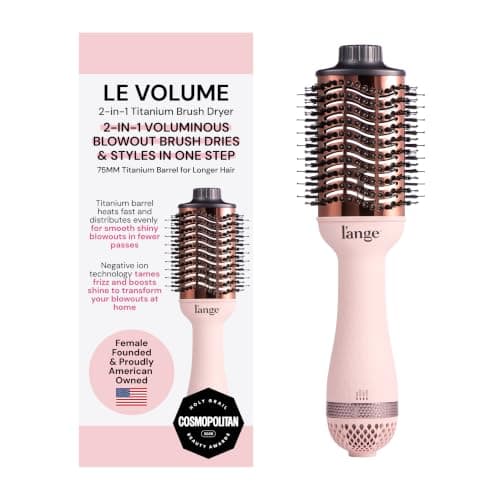 L'ange Le Volume Brush Dryer Three settings published as real temperatures - 95.4°F, 178.9°F and 225.7°F - on a 1.1 lb titanium barrel. | Fine or fragile hair learning to style | |
| — | 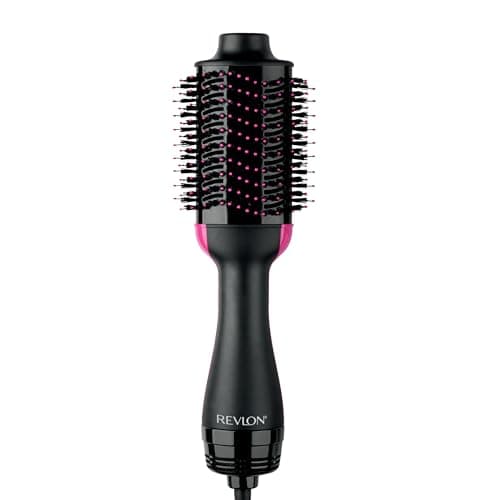 Revlon Salon One-Step hair dryer and volumizer The same four-year warranty on a brush whose head is non-detachable, with no published heat settings. We’d skip this | Nobody starting out |
1. The easiest first brush to live with
Revlon One-Step Volumizer Plus hair dryer and hot air brush
Best for: A finished blow-dry without learning to blow-dry
Four heat settings including a cool option, a detachable head for cleaning, and a four-year warranty.
It hits all three beginner criteria: a genuine cool setting, a head that comes off, and the longest published warranty of any brush in this registry at four years.
Four settings is enough to learn on without being a decision. Start on medium, finish cool, and adjust only if the hair is not dry enough or is drying too fast.
Revlon publishes no wattage, weight, cord length or voltage, so nothing about it can be compared on power — the standing criticism of the brand on this site.
What’s wrong with it
Four blank specification rows, and slow on thick or very long hair.
Published specifications — Revlon One-Step Volumizer Plus hair dryer and hot air brush
| Wattage | Not published |
|---|---|
| Heat settings | 4 heat settings — low, medium, high, cool |
| Speed settings | Not published |
| Weight | Not published |
| Cord length | Not published |
| Noise (dB) | Not published |
| Attachments | Detachable brush head |
| Plate / barrel | Ceramic titanium barrel; tourmaline ionic |
| Dual voltage | Not published |
| Warranty | 4-year limited warranty |
Every figure above is taken from Revlon Hair Tools — One-Step Volumizer Plus product page. “Not published” means the figure does not appear on that page — it is not an estimate withheld, it is a number the manufacturer does not state. How we compile these.
What it costs to run for a year
Revlon does not publish a wattage for this tool, so there is nothing honest to compute. The formula is watts ÷ 1,000 × hours a year × your rate per kWh; if you find a rating plate on the handle, 65 hours a year and 18.34 cents per kilowatt-hour will get you the rest of the way.
2. Most published for a first buy
T3 AireBrush One-Step smoothing and volumizing dryer brush
Best for: Knowing what you are holding before it arrives
16 oz published, an 8 ft swivel cord, three heat settings and two speeds, with a two-year warranty.
The step up in disclosure rather than in features. T3 publishes the weight and the cord length where Revlon publishes neither, and states plainly that no attachments are supplied — which is a better answer than a blank row.
Three heat settings and two speeds is six combinations, fewer than the Revlon's four settings, and there is no published cool option.
125 V only, and two years of cover against Revlon's four.
What’s wrong with it
No published temperatures or cool setting, no attachments in the box, and half the warranty of the cheaper Revlon.
Published specifications — T3 AireBrush One-Step smoothing and volumizing dryer brush
| Wattage | Not published |
|---|---|
| Heat settings | 3 heat settings |
| Speed settings | 2 speed settings |
| Weight | 16 oz (cord not included) |
| Cord length | 8 ft, 360-degree swivel cord |
| Noise (dB) | Not published |
| Attachments | None supplied |
| Plate / barrel | CeraGloss ceramic surface, heat-resistant bristles |
| Dual voltage | No — 125 V |
| Warranty | 2-year warranty |
Every figure above is taken from T3 Micro — AireBrush One-Step product page. “Not published” means the figure does not appear on that page — it is not an estimate withheld, it is a number the manufacturer does not state. How we compile these.
What it costs to run for a year
T3 does not publish a wattage for this tool, so there is nothing honest to compute. The formula is watts ÷ 1,000 × hours a year × your rate per kWh; if you find a rating plate on the handle, 65 hours a year and 18.34 cents per kilowatt-hour will get you the rest of the way.
3. The one that states its degrees
L'ange Le Volume Brush Dryer
Best for: Fine or fragile hair learning to style
Three settings published as real temperatures - 95.4°F, 178.9°F and 225.7°F - on a 1.1 lb titanium barrel.
For a beginner with fine, colored or previously damaged hair, this is the safest way in: you can read exactly what the tool does rather than trusting a dial position.
A 225.7°F ceiling is the gentlest published figure in the category, and the two barrel widths — 60 mm and 75 mm — let you match the tool to your hair rather than the reverse.
1.1 lb published, a cleaning brush in the box, 125 V and a one-year warranty, the shortest here.
What’s wrong with it
The shortest warranty in this registry, 125 V only, and 1,000 W will be slow on thick hair.
Published specifications — L'ange Le Volume Brush Dryer
| Wattage | 1,000 W |
|---|---|
| Heat settings | 3 — cool 95.4°F, low 178.9°F, high 225.7°F (all published) |
| Speed settings | Not published |
| Weight | 1.1 lb (500 g) |
| Cord length | 6.6 ft — the same line also states 2.4 m, which is 7.9 ft |
| Noise (dB) | Not published |
| Attachments | 2 — protective cover and cleaning brush |
| Plate / barrel | Titanium oval barrel, 60 mm or 75 mm |
| Dual voltage | No — 125 V, 60 Hz |
| Warranty | 1-year warranty |
Every figure above is taken from L'ange — Le Volume Brush Dryer product page. “Not published” means the figure does not appear on that page — it is not an estimate withheld, it is a number the manufacturer does not state. How we compile these.
What it costs to run for a year
$11.92 a year
1,000 W × 65 hours a year = 65.0 kWh, at 18.34 cents per kilowatt-hour. The hours assume 15 minutes a session, 5 days a week — that is an assumption, not a measurement, so swap in your own if it is wrong.
The one we'd skip
Revlon Salon One-Step hair dryer and volumizer
Best for: Nobody starting out
The same four-year warranty on a brush whose head is non-detachable, with no published heat settings.
We would steer a beginner away from this one. The head does not come off, so the grill behind the bristles cannot be cleaned, and that is the failure that makes these tools feel cheap after a year.
Revlon also publishes no heat-setting count for it, so a beginner gets no guidance on what any position does.
The warranty is identical to the better model's, and it does not cover a tool getting gradually worse through normal use.
What’s wrong with it
A sealed head you cannot clean, and no published heat settings to learn from.
Published specifications — Revlon Salon One-Step hair dryer and volumizer
| Wattage | Not published |
|---|---|
| Heat settings | Not published |
| Speed settings | Not published |
| Weight | Not published |
| Cord length | Not published |
| Noise (dB) | Not published |
| Attachments | Non-detachable brush head |
| Plate / barrel | Ceramic coating |
| Dual voltage | Not published |
| Warranty | 4-year limited warranty |
Every figure above is taken from Revlon Hair Tools — Salon One-Step hair dryer and volumizer. “Not published” means the figure does not appear on that page — it is not an estimate withheld, it is a number the manufacturer does not state. How we compile these.
What it costs to run for a year
Revlon does not publish a wattage for this tool, so there is nothing honest to compute. The formula is watts ÷ 1,000 × hours a year × your rate per kWh; if you find a rating plate on the handle, 65 hours a year and 18.34 cents per kilowatt-hour will get you the rest of the way.
Questions people actually ask
Is a blow-dry brush good for beginners?
It is the easiest heated tool to learn, because the technique is brushing rather than coordinating a dryer and a round brush in two hands. It is also harder to overheat hair with than a flat iron.
What should I look for in a first hot air brush?
A cool setting, a detachable head you can clean, and a barrel diameter matched to your hair. Published temperatures matter too if your hair is fine, colored or recovering.
Should I dry my hair before using a blow-dry brush?
Rough-dry to about 80 percent first. Used on soaking hair the brush spends most of the session evaporating water rather than shaping, which is slow and keeps the hair under heat for longer.
Is a heated brush the same thing?
No. A heated brush has no fan and works only on already-dry hair, so it cannot replace a blow-dry. If the spec sheet lists speed settings, the tool has a fan.