Curling Irons & Wands
The Best Hair Crimpers and Wavers in 2026
A crimp and a wave are the same geometry at different sizes. Getting the scale wrong is what makes one look deliberate and the other look like 1984.
Updated September 2026 · Sawyer V.
A crimper presses a fine zigzag with narrow plates; a waver presses a large S-bend with wide barrels. Same geometry, different scale. Our registry contains a triple-barrel waver — the ghd Wave — and no fine-plate crimper, because the crimper brands publish nothing we can cite.
We earn a commission if you buy through the links on this page, at no extra cost to you. It never changes which tool we pick or which one we tell you to skip. How this site is funded.
Quick picks
Tap any row to jump to the full write-up. Prices come from the live price layer; where none is available the button says so rather than showing a number we cannot stand behind.
| # | Product | Best for | Price |
|---|---|---|---|
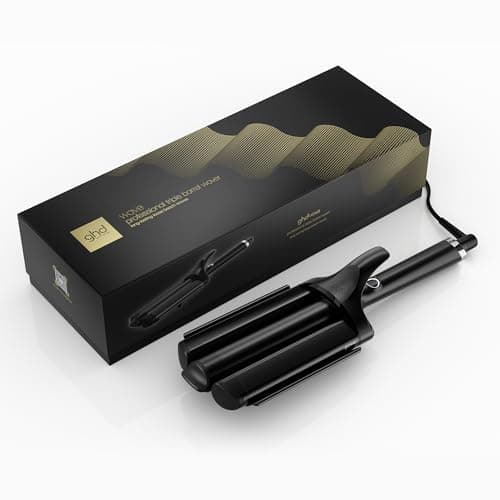
| 1 | ghd Wave triple barrel hair waver Three ergonomic barrels and dual temperature sensors at a fixed 365°F — one press covers a length of hair rather than a wrap. | A deliberate, even wave through a whole head, fast | |
| 2 | 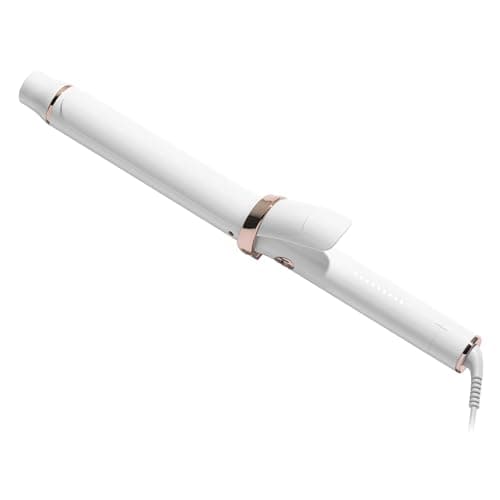 T3 SinglePass Curl X extra-long barrel curling iron Nine heat settings and a 6.5 in barrel — not a crimper, but the tool we would use instead on hair that cannot take a fixed temperature. | Processed hair that should not be pressed at a fixed 365°F | |
| 3 | 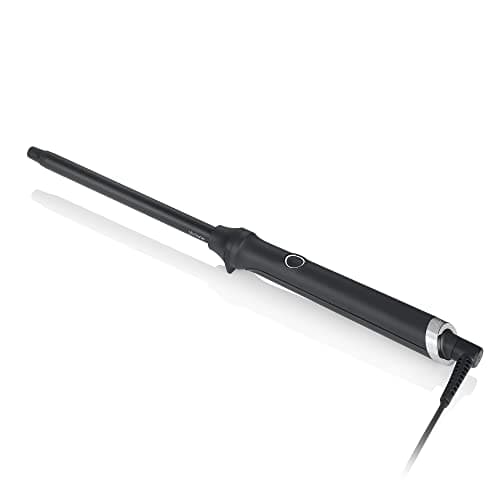 ghd Curve Thin curling wand (0.5 inch barrel) A 0.5 in clipless barrel — the smallest in our registry — which at tight wraps approximates fine texture. | Tight texture at small scale, on short hair | |
| — | 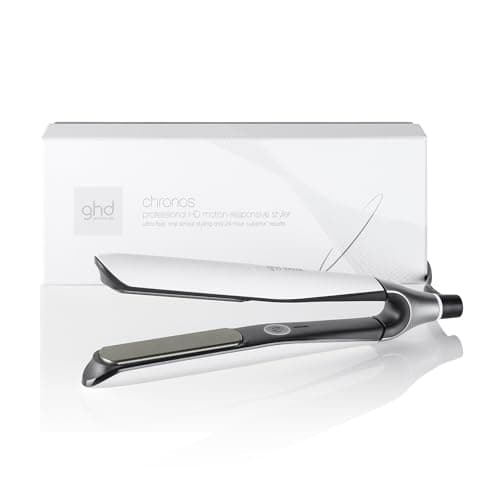 ghd Chronos flat iron (1 inch plate) A flat iron, which is the tool people most often try to crimp with and the one least able to. We’d skip this | Not texture |
1. Best waver, and the only one here
ghd Wave triple barrel hair waver
Best for: A deliberate, even wave through a whole head, fast
Three ergonomic barrels and dual temperature sensors at a fixed 365°F — one press covers a length of hair rather than a wrap.
This is the large-scale end of the crimp family. You clamp a section between three barrels and press, and the hair takes the shape of the gaps — a repeating S-bend produced in one action rather than by wrapping.
Speed is the genuine argument and it is a damage argument too. Total exposure is roughly temperature multiplied by contact time, and one press per length is materially fewer applications than wrapping the same hair in sections.
Dual temperature sensors is a consistency claim worth having here specifically: holding one temperature evenly across three separate barrels is a harder problem than across one. Two-year warranty.
What’s wrong with it
Fixed 365°F with no adjustment at all, and ghd publishes no wattage, weight, cord length or voltage rating — four blank rows, and no hold time per press either.
Published specifications — ghd Wave triple barrel hair waver
| Wattage | Not published |
|---|---|
| Heat settings | One fixed temperature — 365°F |
| Speed settings | Not applicable |
| Weight | Not published |
| Cord length | Not published |
| Noise (dB) | Not applicable |
| Attachments | None supplied |
| Plate / barrel | Three ergonomic barrels, dual temperature sensors |
| Dual voltage | Not published |
| Warranty | 2-year warranty |
Every figure above is taken from ghd — Wave triple barrel hair waver product page. “Not published” means the figure does not appear on that page — it is not an estimate withheld, it is a number the manufacturer does not state. How we compile these.
What it costs to run for a year
ghd does not publish a wattage for this tool, so there is nothing honest to compute. The formula is watts ÷ 1,000 × hours a year × your rate per kWh; if you find a rating plate on the handle, 65 hours a year and 18.34 cents per kilowatt-hour will get you the rest of the way.
2. The adjustable alternative
T3 SinglePass Curl X extra-long barrel curling iron
Best for: Processed hair that should not be pressed at a fixed 365°F
Nine heat settings and a 6.5 in barrel — not a crimper, but the tool we would use instead on hair that cannot take a fixed temperature.
Included because the honest answer for a lot of people asking about crimpers is that their hair should not be clamped between heated surfaces at a temperature they cannot lower.
Nine settings makes this one of only two curling tools here that goes below 365°F. Used with an irregular wrap and the ends left out, it produces a textured result that reads as modern rather than as a pressed pattern.
Published 6.5 in barrel length, three diameters with a published weight each, genuine 100–240 V, two-year warranty.
What’s wrong with it
It is not a crimper and will not produce a repeating zigzag — if a genuine crimp is the look you want, this tool cannot make it.
Published specifications — T3 SinglePass Curl X extra-long barrel curling iron
| Wattage | 78 W |
|---|---|
| Heat settings | 9 heat settings |
| Speed settings | Not applicable |
| Weight | 10.6 oz (1 in), 13.2 oz (1.25 in), 15.1 oz (1.5 in) — cord not included |
| Cord length | 8 ft, 360-degree swivel cord |
| Noise (dB) | Not applicable |
| Attachments | None supplied |
| Plate / barrel | CeraGloss ceramic barrel, 6.5 in long |
| Dual voltage | Yes — auto world voltage, 100–240 V |
| Warranty | 2-year warranty |
Every figure above is taken from T3 Micro — SinglePass Curl X product page. “Not published” means the figure does not appear on that page — it is not an estimate withheld, it is a number the manufacturer does not state. How we compile these.
What it costs to run for a year
$0.93 a year
78 W × 65 hours a year = 5.1 kWh, at 18.34 cents per kilowatt-hour. The hours assume 15 minutes a session, 5 days a week — that is an assumption, not a measurement, so swap in your own if it is wrong.
3. Closest to a fine crimp
ghd Curve Thin curling wand (0.5 inch barrel)
Best for: Tight texture at small scale, on short hair
A 0.5 in clipless barrel — the smallest in our registry — which at tight wraps approximates fine texture.
The narrowest barrel we cover, and the closest thing in our registry to fine-scale texture. Wrapped tightly on small sections it produces a springy, dense result that reads closer to a crimp than to a curl.
It is genuinely useful on short hair for this reason, where a triple-barrel waver has too little length to press more than one bend into.
Published cool tip, built-in safety stand, 30-second heat-up, universal voltage, 8.8 ft swivel cord, two-year warranty.
What’s wrong with it
It is a wand, so it wraps rather than presses — the result is a tight curl pattern, not the flat zigzag a crimper produces, and it is far slower across a whole head.
Published specifications — ghd Curve Thin curling wand (0.5 inch barrel)
| Wattage | Not published |
|---|---|
| Heat settings | One fixed temperature — 365°F |
| Speed settings | Not applicable |
| Weight | Not published |
| Cord length | 8.8 ft, 360-degree swivel cord |
| Noise (dB) | Not applicable |
| Attachments | Cool tip, built-in safety stand |
| Plate / barrel | 0.5 in thin barrel, clipless |
| Dual voltage | Yes — universal voltage |
| Warranty | 2-year warranty |
Every figure above is taken from ghd — Curve Thin curling wand product page. “Not published” means the figure does not appear on that page — it is not an estimate withheld, it is a number the manufacturer does not state. How we compile these.
What it costs to run for a year
ghd does not publish a wattage for this tool, so there is nothing honest to compute. The formula is watts ÷ 1,000 × hours a year × your rate per kWh; if you find a rating plate on the handle, 65 hours a year and 18.34 cents per kilowatt-hour will get you the rest of the way.
The one we'd skip
ghd Chronos flat iron (1 inch plate)
Best for: Not texture
A flat iron, which is the tool people most often try to crimp with and the one least able to.
Named here because it is the substitution people actually make. A flat iron is two flat plates, and a crimp is a repeating bend — the geometry is wrong, and pressing harder does not create one.
What a flat iron can do is a large S-wave through a rotation, which is a genuinely useful technique and a different look — the method is here.
The Chronos is an excellent iron and we rank it highly on the ceramic page. It is simply not a texture tool, and buying one hoping it will be is the mistake this pick exists to prevent.
What’s wrong with it
Flat plates cannot produce a repeating bend, and at a fixed 365°F with no adjustment it is the wrong tool to be experimenting with.
Published specifications — ghd Chronos flat iron (1 inch plate)
| Wattage | Not published |
|---|---|
| Heat settings | One fixed temperature — 365°F |
| Speed settings | Not applicable |
| Weight | Not published |
| Cord length | Not published |
| Noise (dB) | Not applicable |
| Attachments | None supplied |
| Plate / barrel | Floating ceramic plates with ultra-gloss coating, 1 in; wide-plate version also sold |
| Dual voltage | Not published |
| Warranty | 3-year warranty |
Every figure above is taken from ghd — Chronos flat iron (1 inch plate) product page. “Not published” means the figure does not appear on that page — it is not an estimate withheld, it is a number the manufacturer does not state. How we compile these.
What it costs to run for a year
ghd does not publish a wattage for this tool, so there is nothing honest to compute. The formula is watts ÷ 1,000 × hours a year × your rate per kWh; if you find a rating plate on the handle, 65 hours a year and 18.34 cents per kilowatt-hour will get you the rest of the way.
Crimp and wave are the same shape at different scales
Both press a repeating bend into a length of hair, rather than wrapping it into a spiral. What separates them is the size of the bend, and that is set by the width of the plates or barrels.
The same geometry at three scales
| Scale | Tool | Reads as |
|---|---|---|
| Fine, a few millimeters | A classic crimper — narrow ridged plates | Deliberate texture, or period costume |
| Medium | A narrow-barrel waver | Dense, beachy texture |
| Large | A triple-barrel waver like the ghd Wave | A styled, even wave |
Scale is the whole aesthetic decision. The same tool used on the same hair reads completely differently depending on how wide the bend is, and it is the one thing you cannot change after buying.
What we cover, and what we do not
Our registry contains a triple-barrel waver and no fine-plate crimper. That is not an editorial preference — it is a sourcing constraint.
Every product on this site carries a spec block read off the manufacturer’s own product page, and the crimper category is dominated by brands that publish no plate temperature, no settings count and no warranty term we can cite. We are not going to rank products by inventing their specifications, which is the same position we take on storage bags and universal diffusers.
If a genuine fine crimp is the look you want, the criteria below are what to apply.
- A published temperature or settings count. Not “adjustable” — a number. Crimping clamps hair between two ridged surfaces, so contact is total and temperature matters more than on a wand.
- Plate width stated in millimeters or inches. This is the aesthetic decision and a surprising number of listings omit it.
- An auto-off period. Ridged plates hold heat well.
- A stated warranty term. The one number that costs the maker money to be wrong about.
Why the pressing mechanism is harder on hair
Worth being straight about. A waver or crimper clamps hair between heated surfaces on both sides at once, which is more simultaneous contact area than a wand and comparable to a flat iron.
Published microscopy of thermal treatment shows radial and axial cracking with scale edge fusion even on dry hair — Ruetsch and Kamath, Journal of Cosmetic Science. Pressing is not a gentler way to add texture; it is a faster one.
The speed does count in its favor, because fewer applications across a whole head is genuinely less total exposure. But on hair that is bleached or already breaking, a fixed 365°F triple-barrel press is the wrong trade — the damaged-hair page covers what to do instead.
Technique
- Completely dry hair. Non-negotiable with a clamped tool — the steam mechanism is here.
- Flat, even sections. A twisted section presses unevenly and gives you half a wave.
- Overlap each press slightly. Leaving a gap shows as a straight patch in the middle of a wave — the most common mistake with these tools.
- Start below the crown. Texture that begins at the scalp reads as frizz and collapses under its own weight.
- Let it cool before touching. Hair sets as it cools.
Price per use, at 5 uses a week over 5 years
| What you pay | Cost per use | Cost per year |
|---|---|---|
| $30 | $0.02 | $6.00 |
| $60 | $0.05 | $12.00 |
| $100 | $0.08 | $20.00 |
| $150 | $0.12 | $30.00 |
| $200 | $0.15 | $40.00 |
| $300 | $0.23 | $60.00 |
| $400 | $0.31 | $80.00 |
| $500 | $0.38 | $100.00 |
5 uses a week for 5 years is 1300 uses. Both figures are stated assumptions, not measurements — halve the life and every cost per use doubles. We publish the ladder rather than a worked example for one specific product because a price we typed into a sentence would be wrong within a week.
What we would buy
The ghd Wave if you want a deliberate, even, large-scale wave and your hair can take a fixed 365°F — it is fast, and one press per length is a real argument. The T3 SinglePass Curl X if your hair is processed and a fixed temperature is not something you should accept.
If it is specifically a fine 1980s crimp you are after, we do not have a product we can honestly rank, and we would rather say so than pick one for you — how we research explains why that matters more to us than covering every query.
Questions people actually ask
What is the difference between a crimper and a waver?
Scale. Both press a repeating bend into hair rather than wrapping a spiral. A crimper uses narrow ridged plates for a fine zigzag; a waver uses wide barrels for a large S-bend.
Can you crimp hair with a flat iron?
No. Flat plates cannot produce a repeating bend — the geometry is wrong. A flat iron can produce a large S-wave through a rotation, which is a different and genuinely useful technique.
Are crimpers bad for your hair?
They clamp hair between heated surfaces on both sides at once, so contact is total. Published microscopy shows cracking and scale fusion even on dry hair. The speed helps — fewer applications per head — but it is not a gentle mechanism.
Why don't you rank fine-plate crimpers?
Because the brands selling them publish no plate temperature, settings count or warranty we can cite, and every product on this site carries a spec block sourced from the maker's own page. We give the criteria instead.