Flat Irons & Straighteners
How to Get Waves With a Flat Iron
A flat iron is a curling tool that most people only use in one direction. The technique is a rotation, and it takes about ten minutes to learn.
Updated September 2026 · Sawyer V.
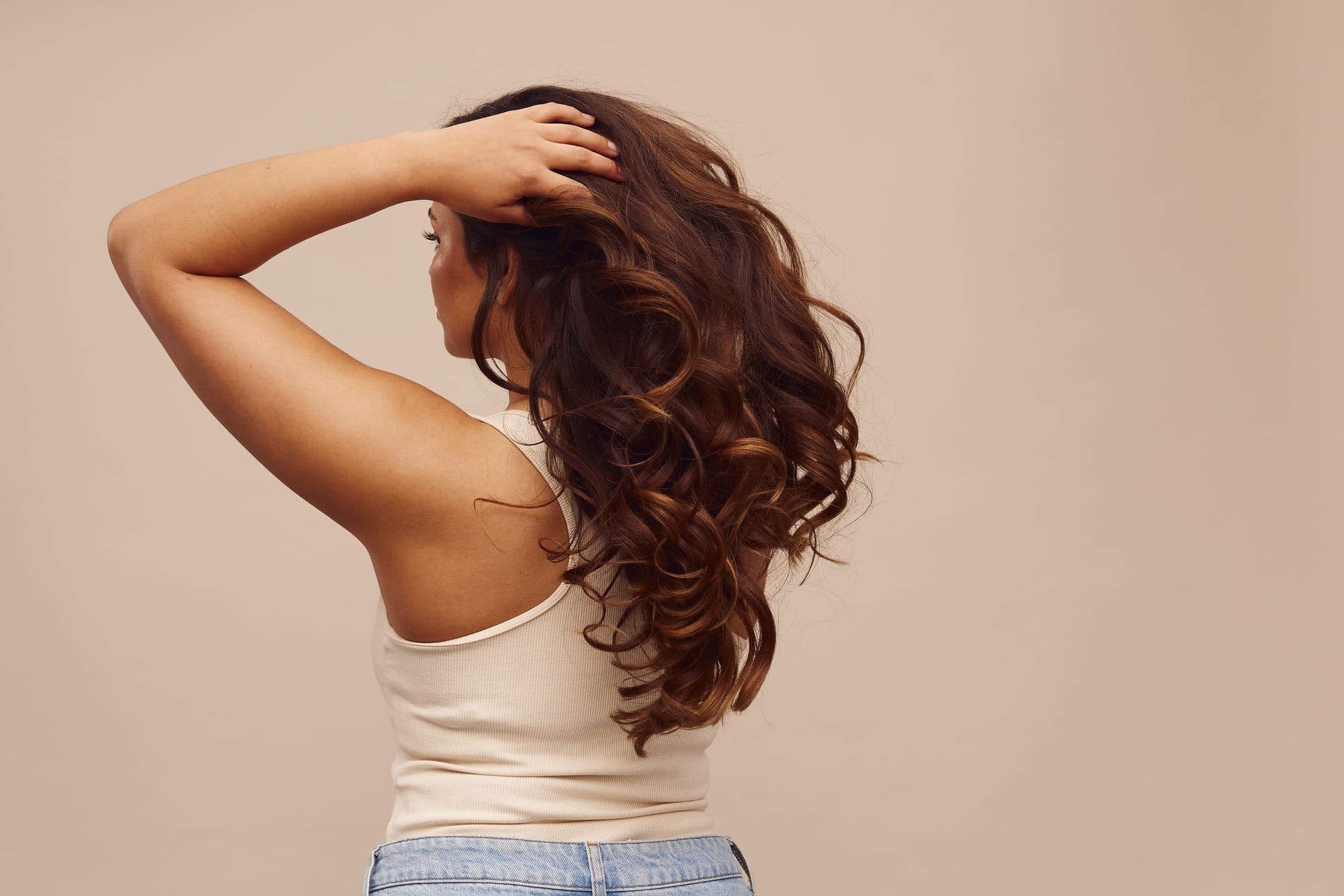
Clamp a section, rotate the iron a half turn so the hair wraps the outside of the plate, and draw it down slowly. The rotation angle decides the shape: a half turn gives a loose bend, a full turn gives a defined curl, and alternating directions gives a beach wave.
We earn a commission if you buy through the links on this page, at no extra cost to you. It never changes which tool we pick or which one we tell you to skip. How this site is funded.
Why bother, when curling irons exist
Three reasons, and the third is the one that matters on this site.
The first is that you already own it. The second is that a flat iron produces a different shape from a barrel — flatter, more bend than spiral, closer to what most people mean by a modern wave than the ringlet a narrow barrel gives.
The third is heat budget. Every additional heated tool is another heat event in your week, and using one tool for two jobs is genuinely fewer applications than owning two and using both. Total exposure is roughly temperature multiplied by contact time, summed across everything you do — the framework is on the how-often page.
The movement
Everything here is one motion with variations. Get the motion and the three shapes below follow.
- Take a section about an inch wide. Wider than that and the middle never makes contact.
- Clamp near the root, not at it. Leave an inch or two of straight hair at the top — waves that start at the scalp read as frizz rather than as styling.
- Rotate the iron away from your face so the section wraps around the outside of the lower plate.
- Draw down slowly, keeping the rotation held. Slow is the whole thing: the hair has to reach temperature and take the shape as it passes through.
- Let it cool before you touch it. Hair sets as it cools, not while it is hot. Pulling a warm wave straight undoes it completely.
Three shapes from one rotation
What the rotation angle produces
| Rotation | Result | Best for |
|---|---|---|
| Half turn (90°), held | A soft bend through the mid-lengths | Movement rather than curl; long hair; a blowout finish |
| Full turn (180°), held | A defined S-wave | Shoulder-length hair, a deliberate wave |
| Full turn, alternating direction each section | An irregular beach wave | The undone look — irregularity is the point |
| Full turn, ends left out | Wave through the middle, straight tips | The most current shape, and the kindest to old ends |
The alternating version is worth explaining, because it is the one people get wrong. A natural wave is irregular; if every section is wrapped the same direction you get a uniform, set look that reads as a curl pattern rather than as beach hair. Alternating away-from-face and toward-face on successive sections is what produces the irregularity. The barrel version of this argument is on the beach waves page.
Plate width changes the shape
A 1 inch plate is the right width for this. It is narrow enough to rotate cleanly and wide enough to hold a section.
A wide plate — like the wide version of the ghd Chronos — is genuinely better for straightening dense hair and genuinely worse for this technique, because the extra width makes the rotation clumsy and produces a broader, less defined bend. If you own a wide iron and want waves, take smaller sections and expect a looser result.
Rounded plate edges help. An iron with sharp plate edges tends to leave a crease at the clamp point, which on a wave shows as a kink. ghd publishes floating high-gloss plates and T3 publishes CeraGloss ceramic; neither publishes an edge profile, so this is an area where the spec sheets do not help you. More on width on the plate size page.
Temperature, and the fixed-iron question
Waving needs slightly less heat than straightening, because you are setting a shape rather than overcoming resistance. On an adjustable iron that is an argument for going a step down from your straightening setting.
On a fixed-temperature iron you do not have that option, and it is worth saying that this is one place where the fixed 365°F design is a mild disadvantage rather than a virtue. It is not enough to change our view of those irons — the reasoning is on the Platinum+ review — but it is a real trade.
What you should not do is compensate for a slow technique by turning the heat up. The variable to adjust is the speed of the draw. That is the same principle as straightening technique, and it is the mistake that does the most damage in this category.
Four mistakes
- Starting at the scalp. Leave the first inch or two straight. Root waves look like frizz and they also flatten under their own weight by lunchtime.
- Sections too thick. The inside of the section never reaches temperature, so the wave drops on one side and holds on the other.
- Moving too fast, then repeating. Two passes at speed is more total exposure than one slow one, and it produces a worse wave.
- Brushing it out immediately. If you want a softer result, wait until it is completely cool, then break it up with your fingers rather than a brush. A brush on a fresh wave gives you volume you did not ask for.
On damaged or colored hair
Waving involves a rotation under tension, which is more mechanical stress on the fiber than a straight draw. On bleached or heavily processed hair that combination — heat plus tension plus a bend — is the one that finds existing weak points.
Use the lowest setting that takes a shape, take the ends out of the wave entirely, and use a protectant. What a protectant does and does not do is on its own page, and the specific case for lightened hair is on the bleached-hair page.
Price per use, at 5 uses a week over 5 years
| What you pay | Cost per use | Cost per year |
|---|---|---|
| $30 | $0.02 | $6.00 |
| $60 | $0.05 | $12.00 |
| $100 | $0.08 | $20.00 |
| $150 | $0.12 | $30.00 |
| $200 | $0.15 | $40.00 |
| $300 | $0.23 | $60.00 |
| $400 | $0.31 | $80.00 |
| $500 | $0.38 | $100.00 |
5 uses a week for 5 years is 1300 uses. Both figures are stated assumptions, not measurements — halve the life and every cost per use doubles. We publish the ladder rather than a worked example for one specific product because a price we typed into a sentence would be wrong within a week.
When to buy the second tool anyway
A flat iron does bends and S-waves well. It does not do tight, spiral curls, and it does not do them on short hair at all, because there is not enough length to rotate through.
If the shape you actually want is a defined spiral, a barrel is the right object and no technique closes that gap — the barrel size guide covers which diameter does what. And if you want both, the honest comparison of owning one tool versus two is on curling iron versus flat iron.
The tools on this page
Prices come from the live price layer. Where none is available the button says so rather than showing a number we cannot stand behind.
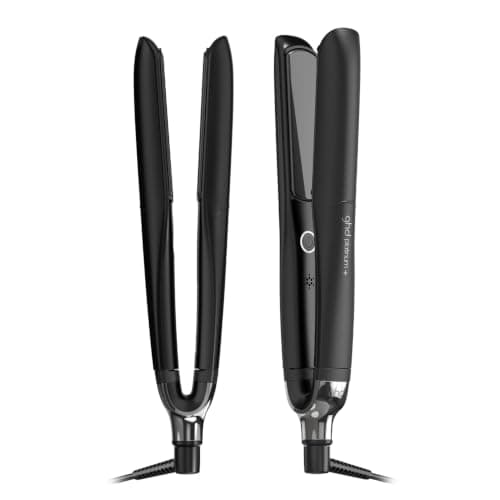
ghd Platinum+ flat iron (1 inch plate)
One temperature, 365°F, no dial to get wrong — the strongest heat-discipline argument in the category, and the longest iron warranty here at three years.
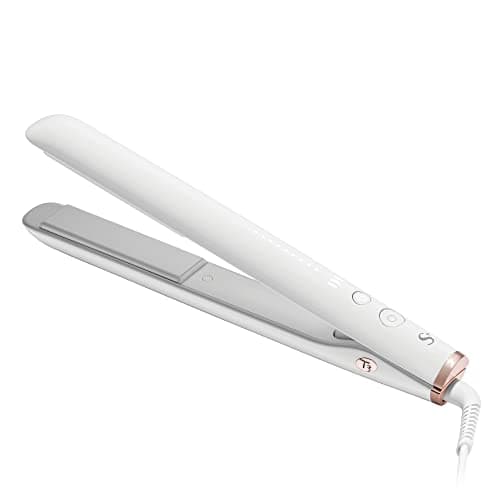
T3 SinglePass StyleMax 1 inch flat iron
Nine heat settings and genuine 100–240 V dual voltage: the most adjustable iron here and the only one you can pack for Europe without a thought.
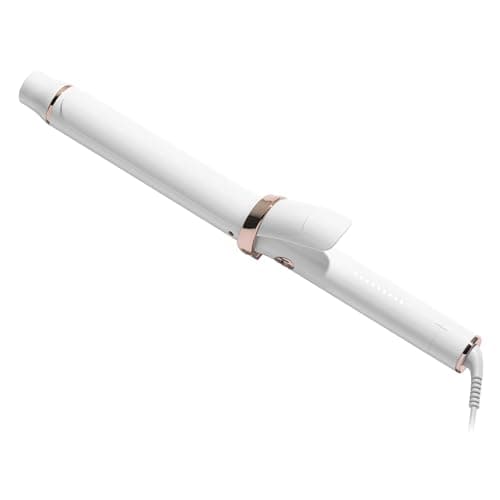
T3 SinglePass Curl X extra-long barrel curling iron
A 6.5-inch barrel and a separate published weight for every barrel size — unusual disclosure in a category where most makers publish a diameter and stop.
Questions people actually ask
Can you curl your hair with a flat iron?
Yes. Clamp the section, rotate the iron a half or full turn so the hair wraps the outside of the plate, and draw down slowly. The rotation angle decides whether you get a soft bend or a defined S-wave.
What size flat iron is best for waves?
1 inch. Narrow enough to rotate cleanly, wide enough to hold a section. Wide plates are better for straightening dense hair and clumsier for this technique.
Why do my flat iron waves fall out?
Almost always because the hair was touched before it cooled. Hair sets as it cools rather than while it is hot, so a wave handled warm relaxes straight back out.
Is using a flat iron for waves more damaging than a curling iron?
Not inherently — it is the same contact heat plus a rotation. Using one tool for both jobs is fewer total heat events than owning two and using both, which is the argument in its favor.