Hair Dryers
ghd Helios vs Revlon SmoothStay: Same Wattage
Two dryers publishing exactly the same power figure, at wildly different prices. This is the cleanest test on the site of what a premium price buys.
Updated September 2026 · Sawyer V.
Both publish 1,875 W, so on the only comparable power figure in this category they tie exactly. The Helios adds a 9 ft cable, a stated cool shot, a published warranty and an honest voltage statement. The SmoothStay publishes three heat settings and two speeds, and leaves five rows blank.

We earn a commission if you buy through the links on this page, at no extra cost to you. It never changes which tool we pick or which one we tell you to skip. How this site is funded.
Why this comparison is worth doing
Most price-versus-value arguments in this category are unfalsifiable, because the specification that would settle them — airflow — is published by nobody. This pair is the exception. Two dryers, wildly different prices, and an exact tie on the headline number both brands chose to print.
1,875 W each. Not close, not roughly — identical. If wattage were what you were buying, this comparison would be over in one line.
The published specifications
ghd Helios against Revlon SmoothStay, manufacturer figures only
| Specification | ghd Helios | Revlon SmoothStay |
|---|---|---|
| Wattage | 1,875 W | 1,875 W |
| Heat settings | Variable temperature control, with a cool shot | 3 heat settings |
| Speed settings | Variable power control | 2 speed settings |
| Cord | 9 ft power cable | Not published |
| Weight | Not published | Not published |
| Attachments | Not published | Not published |
| Surface | Aeroprecis airflow; no heated styling surface | 1 in triple-coated ceramic grill; tourmaline ionic |
| Dual voltage | Stated: not universal voltage | Not published |
| Warranty | 2-year consumer, 1-year professional | Not published |
| Running cost | $22.35 a year | $22.35 a year |
Two ties, four wins for ghd, and one row where neither covers itself in glory.
Where the premium is real
A published warranty, in two forms
ghd publishes a two-year consumer warranty and a one-year professional warranty. Revlon publishes no warranty term for this dryer at all.
The two-tier structure is the more interesting half. A manufacturer stating that the same tool gets a shorter term in a salon is admitting, in binding commercial language, that salon use is harder use. That is candour you do not often get, and it is the sort of number that costs money to be wrong about — the general argument is on the warranty page.
A nine-foot cable
Joint longest in our registry. Revlon publishes no cord length, which means you cannot plan around it — and cord length is one of the few specifications that changes how a tool feels every single time you use it.
A stated cool shot
ghd states one explicitly. Revlon publishes three heat settings with no cool among them. Hair sets as it cools rather than while it is hot, so a cool step is what makes a blowout hold past lunchtime — the technique is on the blow-dry guide.
An honest voltage row
ghd states plainly that the Helios is not universal voltage. That is a brand publishing an inconvenient fact rather than leaving the row empty. Revlon leaves it empty, and a blank row is not a yes — it just moves the risk onto you.
Where the premium is not real
- Power. Exact tie. Neither dryer is more powerful than the other on any published figure.
- Running cost. Identical, $22.35 a year, because running cost is a function of the wattage they share.
- Weight. Neither publishes one. On the specification your arm notices most, both brands are silent.
- Attachments. Neither publishes a list. If you need a diffuser confirmed, neither of these is your dryer — the curly-hair page goes elsewhere for exactly this reason.
- A settings count. This is the odd one. Revlon publishes numbers — three and two — and ghd publishes the word “variable”. On this single row the drugstore brand discloses more.
The row that decides it for most people
Granularity, and it is genuinely unresolved. Revlon’s six heat-and-speed combinations are the fewest of any dryer we list, and two speed settings on the joint most powerful element here means the “low” option is a division of a lot of power.
But ghd will not tell you how many steps “variable” is. If it is a continuous dial, ghd wins this row outright. If it is three positions, it is a draw. The product page does not say, so we cannot score it — and neither can you, which is the point.
If control is what you are actually shopping for, the honest answer is that neither of these dryers is the right buy. T3 publishes five heat and three speed settings; Dyson publishes four and three plus a cold shot. Both state their numbers. See the fine-hair page.
Price per use, at 5 uses a week over 5 years
| What you pay | Cost per use | Cost per year |
|---|---|---|
| $30 | $0.02 | $6.00 |
| $60 | $0.05 | $12.00 |
| $100 | $0.08 | $20.00 |
| $150 | $0.12 | $30.00 |
| $200 | $0.15 | $40.00 |
| $300 | $0.23 | $60.00 |
| $400 | $0.31 | $80.00 |
| $500 | $0.38 | $100.00 |
5 uses a week for 5 years is 1300 uses. Both figures are stated assumptions, not measurements — halve the life and every cost per use doubles. We publish the ladder rather than a worked example for one specific product because a price we typed into a sentence would be wrong within a week.
Which to buy
- Robust hair, tight budget, straightforward routine: the Revlon. You are getting the same published power for a fraction of the money, and the compromises land on rows you may genuinely not use.
- You keep tools for years: the ghd. A published warranty against no published warranty is not a close call.
- You dry at the back of your head: the ghd. Nine feet of cable, stated.
- Fine, colored or curly hair: neither. Buy on published heat granularity and a confirmed attachment list instead — start here.
What this comparison actually shows
Not that premium dryers are a con. The Helios wins four rows, and the warranty and cord are worth real money to the right buyer.
What it shows is that the premium is not in the number both brands advertise. It is in disclosure, cord length, warranty terms and a stated cool shot — none of which appear in a headline. Anyone buying a premium dryer expecting more power than a drugstore one is buying against both manufacturers’ own published figures.
The wider version of that argument, across the whole registry, is on what a dupe actually copies.
The tools on this page
Prices come from the live price layer. Where none is available the button says so rather than showing a number we cannot stand behind.
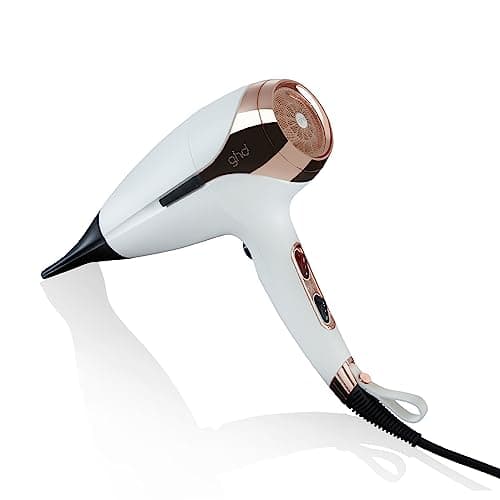
ghd Helios 1875W advanced professional hair dryer
A premium brand publishing exactly the same 1,875 W as a drugstore Revlon — the clearest evidence on this site that wattage is not what the money buys.
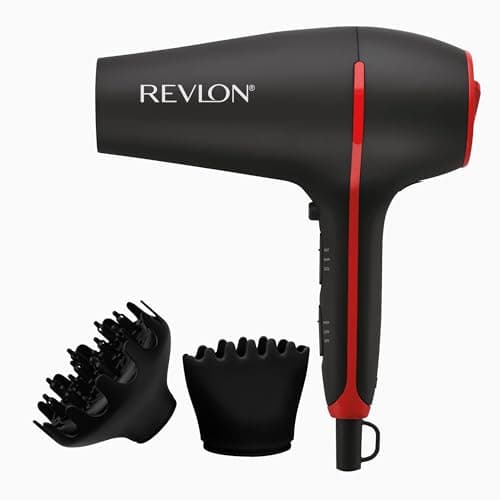
Revlon SmoothStay Coconut Oil-Infused hair dryer
The highest published wattage in this registry attached to the thinnest published spec sheet — Revlon states the watts and almost nothing else.
Questions people actually ask
Is the ghd Helios more powerful than a Revlon?
No. Both publish exactly 1,875 W, which is the joint highest figure in our registry. On the only comparable power specification either brand prints, they tie.
What do you actually get for the extra money?
A published two-year warranty against no published warranty, a 9 ft cable against no published cord length, a stated cool shot, and an honest voltage row. You do not get more power or a lower running cost.
Which is better for fine hair?
Neither, ideally. Revlon publishes six heat-and-speed combinations, the fewest here, and ghd publishes the word variable rather than a count. T3 and Dyson both publish real numbers.