Flat Irons & Straighteners
ghd Chronos vs T3 SinglePass StyleMax: One Setting or Nine
The two premium irons that disagree about whether you should be allowed a dial.
Updated September 2026 · Sawyer V.
ghd publishes one fixed 365°F, floating ceramic plates and a three-year warranty on the Chronos. T3 publishes nine heat settings, 11.1 oz and 100–240 V world voltage on the SinglePass StyleMax. Fine or processed hair wants the nine settings; escalators want the fixed one.
We earn a commission if you buy through the links on this page, at no extra cost to you. It never changes which tool we pick or which one we tell you to skip. How this site is funded.
Side by side, published only
ghd Chronos vs T3 SinglePass StyleMax, as each maker states it
| Row | ghd Chronos | T3 SinglePass StyleMax |
|---|---|---|
| Heat control | One fixed temperature - 365°F | 9 heat settings |
| Wattage | Not published | Not published |
| Weight | Not published | 11.1 oz, cord not included |
| Cord length | Not published | 360-degree swivel - length not published |
| Plates | Floating ceramic with ultra-gloss finish | CeraGloss ceramic, 1 in |
| Attachments | None supplied | None supplied |
| Dual voltage | Not published | Yes - 100-240 V auto world voltage |
| Warranty | 3-year | 2-year |
The argument each one is making
ghd's position is that the dial is what damages hair. A pass fails, the heat goes up, and the next pass is hotter than the hair ever needed — when the real fault was a section that was too thick or hair that was not fully dry. Remove the dial and the correct fix is the only one left.
T3's position is that your hair is not the average and you should be able to find its number. Nine published steps is the most granular control in this registry, and on hair that is fine, bleached or previously heat-damaged the ability to sit genuinely low is the whole decision.
Both are defensible. Neither is right for everyone, which is why this page does not name a winner.
What 365°F is, and is not
It is a deliberately moderate place to fix an iron: below the CHI presets at 392 and 395°F and well below the 455°F ceilings the professional market advertises. For a lot of hair it is simply correct.
It is not adjustable. On very coarse or resistant hair a fixed 365°F can mean more passes, and passes are themselves the damage variable Evans and Park, Journal of Cosmetic Science. On bleached hair it may still be more than you want, and there is no way down.
Weight, voltage and warranty
- Weight: T3 publishes 11.1 oz, the lightest iron here. ghd publishes nothing for the Chronos, which is a real gap on a tool held with the wrist raised.
- Voltage: T3 publishes 100–240 V auto world voltage. ghd does not publish dual voltage on the Chronos — note that the ghd Platinum+ does publish universal voltage, so the brand is not consistent. Check the model, not the badge.
- Warranty: ghd wins, three years against two.
- Wattage: neither publishes one, so neither can be costed. On an iron that matters little — see running costs.
The plates, and what each brand will say about them
ghd publishes floating ceramic plates with an ultra-gloss finish. T3 publishes CeraGloss ceramic plates at 1 inch. Both are ceramic, both are described rather than measured, and neither publishes a heat-up time, a recovery time or a plate uniformity figure.
What is checkable is that both float. Floating plates self-align under pressure, which matters because the instinct when a section will not close cleanly is to squeeze harder - and squeezing harder does not straighten hair, it just flattens the plates against a section that was too thick.
The 1 inch width is the other shared answer, and it is the right default: wide enough to cover ground, narrow enough to work near the root and around the face. See plate size.
One practical tie-breaker: who else uses the iron. A fixed-temperature tool is the safer thing to leave in a shared bathroom, because there is no setting for somebody else to move and nothing to reset before you use it. An adjustable iron in a shared house needs a conversation, or you will find it at the top of its range on a morning when you are in a hurry.
Who should buy which
Buy the ghd Chronos if you know you escalate, if you want the longest premium-iron warranty here, or if you simply do not want to think about temperature ever again.
Buy the T3 SinglePass StyleMax if your hair is fine, colored, bleached or recovering; if you travel; or if you want the lightest iron in this registry.
If you like the fixed-temperature idea but want it in ghd's more documented iron, the Platinum+ publishes universal voltage and the same 365°F — see Platinum+ vs Chronos and what the dial numbers mean.
The tools on this page
Prices come from the live price layer. Where none is available the button says so rather than showing a number we cannot stand behind.
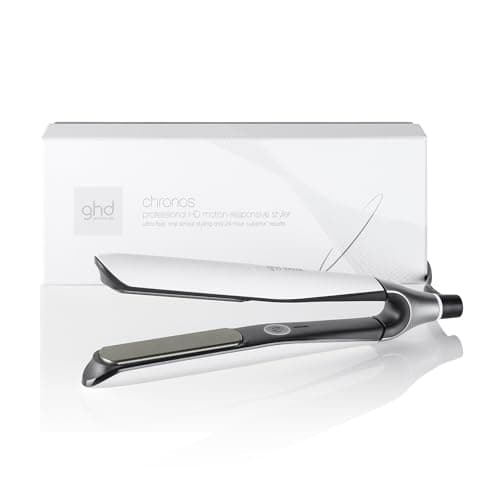
ghd Chronos flat iron (1 inch plate)
The Platinum+ argument with a re-engineered hinge and a wide-plate option — same fixed 365°F, same three-year warranty, more plate choice.
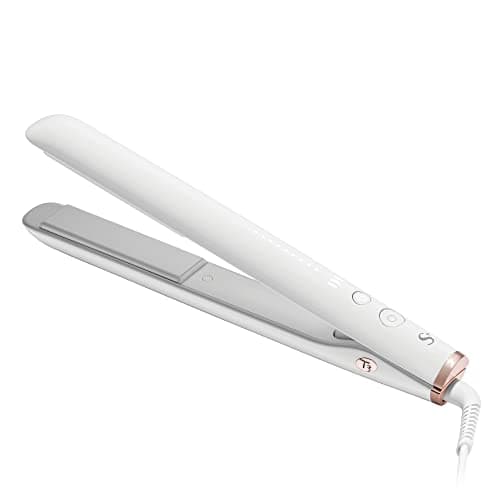
T3 SinglePass StyleMax 1 inch flat iron
Nine heat settings and genuine 100–240 V dual voltage: the most adjustable iron here and the only one you can pack for Europe without a thought.
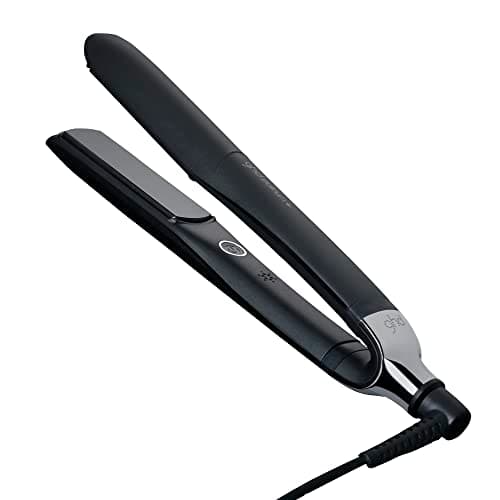
ghd Platinum+ flat iron (1 inch plate)
One temperature, 365°F, no dial to get wrong — the strongest heat-discipline argument in the category, and the longest iron warranty here at three years.
Questions people actually ask
Does the ghd Chronos have temperature settings?
No. It publishes a single fixed temperature of 365 degrees Fahrenheit with no adjustment, which is ghd's deliberate design position rather than an omission.
Is the T3 SinglePass StyleMax dual voltage?
Yes - T3 publishes 100 to 240 V auto world voltage. ghd does not publish dual voltage for the Chronos, although it does for the Platinum+, so check the specific model before traveling.
Which is better for bleached hair?
The T3, because nine published settings let you sit at the bottom of the range. A fixed 365 degrees cannot be dialled down, and bleached hair starts with less margin than virgin hair.
Which has the longer warranty?
The ghd Chronos, at three years against T3's two. ghd publishes three years on both the Chronos and the Platinum+.