Flat Irons & Straighteners
Wet-to-Dry Flat Irons: Why We Would Not Buy One
The category exists because straightening damp hair is convenient. The published microscopy on what heat does to wet hair is the reason we do not recommend it.
Updated September 2026 · Sawyer V.
We do not recommend them. Published scanning electron microscopy of hair thermally treated wet shows bubbling and buckling of the cuticle caused by steam forming and escaping from inside the fiber — damage that does not appear when the same treatment is applied dry.
We earn a commission if you buy through the links on this page, at no extra cost to you. It never changes which tool we pick or which one we tell you to skip. How this site is funded.
What a wet-to-dry iron claims to do
The pitch is time. Instead of drying your hair and then straightening it, you straighten damp hair and the tool drives the moisture out through vents or channels in the plates as it goes. One step instead of two.
The appeal is genuine. Blow-drying and then ironing is two heat events, and anything that collapses them into one sounds like it should mean less total exposure. We take that argument seriously — it is the same logic we use in favor of wide plates and long barrels.
The problem is what happens to the water on the way out.
What the microscopy shows
The clearest published work on this compared thermal treatment of hair in wet and dry conditions directly. Researchers curled hair with a curling iron under a range of conditions and examined the fibers with scanning electron microscopy.
Fibers treated dry, at 50 percent relative humidity, showed radial and axial cracking along with scale edge fusion. Fibers given similar thermal treatment while wet showed severe damage of that same type plus bubbling and buckling of the cuticle, caused by the formation and escape of steam from inside the fiber — Ruetsch and Kamath, Journal of Cosmetic Science.
The authors state the general principle plainly: the propensity of the hair surface to damage depends on the moisture content of the hair. Same tool, same temperature, different water content, different outcome.
Bubble hair is the clinical version
This is not only a laboratory finding. There is a recognized condition — bubble hair deformity — characterized by air-filled cavities forming inside the hair shaft, usually because of heat damage.
A review of the published case reports found that the majority of patients were middle-aged women who had used a heated tool to dry or style wet hair, and that treatment consisted of ceasing use of the heated tool — Li et al., International Journal of Dermatology.
One documented case involved a 61-year-old woman presenting with hair breakage over her crown who regularly dried her damp hair with a blow dryer; dermoscopy revealed multiple bubbles within the shaft, confirmed by light microscopy — Albers et al., International Journal of Trichology. The authors describe it as highlighting the ease of acquisition by means of a common hair dryer.
Being fair about what this proves
We want to be precise, because it would be easy to overstate this.
- The microscopy study used a curling iron, not a wet-to-dry flat iron. The mechanism it describes — steam forming inside a fiber under contact heat — applies to any clamped hot surface on wet hair, but it was not a test of this product category.
- Bubble hair case reports are case reports. They establish that the phenomenon happens and describe who it happens to. They do not tell you the probability for any individual.
- Wet-to-dry irons are engineered around this. Vented plates and channels are designed to let steam escape rather than build. We have not tested any and cannot tell you how well that works.
- “Damp” is not “wet”. The published contrast is between wet hair and hair at 50 percent relative humidity. Where along that spectrum a given tool becomes safe is not something we can source.
What the evidence does support is a direction: water content raises the damage cost of a given heat application, and it introduces a failure mode — steam inside the shaft — that dry styling does not have.
There is no wet-to-dry iron in our registry
Worth stating plainly rather than letting it sit as an implication. We cover 24 products and none of them is a wet-to-dry iron. That is not us quietly boycotting the category — it followed from choosing tools whose manufacturers publish complete specifications.
So we cannot rank them, cannot compare their vent designs, and will not write a roundup of products we have no published data on. What we can do is explain the mechanism and say what we would buy instead.
What to do instead
The routine that gets you the same time saving without the wet-heat problem is a rough dry followed by a shorter styling pass.
- Squeeze with a towel and wait ten minutes. Free, removes surface water at zero thermal cost, and it is the single largest time saving available — the arithmetic is here.
- Rough-dry on a bare nozzle to about 80 percent. No attachment, highest comfortable speed. This is fast because it is unfussy.
- Then style dry. One slow, tensioned pass per section beats three quick ones on both time and damage — technique here.
- Or skip the iron. A properly executed blow-dry gets most hair 80 to 90 percent of the way to iron-straight, and it is a lower-intensity heat event than a clamped plate — the method.
The irons we would buy
If the reason wet-to-dry appealed was speed, buy for pass count instead: a wide plate or flexing plates finish a section first time, which is where the real time is. If it was gentleness, buy for heat granularity.
The T3 SinglePass StyleMax publishes nine heat settings and is the only iron here that works below 365°F. The ghd Platinum+ publishes one fixed 365°F, universal voltage and a three-year warranty. And if the honest answer is that you do not want to iron at all, a hot air brush does the smoothing job with slower air and no clamped plate — that comparison is here.
Price per use, at 5 uses a week over 5 years
| What you pay | Cost per use | Cost per year |
|---|---|---|
| $30 | $0.02 | $6.00 |
| $60 | $0.05 | $12.00 |
| $100 | $0.08 | $20.00 |
| $150 | $0.12 | $30.00 |
| $200 | $0.15 | $40.00 |
| $300 | $0.23 | $60.00 |
| $400 | $0.31 | $80.00 |
| $500 | $0.38 | $100.00 |
5 uses a week for 5 years is 1300 uses. Both figures are stated assumptions, not measurements — halve the life and every cost per use doubles. We publish the ladder rather than a worked example for one specific product because a price we typed into a sentence would be wrong within a week.
The one-sentence version
Applying contact heat to wet hair produces steam inside the fiber, and the published microscopy shows what that steam does on its way out. Dry the hair first — most of the time saving was in the towel anyway. The fuller treatment of heat on wet hair, including how damp is too damp, is on its own page.
The tools on this page
Prices come from the live price layer. Where none is available the button says so rather than showing a number we cannot stand behind.
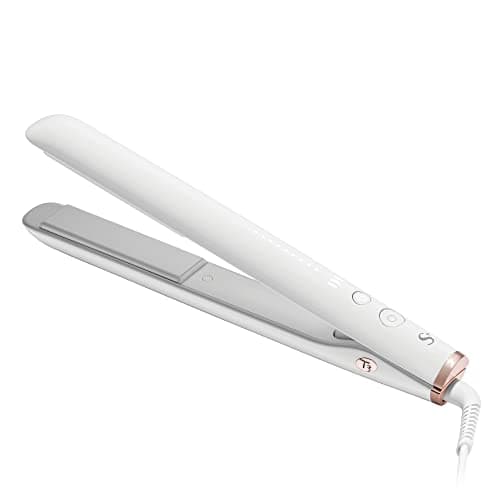
T3 SinglePass StyleMax 1 inch flat iron
Nine heat settings and genuine 100–240 V dual voltage: the most adjustable iron here and the only one you can pack for Europe without a thought.
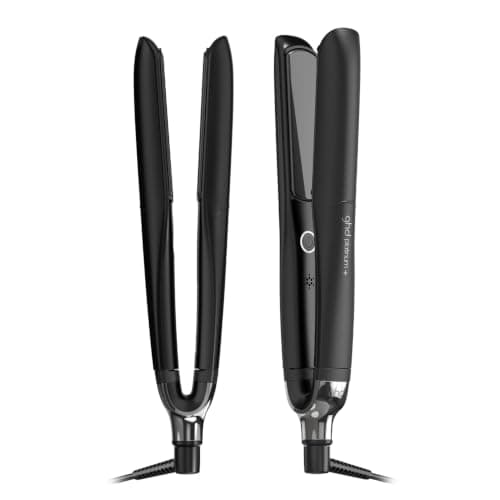
ghd Platinum+ flat iron (1 inch plate)
One temperature, 365°F, no dial to get wrong — the strongest heat-discipline argument in the category, and the longest iron warranty here at three years.
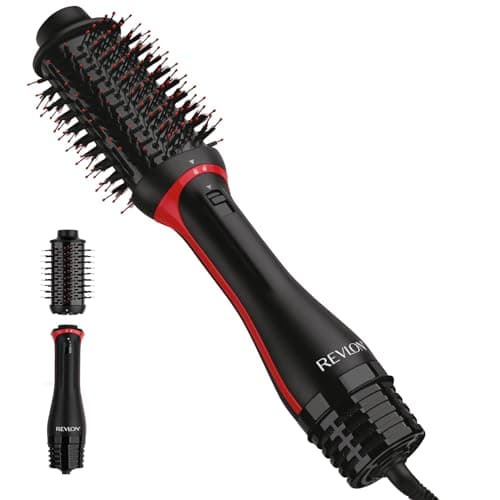
Revlon One-Step Volumizer Plus hair dryer and hot air brush
A 4-year limited warranty, the longest in this registry, on the cheapest kind of tool in it. Worth noticing before paying six times more elsewhere.
Questions people actually ask
Are wet-to-dry flat irons bad for your hair?
Published microscopy of hair thermally treated while wet shows bubbling and buckling of the cuticle from steam forming inside the fiber, on top of the cracking seen in dry treatment. We would not buy one.
Can you straighten damp hair?
We would not. The published contrast is between wet hair and hair at 50 percent relative humidity, and where along that range a tool becomes safe is not something anyone has published. Dry first.
What is bubble hair?
A recognized deformity where air-filled cavities form inside the hair shaft, usually from heat damage. A review of case reports found most patients had used a heated tool on wet hair, and treatment was stopping use of the tool.
Do you recommend any wet-to-dry irons?
No, and we do not cover any. None of the 24 products in our registry is a wet-to-dry iron, so we have no published specifications to rank and will not write a roundup without them.