Guides
Hair Straightener vs Blow Dryer: Which One You Need First
One tool dries. The other reshapes what the first one left behind. Buying them in the wrong order is the most common mistake in this category.
Updated September 2026 · Sawyer V.
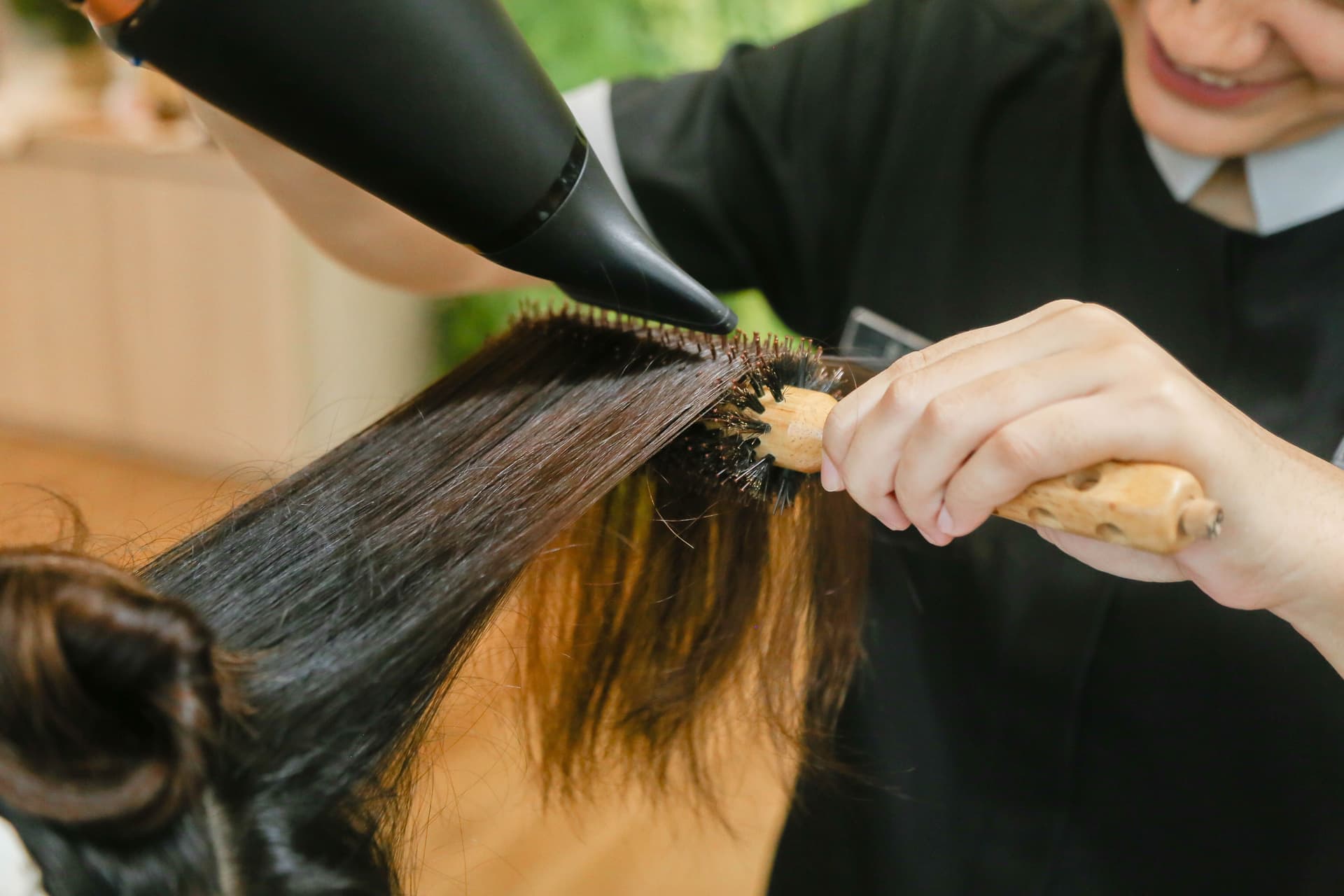
Buy the blow dryer first. A dryer removes water with moving hot air; a flat iron reshapes hair that is already completely dry, using plates pressed against it. They run in sequence, not as alternatives — and a dryer used with tension gets most hair smoother than people expect.
We earn a commission if you buy through the links on this page, at no extra cost to you. It never changes which tool we pick or which one we tell you to skip. How this site is funded.
They do different jobs, in a fixed order
The comparison is usually framed as a choice, and it is really a sequence. A blow dryer is a fan and a heating element: it moves warm air across wet hair until the water has gone. A flat iron is two heated plates: it clamps a section of dry hair and reshapes it by direct contact.
That order is not a preference. A flat iron used on hair that is still damp traps water inside the shaft under a hot plate, and the water flashes to steam. The cavitated fibers that produces are described in the dermatology literature as bubble hair Yin et al., Annals of Dermatology, and the damage from heated tools on wet versus dry hair was shown directly under the microscope two decades ago Ruetsch and Kamath, Journal of Cosmetic Science.
So every flat-iron session depends on something having dried the hair first. That something is either a dryer or several hours of air. It is never the iron.
Side by side, on the jobs people actually want
What each tool does on its own
| Job | Blow dryer | Flat iron |
|---|---|---|
| Dry wet hair | Yes - its only job | No - never on damp hair |
| Smooth, with volume | Yes, with a round brush | Flattens volume |
| Pin-straight | Rarely on its own | Yes - its main job |
| Define a curl pattern | Yes, with a diffuser | No |
| Touch up second-day hair | Awkward | Yes, quickly |
| Fix a kink or crease | Needs re-wetting | Yes, in one pass |
| Waves or bends | With a round brush | Yes, with a wrist turn |
Read down the columns and the overlap is smaller than the question implies. The dryer owns everything that starts wet; the iron owns everything that starts dry. The only genuine contest is the second row, a smooth finish — and that is where hair type decides it.
The temperature gap, on published figures
Very few makers publish the temperature of their dryer’s airflow, and very few publish the floor of their iron’s range. Where they do, the gap between the two categories is large.
Published temperatures, dryers against irons
| Tool | Type | Published temperature |
|---|---|---|
| L'ange Axia HaloRing | Dryer - air | 140-230°F |
| ghd Flight+ | Dryer - air | 149°F airflow |
| L'ange Le Duo | Iron - plate | 280-430°F |
| ghd Platinum+ | Iron - plate | 365°F, fixed |
| CHI 1" Original | Iron - plate | 392°F, fixed |
| Hot Tools Black Gold Evolve | Iron - plate | Up to 455°F |
Every figure is quoted from the manufacturer's own product page. Most dryers and several irons publish no temperature at all.
The numbers understate the difference. Air at a given temperature hands heat to hair far more slowly than a metal or ceramic plate at the same temperature pressed directly against it, which is why a dryer nozzle held a few inches away does not scorch hair and a plate at a similar reading would. A flat iron is not just hotter; it delivers its heat much more efficiently.
The temperature-by-hair-type table shows where each hair type should sit on an iron.
Which one does more damage
Per minute, the flat iron — contact heat at higher published temperatures, delivered under pressure. Per session, it is less clear, because a dryer runs for much longer and total time under heat is a damage variable in its own right. Repeated thermal cycling degrades the fiber’s mechanical properties measurably Evans and Park, Journal of Cosmetic Science, and that applies to both tools.
The practical ranking, from least to most damaging:
- A dryer on low or medium, kept moving, finishing with a cool shot.
- A dryer on high, held close — the most common way people damage hair with a dryer.
- A flat iron, one or two slow passes on completely dry hair at the lowest setting that works.
- A flat iron, many fast passes at the top of the range, which is what happens when the dial goes up because a pass did not work.
- A flat iron on damp hair, by a wide margin.
The last row is the one worth remembering, and it is the reason the dryer is not optional for anyone who owns an iron. See why heat and wet hair do not mix.
Can a blow dryer straighten hair on its own?
Often, yes — to smooth, if not to pin-straight. A dryer used with a round or paddle brush applies tension along each section while the water leaves it, and hair that dries under tension dries straighter. On straight to wavy hair that is frequently all the smoothing anyone needs, and it keeps the volume a flat iron would press out.
The attachments matter more than the motor. A concentrator narrows the airflow so it runs down the shaft rather than blowing it around, and a comb or smoothing attachment applies the tension in one hand. The Dyson Supersonic ships a styling concentrator and a wide-tooth comb; the Shark SpeedStyle Pro ships six attachments, including a QuickSmooth brush and a wide-tooth comb. Dyson publishes a cold shot among its four heat settings; Shark publishes no heat-setting detail at all, which is the one gap on an otherwise generous sheet.
The limit is humidity. Hair takes up water from the air, and the effect rises sharply above roughly 60–70 percent relative humidity Breakspear et al., International Journal of Cosmetic Science, so a blow-dried finish on curly or coily hair reverts faster than an ironed one. The full technique is at how to blow-dry hair straight without an iron.
Can a flat iron replace a blow dryer?
No. It can replace the styling half of a blow-dry on hair that has air-dried completely, and some people with fine or straight hair do exactly that. But it cannot dry, and the wait for hair to air-dry fully is long on anything past the shoulder or at all dense.
The products that promise to do both — “wet-to-dry” irons that vent steam as they go — are a category we recommend against, for the reason in the first section: they put a hot plate on wet hair by design. The full argument is at wet-to-dry flat irons.
Air-drying first is not free of cost either, though the cost is small. See does air drying damage hair.
Which to buy first, by hair type
Straight or fine hair
The dryer, and quite possibly only the dryer. Fine hair dried with a round brush is usually smooth enough, and it is the hair type most easily damaged by contact heat. If you add an iron later, buy one that publishes a low floor. See tools for fine hair.
Wavy hair that you want sleek
The dryer first, then decide. A good blow-dry gets many wavy heads most of the way; an iron finishes the ends and the front. Buy the iron only if the dryer alone leaves you ironing the whole head anyway.
Curly or coily hair you want straight
Both, and the dryer matters more than people expect. A silk press is decided at the drying stage: hair stretched straight while it dries needs one or two iron passes instead of four. See the best dryers for a silk press.
Curly hair you want defined, not straight
The dryer with a diffuser, and no iron at all. See diffusers.
What each one costs to run
The dryer is the only one of the two whose running cost is worth working out. At the U.S. average residential rate of 18.34 cents per kilowatt-hour and 65 hours of use a year, the Dyson Supersonic at a published 1,600 W costs about $19.07 in electricity and the Shark SpeedStyle Pro at 1,750 W about $20.86.
Flat irons draw power in short bursts to hold two small plates at temperature, and most makers do not publish a wattage at all. The one iron-style tool here that does, the L’ange Le Duo at 36 W, costs about 43 cents over the same 65 hours. Neither number should decide a purchase. The running-cost page has the formula.
The specifications that matter on each
What to compare, by tool
| Blow dryer | Flat iron |
|---|---|
| Weight - you hold it up for the whole session | Temperature floor - where the range starts |
| Attachments - concentrator, comb, diffuser | Number of stated settings |
| A cool shot, to set the shape | Plate width - 1 inch suits most hair |
| Cord length | Weight - 11.1 oz to 2.08 lb across this registry |
| Voltage, if you travel | Voltage, if you travel |
Notice that wattage is not on either list. It is a real specification and we publish it wherever a maker does, but it tells you less about a dryer’s drying speed than airflow design does, and almost nothing about an iron. See what hair dryer wattage actually means.
For the next decision after this one, see straightener vs curling iron and how many tools you need.
The tools on this page
Prices come from the live price layer. Where none is available the button says so rather than showing a number we cannot stand behind.
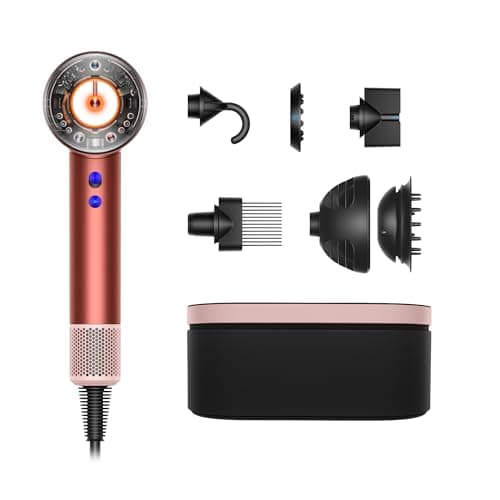
Dyson Supersonic hair dryer
1,600 W is less power than a drugstore dryer draws, and Dyson publishes that openly — the pitch is airflow and heat control, not wattage.
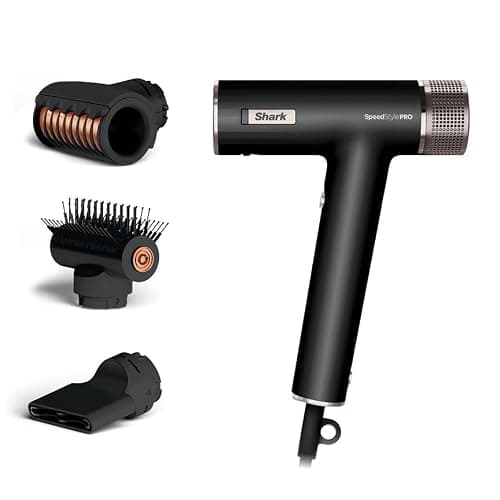
Shark SpeedStyle Pro hair dryer
The highest published wattage of the premium dryers here and the most attachments in the box, at a fraction of Dyson's asking price.
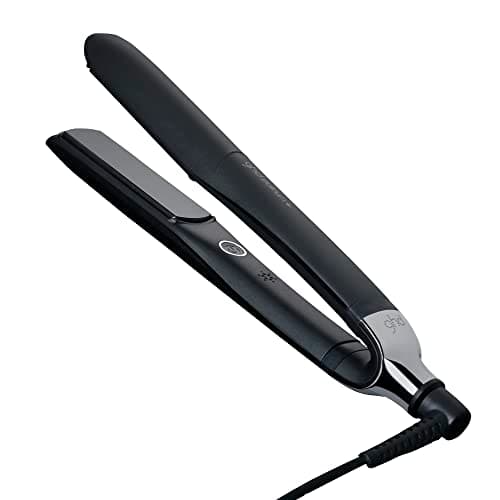
ghd Platinum+ flat iron (1 inch plate)
One temperature, 365°F, no dial to get wrong — the strongest heat-discipline argument in the category, and the longest iron warranty here at three years.
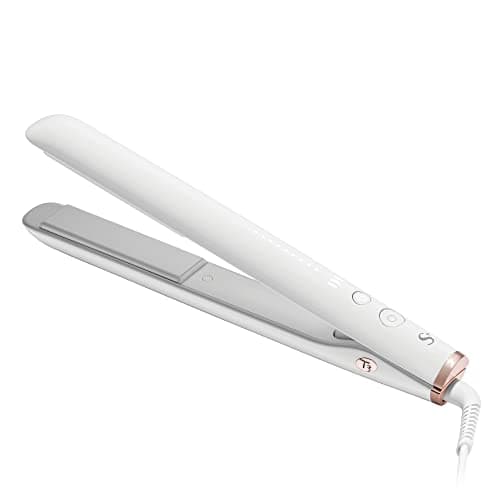
T3 SinglePass StyleMax 1 inch flat iron
Nine heat settings and genuine 100–240 V dual voltage: the most adjustable iron here and the only one you can pack for Europe without a thought.
Questions people actually ask
Should I buy a hair straightener or a blow dryer first?
The blow dryer. A flat iron must only ever be used on completely dry hair, so every iron session depends on something having dried the hair first. A dryer used with a round brush also gets straight to wavy hair smoother than most people expect, sometimes smooth enough on its own.
Is a flat iron or a blow dryer worse for your hair?
Per minute, the flat iron: it applies contact heat at higher published temperatures, under pressure. Per session it is closer, because a dryer runs longer. By far the most damaging combination is a flat iron on hair that is still damp.
Can you straighten your hair with just a blow dryer?
Usually to smooth, if not to pin-straight. Drying each section under tension with a round brush, a concentrator or a comb attachment, then finishing on the cool setting, is enough for many straight and wavy heads. It reverts faster in humidity than an ironed finish.
Can a flat iron dry wet hair?
It should not be used to. A hot plate on wet hair traps water inside the shaft, which turns to steam and produces the cavitated fibers known as bubble hair. Wet-to-dry irons are designed to do exactly this, and we recommend against them.
Which costs more to run, a flat iron or a blow dryer?
The blow dryer, by a wide margin. A 1,600 W dryer used 65 hours a year costs about $19 in electricity at the U.S. average rate. The one iron-style tool here that publishes its draw, at 36 W, costs about 43 cents over the same hours.
Sources
- Yin et al. - bubble hair, Annals of Dermatology
- Ruetsch and Kamath - heated tools on wet versus dry hair
- Evans and Park - thermal cycling and mechanical properties
- Breakspear et al. - moisture sorption in keratin
- Dyson - Supersonic hair dryer product page
- ghd - Platinum+ published specification
- EIA Electric Power Monthly - average residential price per kWh